

Office Buildings
An office building is a rent roll that turns over suite by suite, with lobbies, elevators and restrooms you keep running for everyone. Nashville's market has split by location: Cushman & Wakefield's third-quarter 2026 report put Midtown at 10.8% vacant and the Central Business District at 27.0%. That gap frames an owner's choice to renovate, re-lease, sell or convert.
- Metro office vacancy, Q3 2026
- 16.7% (Cushman & Wakefield), 17.7% (CBRE)
- Nashville CBD, Q3 2026
- 27.0% vacant, $40.93 per sq. ft. full service
- Midtown, Q3 2026
- 10.8% vacant, $50.99 per sq. ft. full service
- Under construction, Q3 2026
- 60,000 sq. ft., Cushman & Wakefield's lowest since at least 2019
- Office districts with not-owner-occupied permits
- OG, OR20 through OR40-A, ORI; not ON or OL
On this page
- Vacancy and rent by submarket
- Who is leasing and where the gains are
- Downtown numbers and who counts them
- Building class and sale prices
- Tenant turnover and sublease space
- Full-service rent and operating costs
- Common areas and accessibility
- Converting an office building
- Short-term rentals in a converted office
- Tennessee statutes on leasing and commissions
- What Rad Stay handles
- Questions
- Sources
Vacancy and rent by submarket
This table is Cushman & Wakefield's third-quarter 2026 count of the Nashville metro, 50.8 million square feet in nine submarkets. Rents are full-service asking rates per square foot per year.
Midtown remains the most expensive submarket, and its tenants take small suites: 18 new leases in the quarter totaled 97,395 square feet, which works out to about 5,400 square feet each. That is the tenant to design for if you own in that part of town. The active pipeline is a single project, Voce at 1717 Hayes Street, 60,000 square feet with no preleasing reported. Cushman & Wakefield puts delivery at April 2027 and CBRE at late 2027.
| Area | Office space, sq. ft. | Share vacant | Rent, all classes | Rent, Class A |
|---|---|---|---|---|
| Nashville CBD | 10,927,487 | 27.0% | $40.93 | $46.37 |
| Cool Springs/Franklin | 9,644,646 | 19.0% | $33.50 | $37.92 |
| Midtown | 8,745,527 | 10.8% | $50.99 | $53.75 |
| Brentwood | 6,281,866 | 11.4% | $32.71 | $33.68 |
| Airport South | 5,789,742 | 15.1% | $34.09 | $43.68 |
| Airport North | 4,068,121 | 14.1% | $24.98 | $25.72 |
| Green Hills/West Nashville | 2,587,225 | 9.4% | $39.03 | $39.28 |
| MetroCenter | 2,154,306 | 14.8% | $28.00 | $30.25 |
| North Nashville | 620,544 | 2.6% | N/A | N/A |
Who is leasing and where the gains are
Lee & Associates pointed to third-quarter leases by EY at 818 18th Avenue South, Metro Nashville at 1283 Murfreesboro Pike and Creative Artists Agency at 21 Platform Way South as signs of demand from professional services, government and entertainment. Cushman & Wakefield's list adds Koniag Government Services at 50,612 square feet on Royal Parkway and Resound Credit Union at 20,226 on Marriott Drive. Those two and the Metro lease all landed in the airport submarkets.
Year-to-date net absorption through September favored Midtown and the airport. Midtown gained 117,101 square feet and Airport South 115,615, helped by the new Wedgewood Village buildings. The CBD gained 65,341. Brentwood lost 51,866 and Cool Springs/Franklin lost 35,709.
CBRE's third-quarter tables add a pricing split: $44.25 per square foot in its urban market against $34.14 in its suburban market, with Class A led by Green Hills, 21st Avenue and Music Row at $52.25, Downtown at $49.88 and West End and Belle Meade at $49.37. Class C space, the cheapest at $24.39, was also the fullest at 7.0% vacant, against 16.2% for Class B and 19.8% for Class A. An older building with a low rent can stay full, so price a renovation against the rent it would actually add.
Downtown numbers and who counts them
Downtown has two very different vacancy rates in print, and each is correct for what it counts. Cushman & Wakefield's Nashville CBD is 10.9 million square feet at 27.0%. CBRE's Downtown covered 14.29 million square feet at 18.9% in Q3 2026, and its survey leaves out government and medical buildings. Before you compare your building with a published rate, find out which blocks and which buildings that rate covers.
Class matters inside those totals. CBRE showed downtown Class B at 23.9% vacant with 35.3% availability, against Class A at 18.4% and 22.3%. A Cushman & Wakefield leasing executive wrote in Real Estate Business that the CBD ended 2025 with 3.1 million square feet vacant, 37.6% of the metro's total, as tenants moved into renovated and newly delivered urban buildings.
Building class and sale prices
Lee & Associates had metro vacancy at 17.48% in Q3 2026, down from 20.15% a year earlier, with Class A absorbing 264,000 square feet while Class B gave back more than 534,000. New space can still command a premium: Cushman & Wakefield says the three Wedgewood Village buildings in Airport South marketed gross rents in the $70s and were nearly 69% preleased when they delivered 231,320 square feet.
Sale prices run across a wide range. Lee & Associates listed third-quarter sales at $247.14 per square foot for 30 Burton Hills Boulevard, $262.26 for 5121 Maryland Way in Brentwood and $57.73 for 648 Grassmere Park Drive. Its average was $272 per square foot with a 7.80% cap rate, compared with $199 and 8.90% a year before. Higher up, the 20-story Class A tower at 1222 Demonbreun sold in 2025 for about $660 per square foot, according to Real Estate Business. Get comparables from your own class and submarket.
Tenant turnover and sublease space
Cushman & Wakefield counted 2.3 million square feet of new leases and 986,974 square feet of renewals through the first three quarters of 2026, with renewals 34.5% ahead of last year's pace. It says high vacancy in second-generation space may limit rent growth as landlords compete for tenants, so weigh keeping a tenant against the cost of finding a new one.
Sublease space competes with yours. The same report shows 744,516 square feet of sublet vacancy, about half of it, 368,301, in Cool Springs and Franklin. Large tenants use it too: CBRE's Q2 2026 list shows Starbucks taking 78,000 square feet as a sublease at 1101 Church Street alongside a 250,000-square-foot new lease at 50 Peabody Street.
Run a lease expiration schedule by suite with every notice date and renewal option on it, and open renewal talks well before those dates. For each suite, compare the renewal offer against the downtime, the buildout and the commission on a new lease. Then check how much sublease space is on the market nearby.
Full-service rent and operating costs
Cushman & Wakefield and CBRE quote office rents full service, which CBRE abbreviates as FSG. Lee & Associates labels its $32.89 average NNN, so check the basis before you compare. Gross rent, as CBRE uses the term, normally bundles real estate taxes, insurance on the building and major upkeep, so those costs stay with you unless the lease passes through increases over a base year or an expense stop. Reset that base carefully at each renewal.
Taxes are the example to model. Commercial real property in Tennessee is assessed at 40% of appraised value, and NewsChannel 5 reported a 45% countywide median jump in the 2025 reappraisal, a figure that blends all property types. Where a lease has no pass-through, a higher appraisal comes out of your income until that lease renews.
Common areas and accessibility
Lobbies, corridors, elevators, restrooms and parking are the parts of the building that only the owner runs, and they are what prospects see first on a tour. Keep a written schedule for elevator service, life-safety tests, cleaning and after-hours access, and bill each item the way the leases allow.
Accessibility duties land here too. Federal ADA rules list the office of an accountant or lawyer among places of public accommodation, and a landlord and a tenant both carry the duties, which they can divide by lease. A suite renovation can reach beyond the suite. Offices and work areas count as primary function areas, and altering one requires an accessible path of travel to it, including the restrooms and drinking fountains that serve it, unless the cost tops 20% of the alteration. Separate jobs on the same path within three years are added together. Budget for this before you approve a tenant buildout.
Converting an office building
Downtown now has a finished example. The SongTeller Hotel opened on October 6, 2026 in the former 211 Commerce office building: 12 floors and 245 rooms, in a building acquired in December 2023 for $75 million, according to Propmodo. Marcus & Millichap's fourth-quarter 2026 report says office-to-hotel conversions helped lower vacancy, and the Real Estate Business article says tenant migration may speed up conversions of aging downtown buildings.
More hotels are coming. The Nashville Downtown Partnership's development map shows hotel work underway at Parkway Towers, the 21-story building on James Robertson Parkway, with 331 rooms under two Hyatt brands, and at Fifth Third Plaza on Church Street. It shows Philips Plaza on Union Street as proposed. That map lists no conversion to housing. Propmodo's building record still shows an earlier plan for 200 residential units at Parkway Towers, a reminder that these plans change.
The work is heavy. Propmodo describes floor plates being reconfigured and mechanical systems upgraded in hotel conversions. Metro moved to the 2024 codes in 2025. The state's 2021 version of the existing building code sends a move from Group B offices to a residential or hotel group through its change-of-occupancy sections, and it calls for sprinklers and alarms where Chapter 9 requires them for the new use. Ask Metro Codes for the 2024 wording. Check three things before you pay for design: how deep the floor plates are from window to core, when each lease can end, and whether a lender will fund the plan.
Short-term rentals in a converted office
Zoning decides this first. On the office side, new not-owner-occupied permits can go in OG, ORI and the range from OR20 to OR40-A. In the downtown code, the North, South, West and Central parts qualify and DTC East does not. ON and OL are off the list, and an NS suffix rules out both permit types.
Metro permits each converted unit separately, capped at four sleeping rooms, and the Fire Marshal inspects once the property has three or more dwellings. New not-owner-occupied permits also face a 100-foot buffer around schools, parks, licensed day cares and places of worship, measured parcel to parcel, unless Council waives it. One more trap is the adaptive residential clause, F.12 in section 17.16.030. Where a lot was developed under that clause, neither permit is available if most of its frontage faces a local road or the parcel lies past the boundary of the Urban Services District. Permits already in good standing before August 2024 are exempt. Get Metro Codes' answer in writing before closing.
Tennessee statutes on leasing and commissions
Two statutes are worth knowing. Tenn. Code 62-13-102 counts paid third-party work on leases or rent as broker activity, and the state real estate commission can explain how that applies to your arrangement. Tenn. Code 62-13-501 describes a sworn notice of a leasing commission agreement that must be on file with the register of deeds ten or more business days ahead of a transfer. Have your attorney search for one when you sell.
What Rad Stay handles
Rad Stay's first line of work is short-term rentals. Commercial, industrial and warehouse management sit alongside it. It also weighs purchases, leases and partnerships, and the conversion question above is where its short-term and mid-term work touches an office owner's decision. Union Street Lofts, four residential lofts, is the only building documented on this site, so request a written list of duties for suites, common areas and tenant billing.
Questions
Is downtown Nashville office really 27% vacant?
In Cushman & Wakefield's third-quarter 2026 count of its Nashville CBD, yes. CBRE's Downtown, a larger area with a different survey, showed 18.9% in the same quarter. Ask which buildings a rate includes before you use it.
What does full-service rent include?
By CBRE's usage it normally takes in taxes, insurance on the building and big maintenance items. Your lease decides the rest, including utilities, janitorial service and whether the tenant pays increases over a base year.
Can I convert my office building to short-term rentals?
Only if the zoning is on Metro's list and each unit is a legal dwelling with its own permit. OG, ORI, the OR20 to OR40-A range and most of the downtown code qualify. ON, OL, DTC East and NS districts do not. The change of occupancy brings building code work as well, so start with Metro Codes.
Will renovating one suite trigger accessibility work elsewhere?
It can. Altering an office or work area requires an accessible path of travel to it, including the restrooms serving it, unless the added cost is more than 20% of the alteration. Have your architect read 28 CFR 36.403 before you approve the buildout.
Do I need a license to manage my own office building?
Tennessee exempts an owner of real estate for property the owner holds. The broker definition in Tenn. Code 62-13-102 covers paid work for others on leases or rent. If an LLC and its staff hold the building, ask the state real estate commission how the exemption applies.
Sources
- Cushman & Wakefield, Nashville Office MarketBeat, Q3 2026
- CBRE Research, Nashville Office Figures, Q2 2026 (Starbucks leases)
- Lee & Associates, Nashville Office Market Overview, Q3 2026
- Real Estate Business, Nashville's Office Market Is Defined by Resiliency, Momentum (Mar. 16, 2026)
- Marcus & Millichap, Nashville 4Q 2026 Office Market Report
- Propmodo, Office building becomes Dolly Parton's 245-room boutique hotel in Nashville (Oct. 7, 2026)
- Propmodo Playbook, Parkway Towers building record
- 28 CFR 36.104, ADA definitions, Cornell LII
- 28 CFR 36.201, landlord and tenant responsibilities, Cornell LII
- 28 CFR 36.403, path of travel, Cornell LII
- Tenn. Code 67-5-801, real property assessment (FindLaw)
- NewsChannel 5, Nashville property values rise 45% in latest assessment (2025)
- Metro Code chapter 6.28 and section 17.08.030, Municode (current through June 23, 2026)
- Metro Code chapter 17.16, land use development standards, Municode (current through June 23, 2026)
- Metro Codes, not-owner-occupied permit checklist (Wayback copy, Feb. 16, 2026)
- Tenn. Code 62-13-102, broker definition (FindLaw)
- Tenn. Code 62-13-104, license exemptions (FindLaw)
- Tenn. Code 62-13-501, commercial leasing commission notice (FindLaw)
- CBRE Research, Nashville Office Figures, Q3 2026 (class and submarket tables, Voce, definitions)
- Nashville Downtown Partnership, development map (read Nov. 5, 2026)
- Nashville and Davidson County Building Code 2024, chapter 3, Occupancy Classification (UpCodes)
- Metro Council BL2025-898, 2024 building codes, passed July 15, 2025 (Legistar)
- Metro Codes, Metro adopts 2024 International Building Codes (July 23, 2025)
- Tennessee Existing Building Code 2021, chapter 10, Change of Occupancy (UpCodes)
Checked November 5, 2026.
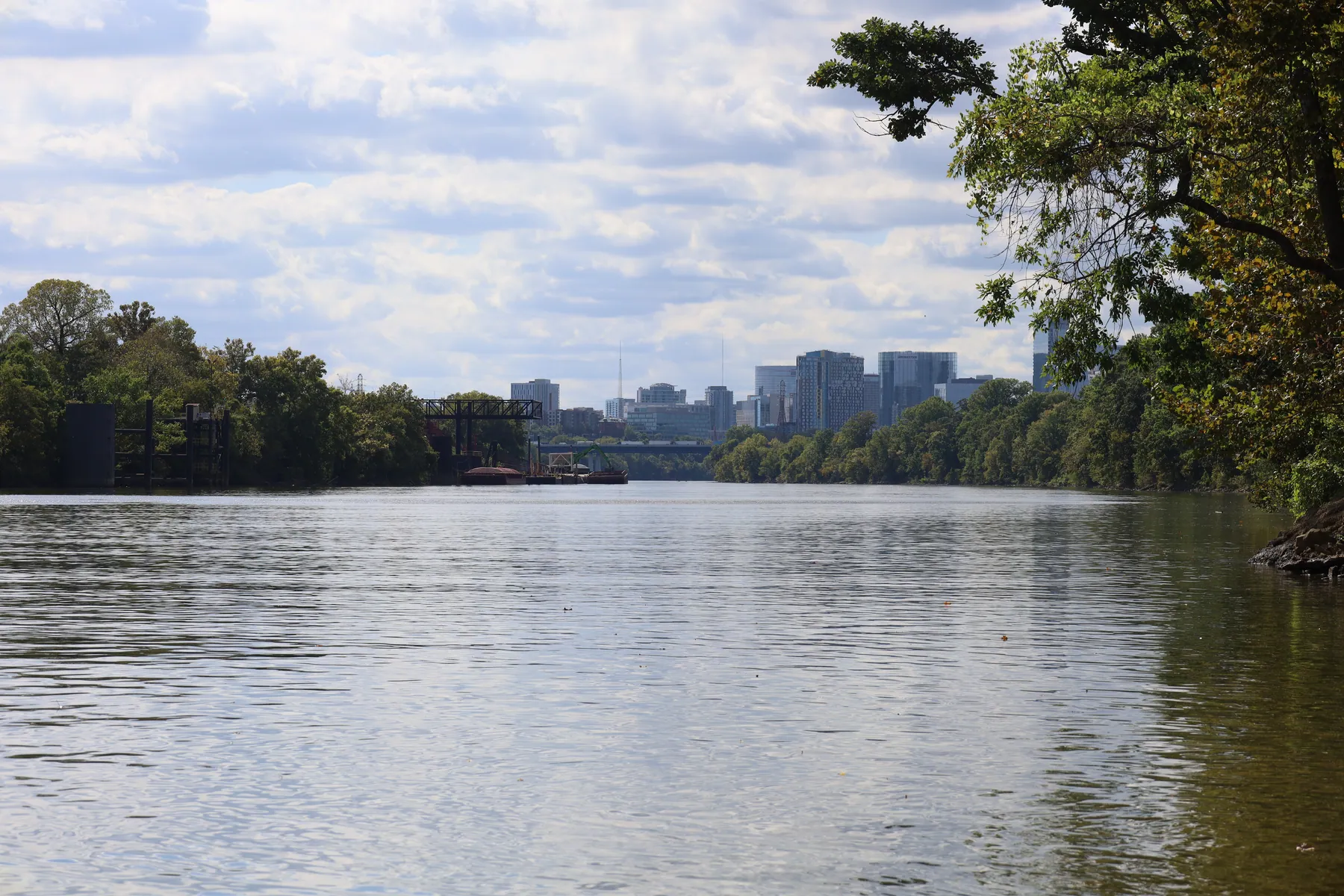
Photo: Antony-22, CC BY-SA 4.0, via Wikimedia Commons. Cropped.
To keep this page, print it or choose Save as PDF in your browser's print window. The printout keeps the sources and the date.
More property types
All 19
Retail Storefronts
A retail storefront is sidewalk-level space leased to a shop, salon, restaurant or bar, often with apartments or lofts above it.
Small Apartment Buildings
A small apartment building in Nashville has 13 to 49 units.
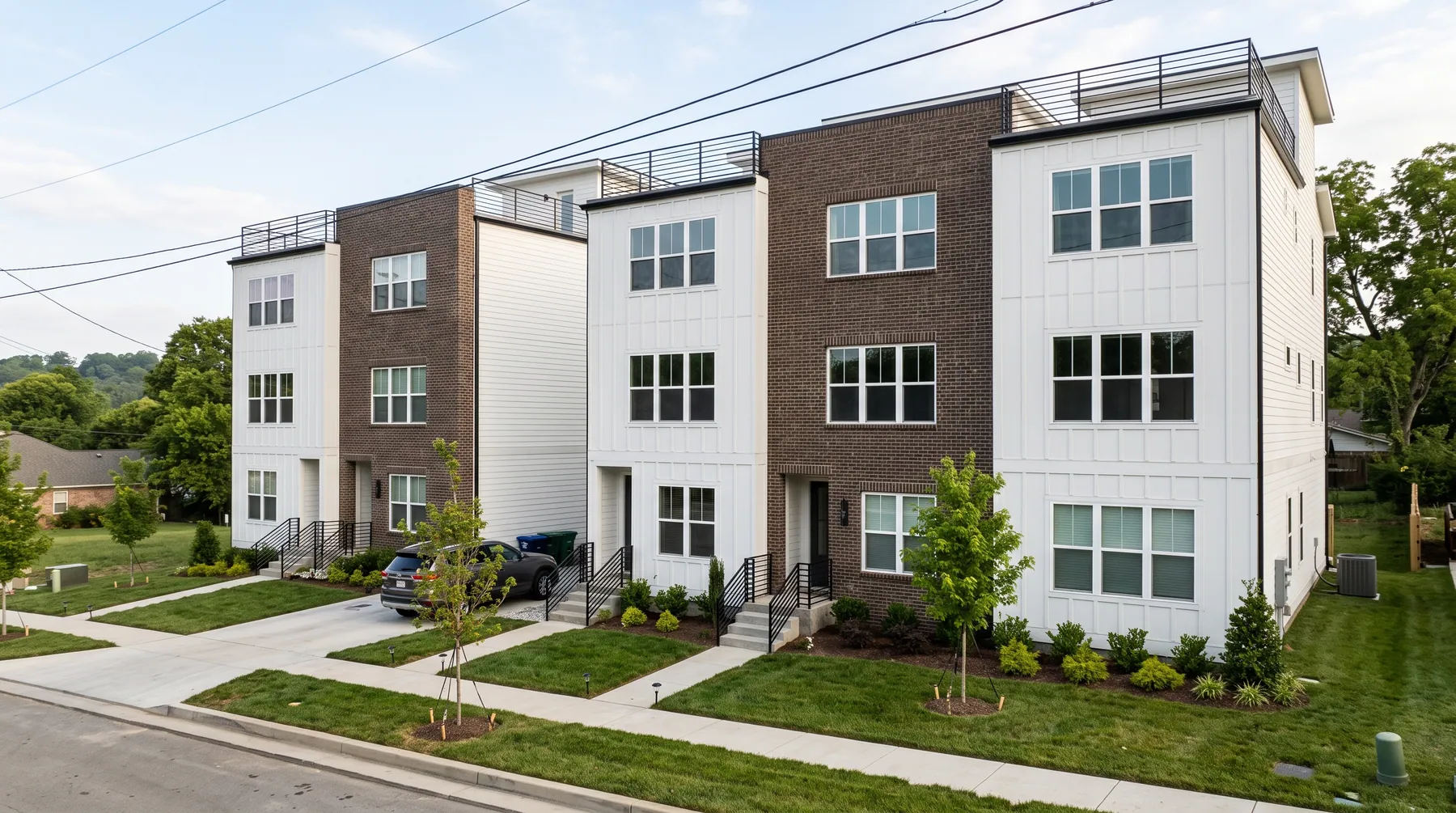
Townhome Clusters
A townhome cluster is four or more attached or grouped townhomes on one site.