
Midtown
Midtown is the stretch between downtown, Music Row, West End and Hillsboro Village, next to Vanderbilt University and Saint Thomas Midtown Hospital. For someone who owns or wants an apartment building, it is a place with steady daily demand from campus, medical and music-business visitors, a large permit base already on the books, and new apartment towers competing for the same renters. This page lays out what the sources say about the area, the zoning and permit rules that decide what a building here can do, and the checks to run before buying, converting or handing over management.
- ZIP codes
- 37203 and 37212 (Metro publishes permits by ZIP, not by neighborhood)
- Issued STR permits, ZIP 37203
- 1,706: 89 owner-occupied, 1,617 non-owner-occupied (Oct. 6, 2026)
- Issued STR permits, ZIP 37212
- 461: 104 owner-occupied, 357 non-owner-occupied (Oct. 6, 2026)
- Average rent, Midtown - Vanderbilt (RentCafe, Oct. 2026)
- $2,342, up 2.7% from $2,280 a year earlier
- To downtown
- Vanderbilt's main campus is about 1.5 miles southwest of downtown
- Anchors
- Vanderbilt University (330 acres), Saint Thomas Midtown (683 licensed beds), Centennial Park (132 acres), Music Row
- Zoning to know
- Mixed-use (MUN, MUL, MUG, MUI), office (OG, OR20-OR40-A), commercial (CN, CL, CS, CA, CF) districts allow new non-owner-occupied permits; residential districts do not
On this page
- Where Midtown is
- How the building stock developed
- Buildings and housing today
- Midtown zoning and the permit an absent owner needs
- The 100-foot rule near the campus and hospitals
- Issued permits in ZIP 37203 and ZIP 37212
- Who visits and why
- Hospital stays and the 30-day limit
- Longer stays near the medical center
- Development from 2023 to 2026
- Getting around
- Building types that fit
- Checks before a Midtown purchase or conversion
- Rad Stay on a Midtown building
- Questions
- Sources
Where Midtown is
Visit Music City places Midtown between downtown, Music Row, West End and Hillsboro Village, next to Vanderbilt University. Nashville has no single legal boundary for the name, so two owners can use it for different blocks. The practical way to pin it down is by anchors. Vanderbilt's main campus sits about 1.5 miles southwest of downtown along the West End Avenue and 21st Avenue corridors. Saint Thomas Midtown Hospital sits on a 10.5-acre site bounded by Patterson Street, Church Street, 20th Avenue and 21st Avenue. Centennial Park, home of the Parthenon, lies across West End Avenue from the Vanderbilt campus.
Metro publishes short-term rental permits by ZIP code, not by neighborhood, and neighborhood names do not follow ZIP boundaries. This page uses ZIP 37203 and ZIP 37212 as a stand-in for the area. I did not find an official source that assigns Midtown streets to a ZIP, so a count for either ZIP describes a wider area than Midtown alone. Confirm the ZIP of a specific address before you quote a permit count to a lender or partner. The geographic point used for this page is the hospital, because Wikipedia publishes its coordinates (36.1539, -86.8025).
How the building stock developed
Midtown's older fabric follows its institutions. Saint Thomas Midtown began as Protestant Hospital, incorporated on December 12, 1918 during an influenza epidemic, and opened on March 20, 1919 with 80 beds. It was renamed Mid-State Baptist Hospital in 1948 when the Tennessee Baptist Convention took ownership, then Baptist Hospital on December 17, 1964. In 1975 it bought five buildings from Saint Thomas Hospital's former Church Street property. It joined Saint Thomas Health in January 2002 and took the name Ascension Saint Thomas Hospital Midtown in 2013. Today it is licensed for 683 acute and rehab care beds.
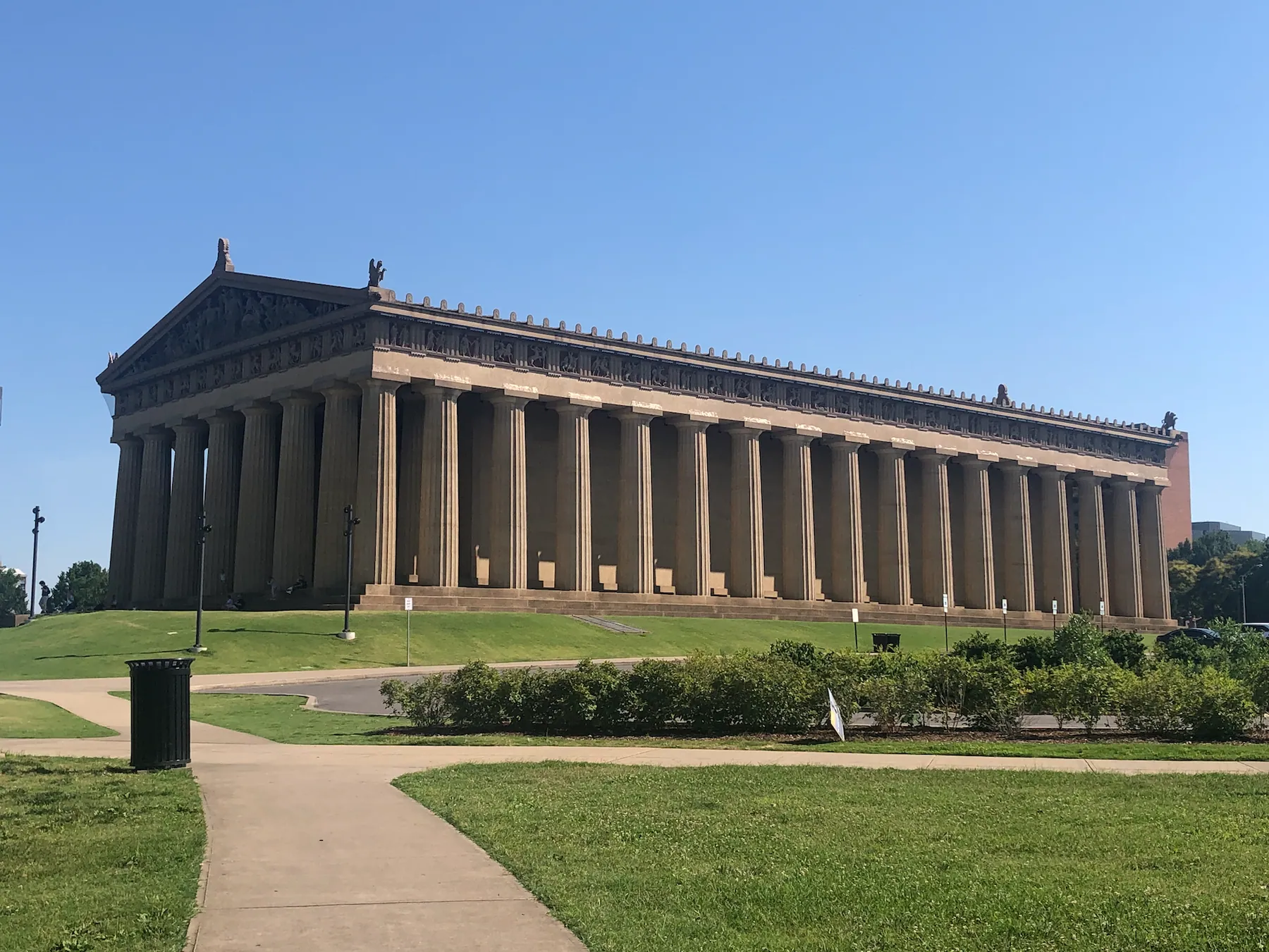
Vanderbilt was founded in 1873. Its 330-acre campus and Centennial Park, which holds a Parthenon replica first put up for Tennessee's 1897 Centennial Exposition and rebuilt in steel and concrete between 1925 and 1931, sit along West End Avenue, with Vanderbilt about 1.5 miles southwest of downtown.
Music Row gives the area its second layer. Development there began in 1954 with the first commercially successful studios and music offices on 16th Avenue South, and by the early 1960s many national labels completed a large share of their country releases in Music Row studios. The Country Music Association opened a $750,000 headquarters in 1967 that also held the Hall of Fame plus its museum, at Music Square East and Division Street. The museum moved downtown in May 2001 and the first building was later demolished. The Music Industry Coalition works to preserve the district's history. For an owner, ask what age and type each building is before you assume anything about its floor plan or its rules.
Two more dated details help you place the institutions. The original Country Music Hall of Fame building stood at Music Square East and Division Street from April 1967 to December 2000, and it has since been demolished. Wikipedia describes RCA Studio B as one of the district's landmarks, where hundreds of notable musicians recorded. On the university side, Wikipedia gives Vanderbilt's campus as 330 acres but notes that the figure includes sparsely used land and the Medical Center, and that the historical core is about 75 acres. Saint Thomas Midtown's own site is 10.5 acres. For an owner, the point is scale: the institutions that create demand occupy defined parcels, and the blocks around them are where your building would sit.
Buildings and housing today
RentCafe's Midtown - Vanderbilt University page, updated October 16, 2026, counts 3,223 households in its area: 2,313 renter-occupied (72 percent) and 910 owner-occupied (28 percent). Its rent figures come only from properties of 50 units or more, so they describe the larger apartment buildings and says little about a fourplex or an eightplex. Visit Music City lists walkability, chef-driven restaurants, bars and a wide range of hotels among the area's draws.
One new building named in a source is LOCAL Midtown at 1904 Hayes Street. Subtext, a St. Louis residential developer, announced its groundbreaking on September 2, 2022: 15 stories and 307 apartments, from studios to three-bedrooms, with about 10,000 square feet of amenity space that includes a music studio and recording booth, a media lounge, an outdoor deck with a swimming pool and a sky lounge on the 15th floor. The announced delivery year was 2024. REBusiness also lists a coffee bar and micro-market on the first floor, a music studio on the fifth, a fitness center, library and gaming room on the sixth, and a five-level covered garage for residents. I did not open a source confirming the opening date or current occupancy, so check before you use it as a comparable. A tower of this size shows what a short-term guest or a mid-term renter can compare your building against: studios through three-bedrooms with a shared amenity floor and parking on site.
Sort any Midtown building into one of four groups before you do any math: a purpose-built apartment building, a condominium, a converted older house or small building, or a hotel or office building. Each group has a different permit path, a different insurance and fire-inspection picture, and a different buyer pool. The sections below take those in turn.
Midtown zoning and the permit an absent owner needs
A Midtown owner who will not live in the unit needs Metro's not-owner-occupied permit, and the parcel's zoning decides whether one can be had. Title 17's land use table and Section 6.28.030 allow it, with conditions, only in certain office, business, shopping-center, mixed-use and downtown districts while leaving it blank in farm and residential zoning, the mobile home park district, the two smaller office districts, East DTC and industrial land. Midtown has parcels in several of these families, and this page did not pull parcel-by-parcel zoning, so check each address in the parcel viewer on maps.nashville.gov and compare it with the list in the zoning guide linked below.
Three exceptions come up near Midtown. Any district name with an -NS ending, such as CS-NS, bars both permit types, since the code prohibits short term rental uses in NS districts. Where land is SP or PUD, the plan has to allow the use; Council has amended such plans for that purpose, once in April 2024 (BL2024-211) and again in March 2026 (BL2026-1268), so read the plan rather than the base zoning. And a holder already operating in a residential zone can renew yet cannot hand the permit to a buyer.
No rule caps how many units of a Midtown building may be permitted; each takes a permit of its own with at most four sleeping rooms, and in practice zoning, the building's documents, and the lender and insurer set the limits.
- District: on the list for absent-owner permits, not NS, and for an SP or PUD, allowed in writing by the plan.
- Distance: nothing that triggers the rule, such as a park, school, licensed day care or place of worship, within 100 feet.
- Documents: condo declarations, leases and HOA bylaws, which may be stricter than Metro.
The 100-foot rule near the campus and hospitals
Since August 11, 2023 (BL2023-1884), no new absent-owner permit has gone to parcels within 100 feet, line to line, of a place of worship, a school or its playground, a park, or a licensed day care or its playground; projects that were under active development in 2020 do not have to meet it. Centennial Park is a Metro park, and Vanderbilt and the hospitals are large institutions close by, so test every Midtown parcel. Whether a given university building counts as a school under the rule is a question for Metro Codes; no source we found answers it, so ask in writing before relying on a reading.
Council can waive the distance by resolution, and the process, revised by BL2024-478 in November 2024, takes a hearing, mailed notice, 14 days of signage and 21 votes, with several units of one building allowed in one resolution. On Legistar, the Council approved nearly all such resolutions between 2023 and 2026, though a downtown request failed once before passing in reduced form. A waiver is a real path, but it runs on its own calendar, and an existing permit never transfers to a buyer.
Issued permits in ZIP 37203 and ZIP 37212
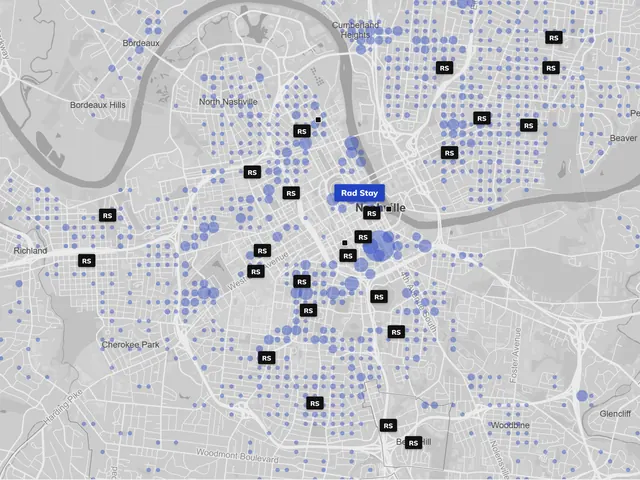
Metro's open data counts 7,022 issued residential permits across the county on October 6, 2026, the day this page's figures were pulled. ZIP 37203 has 1,706 of them, about 24 percent of the county total and more than any other ZIP. Of those, 89 are owner-occupied and 1,617 are not-owner-occupied, so about 95 percent are investor or building-owner permits. Compare downtown's ZIP 37201 at 346 permits (8 owner-occupied, 338 not-owner-occupied): 37203 has roughly five times as many.
ZIP 37212, on the Vanderbilt and Hillsboro side, has 461 issued, 357 for absent owners and 104 owner-occupied, about 77 percent absent-owner. Together the two ZIPs account for 2,167 permits, about 31 percent of the county. ZIP 37204 has 180 and ZIP 37210 has 337.
These counts show how many permits Metro has issued, and they do not tell you occupancy or revenue. One property can hold more than one record over time if it was renewed under a new number, and the open data does not separate a four-unit building from a 200-unit one. What the counts do tell you is that the area is not new to short-term rental. A guest here has many choices, and a new listing competes on photos, reviews and price from the first night.
Who visits and why
Midtown demand comes from institutions with calendars. Vanderbilt had 13,575 students as of 2024, which means move-ins, parents' visits and graduations for a manager to plan around. Vanderbilt University Medical Center has been independent of the university since April 2016, and Saint Thomas Midtown is a separate hospital with 683 licensed beds. Ask each source of demand how long its guests stay, because a hospital stay can run longer than a weekend.
The Parthenon draws a different visitor. It is a full-scale replica built for the 1897 exposition and rebuilt between 1925 and 1931; it houses an art gallery inside Centennial Park's 132 acres, where a statue of Pallas Athena by Alan LeQuire was added in 1990. The park sits about two miles west of downtown, across West End Avenue from the Vanderbilt campus. Music Row adds the music business, with landmarks such as RCA Studio B and the Country Music Association's former headquarters site, and Belmont University sits across Wedgewood Avenue at the far end of the district. Visit Music City says students, music industry professionals and business executives mix with visitors in Midtown.
These guests book at different times and for different lengths: a parent in town for a campus weekend, a family with a relative in the hospital, a visitor to the Parthenon. Pricing and minimum stays should follow those different calendars.
Hospital stays and the 30-day limit
Metro sets a 24-hour minimum and a 30-night maximum for any permitted stay. For a hospital neighborhood that cap matters more than anywhere else, because treatment stays can run longer. A guest who needs 45 days cannot be booked as one short-term rental stay under a Metro STR permit. A furnished unit offered for stays beyond 30 days becomes a leased rental, with a lease and a different set of landlord-tenant rules, and if you plan to run units both ways you need to plan the calendar and the paperwork for each. Confirm the exact treatment with Metro Codes and an attorney before you advertise longer stays.
Every night the operating rules apply: guests limited to four plus double the sleeping rooms (Metro's operation page puts the maximum at 12), a single party, a lead renter of 21 or older, no meals from the permit holder, and the guest cap and a contact posted in the unit. The responsible party must stay within 25 miles and pick up at any hour, seven days a week. Plan the line so someone answers at any hour.
Longer stays near the medical center
RentCafe's Midtown - Vanderbilt University page, updated October 16, 2026, puts the average rent in properties of 50-plus units at $2,342, a 2.7 percent rise from $2,280 twelve months before. Its unit-type averages: studio $1,695 (408 sq. ft.), one-bedroom $2,159 (699 sq. ft.), two-bedroom $3,125 (1,071 sq. ft.), three-bedroom $4,556 (1,433 sq. ft.). Dividing rent by size gives roughly $4.15 per square foot for a studio, $3.09 for a one-bedroom, $2.92 for a two-bedroom and $3.18 for a three-bedroom. Those ratios are my arithmetic on RentCafe's published figures.
For comparison, a RentCafe article dated October 20, 2020 put Midtown's average at $1,893. That makes the 2026 figure about 24 percent higher, though the two pages may define the area differently. The page also reports that 72 percent of households in its area rent, a deep pool of local renters for monthly or yearly leasing. I did not find a sourced employee count for Vanderbilt, the hospitals or the music business, so I will not quote one.
What this means for an owner: long-term rents here are already high, so the case for short-term or mid-term use rests on permits, location and management more than on a rent gap. Where a building cannot get new short-term permits, a furnished mid-term strategy is an alternative to test, and a long-term lease stays the baseline to compare against.
Development from 2023 to 2026
LOCAL Midtown, described above, was announced in 2022 for a 2024 delivery, and it is one example of the larger apartment projects in the area. That 2.7 percent change, over the year to October 2026, again reflects only properties of 50 units or more.
On the short-term side, the rules changed in several steps. August 11, 2023 was the date the distance rule took effect. Council revised the waiver process in November 2024 (BL2024-478). In December 2025 it passed bills that prohibit new not-owner-occupied permits in the RN and RL residential districts and that keep owner-occupied permits out of new accessory dwelling units. No short-term rental ordinance has passed since June 23, 2026, according to Metro's legislative record. If you are assessing a building, ask for the permit numbers, the issue dates and the renewal dates of each unit, because every permit runs out a year from its issue date.
I did not open a source for other Midtown projects under construction in 2026, and I will not name towers I could not verify. Council agendas on Legistar list rezoning cases by address.
Getting around
I did not find a sourced figure for drive times to Lower Broadway or to Nashville International Airport (BNA), so use a route planner at your own address rather than a number from a listing.
WeGo Public Transit runs Route 3 along West End Avenue and Route 7 on Hillsboro Pike. WSMV reported changes effective January 4, 2026. Route 3 weekday service between 9 a.m. and 3 p.m. goes from every 15 minutes to every 10, and at other weekday times until 10:15 p.m. from every 20 minutes to every 15. Weekend daytime service, 6 in the morning to 6 in the evening, improves from every 20 minutes to every 15. Route 7 weekday service until 10:15 p.m. goes from every 30 minutes to every 20. On Sundays, Routes 3, 7 and 50 (Charlotte Pike) run from 5:15 a.m. until 1:15 the following morning. Check WeGo's schedule before you promise guests a transit connection, because routes can detour for construction.
Parking rules differ by building and zoning district. Ask what spaces each unit gets in writing, and whether a garage is shared with other tenants. Parking belongs in the listing from day one.
Building types that fit
Mid-size apartment buildings carry the Fire Marshal inspection (three or more dwellings) and the heaviest insurance and management load, with a permit needed for each unit. Mixed-use buildings with commercial space below fit the zoning list best, since many of the commercial and mixed-use districts allow new permits. Small apartment buildings and converted older homes work where the parcel's district permits and the 100-foot rule is clear. Visit Music City notes a wide range of hotels in the area, and converting one has its own zoning and licensing steps; confirm them with Metro. Condominiums depend on the declaration more than on Metro.
Across all of them, the useful first test is the same: can a not-owner-occupied permit be issued for every unit meant for nightly guests, under the zoning and distance rules, and will the documents on the building allow it?
Checks before a Midtown purchase or conversion
Start with the parcel's district, its overlay if any, and any SP or PUD. For historic or design overlays, Chapter 17.36 has nothing to say about nightly renting, but Metro Planning can say whether an overlay affects renovation. No flood map was opened for this page, so look the parcel up in FEMA's flood layer and on Metro's maps, and stand on the block at 11 p.m. and 7 a.m. to judge noise.
Then the permits. Each lasts 365 days; any 30-day grace for a late renewal is at Metro's discretion and is refused when complaints are on record, so file the renewal early. Selling ends every permit, and so does moving title into a trust or LLC you control, and the buyer applies fresh. Metro's February 2026 FAQ lists a $313 fee with a 2.3 percent card charge, unpermitted renting means fines of $50 daily plus a year before reapplying, and revocation can follow three violations.
Then the building: the applicant's signed word that renting violates no condo, HOA, co-op or lease agreement, a liability policy worth $1 million per occurrence, written notice to adjoining owners including the units above and below, and a Fire Marshal inspection for properties of three dwellings or more, where a house or duplex would use a licensed inspector's certification instead. Each rule is set out in full in the permits guide linked below.
- Permit status of every unit: number, issue date, expiry date, any complaints.
- District, overlay, SP or PUD terms, and the 100-foot check.
- Association documents, lease terms and insurance quotes.
- Fire Marshal inspection history for any building of 3-plus dwellings.
- Flood, noise and parking, checked on site.
Rad Stay on a Midtown building
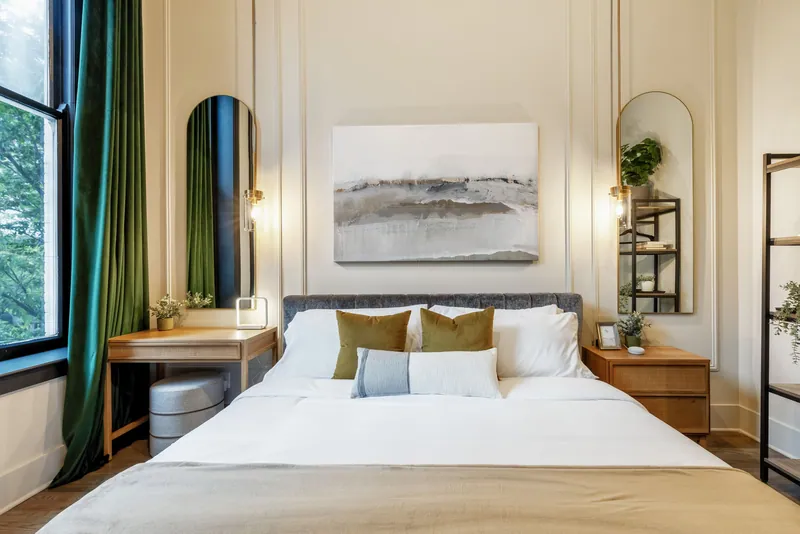
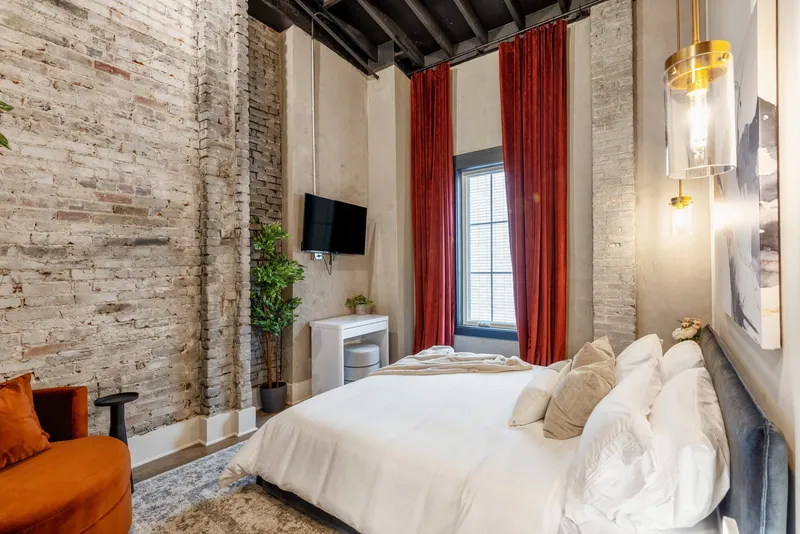
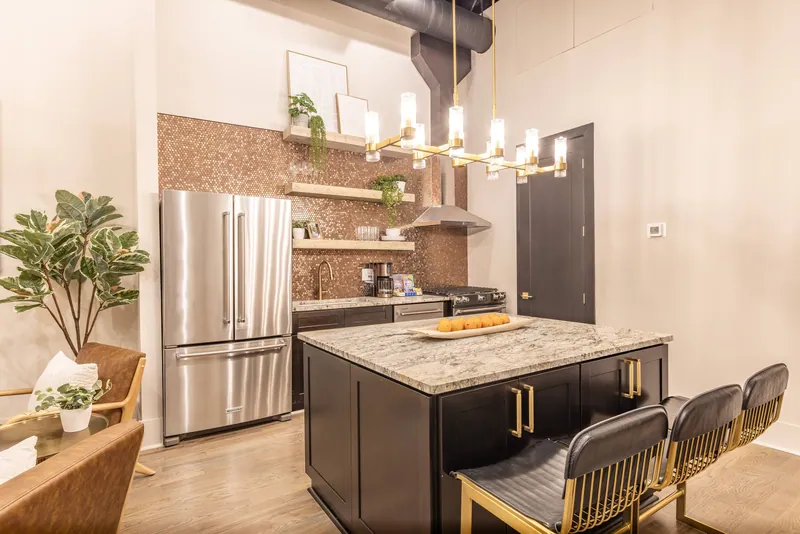
Rad Stay runs the four lofts of Union Street Lofts downtown, 329 Union Street, whose lofts each hold a not-owner-occupied permit from April 2023, and it handles nightly, monthly and yearly stays. On a Midtown building, short-term work means pricing around the campus, hospital and music-business calendars, guest messages, cleaner schedules, booking automation and damage coverage; compliance work means permit applications, renewals and tax filings. A building that cannot get or keep short-term permits can take monthly or yearly tenants, and Rad Stay also reviews Midtown buildings an owner is considering selling, leasing or partnering on. The fastest start is a call with the permit list, the zoning district and the association documents in hand.
Questions
What are the permit counts for Midtown's ZIP codes?
On the October 6, 2026 pull, 37203 had 1,706 issued (1,617 for absent owners, 89 owner-occupied) and 37212 had 461. Metro tallies by ZIP code rather than neighborhood, so those counts reach beyond Midtown.
Can a Midtown building get new permits for units its owner will not live in?
Only when the parcel's zoning is covered by Section 6.28.030, the parcel is not NS, any SP or PUD allows the use, and no school, park, licensed day care or place of worship is within 100 feet, barring a Council waiver. Check the address in Metro's parcel viewer and confirm with Metro Codes.
Can a permitted short-term rental host a guest past 30 days?
No. The maximum stay for any guest is 30 consecutive days, and the minimum is 24 hours. Stays beyond that are mid-term or long-term rentals with their own rules.
What are apartments renting for in Midtown?
RentCafe, updated October 16, 2026, shows an average of $2,342 for its Midtown - Vanderbilt University area: $1,695 for a studio, $2,159 for a one-bedroom, $3,125 for a two-bedroom and $4,556 for a three-bedroom. Only properties of 50 or more units are in it.
Sources
- Metro Code chapter 6.28, Short term rental property permit (Municode, current through June 23, 2026)
- Metro Code 17.08.030, Land use table (Municode)
- Metro Nashville Residential Short Term Rental Permits (open data), status Issued, retrieved 2026-10-06
- Metro Codes, STR operation requirements (Wayback copy, 2026-02-12)
- Metro Codes, Not-owner-occupied checklist (Wayback copy, 2026-02-16)
- Metro Codes, STR permit types (Wayback copy, 2026-02-17)
- Midtown, Visit Music City
- Vanderbilt University, Wikipedia
- Centennial Park (Nashville), Wikipedia
- Saint Thomas Midtown Hospital, Wikipedia
- Music Row, Wikipedia
- Midtown - Vanderbilt University rental market trends, RentCafe (updated Oct. 16, 2026)
- Looking for a collegiate vibe? Midtown/Vanderbilt, RentCafe (Oct. 20, 2020)
- Subtext breaks ground on 15-story multifamily tower in Midtown Nashville, REBusiness (Sept. 2022)
- WeGo services expanding in January, WSMV (Oct. 25, 2025)
Checked October 18, 2026.
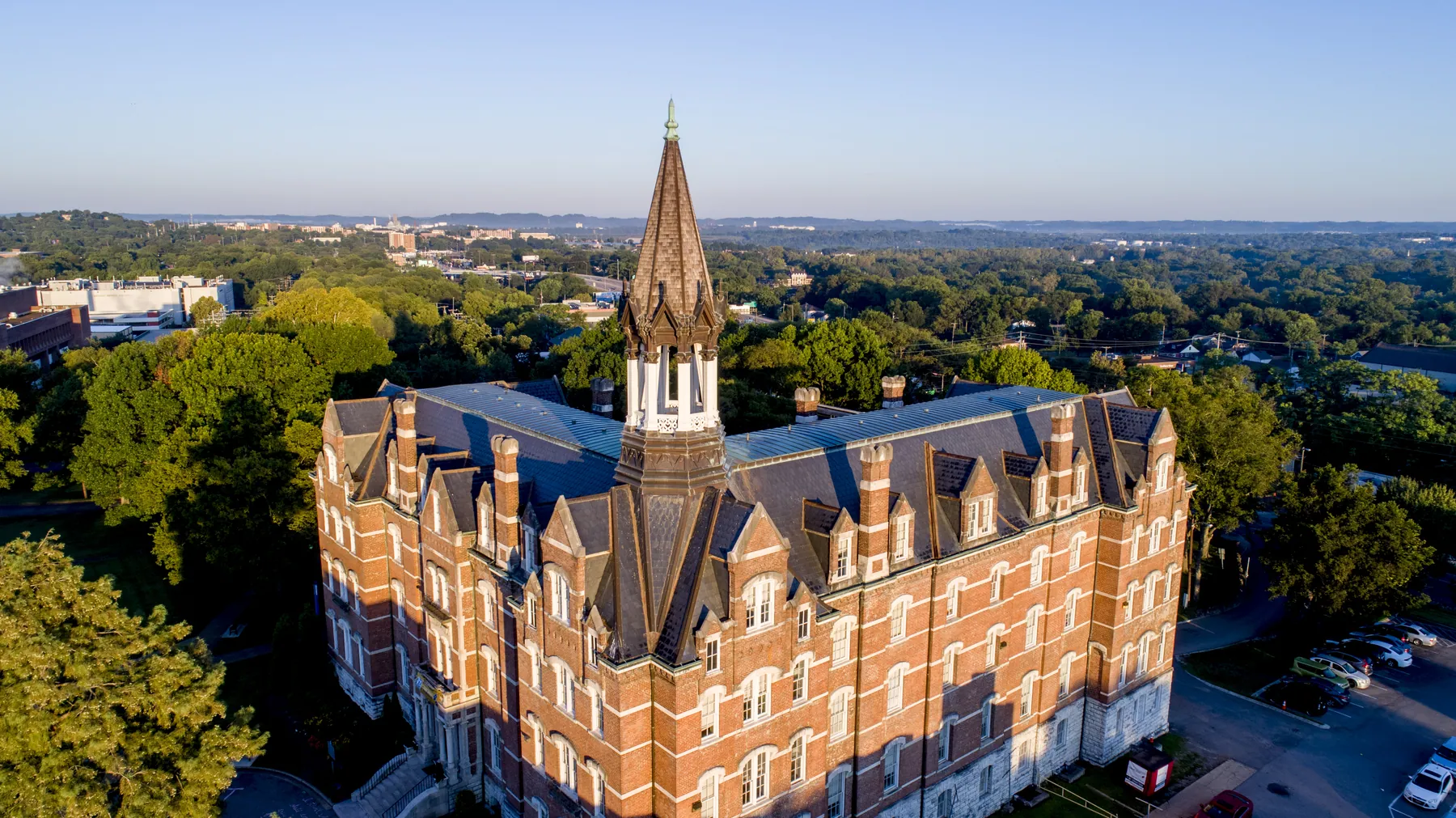
Photo: White.alister.t, CC BY-SA 4.0, via Wikimedia Commons. Cropped.
To keep this page, print it or choose Save as PDF in your browser's print window. The printout keeps the sources and the date.
More markets
All 28
Music Row
Music Row is the studio, label and publishing district around 16th and 17th avenues south, southwest of downtown Nashville.
North Nashville
North Nashville is the part of Nashville north and west of downtown that holds Fisk University, Meharry Medical College and Tennessee State University, along with Jefferson Street, long the center of Black Nashville.
Printers Alley
Printers Alley is a short alley in downtown Nashville between Union and Church Streets, and the blocks around it hold hotels, nightclubs, old printing-trade buildings and upper-floor lofts.