


Pricing and Revenue Management
Revenue management means deciding a price, a minimum stay and a set of booking rules for every night on the calendar, then changing them as demand moves. In Nashville the calendar swings hard between convention weeks, stadium weekends and quiet midweek winter nights, and Metro's permit rules and the tax stack shape what a guest finally pays. This page explains how pricing is set, which local facts drive it, and which choices stay with you.
- Visitors to Davidson County, 2025
- 17.4 million (NCVC, Aug. 2026)
- CMA Fest 2026 downtown hotel occupancy
- 89.4% (NCVC via WSMV)
- Hotel rooms in the pipeline
- 16,242 across 90 properties (NCVC, Aug. 2026)
- Shortest and longest permitted stay
- 24 hours; 30 consecutive days
- Taxes on a stay
- 7% state + 2.75% local sales; 7% Metro occupancy + nightly charge ($2.50 on Metro's return)
On this page
- What the work covers
- Where Nashville demand comes from
- The 2026 event peaks
- More hotel rooms, more competition
- Rules that shape the price
- Taxes sit on top of the rate
- Showing the total price
- Platform fees and platform tools
- Pricing units in the same building
- What you decide
- What pricing cannot promise
- Questions
- Sources
What the work covers
Rad Stay's site describes proprietary dynamic pricing algorithms and lists dynamic revenue optimization among the reasons owners partner with it. In practice the job has more parts than the nightly rate: minimum nights by season and day of week, how to fill one- and two-night gaps between bookings, how far ahead the calendar opens, what changes in the last week before arrival, discounts for longer stays, the cleaning charge, and which channel shows which price.
Each of those settings is reviewed against booking pace, meaning how many nights are already sold for a future date compared with the same point last year, and against what comparable listings nearby are charging and selling.
Where Nashville demand comes from
In a release dated August 31, 2026, the city's convention and visitors corporation (NCVC) put 2025 at 17.4 million day-trip and overnight visitors to Davidson County, whose spending reached a record $11.6 billion, a 3.5 percent gain over the prior year by the count of Tourism Economics and the state tourism department. Hotel Dive, citing the NCVC in May 2025, reported a forecast that 67 percent of 2025 visitors would stay overnight, and that 35 percent of those overnight visitors would come for group and business travel and 65 percent for leisure.
That split matters for a rental because leisure travel and group business keep different calendars. Weekends, holidays and convention weeks are priced as separate seasons, and the convention calendar is checked before any midweek date is discounted.
The 2026 event peaks
WSMV's July 28, 2026 summary of NCVC figures shows how far single events move the market. The 53rd CMA Fest, June 4 to 7, pushed downtown hotel occupancy to 89.4 percent. The Alan Jackson stadium weekend sold 78,433 hotel rooms countywide, with 92 percent occupancy across the county and 98 percent downtown, the second-highest room demand of any 2026 weekend to that date. The Fourth of July sold 31,749 rooms, 2.7 percent more than in 2025, at 74.6 percent county occupancy.
The fall schedule in the same report ran through Titans home games, college football's Music City Kickoff on September 6, and a run of arena concerts. Hotel Dive, citing Construction Dive, reported that the Titans are slated to move into a new $2.1 billion stadium in 2027, so the event calendar on the East Bank will keep changing. Event dates go into the pricing calendar the day a tour or game is announced.
More hotel rooms, more competition
Supply is the other half of price. Hotel Dive, citing a CoStar projection from February 2025, reported that Nashville would open 2,849 hotel rooms in 2025, second only to New York among U.S. markets. The NCVC's August 2026 release counts a further 16,242 rooms across 90 hotel projects in development.
A hotel room competes most directly for a couple or a solo traveler. A rental's advantages, more bedrooms, a kitchen and one booking for a whole group, carry the most weight with groups on weekends and event dates, and pricing should lean on them there instead of matching hotel rates every night.
Rules that shape the price
Metro's permit rules set hard edges. Every booking must last at least a full day and no more than 30 nights straight, so neither hourly day-use pricing nor a six-week stay is possible under a short-term permit. A unit goes to a single group per booking, so its bedrooms cannot be sold one by one to strangers. The guest limit, which is the permitted bedroom count doubled plus four, topping out at 12, sets the largest group a unit can price for.
Stays that would run past 30 nights belong under a lease instead, a separate product priced by the month and explained on the mid-term page.
Taxes sit on top of the rate
Guests pay tax on the full price of the stay, not only the nightly rate. Tennessee's June 2026 manual counts mandatory cleaning, booking and damage-protection charges as part of the taxed amount. In Davidson County the sales tax is the state's 7 percent plus a local 2.75 percent, which the Department of Revenue says includes a half-cent transit surcharge in effect since February 1, 2025. On top of that, Metro's own room tax has been 7 percent of the charge since July 1, 2023, per Metro Finance, plus a set dollar amount per night, $2.50 on the return form Metro posts.
A worked example: three nights at $200 plus a $100 cleaning charge is $700. Sales tax at 9.75 percent adds $68.25. The occupancy tax adds $49.00 at 7 percent and $7.50 in nightly charges, so taxes total $124.75 and the guest's stay costs $824.75 before any platform fee. Without the 50 cents, the three nightly charges come to $6.00, taxes to $123.25 and the stay to $823.25. The flat $2.50 weighs more on inexpensive nights: it is about 2 percent of a $120 night and well under 1 percent of a $400 night.
Under the state manual, a booking platform that qualifies as a marketplace collects both the sales tax and Metro's occupancy tax on the stays it books, while stays booked direct leave the collecting and filing to the operator. Filing is covered on the occupancy tax page.
Showing the total price
The FTC's Rule on Unfair or Deceptive Fees took effect May 12, 2025, and its FAQ lists home shares and vacation rentals offered through platforms among the lodging it covers. Any advertised price must show the total, including every mandatory charge the business can calculate up front, more prominently than other price figures; the FAQ says a cleaning fee the guest must pay belongs in that total. Taxes and optional extras may be listed separately, but they must be disclosed before the guest is asked to pay.
For an owner with a direct-booking site, that means the headline price is the stay with cleaning included, not a low nightly number with fees revealed at checkout. A business selling through a marketplace must give the marketplace accurate pricing so it can show the total.
Platform fees and platform tools
On Airbnb, the fee structure decides what a list price nets. Airbnb's help center says home hosts are being moved to a single fee, 15.5 percent for most, taken from the host's payout, with no separate fee charged to the guest. A rate that netted a given amount under the old split fee has to be listed higher to net the same amount under the single fee, and the guest's total does not necessarily change.
Airbnb's automated tool, Smart Pricing, moves the nightly price with demand between a low and a high the host chooses, and any night can be changed by hand. Airbnb also warns that its length-of-stay discounts take precedence over that tool and that an early-bird discount can drop a guest's price under the host's minimum, so every discount is checked against the floor.
Pricing units in the same building
When several units share an address, they compete with each other in search results. Pricing them as a set avoids two lofts upstairs from each other undercutting one another on the same Tuesday. Differences in size, view, noise and bed count become price differences, and on peak weekends the larger units open first to groups while smaller units hold for couples. Each unit keeps its own guest cap from its own bedroom count.
What you decide
- The floor: the lowest nightly rate you will accept on any date.
- Whether to hold rate and accept empty nights, or price to fill.
- Your own stays, blocked before peak dates are priced, since moving a confirmed guest later can mean a cancellation.
- Pet policy and fees, length-of-stay discounts and the cancellation policy.
- Whether the direct-booking price matches platform prices or sits below them.
What pricing cannot promise
No manager can responsibly quote a revenue or occupancy figure for a unit with no booking history in a market adding thousands of hotel rooms. What pricing can do is make sure no peak night sells at a quiet-night rate, no quiet night sits empty at a peak rate, and every change is visible to you on the statement.
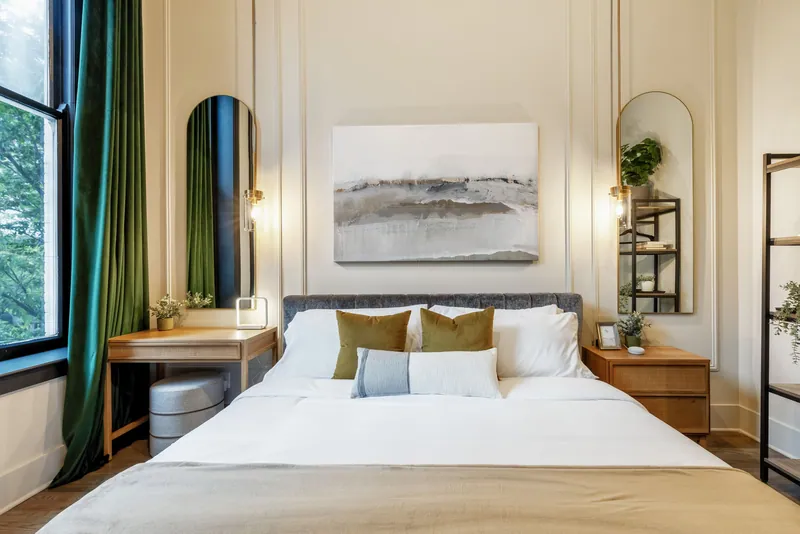
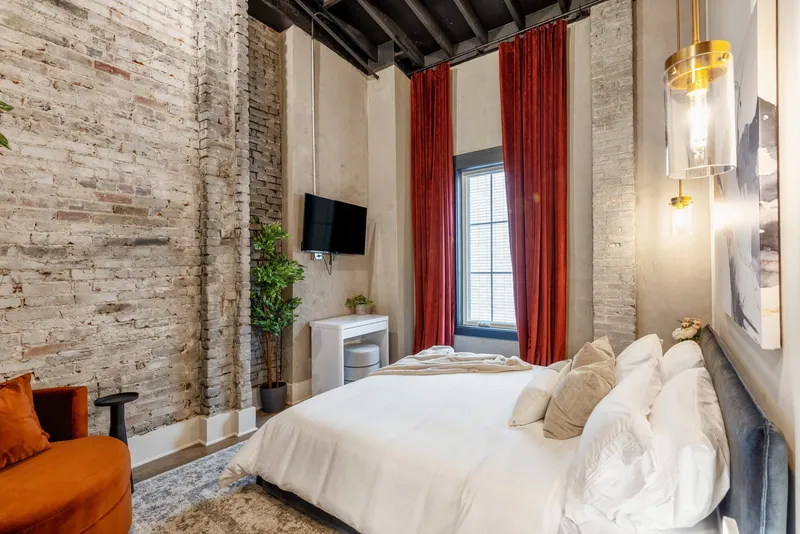
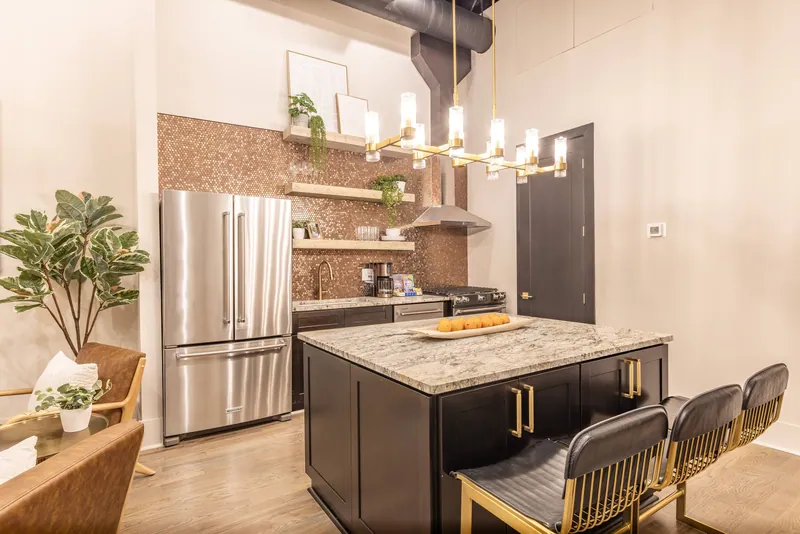
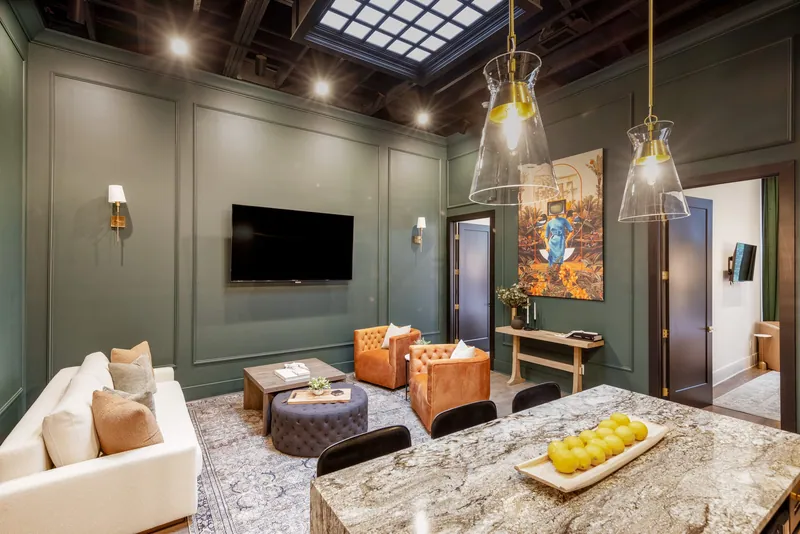
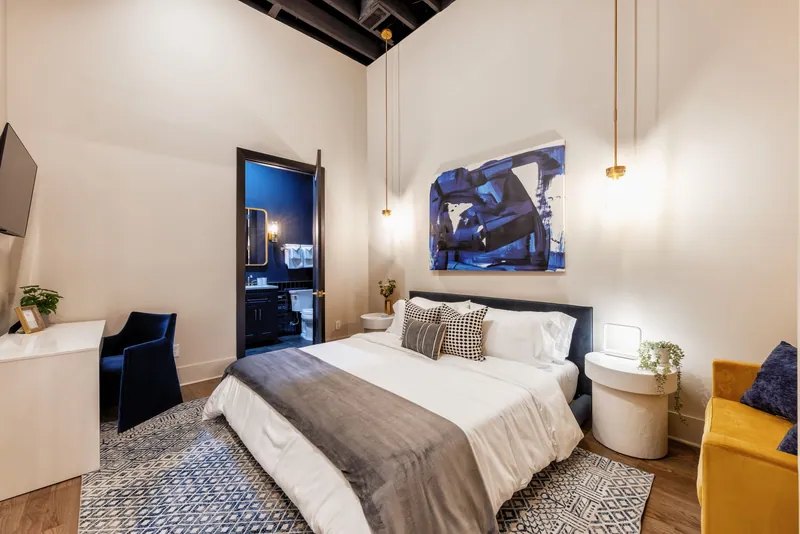
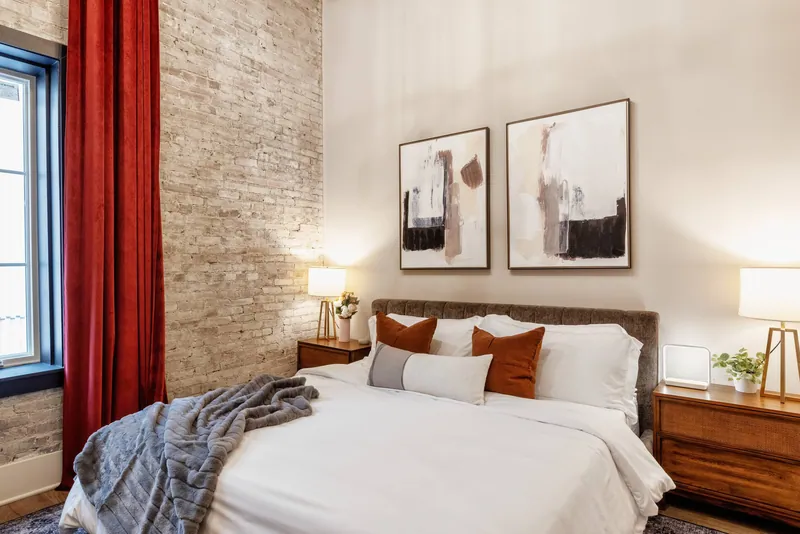
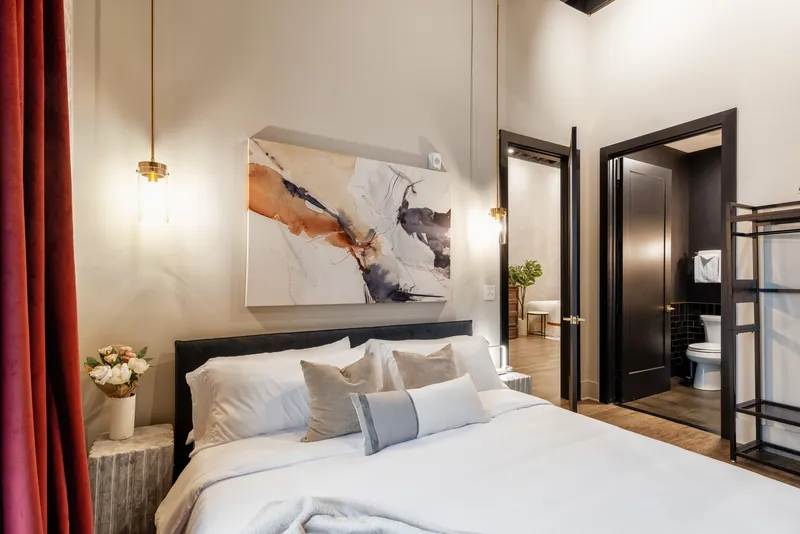
Union Street Lofts, four short-term rental lofts at 329 Union Street in the Printers Alley block, run by Rad Stay since 2023.
- 4.98average rating across 214 Airbnb reviews of the four lofts
- Guest Favoritebadges on the lofts' Airbnb listings, with Superhost status
- 4 of 4lofts hold Metro non-owner-occupied permits, issued April 2023
- WKRN News 2segment on the lofts, published June 11, 2026
Airbnb figures from the four listings as read October 4, 2026. Permits from Metro Codes. Read the case study · See the portfolio
Questions
Can I rent my unit for a day party or a few hours?
No. Metro bars taking payment for any stay under 24 hours, so every booking is at least one night.
Why not just set one rate all year?
Demand in Nashville moves too much. In 2026, CMA Fest pushed downtown hotels to 89.4 percent occupancy and a stadium concert weekend to 98 percent, while ordinary winter weeknights face thousands of new hotel rooms.
Does the advertised price have to include cleaning?
Under the FTC fee rule, yes: the total price must include mandatory fees such as cleaning and be shown most prominently. Taxes may be shown separately before payment.
How much tax does a Nashville guest pay?
About 9.75 percent sales tax plus Metro's 7 percent occupancy tax, both on the full price including mandatory fees, and a flat charge each night, $2.50 on Metro's own return.
Will you guarantee a revenue number?
No. Any figure quoted before a unit has booking history is a guess; pricing decisions and their results show up on your monthly statement.
Sources
- Rad Stay home page (read Nov. 12, 2026)
- Nashville Convention & Visitors Corp, Tourism in Davidson County generated record $11.6 billion in visitor spending in 2025 (Aug. 31, 2026)
- Hotel Dive, Nashville hotel market spotlight (May 29, 2025; Wayback copy June 17, 2026)
- WSMV, Big events, big crowds: Nashville's summer 2026 numbers hit new highs (July 28, 2026)
- Metro Codes, Operation Rules and Requirements (Wayback copy Feb. 12, 2026)
- Metro Codes, Short Term Rentals main page (updated March 11, 2026; Wayback copy Oct. 22, 2026)
- Tennessee Department of Revenue, Taxation of Short-Term Rental Units (June 2026; Wayback copy Sept. 7, 2026)
- Tennessee Department of Revenue, Local Sales Tax Rates (Wayback copy July 28, 2026)
- Metro Finance, Increase of Hotel Occupancy Tax (Wayback copy Oct. 23, 2026)
- FTC, The Rule on Unfair or Deceptive Fees: Frequently Asked Questions (May 2025; Wayback copy Nov. 3, 2026)
- Airbnb Help Center, Airbnb service fees (read Nov. 12, 2026)
- Airbnb Help Center, Use Smart Pricing (Wayback copy Oct. 28, 2026)
- Metro Finance, Short-Term Rental Tax return (510), taxes payable after July 1, 2023, line "Number of rooms rented per night x $2.50" (archived copy, October 22, 2026)
Checked November 12, 2026.
To keep this page, print it or choose Save as PDF in your browser's print window. The printout keeps the sources and the date.
More services
All 15Channel Management Across Airbnb, Vrbo, Booking.com and Expedia
Channel management is running one unit on several booking sites at once without selling the same night twice.
Cleaning and Turnovers
A turnover is the few hours between one checkout and the next arrival, when a unit is cleaned, restocked, checked and reset.
Direct Booking Websites
A direct booking website is the property's own site with its own checkout, where a guest reserves and pays you instead of a marketplace.