











Chestnut Hill
Chestnut Hill is the older residential and light-industrial neighborhood just south of downtown Nashville, around City Cemetery and Fort Negley. It has older houses, apartment buildings from the 1950s and 1960s, new infill and several large apartment and mixed-use projects in the pipeline. For someone holding or eyeing an apartment building here, the answer comes parcel by parcel: what the zoning allows, how near the closest church, school or park sits, and what the next project over will do to the block.
- Main ZIP code
- 37210
- Issued STR permits, ZIP 37210 (Oct. 6, 2026)
- 337: 75 owner-occupied, 262 non-owner-occupied
- Issued STR permits, ZIP 37203 (Oct. 6, 2026)
- 1,706: 89 owner-occupied, 1,617 non-owner-occupied
- Landmarks
- City Cemetery (1822), Fort Negley (1862), St. Patrick Catholic Church (1890)
- Zoning to check
- Mixed-use, commercial and office districts allow new non-owner-occupied permits; residential districts do not
- Largest announced project
- Modera Chestnut Hill, Mill Creek Residential: up to 400 apartments (June 2025 report)
On this page
- Where Chestnut Hill is
- How the building stock developed
- Buildings and housing today
- Chestnut Hill zoning and short-term permits
- The 100-foot rule near churches, schools and parks
- Operating rules that affect a building here
- Issued STR permits in ZIP 37210 and 37203
- Who visits and why
- Longer stays in Chestnut Hill
- Development 2023 to 2026
- Getting around
- Which building types fit here
- Checks before a Chestnut Hill purchase
- Rad Stay on a Chestnut Hill building
- Questions
- Sources
Where Chestnut Hill is
Chestnut Hill lies south of downtown around Second, Third and Fourth avenues south and Chestnut Street. City Cemetery, at 1001 Fourth Avenue South, anchors the neighborhood. Fort Negley sits on St. Cloud Hill, and the Nashville Scene's walk through the neighborhood describes a freight line running through it. Fort Negley's address is 1100 Fort Negley Boulevard, and Wikipedia places it about 2 miles south of the city center.
Chestnut Hill's ZIP code is 37210, which is also the mailing ZIP of St. Patrick Catholic Church. ZIP 37203 covers downtown and the Gulch and may include some addresses on the northern edge. Real estate listings for Chestnut Hill apartment buildings, such as the 39-unit property at 1216 to 1220 Lewis Street, are marketed as 37210. Metro does not draw a single official line around Chestnut Hill that every source agrees on, so boundaries in this page follow the street names used in the Nashville Scene's 2020 walking column and in news coverage of development sites.
Measure distances from the specific building you are considering rather than from these landmarks.
How the building stock developed
City Cemetery opened in 1822 on the plains south of town, and the Nashville Scene counts about 20,000 burials since. The National Register added it in 1972. St. Patrick Catholic Church was founded in 1890 in a Second Empire style to serve the Irish community south of the city, and the Nashville Scene reports that Irish Traveller families have long used it for baptisms, weddings and funeral Masses, traditionally returning to Nashville in early May.
In the early 20th century, the Scene reports, the stretch from Second to Fourth avenues was the center of Nashville's African American life. Tom Wilson, a Nashville businessman, founded the Nashville Elite Giants in March 1920. Wilson Park was built for the team in 1929, held about 8,000 fans, closed in 1946, and was one of only three stadiums built nationally for a Negro League team.
Fort Negley, on St. Cloud Hill, dates to 1862. Union forces built it after taking Nashville, using local enslaved people, newly freed people and free Black men conscripted for the work. Wikipedia records 2,768 Black people officially enrolled in the labor force, and says it was the largest inland fort built in the United States during the war. The Scene adds that laborers who stayed after the war formed Nashville's first Black neighborhood on the hill.
The building types you can see today reflect those layers. North of St. Patrick, toward downtown, the Scene describes older houses: low-slung bungalows, tin-roofed houses and Queen Anne townhouses. South of the church, new narrow, tall houses are arriving. Along Chestnut Street the Scene found light-industrial businesses in 2020: a butcher supply, an ice-machine service, and a bolt manufacturer and wholesaler. Two Lewis Street buildings in the Chestnut Flats listing were built in 1959 and 1969.
St. Wikipedia says St. Patrick's Catholic Church and Rectory, 1219 Second Avenue South, dates from 1890 and has been a National Register listing since 1984. The Scene says tall, narrow new houses have appeared mostly south of St. Patrick and Wilson Park, so older and new housing sit side by side in the same blocks. The Scene also reports a CrossFit gym next to a boxing gym on the light-industrial stretch.
Buildings and housing today
Chestnut Hill's multi-unit stock is small-scale and older. The clearest example in public listings is Chestnut Flats at 1216 to 1220 Lewis Street: two buildings from 1959 and 1969 on 0.66 acres, with 39 units. Listing material says 19 of the 39 units were offline and that all units carry Metro Development and Housing Agency (MDHA) affordability restrictions at 50 and 120 percent of area median income through July 2029. Those terms come from the broker's marketing material, so verify them with MDHA. The asking price was $2,535,000, and a Coldwell Banker page updated August 6, 2026 showed the listing as pending. Confirm the current status with the broker.
That matters for an owner or buyer thinking about short-term rentals. Affordability covenants and short-term occupancy do not mix on the same units. If a building in this part of Chestnut Hill is rent-restricted, the restriction comes first, and the units stay long-term housing until the covenant ends. Ask for the recorded covenant and the agency's compliance file before you underwrite anything else.
Mixed-use and creative-office reuse has started along Third Avenue South. The Layman Drug building at 1128 Third Avenue South was a druggist for most of its 130 years, according to the Scene, and now houses an audiovisual studio. The Nashville Post reports that it houses a commercial recording studio and rehearsal space,. The May Hosiery Mill, a former stocking factory a few blocks away past a railroad crossing, has been reimagined for new uses, per the Scene. Whether buildings like these can hold short-term units depends on the district their parcels sit in.
Metro treats houses and duplexes quite differently from bigger properties, as the permit sections below explain.
Chestnut Hill zoning and short-term permits
Whether Metro grants a short-term rental permit depends on the parcel's zoning, so the first step for any Chestnut Hill building is to look up its district in Metro's Parcel Viewer. Zoning can change from one block to the next.
Most of it comes down to zoning: Chestnut Hill's commercial, office and mixed-use parcels may qualify for permits for absent owners, its residential lots may not, and every eligible district is named in our zoning guide, linked below. A district with an NS ending, CS-NS for one, can hold neither permit, while SP or PUD land needs the plan itself to permit the use.
Metro has amended SPs and PUDs for this purpose, so a building under an SP needs its plan text read line by line. This matters in Chestnut Hill because several of the projects described below need rezoning or other Metro approvals.
Someone already operating on residential land here can keep renewing, but cannot sell the permit with the building. An owner-occupied permit belongs to someone who lives there and, save for narrow exceptions, cannot list the whole home.
Check whether any parcel near the rail line is in one of those industrial districts. So a Chestnut Hill building on residential land gets no new permit for units rented by an absent owner.
For multifamily buildings the rules are consistent. A permit can cover at most four bedrooms. There is no rule in the code capping how much of a building may rent short-term, so do not assume one.
If part of the block you are looking at has been remapped to RN or RL, it follows those rules. City-wide permit mechanics are covered in the permits guide linked from this page.
The 100-foot rule near churches, schools and parks
Chestnut Hill has several institutions that can trigger Metro's distance rule. Since August 2023 the distance rule has kept new absent-owner permits 100 feet from schools, churches, parks and licensed day cares in Chestnut Hill as everywhere, unless Council waives it; the multifamily guide linked below covers waivers. The measurement runs parcel line to parcel line.
The nearby candidates are known. St. Patrick Catholic Church is at 1219 Second Avenue South. The Johnson Alternative Learning Center, a Metro school, sits across Second Avenue from it. City Cemetery is at 1001 Fourth Avenue South, and Fort Negley's park is at 1100 Fort Negley Boulevard. Whether a particular cemetery or fort parcel counts as a park under Metro's definitions is a question to put to Metro Codes, since the rule's words are religious institution, school, park and day care. Treat each as a measurement to verify.
A waiver exists. That is a downtown example, but it shows the process is real, and a waiver is not guaranteed.
Operating rules that affect a building here
Beyond zoning and distance, a few Metro Code rules shape how a multi-unit building runs. Each permit then carries Metro's countywide operating rules, which that guide also sets out.
Renewal runs on the 365-day cycle. Renewal emails come 60 and 45 days before expiry; any late-renewal grace is Metro's call and is withheld where complaints are documented. With several units, keep every permit's expiry date on one calendar, because units renew one by one. An adaptive residential lot has a further test: neither permit is available where the lot's frontage is chiefly on a local street, or where the lot is beyond the USD, save a permit whose good standing predates August 1, 2024. Confirm with Metro Codes whether a parcel is affected.
Issued STR permits in ZIP 37210 and 37203
Filtering Metro's open data to Issued permits, pulled October 6, 2026, gives 337 in ZIP 37210, 262 not-owner-occupied and 75 owner-occupied. ZIP 37203, which takes in Chestnut Hill's northern edge as well as downtown and the Gulch, counts 1,706 permits, 1,617 held by absent owners and 89 by owners on site.
Read those counts carefully. ZIP 37210 covers more than Chestnut Hill, so the number is an upper bound for the neighborhood. The non-owner-occupied share is about 78 percent in 37210 and about 95 percent in 37203. That gap fits a downtown ZIP with more commercial and DTC land, where absent-owner permits are allowed, though the data does not give a reason.
Metro's data records permits, not performance. Occupancy and revenue are not in it. Because Metro limits new absent-owner permits to listed districts, a building without one today cannot count on getting one just because the neighbors have them.
Who visits and why
Chestnut Hill guests come for the places around it. Fort Negley is a park with a visitor center; the fort reopened to the public on December 10, 2004 after a restoration, a visitor center was built with $1 million in additional city funds in 2007, and a restoration and interpretation master plan was completed in 2022. The Adventure Science Center sits on the north-facing side of the Fort Negley hill, and the Nashville Scene says its front has a panorama of the downtown skyline.
Visitors also come for City Cemetery and St. Patrick for family and history reasons. The cemetery holds founder James Robertson, Gov. William Carroll and two original Fisk Jubilee Singers, among others. The Scene reports that Irish Traveller families return to St. Patrick for baptisms, weddings and funerals, and that fewer come now than before.
No public count of visitors, hotel rooms or events inside Chestnut Hill turned up, so none is given here.
Longer stays in Chestnut Hill
Long-term and mid-term demand is hard to size from public sources, and I found no published rent or occupancy figure specific to Chestnut Hill.
For Nashville as a whole, WSMV reported on January 21, 2026 that Zumper's median one-bedroom rent was about $1,520 a month in December, down almost 6 percent. That number covers the whole city and one unit size only. Ask for rent rolls on any building you underwrite.
If a building cannot hold short-term permits because of its zoning, a mid-term plan with furnished stays longer than 30 days avoids the 30-day maximum stay that applies to permitted short-term rentals, although a mid-term lease has its own tax and lease terms to check.
Development 2023 to 2026
Chestnut Hill is changing mainly through large apartment and mixed-use proposals. These are filings and news reports. Whether each one is built, and when, is not settled.
Mill Creek Residential, based in Boca Raton, Florida, filed with the Metro Planning Department for Modera Chestnut Hill at 8 Andrew T. Whitmore Street, ZIP 37210. On June 12, 2025, the Nashville Post reported a plan for five buildings of seven floors or fewer, with up to 400 apartments, some live/work units, a dog park and pickleball courts. The article describes the site as a few blocks east of Wedgewood-Houston and says the Steinhouse family listed it for sale in October 2024. It gives a Planning Commission hearing date of July 24. I could not confirm the outcome.
Tareen Development Partners is planning a 16-story, 311-unit mixed-income apartment tower with a structured parking garage in Chestnut Hill. A July 2026 notice from the engineering firm Bohler said Metro Planning Commission review was scheduled for August and construction was anticipated to begin in 2027, pending approvals. I could not confirm the August outcome or the address.
Richland Building Partners, a Nashville developer, plans an eight-story mixed-use building at 1020 and 1024 to 1026 Third Avenue South on three parcels of about 0.57 acres, with commercial space on the main level and seven floors of for-sale residential space. The Nashville Post reported the plan in September 2025 and, on February 11, 2026, a combined $8.1 million purchase of two Chestnut Hill properties; I could not confirm that those two are the Third Avenue parcels. The Post's September 2025 article places the site in Metro Council District 17 and says it was bought in 2019 for about $810,000. The plan needed approval from the Board of Zoning Appeals. Pfeffer Torode is the named architect.
A group linked to 615 Ventures owns 1122, 1124 and 1126 Third Avenue South, next to the Layman Drug building. The Nashville Post reported on January 29, 2026 a four-story building with residential and retail space, rendered by Root Architecture, and said the owners paid about $1.75 million in July 2025. The owners needed a special exception from the Metro Planning Commission to reduce step-back requirements, and a meeting was set for February 18.
Why this matters to a building owner: new supply nearby affects rents and occupancy, and each SP rezoning decides whether short-term rentals are allowed in that project. Read the SP text of any new building near you, because it may allow or bar short-term permits regardless of the base district.
Getting around
Fort Negley is about 2 miles south of the city center, according to Wikipedia. Check the walking and driving route from the specific building you are considering.
I could not confirm specific WeGo bus routes serving Fourth Avenue South or Chestnut Street, so check WeGo's current route map for the exact block before you tell guests or tenants that transit is available. For Nashville International Airport, plan on a rideshare or car trip; I did not verify a drive time.
Parking is a practical question for any older building. Check for off-street parking and count spaces per bedroom before planning guest stays, since a unit's guest limit is four plus two for each sleeping room, and never more than 12 per permit.
Which building types fit here
Fourplexes and small buildings of four to 20 units match the scale of the older blocks, the 39-unit Lewis Street buildings among them. The permit question decides whether the plan is short-term, mid-term or long-term. On residential land a new absent-owner permit is out of reach, so a four-unit building there usually runs furnished by the month or leased by the year unless it already holds permits.
Mixed-use buildings along Third Avenue South are the likeliest candidates for non-owner-occupied short-term units where the parcel is in a district on the allowed list. The new four-story and eight-story proposals along Third Avenue show where developers see that fit.
The large Specific Plan sites suit apartment buildings of 50 to 200 units. They also depend on the SP text. Lease-up buildings are a reasonable comparison for the 2026 filings: when 311-unit and 400-unit projects open, owners nearby will compete with new units that have concessions.
Historic buildings call for their own check. Chapter 17.36 contains no STR rule for historic overlays, but renovation, signage and exterior changes may need Metro Historic Zoning Commission review depending on the overlay. Before planning exterior work, ask Metro Planning if the parcel lies in a historic or conservation overlay.
Checks before a Chestnut Hill purchase
Begin with the parcel: pull its zoning district and any SP or PUD text. Then check the 100-foot distance against the day cares, schools, parks and churches close by. Then check any recorded covenant. The Chestnut Flats listing shows MDHA restrictions running through 2029, and a buyer inherits them.
Check flood risk and the rail line. I did not research flood-zone designations for Chestnut Hill parcels, so confirm each parcel on Metro's floodplain map. The Scene reported a long freight train passing during its walk, so check for rail noise. Stay a night or two before you buy to hear what guests will hear, and say so in the listing.
Check ownership structure. Metro's rules say an owner-occupied permit holder must be a natural person, and that a permit is not transferable. Selling the building, or moving it into a trust or LLC, ends its permits, and the buyer applies anew. Metro's own summary says an LLC that holds a not-owner-occupied permit may change members and keep the permit. When a building's price leans on its permits, ask the seller for a written statement of each permit's status, and plan for the chance that none carry over.
Check the operating duties too: liability insurance of $1 million each occurrence, a contact within 25 miles who answers the phone day or night, notice sent to adjoining owners before you file, the guest limit posted, each listing showing its permit number, and a one-year term. The February 2026 FAQ copy gives a $313 permit fee, and renewal fees are set by the zoning administrator. Each day of unpermitted renting is a $50 fine, and a new permit is barred for a year.
Check condominium bylaws and leases. If the units have separate owners, an association can impose stricter rules than Metro does. If tenants are in place, short-term conversion must wait for their leases to end under the lease terms.
General information only, not legal or tax advice. Have Metro Codes and an attorney confirm each rule before closing.
Rad Stay on a Chestnut Hill building
Rentals of every length are managed by Rad Stay here as elsewhere, with its flagship at Union Street Lofts downtown. For a Chestnut Hill building, the work starts before the first guest: reviewing zoning and permit eligibility, the distance rule, covenants and the fire inspection requirement.
On a building here that means setting prices, messaging guests, cleaning, handling bookings, covering damage and staying on top of permits and taxes. In a building near a rail line and a cemetery, that includes setting accurate listing descriptions so guests know what they will hear and see, and keeping the 24-hour responsible-party line staffed.
Where short stays are barred or a poor fit, as in a rent-restricted building or one on residential land, the same building can be leased monthly or yearly. It also reviews Chestnut Hill buildings for possible purchase, lease or partnership. Owners can ask for a review of a specific address before committing money.
Questions
Can I get a new non-owner-occupied STR permit for a house in Chestnut Hill?
Only where Metro lists the parcel's district, a business, office, mixed-use or DTC district for example, with no church, licensed day care, school or park closer than 100 feet. By Metro's account, new absent-owner permits are closed to parcels in AR2A, R, RS or RM zoning; Metro Codes can confirm a given parcel.
How many issued STR permits are in ZIP 37210?
The October 6, 2026 pull of Metro's open data shows 337: 262 not-owner-occupied, 75 owner-occupied. The ZIP includes more than Chestnut Hill, so the number is an upper bound.
Is there a cap on the share of units in an apartment building that can be short-term rentals?
We found no percentage cap, neither in Section 6.28.030 nor in the zoning chapters we read. Each unit holds a separate permit, with four bedrooms at most, and once a property reaches three dwellings the Fire Marshal inspects it. Association or lease rules can be stricter.
Are there large new apartment projects planned in Chestnut Hill?
Yes, as filings and news reports. Mill Creek Residential filed for up to 400 apartments in five buildings at 8 Andrew T. Whitmore Street in 2025, and Tareen Development Partners has a planned 311-unit, 16-story tower with Planning Commission review set for August 2026. Outcomes were not confirmed.
Can I buy a rent-restricted building and convert it to short-term rentals?
Not while the covenant applies. A listing for 1216 to 1220 Lewis Street shows MDHA affordability restrictions through July 2029 that a buyer must honor. Read the recorded covenant before you underwrite.
Sources
- Metro Code chapter 6.28, Short term rental property permits (Municode, version Jun. 23, 2026)
- Metro Code 17.08.030, land use table (Municode)
- Metro Nashville, STR permit types (Wayback copy, Feb. 17, 2026)
- Metro Nashville, STR operation requirements (Wayback copy, Feb. 12, 2026)
- Metro Nashville, STR frequently asked questions (Wayback copy, Feb. 11, 2026)
- Metro Nashville open data: Residential Short Term Rental Permits, status Issued, retrieved Oct. 6, 2026
- Walk a Mile: Chestnut Hill and St. Cloud Hill, Nashville Scene (Feb. 20, 2020)
- Fort Negley, Wikipedia
- Residential project eyed for Chestnut Hill, Nashville Post (June 12, 2025)
- Bohler Supports Planned Mixed-Income Residential Tower in Nashville (July 2026)
- Mixed-use building eyed for Chestnut Hill, Nashville Post (Sept. 18, 2025)
- Chestnut Hill properties eyed for project sell for $8.1M, Nashville Post (Feb. 11, 2026)
- Chestnut Hill site slated for mixed-use building, Nashville Post (Jan. 29, 2026)
- Report: Nashville rent prices on the decline, WSMV (Jan. 21, 2026)
- 1216-1220 Lewis St (Chestnut Flats) listing, LoopNet
- St. Patrick's Catholic Church and Rectory, Wikipedia
- Nashville City Cemetery, Wikipedia
- 1216 Lewis St listing, Coldwell Banker (status pending, Aug. 6, 2026)
- Metro Nashville, STR renewal page (Wayback copy, Oct. 12, 2026)
Checked October 18, 2026.
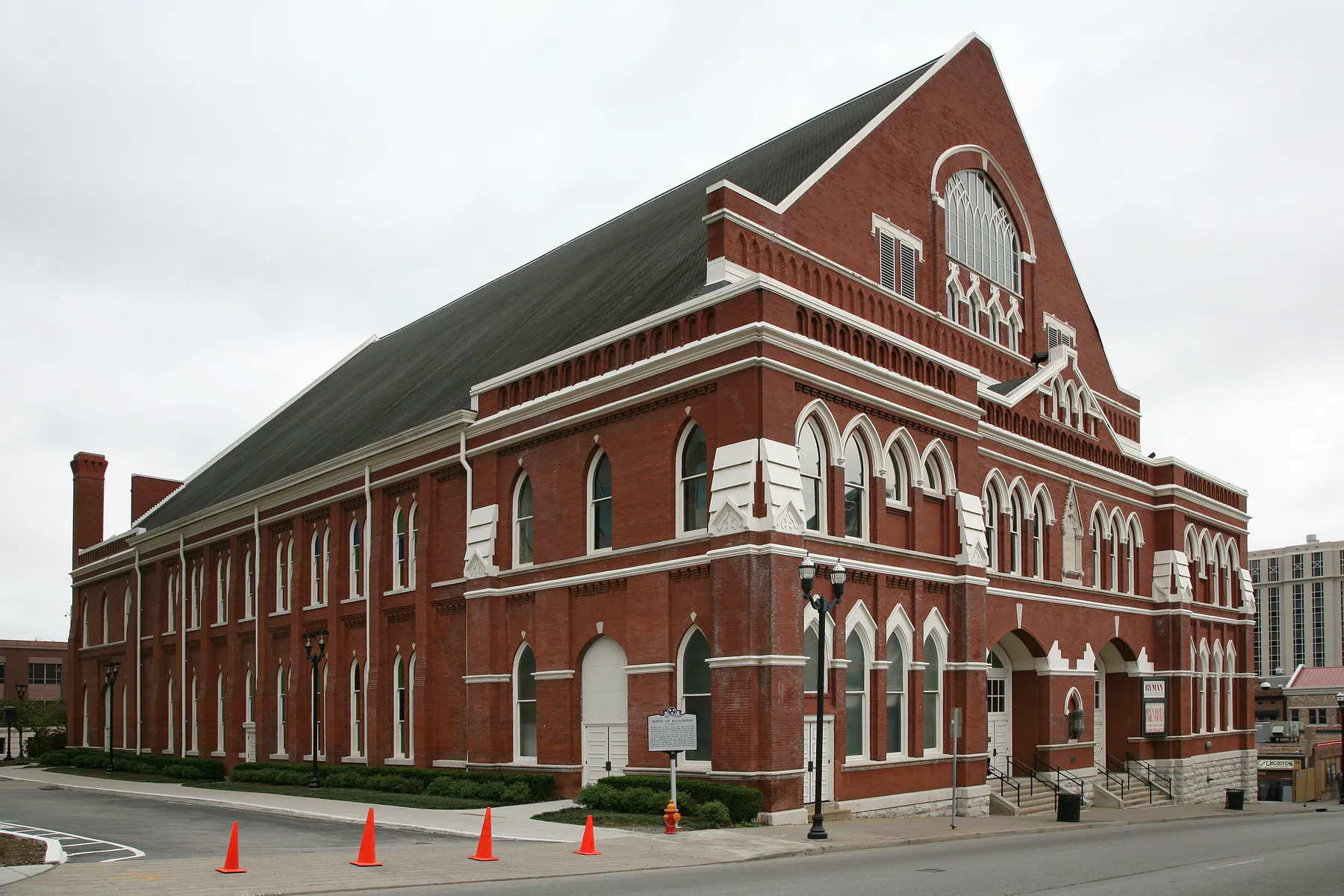
Photo: TennesseeEditor, CC BY-SA 4.0, via Wikimedia Commons. Cropped.
To keep this page, print it or choose Save as PDF in your browser's print window. The printout keeps the sources and the date.
More markets
All 28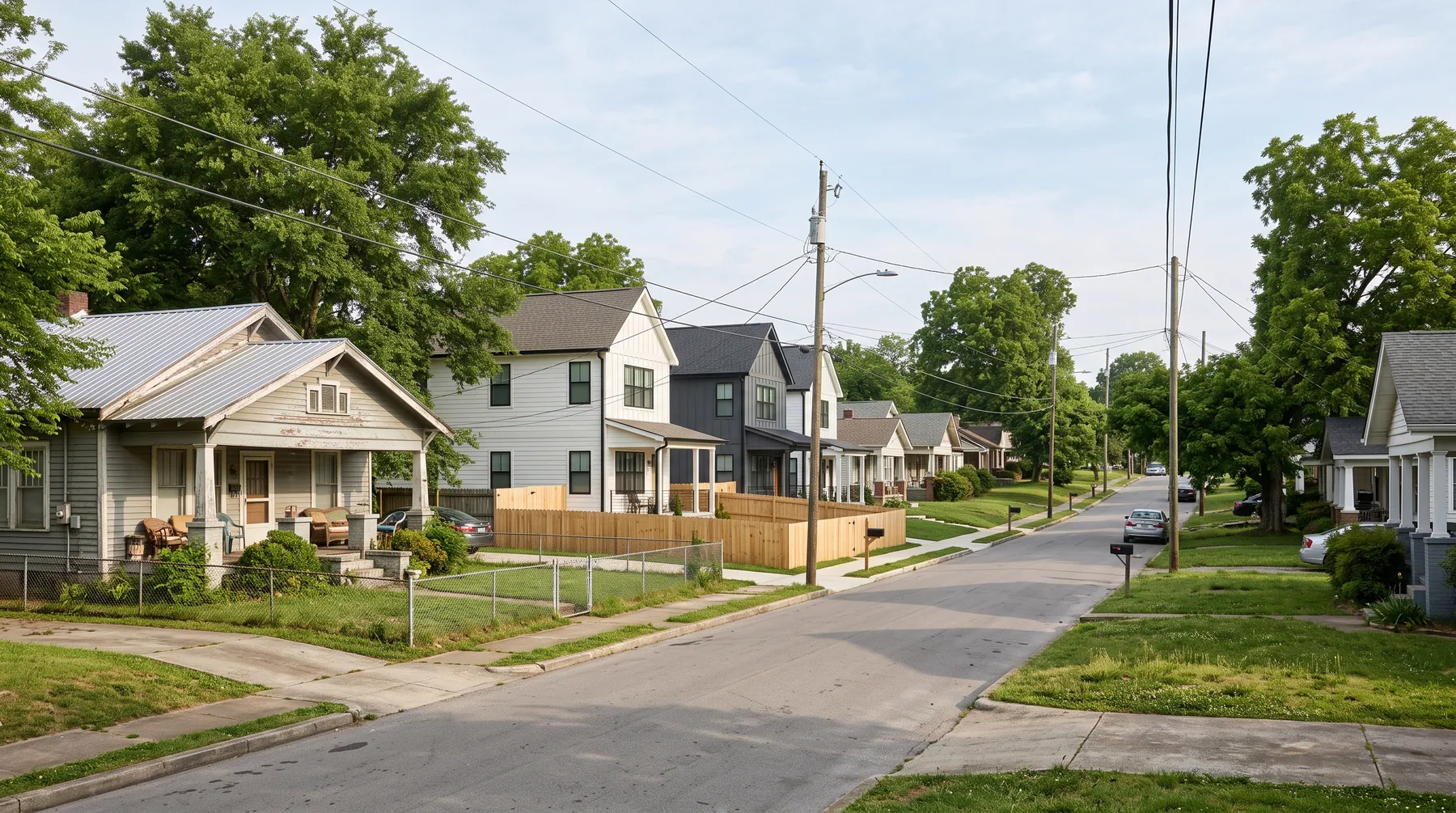
Cleveland Park
Cleveland Park is an East Nashville neighborhood around the Metro park of the same name, mostly in ZIP 37207, with McFerrin Park along McFerrin Avenue in ZIP 37206.
Downtown Nashville
Downtown Nashville is the central business district, Lower Broadway, Second Avenue, Printers Alley and the Capitol area.
East Bank
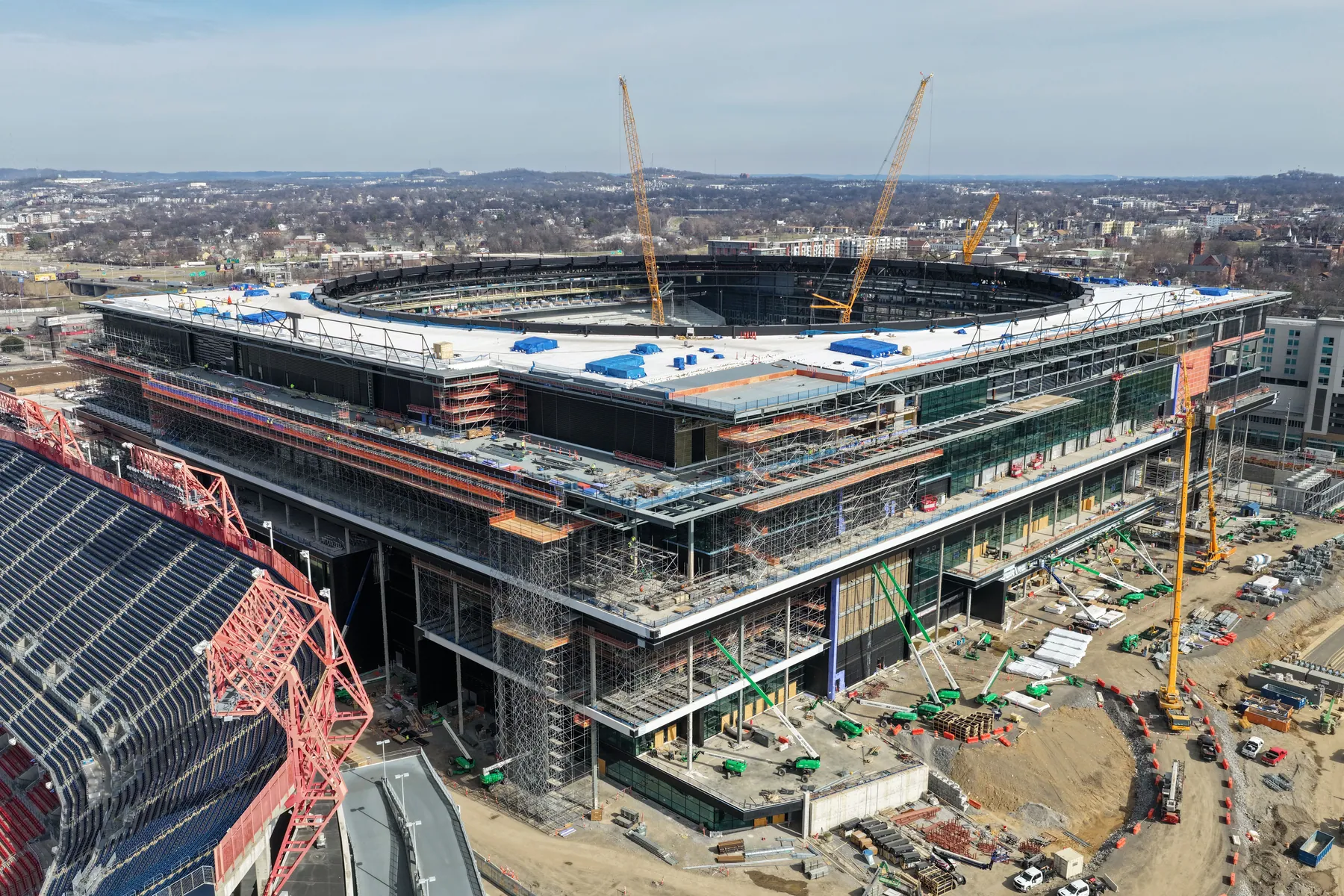
The East Bank is the strip facing downtown over the river, where the Titans play now and where a new enclosed stadium, a master-planned district and an Oracle campus are going up.