
Small Apartment Buildings
A small apartment building in Nashville has 13 to 49 units. If you own one, the question is whether to run it on long-term leases, mid-term stays, nightly rentals or a mix, and each choice carries its own permits, code rules and tax bills. This page covers the rules that change at this size.
- Unit range
- 13 to 49 units
- Short-term rental permits
- One per unit, up to four sleeping rooms each
- Permit fee (Feb. 2026 copy)
- $313 per permit, so $4,069 for 13 units and $15,337 for 49
- Permit term
- 365 days, then renewal
- Fair Housing design rules
- Buildings of 4+ units first occupied after March 13, 1991
- Property tax class
- Industrial and commercial, assessed at 40 percent
- Parcels with 13 to 49 issued non-owner-occupied permits
- 23 (Metro open data, retrieved Oct. 18, 2026)
On this page
- Zoning and short-term rental permits
- One short-term rental permit per unit
- Distance from schools, parks and churches
- Fire alarms and life safety
- Accessibility under the Fair Housing Act
- Property tax and hotel occupancy tax
- Operating models
- Operations and risks at this size
- What Rad Stay handles
- Questions
- Sources
Zoning and short-term rental permits
Zoning decides which short-term rental permit a building can get. Metro does not issue new non-owner-occupied permits on property zoned AR2A, R, RS or RM. A small building there that already holds permits can usually renew them, though a sale or other transfer of the property ends them. A building in an RM district therefore runs on leases or mid-term stays unless the zoning changes.
Buildings under a Specific Plan or a Planned Unit Development answer to that plan first. If the SP or PUD text does not list short-term rentals, Metro will not issue permits on the site. Council can and does rewrite such plans to permit the use. BL2024-211 amended an SP to permit non-owner-occupied short-term rentals and passed on April 16, 2024. BL2026-1268 rezoned property from RM20-A to an SP to permit them and passed on March 17, 2026.
Other districts and overlays carry their own limits. Council bill BL2025-1005 passed on December 4, 2025 and created the Residential Neighborhood (RN) and Residential Limited (RL) districts. RN and RL zoning bans renting by owners who live elsewhere, and permits an owner-occupied rental there just in the single-family building type. Neither permit is open to a lot built out as an adaptive residential use if most of its street frontage is along a local street or it lies past the Urban Services District, unless its permit was already in good standing on the August 1, 2024 cutoff. Neither historic overlays nor Urban Design Overlays carry a short-term rental rule in Chapter 17.36.
One short-term rental permit per unit
Metro Code 6.28.030 has no separate permit for apartment buildings. The code treats each apartment as a separate rental holding up to four sleeping rooms, and sets no cap on the number of a small building's apartments that rent by the night. Small buildings qualify for new permits on apartments the owner does not occupy just in the code's listed districts: shopping-center, commercial, mixed-use and office zones, plus the Central, West, South and North parts of DTC; the permits guide linked below spells out each one. They are not available in DTC East, in any district with an -NS suffix, or in R, RS, RM, RN or RL.
At the February 2026 fee of $313, permitting 13 units costs $4,069 and 49 units costs $15,337. Each apartment's application must carry a liability policy with limits of $1 million or above for every occurrence, a statement that renting breaches no condominium, co-op, HOA or lease agreement, and proof that adjoining owners got written notice, a group that in Metro's definition includes the owners above and below. A permit lasts 365 days, so a 30-unit building renews 30 permits a year unless you plan the applications together. Metro's renewal reminders come by email, the first 60 days out and the second at 45.
No permit carries over; a sale of the small building, or moving title between you and your LLC or trust, voids the permits, and the next owner files under whatever rules govern on that date.
Distance from schools, parks and churches
Metro will not grant a new permit for an apartment its owner does not live in if the lot is under 100 feet, measured between parcel lines, from any school or school playground, park, licensed day care, church or other religious institution, unless a Council resolution waives that, but only after a public hearing, letters to owners within 600 feet, 14 days of a sign on the site and 21 yes votes. A single resolution is allowed to cover several apartments of one development.
Look at 160 2nd Avenue North: Resolution RS2024-479 asked for 62 of them there and lost a vote on June 4, 2024, and RS2024-580 came back with 55 at that address and was approved on July 2, 2024.
Fire alarms and life safety
The International Building Code sorts buildings by how long people stay, and the group a building falls in sets its fire-alarm rules. Ask Metro Codes in writing which group your building would be in before you convert leased units to nightly use. Metro adopts a specific edition of the code, so confirm which one applies to your project.
Metro switched its building code to the 2024 edition with BL2025-898 in July 2025, and the alarm triggers here come from the 2021 model text, so read each one against the 2024 section. That 2021 text calls for a manual fire alarm in a Group R-2 apartment building once any dwelling unit is located at least three stories higher than the lowest level where an exit discharges. The same section lists other triggers, so read it against your building. For Group R-1 buildings, which cover transient stays, a manual fire alarm is not required in buildings of two stories or less, subject to listed conditions. Metro's local amendments to the 2024 fire code, in BL2025-1004, require Class I standpipes throughout any building that has four or more stories above or below grade plane.
A Fire Marshal inspection applies to any property that holds three or more dwellings under Metro's checklist, and every small apartment building qualifies. A single-family home or a duplex can file a Tennessee-licensed architect's, engineer's or home inspector's certification in place of that visit, but a 13-unit building cannot.
Accessibility under the Fair Housing Act
Fair Housing Act design rules reach multifamily buildings with residents first moving in after March 13, 1991. In an elevator building all units are covered; without an elevator, only the ground-floor units are covered. In a covered building, at least one entrance must sit on an accessible route unless the terrain or site makes that impractical, and the public and common areas must be usable by people with disabilities. Covered units need doorways a wheelchair can pass through, an accessible path into and through the unit, switches, outlets and thermostats within reach, bathroom walls backed for grab bars, and kitchens and baths with room to turn a wheelchair.
Federal ADA rules treat a facility as a place of lodging when it provides guest rooms for stays that are generally 30 days or less, the guest cannot return to the same room after the stay, and it offers hotel-like features. Those features include on-site or off-site management and a reservations service, housekeeping or linen service, and reservations for a room type that do not guarantee a specific unit until check-in. A 40-unit building run as nightly units that way may look like a place of lodging, so ask an accessibility consultant before you add a lobby, check-in desk or linen service.
Property tax and hotel occupancy tax
Tennessee classifies real property used for dwelling purposes that contains two or more rental units as industrial and commercial property, and assesses industrial and commercial property at 40 percent of value rather than the 25 percent used for residential property. A 13-unit building falls in the commercial class.
Airbnb's Tennessee help page says it collects and pays over the 7 percent state sales tax, plus local sales tax, 1.50 to 2.75 percent, and an occupancy tax set locally, which runs from 0 to 8 percent depending on the city and county. Airbnb applies the sales taxes to stays booked for 89 nights or less, and occupancy tax usually to the first 30 nights. That page gives no Nashville figure, so confirm the Davidson County rate with Metro and with the state's Department of Revenue. Confirm separately how bookings made outside Airbnb are taxed, so the building has a filing process for every channel.
Operating models
In a management agreement, you stay the owner and permit holder and a manager runs the building for a fee, while a master lease gives an operator the whole building for a fixed rent and runs the units, which shifts vacancy risk to the operator along with the upside. In a revenue share, the owner and operator split what the units earn.
Permits complicate a master lease. Metro permits cannot be assigned and end when ownership changes, so before you sign a deal for a small building that has short-term apartments, ask Metro Codes whose name must be on each permit. Our guide on master leases against management agreements covers the structure.
A mixed building is allowed where zoning permits non-owner-occupied permits. Units with permits can host stays of up to 30 consecutive days. Other units can be leased for longer terms. Only units with permits may be listed as short-term rentals.
Operations and risks at this size
Each apartment may sleep four guests plus two more per sleeping room, to a limit of 12. Thirteen one-bedroom units can hold 78 guests at once and 30 two-bedroom units 240. One party books an apartment at a time, the lead renter is 21 or older, each stay lasts at least 24 hours, and nobody may stay beyond 30 nights in a row. Listings must display the permit number, and the occupancy limit and responsible-party contact must be posted inside each unit. Keep each apartment's guest register at least six months, and keep a responsible party inside 25 miles answering at all hours.
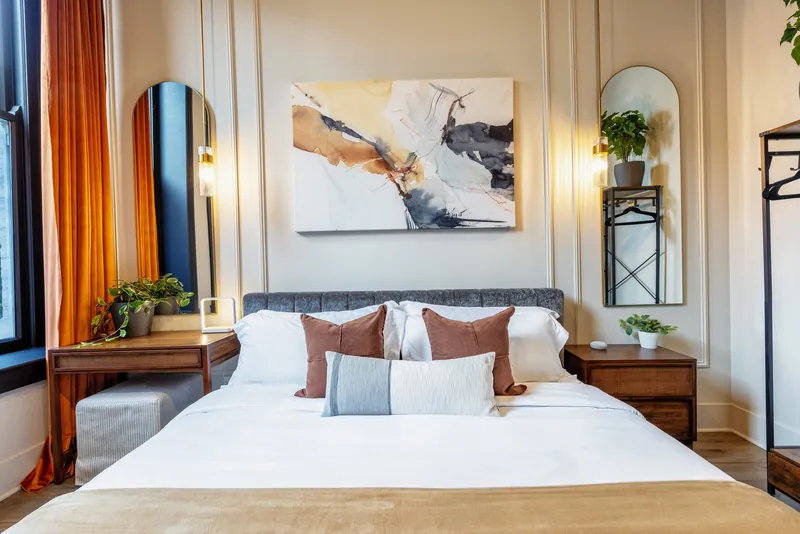
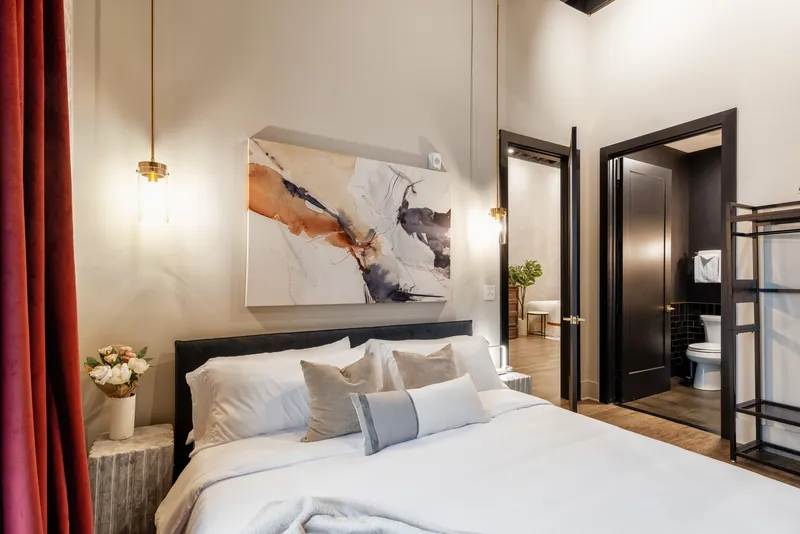
Enforcement scales with unit count. A small building rented with no permit draws fines at $50 a day, and Metro may revoke a permit for three violations of its general rules on 15 days' written notice. A revoked holder cannot get a new permit for one year. Our flagship is Union Street Lofts on Union Street: four lofts, Units 201 to 204, each with a not-owner-occupied permit Metro issued in April 2023.
The risks are structural. A sale voids every permit. A refused distance waiver keeps units off the nightly market. A rule change like BL2025-1005 can close a district to non-owner-occupied rentals. Changing leased units to transient use can change the building's fire-code group. Metro's open data on October 18, 2026 showed 23 parcel IDs with 13 to 49 issued non-owner-occupied permits each, 509 in all, and four parcel IDs with 50 or more. Condo units can carry their own parcel IDs, so those counts understate large buildings.
What Rad Stay handles
For a small apartment building, Rad Stay sets up and tracks each unit's permit and renewal, supports hotel occupancy and sales tax compliance, prices every unit separately, handles guest communication and booking automation, coordinates cleaning, and arranges damage protection. Units that cannot or should not run nightly go to mid-term or long-term leases. We also review buildings of this size for owners who want to buy, lease or partner.
Questions
Do I need one permit for the whole building?
No, because Section 6.28.030 treats every apartment as a separate rental of four sleeping rooms at most, so a 20-unit building rented entirely by the night needs 20 permits. The code sets no percentage limit on short-term units in a building.
Does a sale transfer the short-term permits?
No. Permits cannot be transferred or assigned, and a change of ownership, including moving title from a person to an LLC or trust, voids them. The buyer then applies as a new applicant.
Can an RM-zoned building get new permits for apartments rented while the owner lives elsewhere?
No; Metro's permit-types page names RM, along with AR2A, R and RS, as zoning where those permits are no longer issued. Current holders there may be able to renew, but cannot pass the permits to a buyer. Council has rezoned some property to an SP that allows the use, as in BL2026-1268.
Does the Fair Housing Act's design standard reach my building?
It reaches multifamily buildings first occupied after the March 1991 cutoff: every unit where there is an elevator, and only the ground floor where there is none. Renovation, lodging use and the ADA can raise separate duties.
Can I run part of the building as short-term rentals and the rest as leases?
Yes, where zoning allows non-owner-occupied permits. Only units with permits may be listed as short-term rentals, and no guest may stay more than 30 consecutive days.
Sources
- Metro Code of Ordinances, Title 6 (Chapter 6.28, Sections 6.28.010 and 6.28.030) and Title 17 (Sections 17.04.060, 17.08.030, 17.16.030, 17.16.250, Chapter 17.36 and Chapter 17.38), Municode, version of June 23, 2026
- Metro Nashville Codes, not-owner-occupied short-term rental permit checklist (Wayback copy of February 16, 2026)
- Metro Nashville Codes, short-term rental permit types, operation requirements and renewal pages (Wayback copies, February to October 2026)
- Metro Council Legistar, matters BL2024-211, BL2025-1005, BL2026-1268, RS2024-479 and RS2024-580
- International Building Code 2021 model text, Chapter 9, Sections 905.3.1, 907.2.8 and 907.2.9.1 (Tennessee edition on UpCodes); Metro now enforces the 2024 edition
- 24 CFR 100.205 (Fair Housing Act design rules) and 28 CFR 36.104 (ADA place of lodging), Cornell LII
- Tenn. Code Ann. 67-5-501 and 67-5-801, property classification and assessment percentages, FindLaw
- Metro Nashville Residential Short Term Rental Permits (open data), status Issued, retrieved 2026-10-18
- Airbnb Help Center, occupancy taxes collected in Tennessee
- Metro Council, BL2025-898, adopting the 2024 International Building Code and 2024 International Residential Code, passed July 15, 2025 (Legistar)
- Metro Council, BL2025-1004, adopting the 2024 International Fire Code and 2024 NFPA 101 Life Safety Code, passed Oct. 9, 2025, approved by the Mayor Oct. 10, 2025 (Legistar)
Checked October 18, 2026.
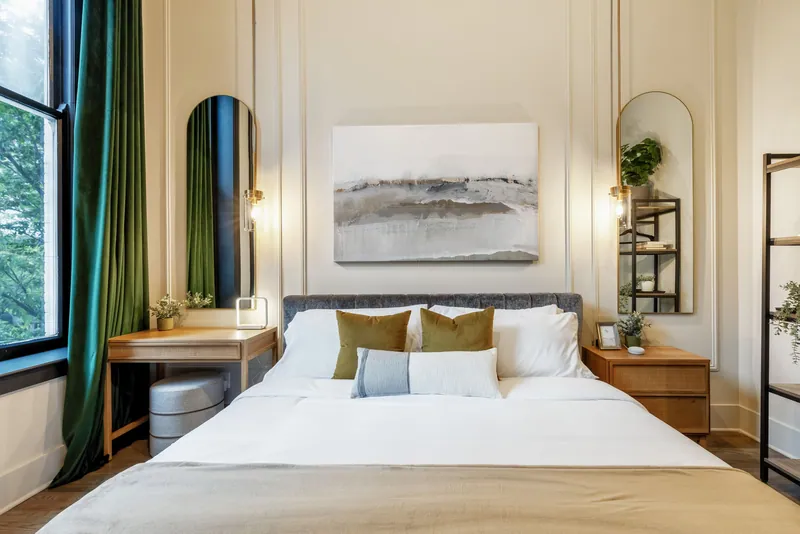
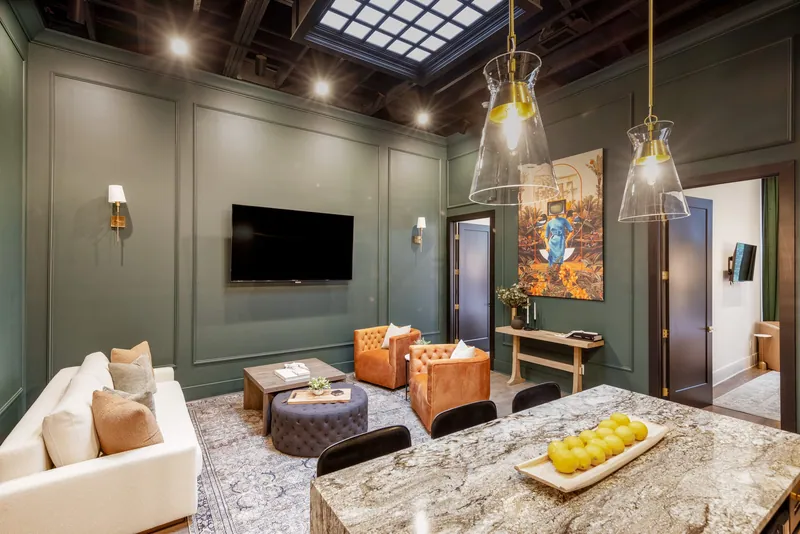
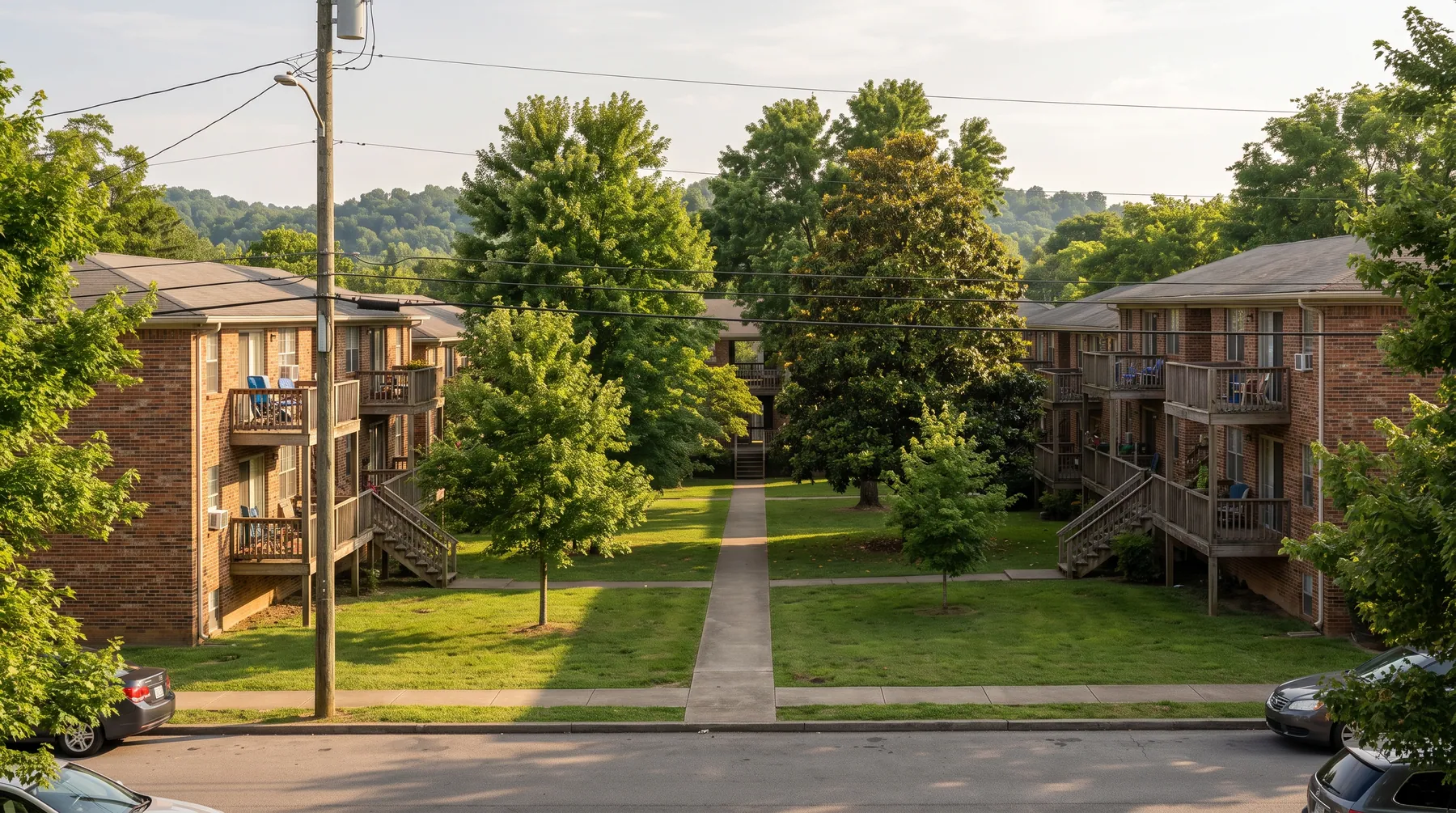
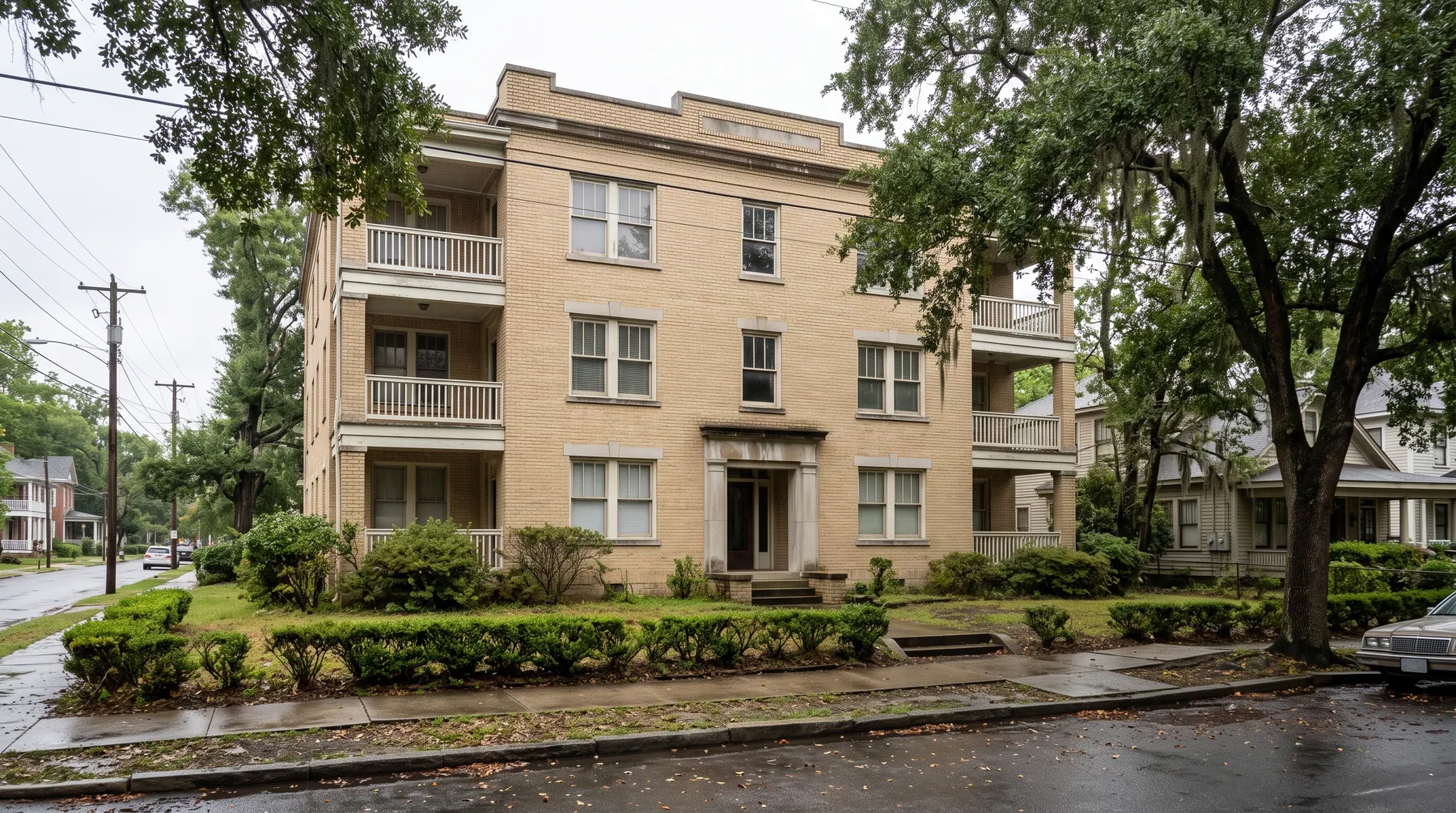
Top image: Illustration of a representative building, not a specific property.
To keep this page, print it or choose Save as PDF in your browser's print window. The printout keeps the sources and the date.
More property types
All 19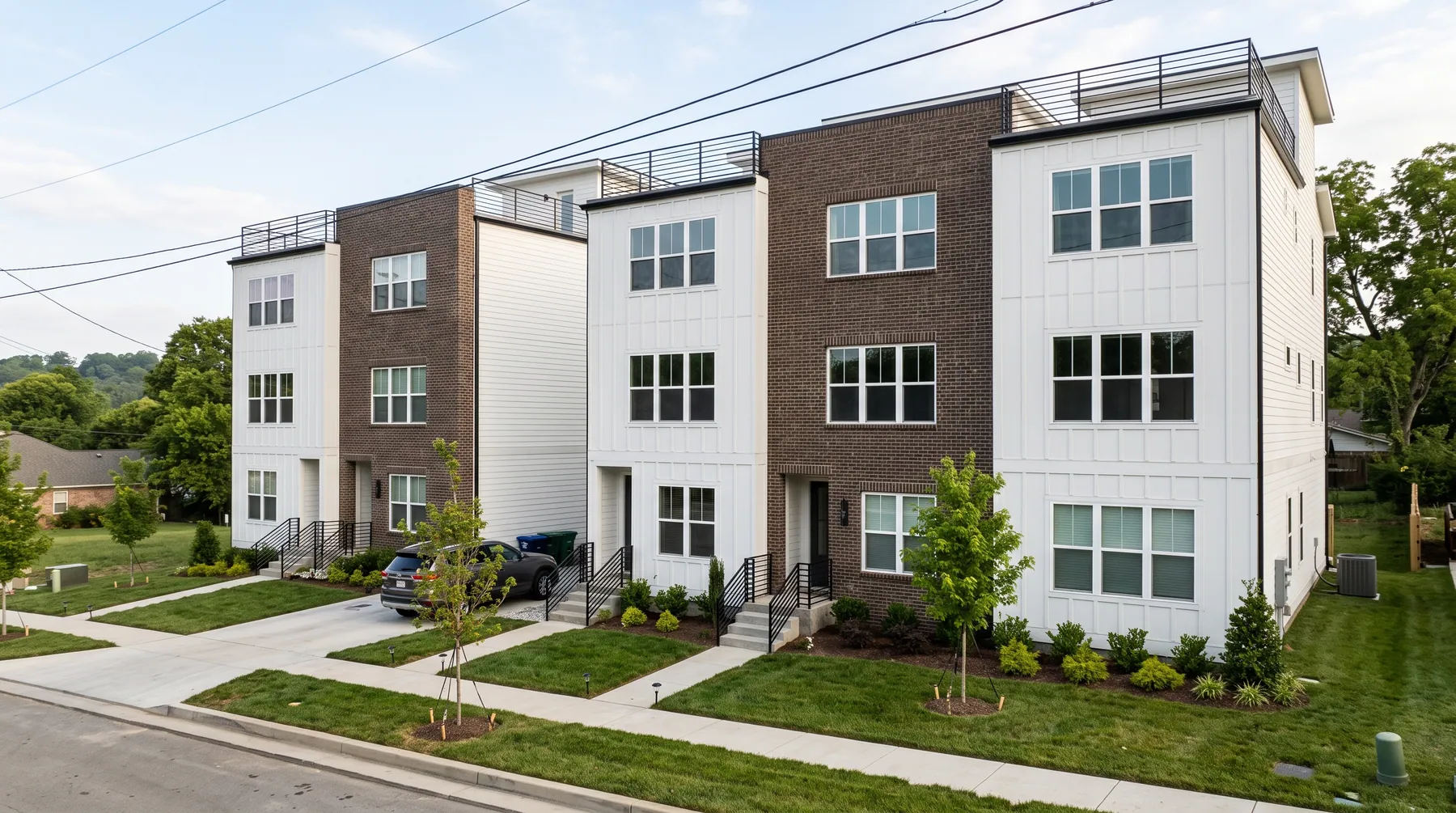
Townhome Clusters
A townhome cluster is four or more attached or grouped townhomes on one site.

Warehouse and Flex Buildings
A warehouse stores and moves goods.
Eightplex
An eightplex is big enough that its layout and zoning drive the rules.