










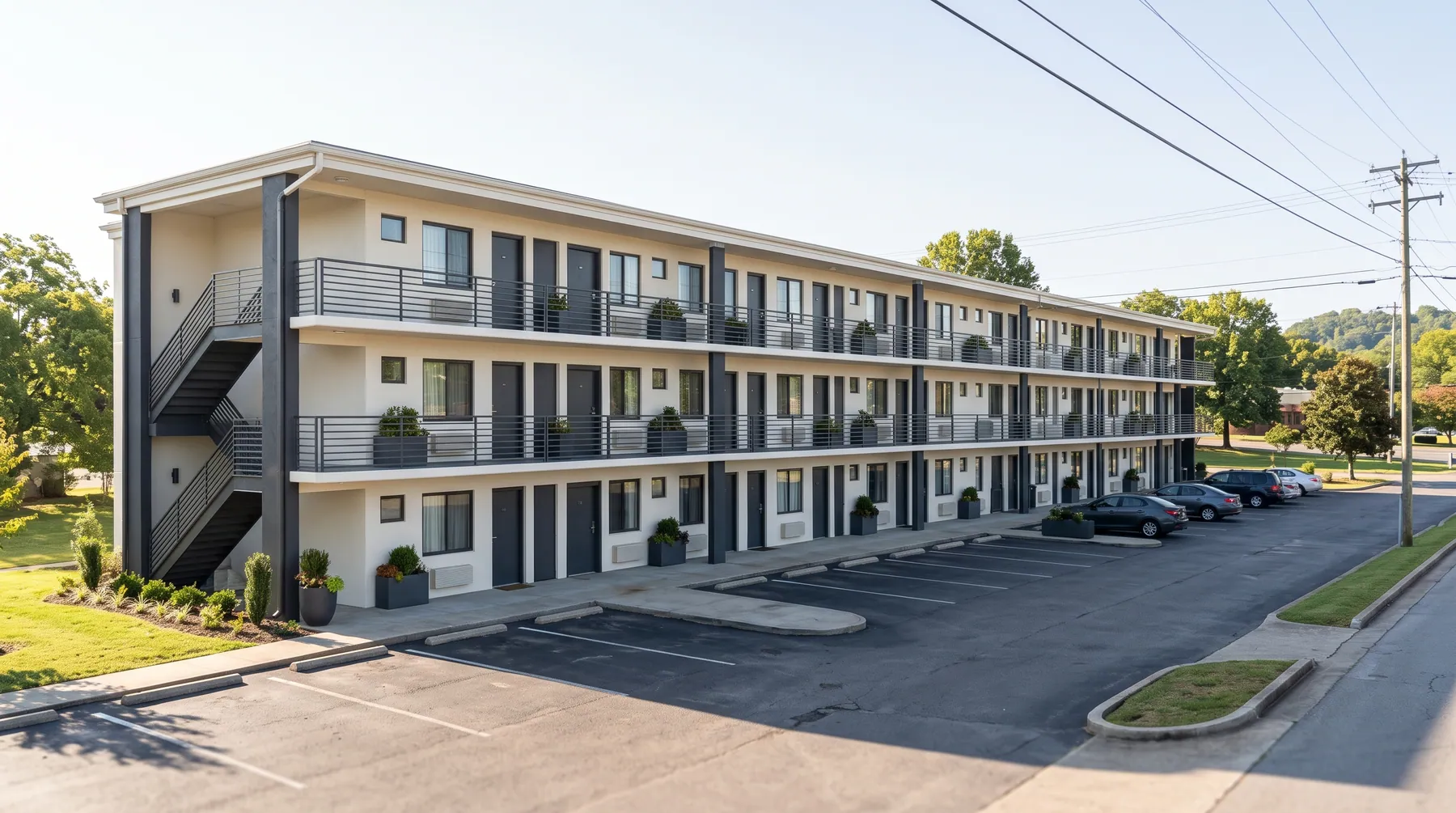
Hotel to Extended-Stay Conversions
A hotel or motel that stops renting by the night and starts renting furnished units by the week or month is a different business under Metro's rules. In Nashville, the short-term rental permit is issued one unit at a time, only in listed zoning districts, and a stay over 30 days falls outside it. This page covers what an owner of a hotel-type building has to check before changing the model.
- Short-term rental permits
- One per unit, up to four sleeping rooms each
- Longest stay on an STR permit
- 30 consecutive days (Metro Code 6.28.030)
- Fire Marshal inspection
- Required for 3+ dwellings on the property
- Metro hotel occupancy tax
- 7% since July 1, 2023, plus a nightly fee Metro's return lists at $2.50
- Davidson County hotels, 2025
- 67.0% occupancy, $199.20 average daily rate
- Rules checked
- Metro Code text current through June 23, 2026
On this page
- Three ways to run the same building
- Zoning decides whether the permit path exists
- A permit for every unit
- The 100-foot rule
- Fire Marshal and building code review
- Rules each converted unit runs under
- Taxes change with the length of stay
- Where the demand comes from
- The hotel market you are leaving
- Fair Housing and the guest's rights
- Operating models
- Risks to price in
- Questions
- Sources
Three ways to run the same building
A hotel-type building can run three ways, and each one meets a different set of rules. The first is the one it has now: transient hotel rooms rented by the night. The second is short-term rental units under Metro's STRP permit, where no guest stays more than 30 consecutive days. The third is a furnished unit leased for more than 30 days, usually called extended-stay, mid-term or corporate housing.
Most owners who ask about a conversion are choosing between the second and the third, or planning a mix of both. The difference matters because the permit, the inspections and the taxes all change with the length of stay. A permit covers the stay of a guest. It does not cover a lease.
Zoning decides whether the permit path exists
Metro Code 6.28.030 allows new not-owner-occupied short-term rental permits, with conditions, only in a list of districts. That list runs through the mixed-use families MUN, MUL, MUG and MUI and their -A forms, the office zones OG, OR20 to OR40-A and ORI, the commercial CN, CL, CS, CA and CF, the shopping-center SCN, SCC and SCR, and four downtown districts: North, South, West and Central. For a former hotel the closed list matters as much: DTC East, every residential district from AG and AR2a through RL, and the IWD, IR and IG industrial zones are closed to fresh permits for a converted building whose owner lives elsewhere.
Two more exclusions catch hotel properties. A district whose name carries NS, such as CS-NS, the commercial service district with short-term rental removed, rules the use out completely. Where an SP or PUD controls the site, the plan's own text has to allow the use before Metro will permit it. Council has rewritten plans to do that; BL2024-211 (April 2024) and BL2026-1268 (March 2026) are two examples.
Before you price a purchase, read the parcel's zoning off the Metro map against that list, and get a written answer from Metro Codes on how the existing hotel use is classified. That answer drives the whole deal.
A permit for every unit
Metro has no separate multifamily or hotel permit type. Every former guest room converted to a dwelling needs its own permit, and one permit cannot cover more than four sleeping rooms. A 60-room hotel converted into 60 studios would need 60 applications. Each permit also needs written notice to the adjoining owners, which for a stacked building means the floors above and below too, liability insurance carrying $1 million for each occurrence at minimum, and a responsible party, someone within 25 miles who picks up night and day.
Metro's February 2026 materials put the fee at $313, and every permit runs out 365 days after it is granted. Permits are not transferable; a sale cancels every one of them, leaving the new owner to file fresh applications under the rules in place at that point. Metro's Operation page treats retitling the hotel from a person to that person's trust or LLC the same way. For a hotel conversion that is a financing and exit issue: a buyer of a stabilized building cannot take over its permits.
Metro Code does not put a percentage cap on how many of one building's units can hold permits. The limits are the zoning list above, the four-bedroom limit per permit and the distance rule.
The 100-foot rule
Location matters for a new permit with no resident owner, too: Metro says no if under 100 feet separate the hotel's property line from that of any park, place of worship, school, licensed day care, or school or day care playground. Run that measurement before you agree on a price.
A Council resolution can waive the distance, once Council has held a public hearing, mailed notice to all owners inside 600 feet, a sign up for two weeks and 21 votes in favor. A converted hotel's units can all go into one resolution, since the code allows several units of one development to share it. The record shows how this goes for large buildings. Council rejected RS2024-479 on June 4, 2024; the request covered 62 units of 160 2nd Avenue North. Then, on July 2, it approved RS2024-580, a smaller request for 55 of those units. A large unit count can be approved, but it can take a second try.
Fire Marshal and building code review
Applications for any building of three dwellings or more go to the Nashville Fire Marshal's Office. Metro Codes treats a shared hallway or walkway leading to the unit as the sign that the Fire Marshal, not a private inspector, must do the inspection.
The State Fire Marshal's Office also sets rules by building size for transient rental homes. A home of at least four stories, at least 5,000 square feet, or 13-plus occupants counts as an R-3 occupancy in the International Building Code, which takes away the state-law sprinkler exemption. A hotel is much larger than that, so ask the Fire Marshal and Metro Codes which occupancy classification and which sprinkler and alarm requirements apply when the use changes. Do not assume the existing hotel certificate carries over to leased units.
The Fire Department's checklist covers the items below, and its 2022 archived copy cites sections of the 2012 International Fire Code. Nashville no longer uses that edition: since BL2025-1004 passed in October 2025, Metro has enforced the International Fire Code and NFPA 101 in their 2024 editions. The Fire Department checklist items, from street numbering to interconnected UL 217 alarms and rescue windows in sleeping rooms, are set out in our fire safety guide linked below; check with the Fire Marshal's Office for any change since that checklist was archived.
Rules each converted unit runs under
A permit carries rules a hotel front desk does not face. The lead guest must be at least 21, each booking covers one party, and no stay may be shorter than a full day. No food may be served by the permit holder, and each listing displays the permit number. Inside, each unit posts the guest cap and the phone number of the responsible party.
Metro keeps a guest register for at least six months. Operating without any permit draws a $50 daily fine, and Metro then takes no application for a year. After three general-provisions violations at a unit and 15 days' written notice, Metro can revoke a permit, and the former holder then waits a year for any new one. Section 6.28.030 holds the full text and on the Metro Codes pages listed below.
Taxes change with the length of stay
A hotel already collects Metro's hotel occupancy tax, and a permitted short-term rental is covered too. Metro raised the rate by 1% under BL2022-1529, so since July 1, 2023 the local occupancy tax is 7%. The flat nightly fee is $2.50 on Metro Finance's posted return; its last 50 cents was due to lapse on May 21, 2026 under the code, and BL2026-1493 moves that to 2032 once it takes effect. Metro's collections page says a guest who has held a room for 30 days or more in a row owes no tax after the 30th day. Tennessee's Public Chapter 364 reshaped long-stay tax: a rental agreement signed, renewed or amended since July 1, 2025 is taxed for days 1 to 30 of each stay, with day 31 onward left untaxed.
Sales tax follows a different line. The state's general rate is 7%, and the local rate varies by county and city. Tennessee's Important Notice 17-24 treats vacation lodging stays from 1 through 89 days as short-term, and says a management company that runs the property is the party that registers and collects the sales tax. Ask a Tennessee tax professional how each lease type in your building is taxed.
Where the demand comes from
Metro law draws the line at 30 days, so you need to know how much of your demand falls on each side of it before you pick a model. A stay of 30 days or less fits the permit. A longer stay is a lease, and the permit does not apply to it.
The hotel market you are leaving
Visit Music City, citing STR data, reports Davidson County hotels at 67.0% occupancy in 2025 with a $199.20 average daily rate, down 1.3%, while supply rose 3.4% and RevPAR slipped 2.1%.
A converted building that goes back to nightly rentals competes in that same hotel market, so check current rates before you underwrite.
Fair Housing and the guest's rights
Once rooms are leased as homes, fair housing law applies to the people you rent to. Under the Fair Housing Act, a housing provider must make reasonable exceptions to rules and policies for a person with a disability, and must allow reasonable modifications at the tenant's expense, such as grab bars. The Act also has design and construction requirements for certain multifamily buildings. Ask a fair housing attorney whether a converted hotel falls under them before you finalize plans.
Operating models
Three structures to compare for a hotel-type building: a management agreement, where the owner keeps the permits, the lease and the income and pays a fee; a master lease, where one operator rents the entire property and carries the risk; or a revenue share. Because Metro permits are issued to an owner and cannot be transferred, the owner's name on each permit and the structure of the agreement need to match. Have a Tennessee attorney draft it.
Rad Stay handles Nashville owners' rentals on nightly, monthly and yearly terms. On a converted hotel its work would cover rate setting, answering guests, scheduling cleaners, automating reservations, damage protection, and help on permits and taxes, and it also reviews hotel-type buildings for owners who want to sell, lease or partner. Its own Union Street Lofts, four units at 329 Union Street in DTC-zoned downtown, all had Metro permits for absent owners issued in April 2023. That building is small, and a hotel conversion is a much bigger permit and inspection project.
Risks to price in
The main risks are specific and checkable:
- Zoning that does not appear on the list, or an NS, SP or PUD designation that blocks the permit.
- A distance conflict, which only a Council waiver after a hearing and a 21-vote majority can clear.
- Permits that die at sale, which limits how a buyer values the building.
- A change of use that triggers fire protection upgrades the hotel did not need.
- Mid-term leases that fall outside the permit, so the building depends on lease demand rather than nightly booking.
Questions
Can a hotel start renting rooms as short-term rentals without permits?
Not without permits. Metro permits each unit separately and only in the listed districts, and the building has to clear the distance rule and a Fire Marshal inspection, so get your parcel checked by Metro Codes.
What happens to the permits if I sell the building?
Metro Code says permits are not transferable, and a change of owner ends them, so the buyer files again.
How many guests can a converted unit hold?
Twelve at most, per Metro's Operation page; below that, two guests per sleeping room, then four extra. A one-bedroom unit allows six.
Can I rent a converted unit for 45 days under the permit?
No. Under Metro Code 6.28.030 no guest may stay beyond 30 consecutive days. A longer stay is a lease, which is a separate arrangement.
Is the occupancy tax the same as at a hotel?
It is the same Metro tax: the 7% rate in force from July 1, 2023, with the flat nightly fee Metro's return shows as $2.50. Metro's collections guidance has long said a guest staying 30 days in a row stops owing the tax after day 30; the 2025 state change (Public Chapter 364) sets the rule for agreements dated from July 1, 2025.
Sources
- Metro Code Chapter 6.28, Short term rental property permit (Municode, version of June 23, 2026)
- Metro Codes, Short Term Rental Permit Types (Wayback copy, Feb. 17, 2026)
- Metro Codes, Operation Requirements (Wayback copy, Feb. 12, 2026)
- Nashville Fire Department, Short Term Rentals Applicant Checklist (Wayback copy, 2022)
- Tennessee State Fire Marshal's Office, Transient Rental Homes
- Tennessee Department of Revenue, Important Notice 17-24, Short-Term Rental of Vacation Lodging
- Visit Music City, Research and Hospitality Stats
- Wikipedia, Fair Housing Act
- Metro Codes, Apply for a Short Term Rental Property Permit (Wayback copy, Aug. 22, 2026)
- Metro Finance, Increase in the Hotel Occupancy Tax
- Metro Finance, Pay Short Term Rental Property Occupancy Tax
- Tennessee Department of Revenue, Occupancy Tax Notice 25-07, Short-Term Rental Unit 30 Day Occupancy
- Tennessee Department of Revenue, Sales and Use Tax
- Metro Council, BL2025-1004, adopting the 2024 International Fire Code and 2024 NFPA 101 Life Safety Code, passed Oct. 9, 2025, approved by the Mayor Oct. 10, 2025 (Legistar)
- Metro Finance, Short-Term Rental Tax return (510), taxes payable after July 1, 2023, line "Number of rooms rented per night x $2.50" (archived copy, October 22, 2026)
- Metro Council, BL2026-1493, passed Sept. 1, 2026, Mayor approved Sept. 4, 2026; Section 4 moves the 5.12.140 B date, Section 10 sets the effective date (Legistar)
Checked October 18, 2026.
Top image: Illustration of a representative building, not a specific property.
To keep this page, print it or choose Save as PDF in your browser's print window. The printout keeps the sources and the date.
More property types
All 19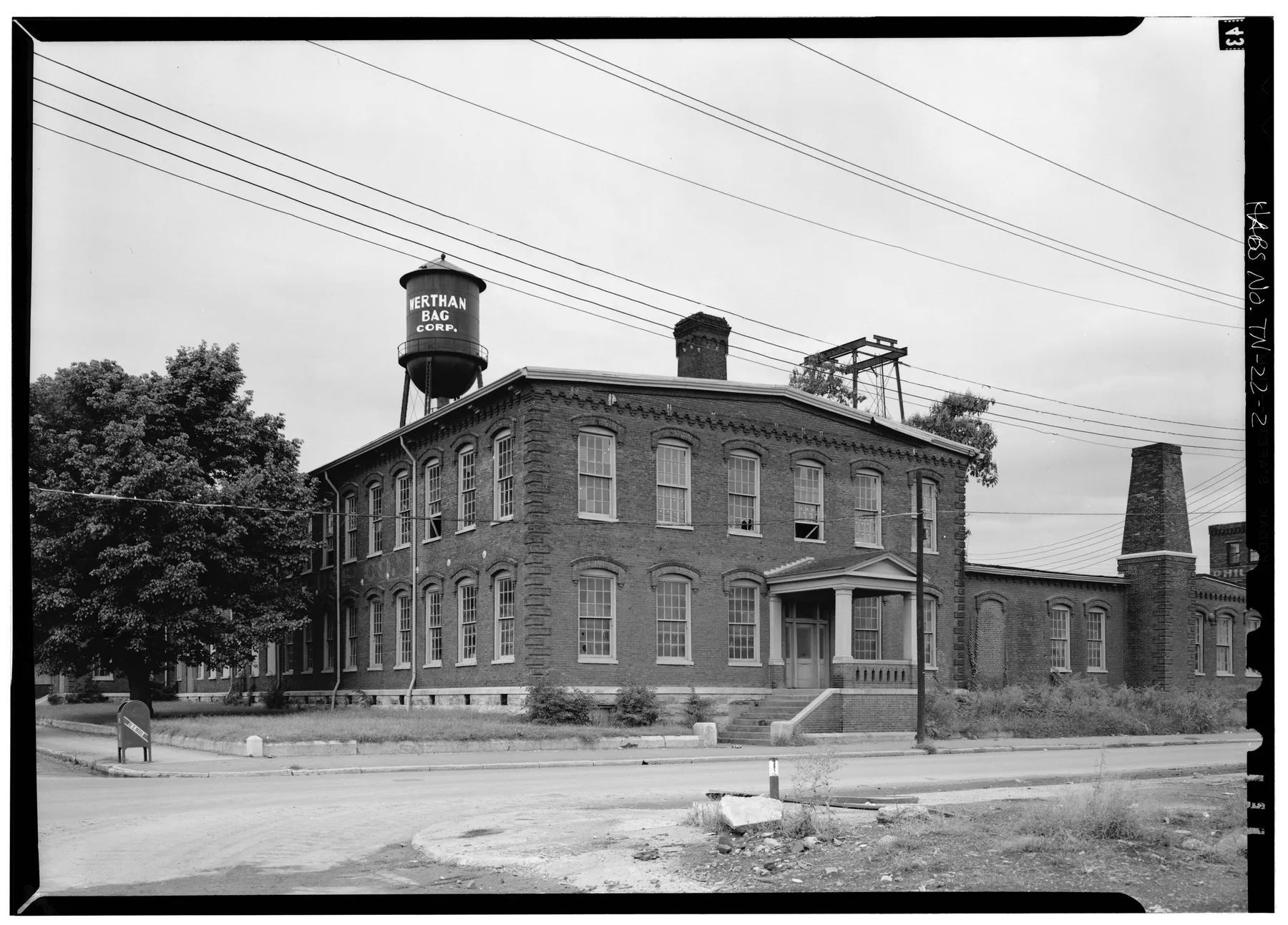
Industrial Buildings
An industrial building is where the work happens: light manufacturing, assembly, fabrication, repair.
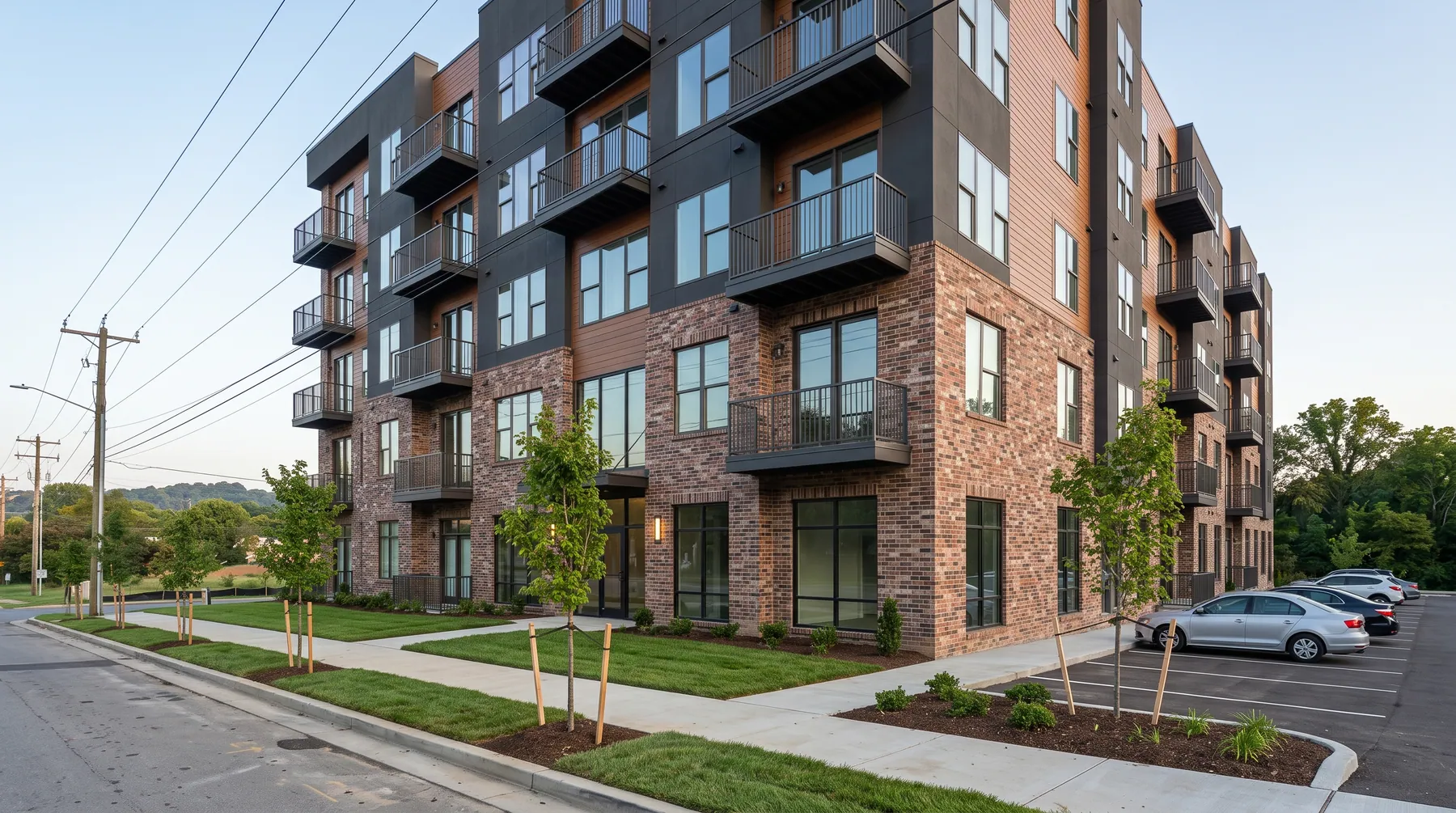
Lease-Up Buildings
A lease-up building is a new apartment building that is filling its units for the first time.
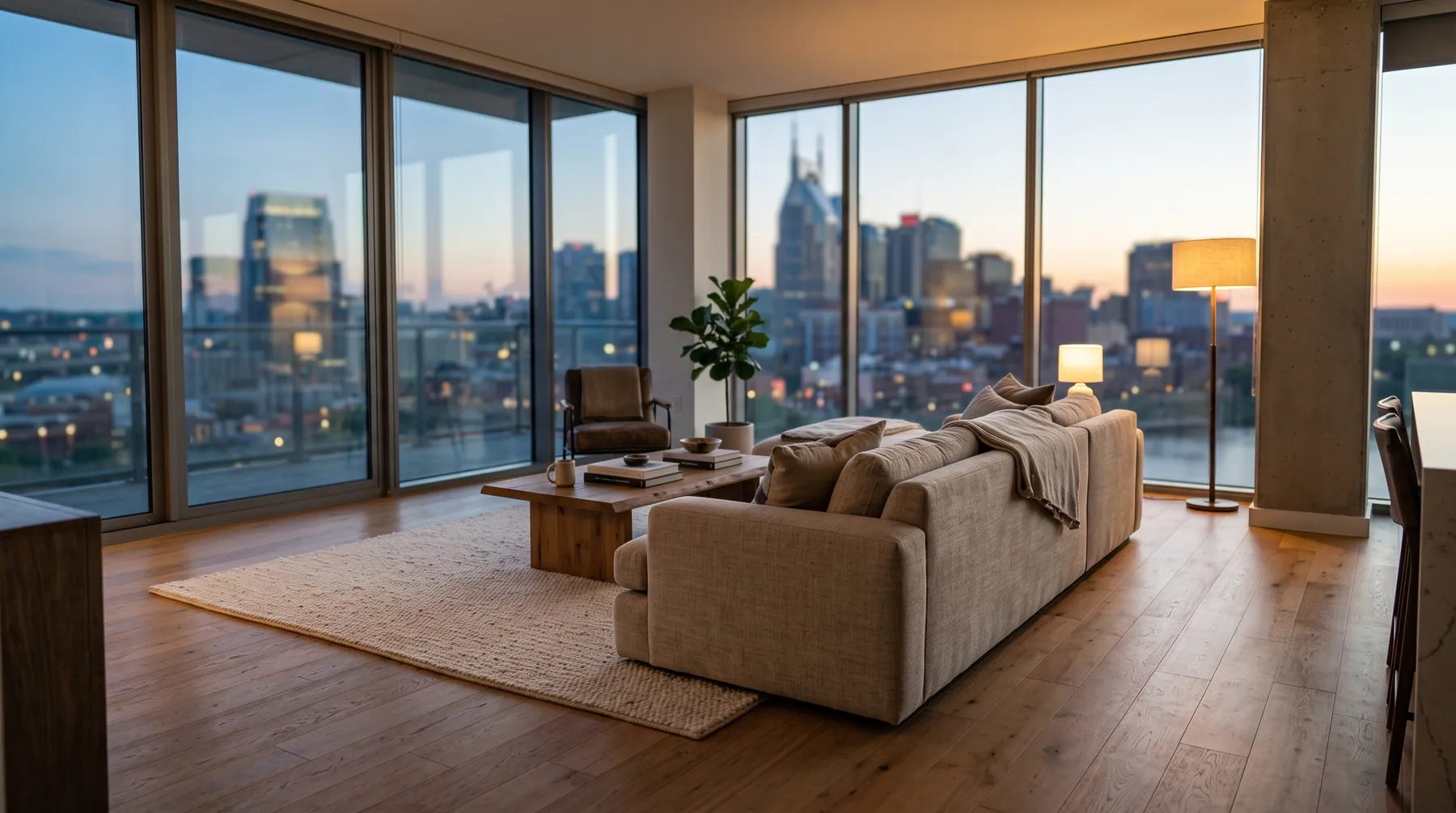
Luxury Apartment and Condo Units
A unit in a Nashville tower is owned or leased one apartment at a time, inside a building whose rules you did not write.