

East Nashville
East Nashville covers the big stretch on the far bank of the river from downtown, and the rules can flip between neighboring streets. An apartment-building owner needs to know which side of that line the parcel falls on: a commercial or mixed-use district, where an absent owner can still get new short-term permits, or a residential one, where that door is shut. This page covers the geography, the history, the permit counts in Metro's own data, the disasters that shaped the area, and what an owner should look at before a purchase or conversion.
- ZIP codes
- 37206 (smaller East Nashville), 37216 and 37207 (greater East Nashville)
- Main roads
- Gallatin Avenue (Gallatin Pike), Ellington Parkway, Main Street, Shelby Avenue, Porter Road
- Zoning to know
- Mixed-use, office and commercial districts allow new non-owner-occupied permits; residential districts do not
- Issued STR permits, ZIP 37206
- 667 (371 owner-occupied, 296 non-owner-occupied)
- Issued STR permits, ZIP 37216
- 313 (146 owner-occupied, 167 non-owner-occupied)
- Issued STR permits, ZIP 37207
- 808 (246 owner-occupied, 562 non-owner-occupied)
- Permit data date
- Metro Nashville open data, retrieved October 6, 2026
On this page
- Where East Nashville is
- How the area developed
- The fire of 1916 and the tornadoes
- Buildings and housing today
- East Nashville zoning, parcel by parcel
- Permits issued in the East Nashville ZIP codes
- Who visits and why
- Longer stays in East Nashville
- Development from 2023 to 2026
- Getting around
- Which building types fit
- Checks before an East Nashville purchase
- How a manager runs a building here
- Questions
- Sources
Where East Nashville is
The Cumberland River forms the southern, southwestern and eastern edges of East Nashville. Wikipedia gives the area's center point as about 36.1892 N, 86.7336 W. No single legal boundary exists for the area. Wikipedia describes a smaller East Nashville, which is ZIP 37206, and a greater East Nashville that also takes in ZIPs 37216 and 37207. It says the western and northern edges are not defined: some people place them at Ellington Parkway, Cahal Avenue and Porter Road, and others draw it at I-65 and I-24 to the west and at Briley Parkway to the north. For an owner, that means a neighborhood name in a listing proves nothing. Look up the parcel's ZIP, its zoning district and any overlay.
The two main thoroughfares are Gallatin Avenue, also called Gallatin Pike or Gallatin Road, and Ellington Parkway. Smaller arteries include Main Street, Shelby Avenue, Porter Road, Riverside Drive, Eastland Avenue, McFerrin Avenue and Woodland Street.
Wikipedia lists the neighborhoods of the smaller East Nashville as Historic Edgefield, East End, Lockeland Springs, Shelby Hills, Boscobel Hills, Rolling Acres, Eastwood, Maxwell and Greenwood. Further east are Rosebank, Porter Heights and Barclay Drive. Greater East Nashville adds Highland Heights, Cleveland Park, McFerrin Park and Inglewood, which includes South Inglewood, Dalewood and Riverwood. This site has separate pages for Five Points, Lockeland Springs, Edgefield, Cleveland Park and Inglewood. This page is the overview that sits above them.
How the area developed
The oldest layers are close to the river. Wikipedia says the Lockeland homestead was built in 1790 and the subdivision was named in 1880, for Jane Locke, wife of Col. Robert Weakley. East End started in 1876 as an extension of Edgefield. In the 1890s the Nashville Railway built a casino and amusement park in what is now Shelby Park. The company went bankrupt by 1903, and the city bought the property in 1909.
Shelby Park officially opened on July 4, 1912, according to Wikipedia's Shelby Park article, and covers 361 acres. The Shelby Bottoms greenway next to it became a park in 1994. It covers 810 acres, runs about three miles along the river and has about eight miles of paved greenway and five miles of mulched trails. The 141-acre Cornelia Fort Airpark, an airfield from 1944 to 2011, passed to the city that year. Together the three pieces cover more than 1,000 acres of green space.
Public housing is also part of the history. Wikipedia names James A. Cayce, described as Nashville's largest project, along with Sam Levy Homes and the Parkway Terrace site, and says Cayce is being replaced. The housing authority now calls that program the Cayce Transformation, formerly Envision Cayce. Its master plan calls for 2,390 units and one-for-one replacement of the existing affordable units. Completed pieces named by the authority include Barrett Manor (70 one-bedroom units), Kirkpatrick Park (94 townhome-style apartments), Red Oak Townhomes (finished November 2021) and Cherry Oak (96 units, groundbreaking May 2022). Park Point East adds 203 affordable apartments in two buildings and 24 townhomes, with 115 of the apartments set aside for Cayce Place families. The authority's page does not give delivery dates for every phase, so ask MDHA, the city's housing agency, before assuming one.
The fire of 1916 and the tornadoes
Disasters explain why the stock is a mix of ages. Wikipedia says the Great Fire of March 22, 1916 burned over 500 houses, left over 2,500 people without homes and caused over $1.5 million in property losses. One person died. East Park, running from 6th to 8th Street, was formed after the fire.
Tornadoes have hit the area repeatedly. Wikipedia reports that the March 14, 1933 tornado damaged about 1,400 homes, 16 churches, 36 stores, five factories, four schools, a library and a lodge hall. The April 16, 1998 tornado, rated F3 at the time and later assessed as likely EF2 under the Enhanced Fujita Scale, crossed downtown and moved through East Nashville. Wikipedia reports at least 300 homes damaged in East Nashville, many losing part of their roofs and a few destroyed, and a church well over 100 years old badly damaged. In Nashville, one person died and about 60 were injured, with damage of about $100 million in 1998 dollars.
The most recent event is the March 3, 2020 tornado. It touched down at 12:32 a.m. in western Davidson County and was rated high-end EF-3, with 165 mph winds, a 60.13-mile path and an estimated $1.504 billion in damage, the sixth costliest tornado in U.S. history. It crossed Interstate 24 at Spring Street and caused major EF-3 damage in East Nashville. Two pedestrians were killed by debris there. Wikipedia says numerous businesses, restaurants, bars, homes and apartment buildings were damaged or destroyed, that the Basement East music venue suffered major structural damage, and that the YMCA was badly damaged. In neighborhoods east of Five Points, the damage was EF-2 level to homes, churches and multi-story brick buildings.
For a building owner, roof age and wind resistance are underwriting items. Ask for repair and permit records on any building in the 2020 path, and get an insurance quote before you price an offer.
Buildings and housing today
Most of the named projects in the sources for this page are public housing sites and one private proposal, so no count is given here of 4-to-200-unit buildings in East Nashville. Look at the parcel, not the neighborhood.
A March 2026 report from Hoodline describes a mixed-use project on Dickerson Pike by Forstone Capital, of Darien, Connecticut, filed through 1218 Dickerson LLC, on parcels at 1218, 1224 and 1236 Dickerson Pike plus 5 Ligon Avenue. The core parcels were bought in late 2021 for about $10 million. The filing would allow at least one tower of roughly 12 stories in two phases. It asks for rezoning under case 2022Z-034PR-001 within the Dickerson Pike Sign Urban Design Overlay and the Skyline Redevelopment District, along with special exceptions to setback and height limits. The report gives no unit count. It says a public hearing was expected in mid-April and reports no result. Hoodline also mentions a separate 280-unit apartment proposal on Dickerson Pike, which it does not tie to this project. Treat both as proposals, not as buildings.
If you are comparing a conversion candidate against new supply, ask Metro Planning for the open cases on the corridor rather than relying on press items.
This page does not name individual hotels or loft buildings, because none was confirmed from an official or press source. If you are weighing a hotel-to-extended-stay conversion, verify the property's zoning, certificate of occupancy and any recorded restrictions before relying on a listing description.
East Nashville zoning, parcel by parcel
Zoning decides it. Under the use table in Title 17 and Section 6.28.030, an East Nashville unit whose owner lives elsewhere may receive a new permit in just a handful of districts, among them downtown, commercial, office, shopping-center and mixed-use ones, and never on residential, farm, mobile home park, ON, OL or industrial land, and each unit takes a separate permit of four bedrooms at most; see the zoning guide linked below for the codes. The Metro Code text on the fact sheet used for this site is current through June 23, 2026. That last point matters in East Nashville, because many of the buildings you can buy are small.
NS districts prohibit both permit types.
In East Nashville, that sorting happens parcel by parcel. A fourplex on a Gallatin Pike or Main Street parcel zoned MUL-A can be a candidate for non-owner-occupied permits. The same fourplex on a residential lot cannot. Check the parcel in Metro's zoning viewer.
Specific plans and planned unit developments follow their own text. Plans matter too: an SP or PUD parcel is permitted only if its plan allows the use, and Council has amended plans and rezoned parcels to add it, BL2026-1268 in March 2026 among them, so a newer East Nashville mixed-use project may or may not have the right. Read the SP document, not the base district.
If a parcel carries one of those districts, a multi-unit building is not a candidate for non-owner-occupied permits under any reading.
Historic overlays do not change this list. What overlays do control is exterior work, so they matter when you plan an addition, a new entrance, replacement windows or a code-driven fire escape. Historic Nashville's easements program names East Nashville's overlays as Edgefield (historic district, 1978), Lockeland Springs-East End (conservation district, 1985), Greenwood (2008), Maxwell Heights (2008) and Inglewood Place (2016); none of them adds a short-term rental rule. The same page gives conflicting years for the Eastwood overlay, so confirm that one with Metro Planning.
The distance rule is the last gate. Churches, schools and parks are scattered through these blocks, and since August 2023 Metro has issued no new absent-owner permit within 100 feet of any of them or of a licensed day care, unless Council grants a waiver; the steps are in our multifamily guide below. Shelby Park, Cleveland Park and the smaller parks, along with churches and schools, can fall within 100 feet of a parcel, so measure before you sign. The general permit rules are covered in the guide on permits for multifamily buildings, linked below.
Permits issued in the East Nashville ZIP codes
Metro's open data, filtered to Issued permits and pulled October 6, 2026, counts 667 in ZIP 37206: 371 owner-occupied, 296 not-owner-occupied. ZIP 37216 has 313 (146 owner-occupied and 167 non-owner-occupied). ZIP 37207 shows 808, with 562 not-owner-occupied and 246 owner-occupied. Together the three ZIPs hold 1,788 issued permits, about one in four of the 7,022 issued countywide on that date, and they are split 763 owner-occupied and 1,025 non-owner-occupied.
The ZIPs differ. In 37206, owner-occupied permits are 56 percent of the total. In 37216, the split is close to even. In 37207, non-owner-occupied permits are about 70 percent of the total. For comparison, ZIP 37203 has 1,706 issued permits and 1,617 of them are non-owner-occupied.
One caution applies to every number on this page. A permit count is not a count of buildings or bedrooms. A fourplex with four permits counts four times, and the counts say nothing about occupancy or revenue.
A second caution applies to ownership changes. A permit is not transferable. A sale, or a move between you and your trust or LLC, voids every permit, and the new owner starts over under the current rules. For a building whose value depends on its permits, that makes the purchase contract and the permit timeline part of the underwriting. That state-law point was not checked against statute text for this page, so confirm it with counsel.
Who visits and why
The sources describe places more than single attractions. Wikipedia places Five Points where Woodland Street, Clearview Avenue and 11th Street come together, a cluster of restaurants, bars and shops and the home of the yearly Tomato Art Fest. The Basement East, a music venue, was heavily damaged in the 2020 tornado. Shelby Bottoms offers about eight miles of paved greenway.
Wikipedia also lists Cumberland Park, which cost about $17 million and sits just south of Nissan Stadium between the Shelby Street Pedestrian Bridge and the Gateway Bridge.
The biggest event driver is the Tennessee Titans' new stadium. Wikipedia's Nissan Stadium (2027) article reports a groundbreaking on February 29, 2024, a planned 2027 opening, 60,000 seats (the current stadium seats 69,000) and a cost of $2.1 billion, including $1.26 billion in public money: $500 million from the state of Tennessee and $760 million in revenue bonds issued by the Metro Sports Authority. It is being built beside the existing stadium, which is planned for demolition afterward. The article lists the Titans, the Tennessee State Tigers and the Music City Bowl among planned tenants, and says the NFL announced on May 19, 2026 that the stadium will be the site of Super Bowl LXIV in 2030. The article does not describe the relationship between the stadium and East Nashville in detail, so measure the parcel's actual distance and route.
The sources reviewed did not provide visitor counts, hospital or university visit data or an event calendar, so this page does not name a dominant guest segment.
Longer stays in East Nashville
The 30-day maximum stay for a short-term rental permit is the reason mid-term rental is a separate business in Nashville. The code limits any one guest to thirty consecutive days. Anything past 30 nights is outside what the permit covers, which makes monthly rental the fallback for a building that cannot get absent-owner permits.
The sources reviewed did not yield a verified, dated rent figure for ZIP 37206, 37216 or 37207, so none is quoted here. Before you underwrite, pull dated rent data for the building type and street, and keep the date with every number.
Development from 2023 to 2026
Two kinds of change are visible in the sources. The first is public: the Cayce Transformation, whose newer phases include Cherry Oak (groundbreaking May 2022) and Park Point East, and the new Nissan Stadium, which broke ground in February 2024. The second is private mixed-use on Dickerson Pike, including the Forstone Capital filing reported in March 2026.
Where a developer asks to rezone to mixed-use, the permit rights of the future building depend on the zoning and any SP language, so read the filing before assuming a new building can host short-term rentals.
Getting around
Public transit follows the pikes. WeGo's changes of July 6, 2025 brought Route 56 Gallatin Pike to a bus every 15 minutes in three windows: weekday evenings, weekend days from 6 a.m. to 6 p.m. (up from 20), and on weekend evenings (up from 20 to 30), and Route 23 Dickerson Pike to every 15 minutes during weekend daytime hours, up from every 25. WeGo Link, the on-demand service, expanded in the Maplewood and Broadmoor area of East Nashville.
By car, Ellington Parkway is one of the two main thoroughfares. Metro Code sets required off-street parking by use, so confirm the requirement for a conversion with Metro Codes or Planning before closing, not after.
Which building types fit
On a mixed-use or commercial parcel, a building of four to twelve units fits short-term management best, since the zoning still accepts new absent-owner permits and the building runs as one operation. Buildings with shops at street level and apartments upstairs suit a split plan: short or monthly stays on the upper floors, an ordinary commercial lease below.
In the residential districts, the fit changes. Only an owner who lives in the unit can use the owner-occupied permit, and outside narrow exceptions it cannot list a whole home, so it gives an investor no short-term route. A buyer of an apartment building who will not live there should plan on monthly or yearly leases in those districts.
The property-types pages on this site cover the economics and the operating requirements of each building size. For a small building in a mixed-use district, the permit rules above apply unit by unit, so a fourplex needs four separate permits and four separate applications.
Checks before an East Nashville purchase
Start with the parcel. In Metro's zoning viewer, confirm the base district, any NS, SP or PUD marking, and the overlays that apply. Then check the 100-foot rule against churches, schools, day cares and parks.
Next, check flood risk. The May 2010 flood hit Moss Rose Drive, Cooper Lane and McGinnis Drive hardest, and about 1,600 volunteers helped an estimated 640 homes, with ArtHouse Gardens on Woodland Street serving as a coordination center. Metro Water Services says all development in a Special Flood Hazard Area needs local permits, that a grading permit is required for land disturbance over 10,000 square feet, and that residential structures in the floodplain must have the lowest finished floor four feet above the base flood elevation. Development in the floodway is generally prohibited. Look up the parcel in Metro's flood tools and in FEMA's maps before you assume anything.
Then check the building's life-safety status. Under the checklist Metro publishes, multifamily structures with three or more dwellings need a Fire Marshal inspection. Then plan for the countywide operating rules, from the guest cap and the always-on responsible party to the liability policy of $1 million and each listing carrying its permit number; the code sections for each are in our multifamily permits guide.
Finally, read the documents. A condominium regime or a lease can be stricter than Metro. The fee is $313 a permit in Metro's February 2026 FAQ, and each permit runs a year. Operate only when a permit is in hand. Renewal reminders arrive 60 and 45 days ahead by email; a 30-day grace after expiry is up to Metro and goes to no unit with documented complaints, so renew on time. Most of the waiver resolutions Council took up between 2023 and 2026 passed, according to Legistar, but not every one. Treat none of this as legal or tax advice, and confirm with Metro Codes.
How a manager runs a building here
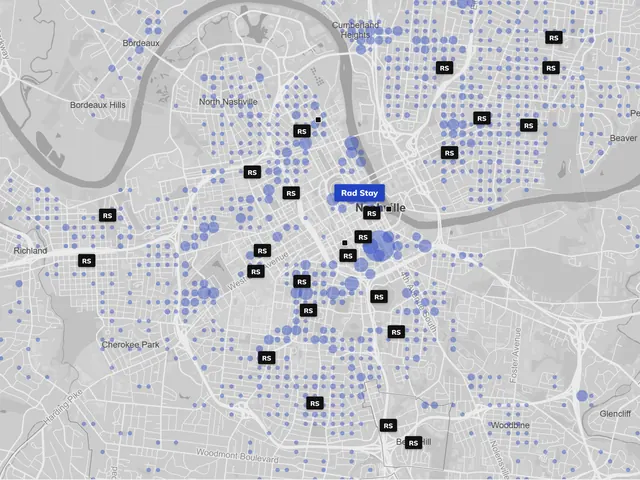
Nightly, monthly and annual rentals are all handled by Rad Stay. Its flagship, downtown, is Union Street Lofts, whose four lofts at number 329 Metro permitted as not-owner-occupied in April 2023. For an East Nashville building the first job matches downtown: settle the permit path unit by unit, then decide which stay length is allowed and which pays best.
In practice, that means a few services. Rate setting for nightly units; guest messages and booking automation; cleaning between stays; protection against damage; and help with permits and taxes, including renewal paperwork, the neighbor notices and the posted contact details. For buildings with commercial space, Rad Stay manages commercial, industrial and warehouse space as well. It also reviews East Nashville buildings for owners deciding whether to sell, lease out or partner.
Questions
Which East Nashville ZIP has the most short-term rental permits?
On October 6, 2026, ZIP 37207 had 808 issued permits, 37206 had 667 and 37216 had 313. ZIP 37207 belongs to greater East Nashville, so it is not a clean comparison with 37206.
Can an East Nashville fourplex get new permits for an owner who lives off site?
Yes, if Section 6.28.030 names its district (business, mixed-use and downtown districts are examples), the district has no NS tag, and the parcel clears the 100-foot rule. R, RS, RM and other residential districts are out. Metro Codes can confirm.
Do historic overlays ban short-term rentals?
No. Chapter 17.36 gives historic overlays no rule on short-term rentals; they govern exterior work, and the Historic Zoning Commission reviews it. The zoning district and Section 6.28.030 still decide eligibility.
Does a permit transfer if I buy the building?
No.
Is flooding a concern in East Nashville?
In some places, yes. The May 2010 flood hit Moss Rose Drive, Cooper Lane and McGinnis Drive hardest. Look up the parcel in Metro's flood tools and FEMA's maps. In a floodplain, Metro requires the lowest finished floor four feet above the base flood elevation for residential structures.
Sources
- Wikipedia, East Nashville, Tennessee
- Wikipedia, Shelby Park (Nashville)
- Wikipedia, 2020 Nashville tornado outbreak
- Wikipedia, 1998 Nashville tornado
- Wikipedia, Nissan Stadium (2027)
- Hoodline, 12-story Dickerson Pike tower races toward zoning showdown (March 2026)
- WeGo Public Transit, system changes effective July 6, 2025
- Metropolitan Development and Housing Agency, Cayce Transformation
- Metro Water Services, Build Responsibly (floodplain development)
- Historic Nashville easements program, local historic overlays
- Metro Code 6.28.030, Short term rental property permit (Municode, current through June 23, 2026)
- Metro Codes, STR permit types (Wayback copy, February 17, 2026)
- Metro Codes, STR operation requirements (Wayback copy, February 12, 2026)
- Metro Council Legistar, short-term rental legislation and waiver resolutions
- Metro Nashville open data, Residential Short Term Rental Permits, status Issued, retrieved October 6, 2026
Checked October 18, 2026.
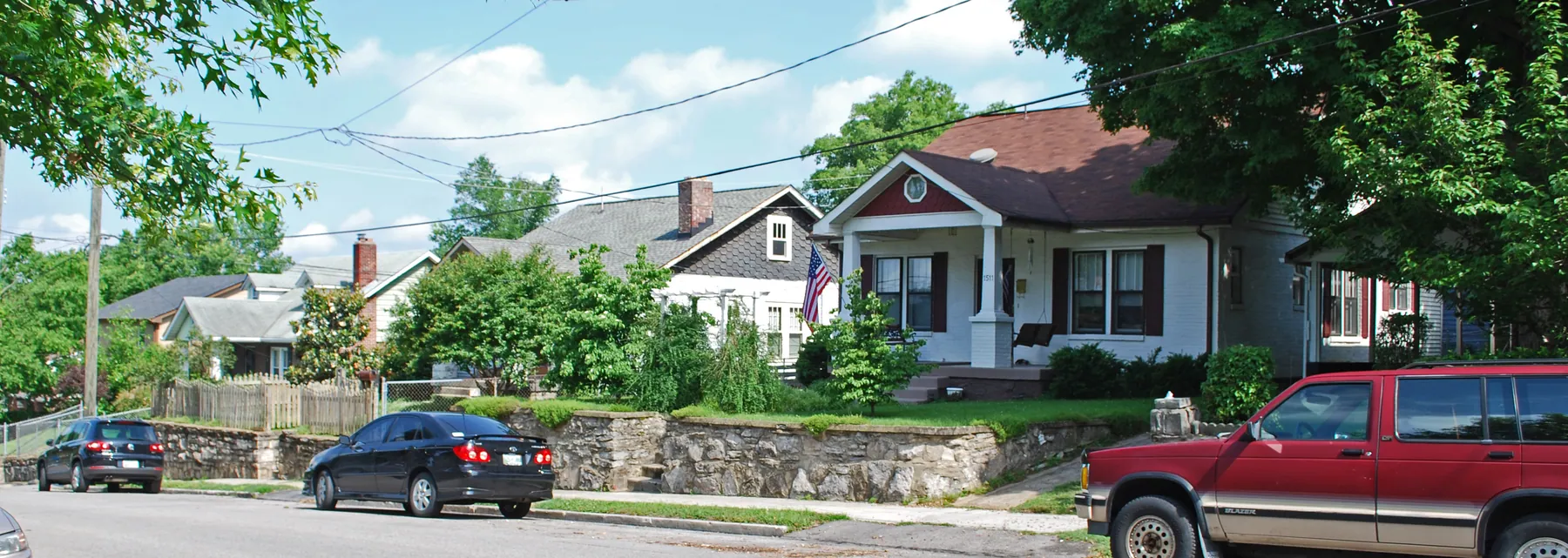
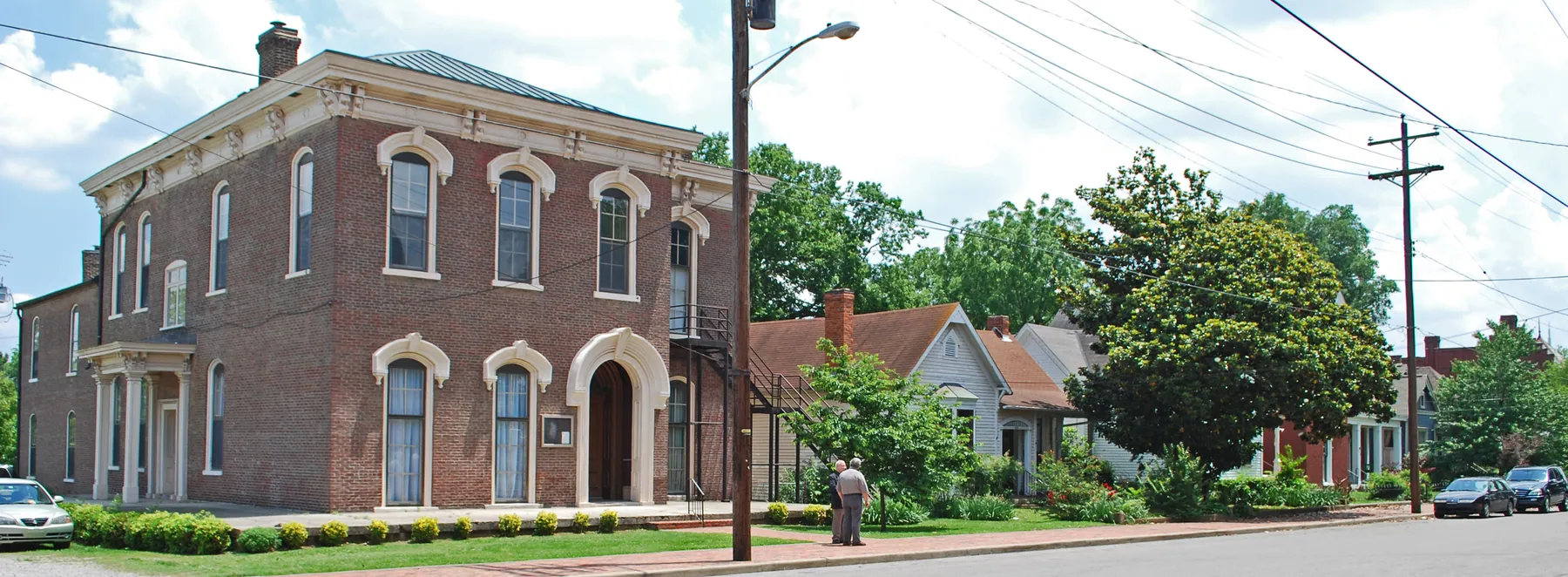
Photo: Andrew Jameson, CC BY-SA 3.0, via Wikimedia Commons. Cropped.
To keep this page, print it or choose Save as PDF in your browser's print window. The printout keeps the sources and the date.
More markets
All 28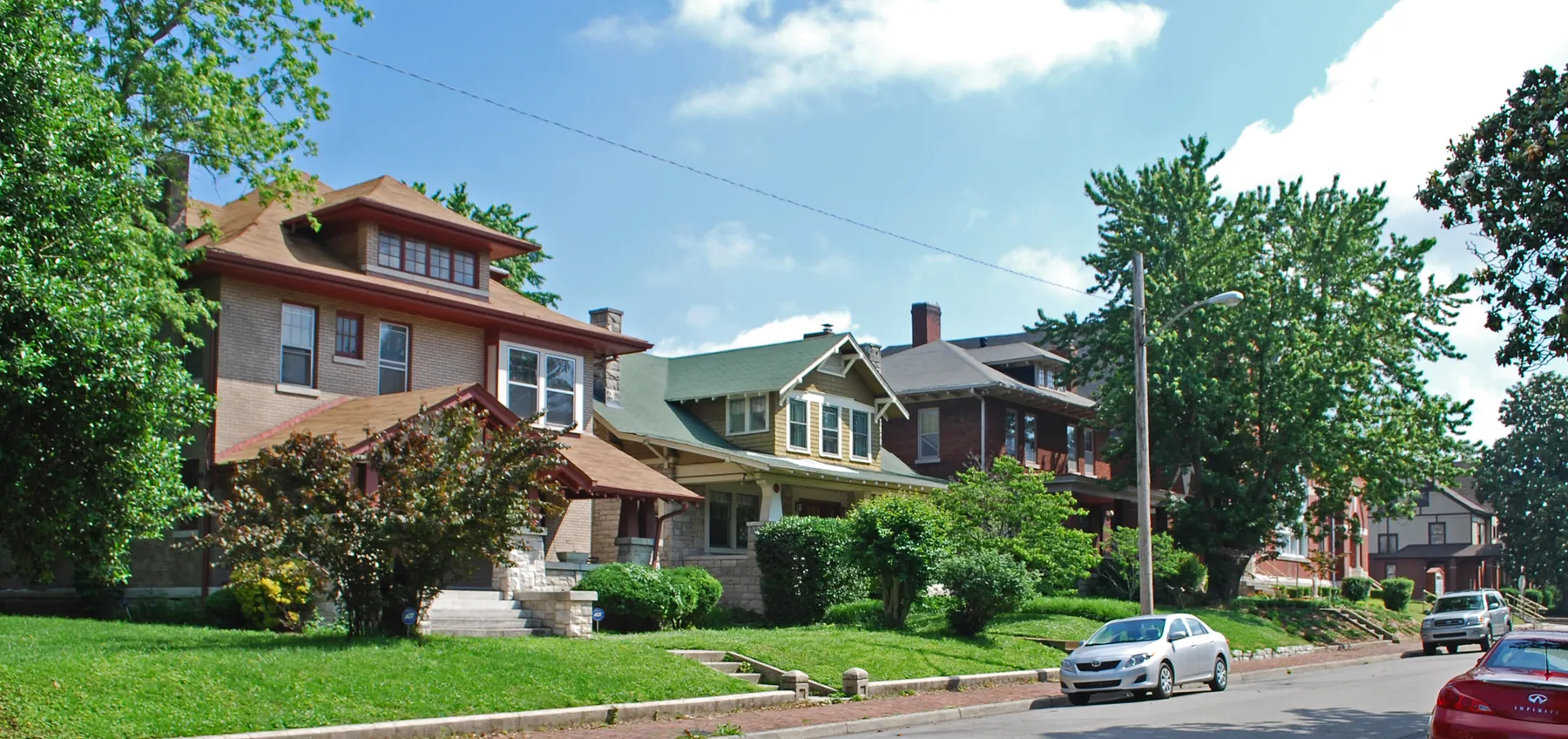
Edgefield
Edgefield is East Nashville's old riverside neighborhood, in ZIP 37206, facing downtown over the Cumberland.
Five Points
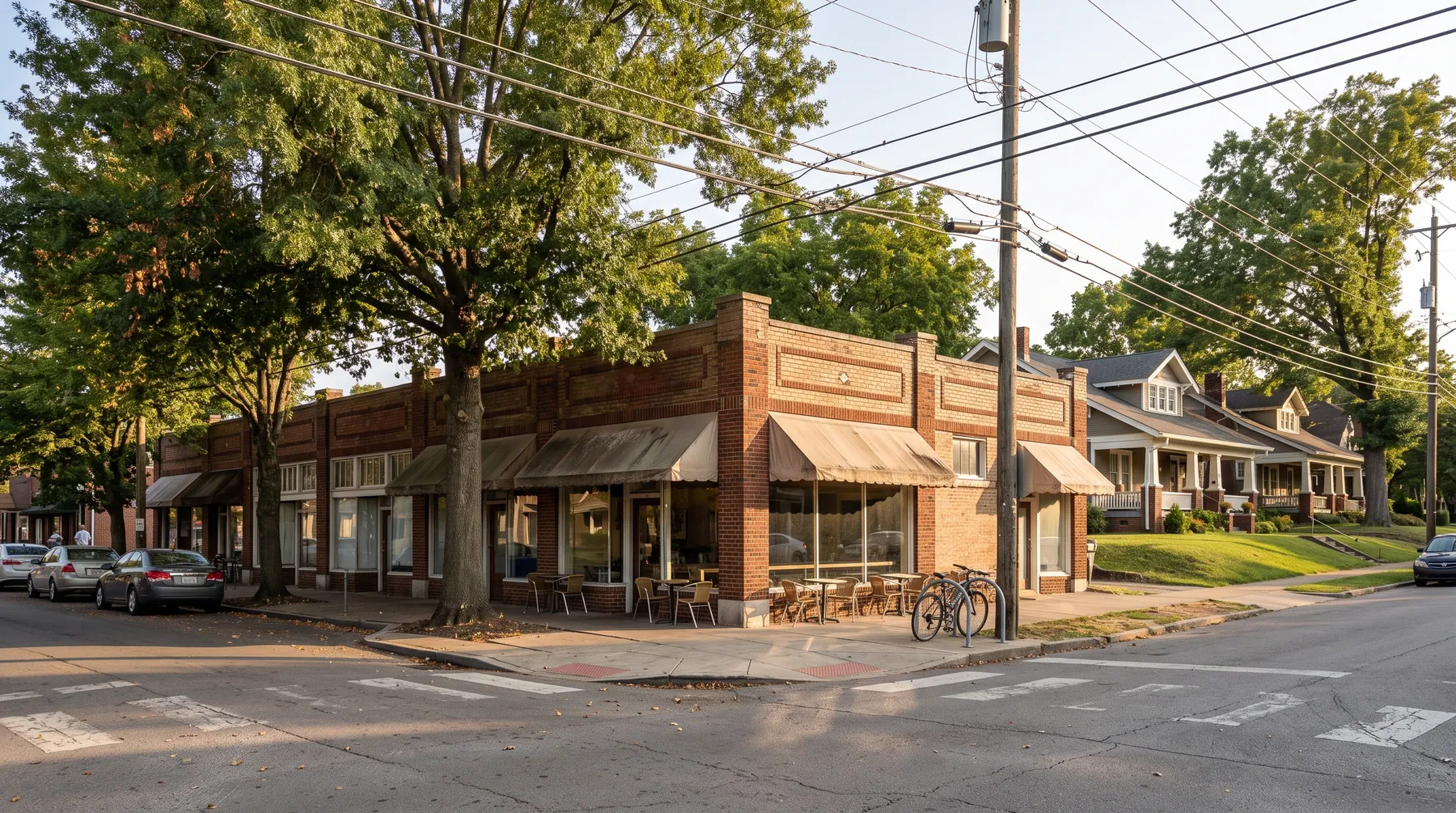
Five Points is the commercial crossroads of East Nashville, where Woodland Street, North 11th Street and Clearview Avenue meet.
Germantown
Germantown is the 19th-century neighborhood just north of the Tennessee State Capitol, with a minor league ballpark, a state park and the state museum in or beside it.