


Financing Small Multifamily in Tennessee
Financing a four-to-200-unit building starts with a question the loan documents do not answer: what income can the building legally earn after you close? In Nashville, short-term rental permits do not transfer to a buyer, so that question has a specific answer under Metro Code. This guide covers the loan limits we could confirm, the Metro rules a lender will ask about, and who to call before you sign.
- 2026 baseline conforming loan limit, one unit
- $832,750 (FHFA, announced November 25, 2025)
- STR permit fee
- $313 (Metro, February 2026 copy)
- STR permit term
- 365 days from issue
- Permit transfer on sale
- Not allowed; new owner must apply
- Fire Marshal inspection
- Required for 3+ dwellings on the property
On this page
- What this guide covers and what it does not
- Start with the unit count
- The one federal number we confirmed
- Davidson County limits for two to four units
- Tennessee recordation taxes at closing
- HUD-insured loans start at five units
- Debt service coverage loans: ask how the lender counts short-term income
- Short-term rental permits do not come with the building
- Zoning decides whether new permits are possible
- The 100-foot rule can block a permit
- Permits expire, and operating rules touch the numbers
- Other Metro rules that change a building's income
- Paperwork a buyer inherits as an applicant
- Who to call before you commit
- Questions
- Sources
What this guide covers and what it does not
Nothing here is legal, tax, lending or investment advice. Loan programs change their terms often, and the lender's written term sheet is the only place the real numbers live.
We could open and confirm two kinds of facts for this guide: the 2026 federal conforming loan limit, and the Metro Nashville short-term rental rules that decide what income a building can earn. We could not open the current term sheets for Fannie Mae or Freddie Mac multifamily loans, so this guide gives no interest rates, debt service coverage minimums or fee figures for those programs. Ask each lender for them in writing.
Start with the unit count
Lenders sort buildings by the number of units, and the sorting changes who underwrites the loan, what documents they ask for and how they count income. Before you call anyone, write down the exact number of dwelling units on the deed and in the Metro property records, and the number of rooms that are rentable.
Ask every lender the same first question: at what unit count does your loan stop being a residential product and become a commercial or multifamily product? The answer differs between lenders, and it decides which conforming limits, if any, apply to you. A four-unit building and a five-unit building can sit on opposite sides of that line at one bank and on the same side at another.
In Nashville the unit count also controls one local rule. For short-term permits, Metro's Fire Marshal inspects only multifamily structures, which its checklist sets at three dwellings or more. One- and two-family properties instead file a certificate signed by a licensed design professional or home inspector (Metro permit checklist and Apply page, 2026).
The one federal number we confirmed
The Federal Housing Finance Agency announced on November 25, 2025 that the 2026 baseline conforming loan limit for a one-unit property is $832,750. FHFA sets limits under the HERA formula, and publishes a full county list for 2026 that includes the higher limits for two-, three- and four-unit properties. The county file is open, and the Davidson County lines are in the next section.
FHFA's release says the 2026 baseline is $26,250 higher than 2025. It ties the 3.26 percent increase to average house price growth between the third quarters of 2024 and 2025. The ceiling for high-cost areas on a one-unit property is $1,249,125, which is 150 percent of the baseline. Download the FHFA county list, find Davidson County and the line for your unit count, and compare it to your planned loan amount before you talk to a lender.
Davidson County limits for two to four units
FHFA's 2026 county list (HERA-based, flat CSV, page last updated October 14, 2026) has a line for Davidson County, Tennessee, in the metropolitan area coded 34980. The limits are $1,029,250 for one unit, $1,317,650 for two units, $1,592,700 for three units and $1,979,350 for four units.
The Davidson one-unit figure is $196,500 above the $832,750 national baseline, so Nashville sits in a higher-limit area. A four-unit building financed at $1.9 million would fall under the Davidson four-unit limit, while the same loan in a county at the baseline would be a jumbo loan. FHFA's page describes the limits as the ceiling on mortgages Fannie Mae and Freddie Mac may buy. Whether a given lender sells your loan to them is the lender's choice, so ask.
A five-unit building has no line in this list. The columns stop at four units, which matches the cutoff question in the section on unit count: above four, lenders move you to multifamily or commercial products with their own sizing.
Tennessee recordation taxes at closing
Tennessee's Department of Revenue lists two recordation taxes: a realty transfer tax of $0.37 per $100 of purchase price, and a mortgage tax of $0.115 per $100 of indebtedness, with the first $2,000 of the debt exempt. Recordation taxes are filed monthly, on the 15th of the month after the period covered (Tennessee Department of Revenue, Recordation Tax, Due Date and Tax Rates, Wayback copy of September 2025).
Put numbers on it before you set a closing budget. On a $2,000,000 purchase, the transfer tax is $7,400. On a $1,500,000 loan, the mortgage tax is $1,722.70, which is $0.115 on each $100 of the $1,498,000 left after the exemption. Those two lines come to $9,122.70 before title, legal or lender fees, which this page does not quote.
The mortgage tax reaches the debt you record, so a lender's loan amount, a seller note or a second lien each add to it. Ask the title company to list every recorded instrument and its tax before closing, and ask your attorney who pays each line under the contract.
HUD-insured loans start at five units
HUD's Section 207/223(f) program insures lender loans to buy or refinance existing multifamily rental housing. The property must have at least 5 residential units with complete kitchens and baths, and must have been completed or substantially rehabilitated at least 3 years before the insurance application (HUD, Descriptions of Multifamily Programs, Wayback copy 2026).
The term cannot exceed 35 years or 75 percent of the estimated life of the improvements, whichever is less. The maximum loan is a percentage of the estimated value after repairs, and HUD lists 83.3 percent for market-rate projects, 85 percent for projects that meet its affordable housing definition and 87 percent where 90 percent or more of the rent is subsidized. The program does not take buildings that need substantial rehabilitation, or that would replace more than one major system. HUD requires critical repairs before endorsement and allows non-critical repairs within 12 months after closing.
Applications go through a lender approved for HUD's Multifamily Accelerated Processing, and HUD's regional office issues the commitment. HUD reports that in fiscal year 2024 it insured mortgages for 161 projects with 21,343 units, totaling $2.8 billion. That works out to an average of about 133 units per project, so this program is built for larger buildings. A building at the low end of Rad Stay's four-to-200-unit range, with four units, does not qualify at all.
Debt service coverage loans: ask how the lender counts short-term income
Many investors finance rental buildings with a debt service coverage ratio loan, which sizes the loan from the property's rental income rather than from the borrower's personal income. We did not confirm a published standard for these loans, since lenders set their own terms.
The question to put to a DSCR lender is how they count short-term rental income. Some lenders accept a track record of bookings, some accept a market rent study, and some count only a long-term lease rate. Ask which one applies to your building, and ask the lender to put it in writing before you pay for an appraisal.
A lender relying on short-term income will ask to see the permits. That is where the Nashville rules below come in.
Short-term rental permits do not come with the building
Section 6.28.030 issues each short-term rental permit to one applicant for one dwelling, and it cannot be assigned or transferred. Per Metro, the permit dies with the sale and the purchaser files fresh under current regulations. That includes retitling into or out of one's own LLC or trust, per Metro Codes' Operation page (2026).
So a seller's permit count tells a buyer about the past and gives the buyer nothing. A lender who underwrites short-term income from a seller's permit-based operating statement is underwriting income you may not be able to repeat. Treat every permit in the seller's package as something you must reapply for, and ask a Metro Codes staff member in writing whether each unit would qualify today.
Each unit is permitted alone, capped at four sleeping rooms; through June 23, 2026 the code set no count or share limit for a building.
Zoning decides whether new permits are possible
Our multifamily permits guide lists the districts that can receive absent-owner permits; residential, farm, DTC East and NS-tagged land cannot, and planned-unit sites follow their plans.
An existing holder in a residential zone can renew, but the permit cannot go to a buyer. For a lender and for you, a building in a residential zone with old permits is a building whose short-term income ends at closing.
Find the exact parcel's district on Metro's map, then have Metro Codes confirm eligibility before signing a contract with a financing contingency.
The 100-foot rule can block a permit
Parcels within 100 feet of a house of worship, school, park or licensed child care center also cannot get new absent-owner permits without a Council waiver, granted for most requests since 2023 but not all.
A waiver is a public process with a date, so build the time into your financing deadlines.
Permits expire, and operating rules touch the numbers
Permits run one year and renew on a reminder schedule; Metro may grant a 30-day grace for late renewal only where no complaints are documented. The fee in February 2026 was $313, with 2.3 percent added for cards; renewal fees come from the zoning administrator.
Operating rules trim income too: sleeping rooms set the guest cap, 12 at most, stays stop at 30 nights, and every permit needs liability insurance of $1 million and a nearby responsible party.
Put those costs and limits in the operating budget you give the lender. Unpermitted renting brings daily fines of $50 and a year's wait, and a third violation can cost a permit.
Other Metro rules that change a building's income
Zoning districts changed again recently. BL2025-1005 (Chapter 17.38), effective December 12, 2025, bars absent-owner rentals in RN and RL zoning and limits owner-occupied ones there to single-family buildings. Adaptive-residential lots fronting chiefly on local streets, or outside the USD, lose both permits under 17.16.030.F.12. Any permit in good standing as of August 1, 2024 is untouched.
Detached accessory dwelling units are a separate case. Newly built accessory dwellings also cannot carry owner-occupied permits, under G.12 of the same section. If a seller counts a backyard unit in the income, get Metro Codes' written answer on whether it can be permitted today.
Owner-occupied permits carry their own limits. Whole-home listings are barred on that permit, except a lawfully permitted detached unit, an accessory apartment, or one side of a duplex under covenant. In a duplex, both units must stay under one owner, who lives in one, with a covenant recorded at the Register of Deeds (Metro Code 6.28.030.A.2). A lender reading a two-family operating statement should know which unit the owner lives in.
Paperwork a buyer inherits as an applicant
Because the permit starts over, the application checklist becomes your closing checklist.
Ask the seller for the complaint and violation history of every unit before you price the loan.
No short-term rental ordinance appears in the Legistar titles we reviewed after June 23, 2026. Rules can still change, so ask Metro Codes which version will apply when you close.
Who to call before you commit
Make three calls before closing. First, a lender that actually writes loans at your unit count, with the written question about how short-term income is counted. Second, Metro Codes, to confirm the zoning district, permit eligibility and the 100-foot rule for each unit. Third, your own attorney and tax adviser, since entity structure matters: for owner-occupied permits Metro requires the owner to be a natural person, and an ownership change voids a permit.
Ask the lender and the title company about anything recorded against the property, and read any HOA or condo documents, since every applicant certifies that none of them bars renting. Metro's FAQ adds that an association may set tighter limits than Metro.
A management company can help you model the income by unit, but the loan terms are between you and the lender.
Questions
Does a seller's short-term permit pass to me with the building?
No; Section 6.28.030 bars any transfer or assignment. A buyer files fresh under whatever rules then apply. Confirm with Metro Codes.
What is the 2026 conforming loan limit?
FHFA set the 2026 baseline limit for a one-unit property at $832,750, announced November 25, 2025. For Davidson County, the 2026 list shows $1,029,250 for one unit, $1,317,650 for two, $1,592,700 for three and $1,979,350 for four.
What taxes does Tennessee charge when I buy and finance a building?
The state realty transfer tax is $0.37 per $100 of purchase price, and the mortgage tax is $0.115 per $100 of indebtedness, with the first $2,000 of debt exempt. On a $2,000,000 purchase with a $1,500,000 loan that is $7,400 plus $1,722.70. Confirm the rates and who pays with your attorney and title company.
Can I use a HUD-insured loan on a four-unit building?
Not under Section 207/223(f). HUD's program description requires at least 5 residential units with complete kitchens and baths, and completion or substantial rehabilitation at least 3 years before the application.
Will the Fire Marshal inspect the building?
Only with three or more dwellings, per Metro's checklist. Smaller properties file a licensed professional's certification instead.
Can I hold the permit in an LLC?
An absent-owner permit also ends, per Metro's Operation page, when title moves from an individual into an LLC or trust, or back. Owner-occupied permits require a natural person. Ask your attorney before you decide how to take title.
Sources
- Metro Nashville Codes, renew a short term rental property permit (Wayback copy, October 2026)
- Metro Nashville Codes, short term rental FAQ (Wayback copy, February 2026)
- Metro Code chapter 17.38 and 17.16.030, Municode
- Metro Council legislation search (Legistar API), short term rental bills
- FHFA, conforming loan limit values for 2026 (announced November 25, 2025)
- FHFA, conforming loan limit page and 2026 county list
- Metro Code 6.28.030, Municode
- Metro Code 17.08.030 land use table, Municode
- Metro Nashville Codes, Apply for a short term rental property permit (Wayback copy, August 2026)
- Metro Nashville Codes, short term rental permit types (Wayback copy, February 2026)
- Metro Nashville Codes, operation requirements (Wayback copy, February 2026)
- Metro Nashville Codes, not-owner-occupied checklist (Wayback copy, February 2026)
- FHFA, 2026 county loan limit list, HERA-based, CSV (Davidson County, TN line)
- Tennessee Department of Revenue, Recordation Tax, Due Date and Tax Rates (Wayback copy, September 2025)
- HUD, Descriptions of Multifamily Programs, Section 207/223(f) (Wayback copy, 2026)
Checked October 18, 2026.
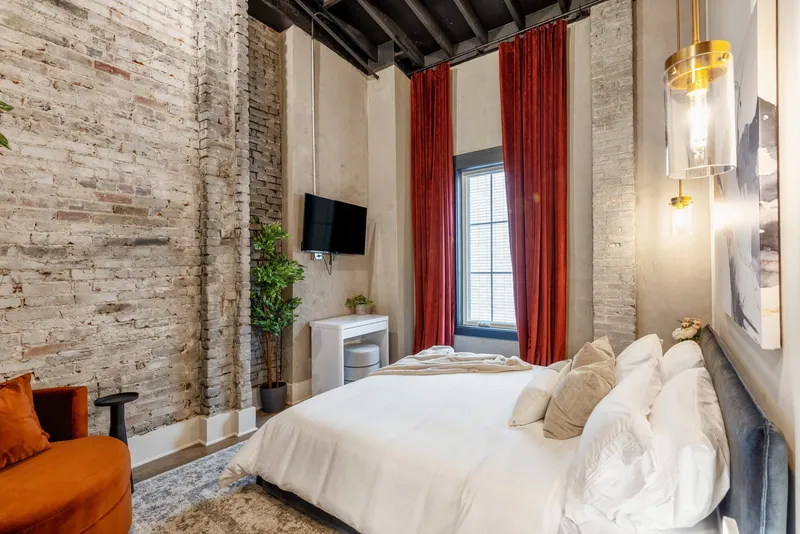
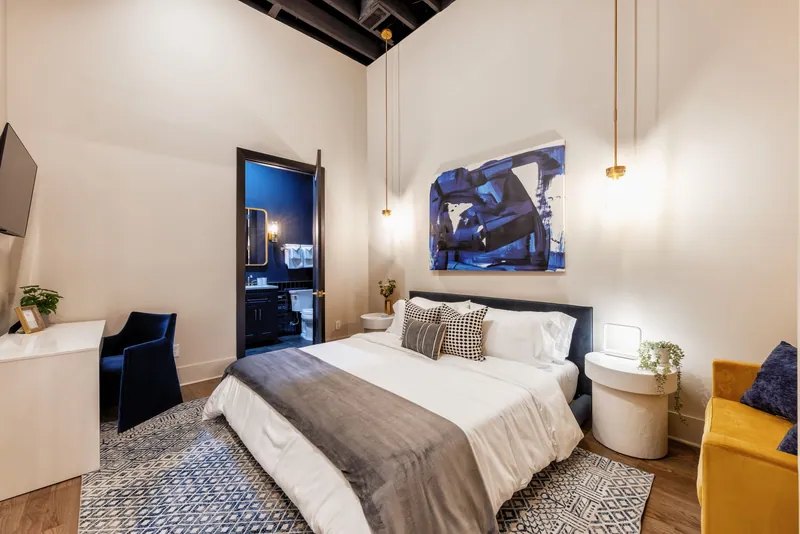
Top image: Illustration of a representative scene, not a specific property.
To keep this page, print it or choose Save as PDF in your browser's print window. The printout keeps the sources and the date.
More investment guides
All 4
Master Lease vs Management Agreement
An owner who wants someone else to run a Nashville building has two basic contracts to pick from: a management agreement, which leaves the owner as operator of record, and a master lease, under which an operator rents the whole building and runs it.

Underwriting a Short-Term Rental Building
Underwriting a short-term rental building means turning a unit count into a revenue line, then taking out everything that sits between the guest's payment and your net operating income.
Buying a Multifamily Building for Short-Term Rentals in Nashville
In Nashville the permit, more than the rent roll, sets what a multifamily building can earn by the night, and it does not convey with the deed.