










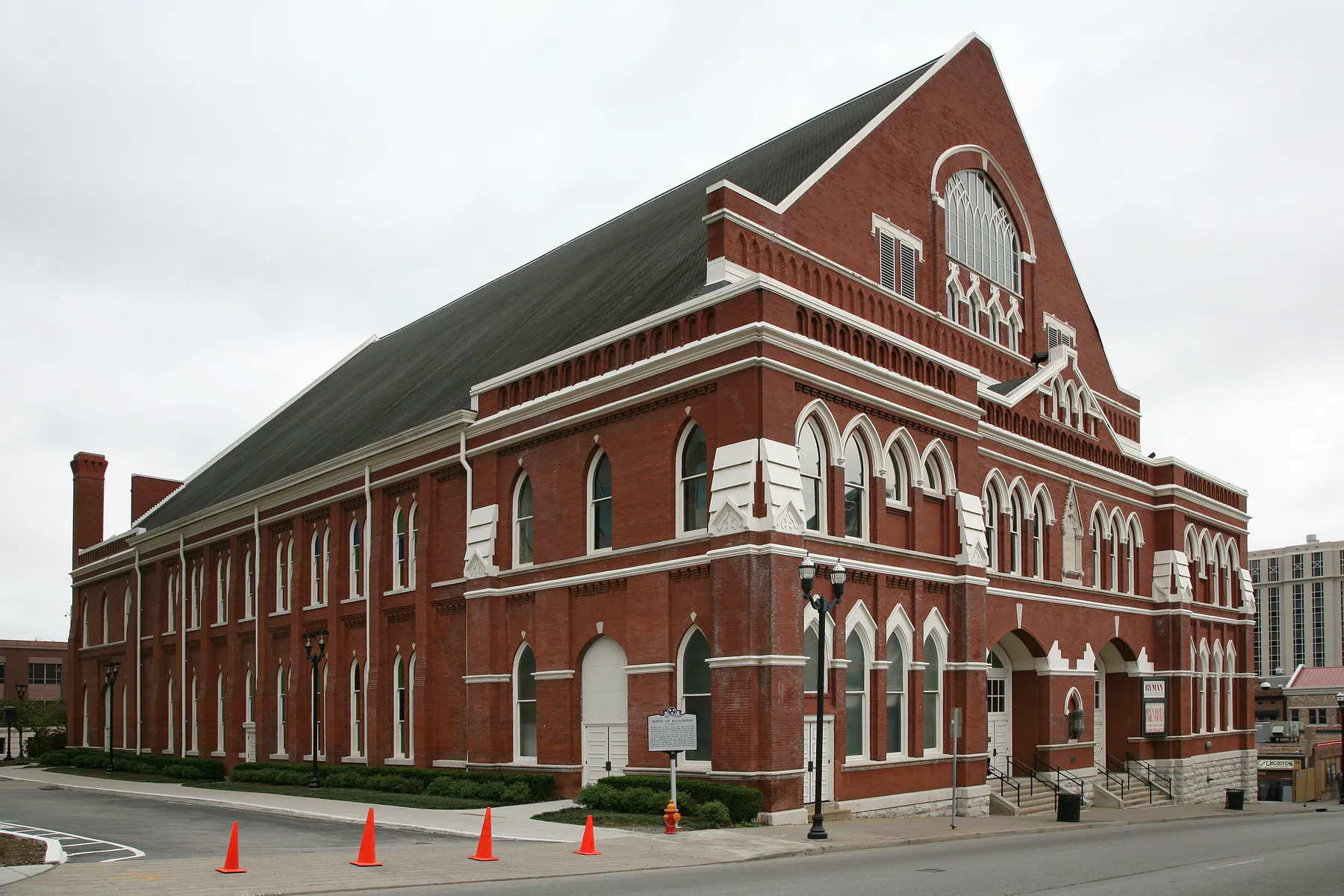
Downtown Nashville
Downtown Nashville is the central business district, Lower Broadway, Second Avenue, Printers Alley and the Capitol area. In four DTC districts absent owners can still get new permits, and Metro's October 2026 data showed 338 such permits issued in ZIP 37201. For an owner, the answer depends on the parcel, the building's documents and the block.
- ZIP codes
- 37201 and 37219; Metro permit records also show 37203
- Zoning to know
- DTC North, DTC South, DTC-West and DTC Central allow new not-owner-occupied permits; DTC East does not
- Issued STR permits, ZIP 37201
- 346 (8 owner-occupied, 338 not-owner-occupied), Metro data retrieved Oct. 6, 2026
- Issued STR permits, ZIP 37219
- 78 (3 owner-occupied, 75 not-owner-occupied)
- Downtown residents
- About 23,335 in 16,802 units at midyear 2026, per the Nashville Downtown Partnership (as reported by a downtown real estate guide)
- Workers downtown
- About 88,000 (Downtown Partnership 2025 annual report, as reported by NASHtoday)
On this page
- Where downtown is
- How the building stock developed
- Housing and buildings today
- Older buildings, lofts and mixed-use blocks
- Downtown zoning and short-term permits
- Issued permits in ZIPs 37201, 37219 and 37203
- Council waivers on the 100-foot rule
- Who visits and why
- Employers, offices and mid-term demand
- Long-term demand
- Development from 2023 to 2026
- Getting around
- Which building types fit
- Checks before a downtown purchase
- Rad Stay on a downtown building
- Questions
- Sources
Where downtown is
Downtown sits on the west bank of the Cumberland River. For its 2024 Business Census, the Nashville Downtown Partnership counted every business inside the interstate loop and south of Jefferson Street as downtown. Metro also has a separate Downtown Code, which added an East Bend subdistrict across the river in 2026. The center point used on this page is Lower Broadway, which runs from First Avenue to Fifth Avenue.
Three ZIP codes matter for this page. ZIP 37201 and ZIP 37219 cover the core. ZIP 37203, with 1,706 issued permits in Metro's records, is counted here too. If you are reading a permit list, a listing or a tax bill, check the ZIP against the street address and the parcel's zoning, because ZIP and zoning boundaries are drawn separately.
Broadway runs through the middle of downtown, and SoBro, the area south of it, is covered on its own page. Capitol Hill, with Legislative Plaza and the Bicentennial Capitol Mall State Park, is covered below. The Printers Alley block, where Rad Stay's Union Street Lofts sit at 329 Union Street, is a short walk from Lower Broadway.
Nashville is a consolidated city-county, and the city had 689,447 residents in the 2020 census, with a 2025 estimate of 721,074. The metro area had 2,150,553 residents in 2020, up 343,319 from 2010. Downtown is a small part of that total, but it holds the concentration of offices, venues and hotels that the rest of the region visits.
How the building stock developed
Downtown's buildings come from several eras. The older commercial blocks went up in the 1870s and 1880s. Second Avenue's three- and four-story Victorian Italianate buildings date from then, and the street was called Market Street until 1903. Broadway was first named Broad Street, and the first public high school in the city was built on it in 1875. Around 1830 Printers Alley became the hub of Nashville's printing trade, and by 1915 it housed two big newspapers, 10 print shops and 13 publishers.
The Life and Casualty Tower, completed in 1957, made the skyline much taller, and the AT&T Building, now 333 Commerce, followed in 1994. According to the Wikipedia tallest-buildings list, the current building boom began in the early 2010s, and several of the towers it produced are hotel or residential towers, described below. The same list names 333 Commerce, completed in 1994 at 617 feet, as the tallest completed building in Nashville, and counts 40 completed buildings taller than 300 feet, plus 2 that had topped out, in its 2026 version. It describes the 12-story First National Bank Building of 1905 as the city's first high-rise.
Public buildings changed the district too. The Music City Center convention hall opened in May 2013. In May 2010, flooding killed eleven people in the Nashville area and caused more than $2 billion in damage, and drainage backups let several inches of water into Bridgestone Arena. That flood is covered in the due-diligence section below.
Housing and buildings today
The Nashville Downtown Partnership counted about 22,000 residents in its 2025 annual report, up 10 percent from 2024, as reported by the Nashville Post and NASHtoday. By its midyear 2026 residential update, as reported by a downtown real estate guide, the numbers were 23,335 residents in 16,802 units, with 1,490 units under construction and 9,394 planned.
Named residential towers include 505 at 505 Church Street, a 46-story, 535-foot tower finished in 2018. The Place at Fifth and Broadway, 34 floors, followed in 2020. In 2022 the Four Seasons Hotel and Residences (40 floors, 542 feet) and the Conrad Hotel and Residences (34 floors) were completed. Alcove at 900 Church Street, 34 floors and finished in 2023, offers residences for lease only. The tallest-buildings list also includes Prime (2024) and The Emory and The Everett (both 2025). Viridian Tower, a 31-story residential building, dates from 2006.
Nashville Yards, a 19-acre mixed-use development by Southwest Value Partners, includes 673 residences in two towers, with condominiums for sale and apartments for lease. Its Pinnacle at Nashville Yards office tower was completed in 2025 and Amazon Tower Two in 2023.
Hotels are part of the same skyline. The JW Marriott Nashville (35 floors, 2018) and the Renaissance Nashville Hotel (35 floors, 1987) are on the tallest-buildings list, and the Union Station Hotel has 65-foot vaulted ceilings. Some towers combine a hotel and residences, as the Four Seasons and the Conrad do. Buying one condo there differs completely from buying a whole apartment building, the kind Rad Stay aims to manage.
Older buildings, lofts and mixed-use blocks
Older blocks matter to a manager of buildings with 4 to 200 units. The Second Avenue Commercial District runs along Second Avenue North between Brandon Street and Broadway. Its buildings are mostly three and four stories and mostly Victorian Italianate, with a few in the Commercial Style, and the district's National Register listing came in 1972. A 1985 fire led to the demolition of three buildings there, and the 2020 bombing on Second Avenue North damaged many buildings in the area.
Broadway's historic district joined the Register on July 18, 1980. Its landmarks include the Union Station Hotel (1969 listing), Hume-Fogg High School (1974), the Customs House (1972) and the Frist Art Museum (1984). Printers Alley, the blocks between Union and Church and between Third and Fourth, became a historic district in 1982. That district spans roughly 5 acres of Italianate, Queen Anne and Romanesque fronts, from Third to Fourth Avenue and from Bank Alley across both sides of Church Street. The last printing company left the alley in 1977.
Union Street Lofts shows one use of an older downtown building: Units 201 to 204, the four lofts upstairs at number 329, each holding its own April 2023 permit.
Downtown zoning and short-term permits
Downtown, absent owners can, with conditions, get new permits under Section 6.28.030 in the North, West, South and Central DTC districts, but not in DTC East; the zoning guide linked below covers the other qualifying districts.
DTC East is not on the list. DTC East, residential and farm zoning, industrial land and the ON and OL districts are not on the list. Both permits are off the table under an NS suffix, and an SP or PUD parcel needs the plan's approval of the use. Some adaptive-residential lots are shut out as well.
East of the river the zoning is changing. A downtown real estate guide reports that Metro added an East Bend subdistrict by ordinance BL2026-1273, effective May 1, 2026, and that Metro Planning's February 2026 staff report says the Downtown Code's East use area prohibits short-term rental. If your building is near the river, get the current zoning letter from Metro, not a summary.
Owner-occupied permits are a separate path. Only an owner living in the unit qualifies for the owner-occupied permit. That is not a model for a 40-unit building.
Historic overlays do not change the permit test. Chapter 17.36 attaches nothing about short-term rentals to historic overlays, leaving the base zoning in charge. The overlay is a separate set of rules about changes to the building, taken up further down.
Issued permits in ZIPs 37201, 37219 and 37203
Metro's open data sorts permits by status. With data pulled October 6, 2026 and filtered to Issued, Metro counted 7,022 permits countywide. ZIP 37201 had 346: 338 not-owner-occupied, 8 owner-occupied. That is roughly 4.9 percent of all of them, and 98 percent of the ZIP's permits are for absent owners. ZIP 37219 had 78, with 3 owner-occupied and 75 not-owner-occupied.
Between them, the two core ZIPs hold 424 issued permits, about 6 percent of the county. ZIP 37203 held 1,706, 89 of them owner-occupied. That is the most permits of any ZIP in the county's data.
Read the counts carefully. A permit belongs to an owner and a unit. A permit is not an asset of the building: it cannot be assigned, and a sale, or retitling the property into your LLC or trust, voids it, so the buyer starts over. A high count in a ZIP shows where permits were issued in the past. It does not guarantee a new one to a buyer.
Permits also expire 365 days after they are issued, with renewal emails from Metro at 60 and 45 days before. A 30-day grace period applies only if there are no documented complaints.
The day-to-day rules apply to each unit in a downtown building. Metro's permit fee was $313 in its February 2026 copy, plus a 2.3 percent card processing fee.
The rules have changed in the last three years. The 100-foot distance rule came from BL2023-1884, passed August 1, 2023. BL2024-478, signed by the Mayor on November 12, 2024, made a change of owner void the permit and reworked waivers. Legistar's titles show no new short-term rental ordinance since June 23, 2026, the date of the Municode copy used here.
Council waivers on the 100-foot rule
Downtown owners have gone to the Council for 100-foot waivers. Most of the 30-plus waiver resolutions Legistar shows for 2023 to 2026 passed. One downtown case went the other way first. One that failed, RS2024-479, sought 62 units in the building at 160 2nd Avenue North and lost on June 4, 2024; RS2024-580, a narrower request there for 55 units, passed that July 2.
The lesson for an owner is practical. A waiver is a public vote on a specific unit count, and a smaller request can succeed where a larger one failed. The Council record is public, so read the resolution for any building near the one you are buying.
Who visits and why
Wikipedia describes the Lower Broad district as lying between Second and Fifth avenues. Its honky-tonks run live music from as early as 10 a.m. to 3 a.m. or later each day. Named venues include Acme Feed and Seed, in a building the Wikipedia article calls 100 years old; Nashville Underground, a 40,000-square-foot honky-tonk; Ole Red, owned by Blake Shelton; and the Hard Rock Cafe, at the edge of Riverfront Park. Also on Broadway, the Ernest Tubb Record Shop, founded in 1947, is the broadcast site of the Midnight Jamboree on WSM 650 AM. Bridgestone Arena, at 501 Broadway, opened on December 18, 1996, seats 17,159 for hockey. For concerts the arena lists about 10,000 for half-house shows, 18,500 for end-stage shows and 20,000 for center-stage shows. It is home to the Nashville Predators. It has hosted the CMA Awards every year since 2006 except 2020, the NHL Entry Draft in 2003 and 2023, UFC on ESPN cards on August 5, 2023 and July 12, 2025, and the Music City Rodeo each late May since 2025. A three-year renovation began there in summer 2026.
The Frist Art Museum and the Music City Center sit downtown as well.
CMA Fest drew 95,000 fans a day, according to the Downtown Partnership's 2025 annual report as reported by NASHtoday, with $86 million in visitor spending. For a short-term rental manager, event weekends like these are the dates to plan pricing around.
The state's seat of government draws a second group. The Tennessee State Capitol stands on Capitol Hill, the highest point downtown. It was officially completed in December 1859, when work on the library was finished, and became a National Historic Landmark in 1971. The Bicentennial Capitol Mall State Park lies directly north of it across James Robertson Parkway, and Legislative Plaza is directly south.
Employers, offices and mid-term demand
About 88,000 people work downtown, according to the Downtown Partnership's 2025 annual report as reported by NASHtoday. The Nashville Post reported downtown office vacancy of 16.6 percent from that report, and Class A vacancy of about 21 percent.
The tallest-buildings list includes office towers. Tennessee Tower, named for William R. Snodgrass (1970, 31 floors), and the James K. Polk State Office Building (1981, 24 floors) are listed, along with 333 Commerce (1994, 617 feet, the tallest completed building on the list), Fifth Third Center (1986) and Bridgestone Tower (2017). Amazon Tower Two, finished in 2023, is part of Nashville Yards. A guest staying a month or longer is a different customer from a weekend visitor. This page has no booking data on mid-term demand, so test it before you underwrite it.
Metro's rule shapes this. Anything past 30 days is a leased rental outside the permit. In a downtown building you can mix the two, and the building's lease and condo rules decide what is allowed.
Long-term demand
This page does not quote a rent figure. Before underwriting a building, check live listings for current asking rents in comparable downtown buildings.
The Downtown Partnership's midyear 2026 numbers show a market still adding housing: 23,335 residents in 16,802 units, with 1,490 units under construction and 9,394 planned, as reported by a downtown real estate guide. A building with no permit path can still be leased monthly or yearly, and a permitted one can choose among three models. Rad Stay manages all three.
Development from 2023 to 2026
Downtown's business group, the Nashville Downtown Partnership, reported 2,975 units under construction in its 2025 annual report and 1,490 at midyear 2026, about half as many. Towers that opened in the period include Alcove and Amazon Tower Two (2023), Prime (2024), and The Emory, The Everett and the Pinnacle at Nashville Yards (2025).
Under construction on the Wikipedia tallest-buildings list: the Paramount tower at 1010 Church Street, planned at 750 feet and 60 floors for 2028; Pendry (2027); Nashville EDITION (2027); and Voce (2027). A downtown real estate guide reports a September 15, 2025 groundbreaking for Paramount from developer press coverage, which is not a Metro record.
Voters approved the Choose How You Move transportation referendum on November 5, 2024. The earlier Let's Move Nashville plan was rejected on May 1, 2018, by a 2-to-1 margin. East Bend, across the river, was added to the Downtown Code in 2026 as a new subdistrict, and its zoning is what an owner there needs to read first.
Getting around
Printers Alley, Lower Broadway, Bridgestone Arena at 501 Broadway and the Tennessee State Capitol on Capitol Hill are all downtown, and the Union Street Lofts block is a short walk from Lower Broadway.
WeGo says Route 18 connects WeGo Central's Elizabeth Duff Transit Center with Nashville International Airport (BNA). Express trips take about 20 minutes, local trips 35 to 45 minutes depending on traffic, and the fare is $2 each way for adults.
Interstates 40, 65 and 24 meet near downtown, and Interstates 40 and 65 run beneath Broadway between 13th and 14th avenues. Metro Code bans visible RVs, buses or trailers tied to a rental. Put parking instructions and cost in writing for guests before arrival, because downtown garages and lots are not part of your building unless your deed or lease says so.
Which building types fit
Three types fit downtown best. Historic upper-floor lofts and small buildings on Second Avenue, Printers Alley and nearby streets come closest to Union Street Lofts: few units, shared stairs, a Fire Marshal visit and an overlay. Buildings with storefronts or offices below and apartments above are the second fit. Hotel-style conversions, where a small hotel or office building becomes extended-stay apartments, are the third.
Luxury condo units in towers are a different decision. Metro's FAQ says an HOA's rules can be stricter than the city's, and a downtown real estate guide cites section 13-7-605 of the Tennessee Code as saying the state act does not prevent a condominium association from restricting short-term rental use under its governing documents. That statute was not checked against its text here, so ask an attorney.
Checks before a downtown purchase
Work through the parcel in this order. First, the parcel's zoning district from Metro's zoning records: a DTC North, South, West or Central parcel passes the first test, and a DTC East, NS-suffix or residential parcel does not. Second, any SP or PUD, which can override the base district. Third, the distance rule: a licensed day care, park, church, or school or its playground inside 100 feet blocks any new absent-owner permit, unless 21 Council votes on a resolution waive it, following a hearing and mailed notice, and a whole building's units can share one resolution. It has applied since August 11, 2023. Projects under active development in 2020 are exempt, and a waiver also needs a sign on the property for two weeks.
Fourth, the historic overlay: Second Avenue's overlay district dates from March 1997, set up by the Metropolitan Historic Zoning Commission. Ask Metro whether the parcel sits in an overlay before you plan any change to the building.
Fifth, fire safety. Metro handles a building of three-plus dwellings differently from a house: the Fire Marshal inspects it instead of a private inspector certifying it. Request the Fire Department's applicant checklist early and compare it with the building.
Sixth, the ground itself. The May 2010 flood killed eleven people in the Nashville area and caused more than $2 billion in damage, according to Wikipedia. Look the parcel up on FEMA's flood map and get a flood insurance quote before making an offer.
Seventh, the documents: each applicant certifies that renting breaches no lease and no HOA, condo or co-op agreement. Written notice must go to every adjacent owner before filing, including those above and below. The rest of Metro's operating rules, guest caps, listings, insurance and the on-call responsible party among them, are in the permits guide for multifamily buildings.
Last, noise. Near Lower Broadway live music can run until 3 a.m. or later.
Rad Stay on a downtown building
Rad Stay operates Union Street Lofts, a DTC building downtown, and manages stays by the night, the month and the year, plus commercial, industrial and warehouse property. Union Street Lofts carries 214 Airbnb reviews at a 4.98 average, with host Kasra as a Superhost.
For a downtown building, a manager's work comes down to a list of services. Rates are set around event weekends and slow weeks. Guest communication covers arrival, parking and noise expectations before check-in. Cleaning coordination handles turnovers between stays. Booking automation keeps calendars in sync across channels. Permit and tax support covers Metro's paperwork, including the permit number in every listing.
It also reviews downtown buildings for owners thinking of a sale, lease or partnership. If you own or are weighing a downtown apartment building, the first question is the parcel: its district, its documents and its permits. This is general information rather than legal or tax advice; check every rule with Metro Codes.
Questions
Is downtown Nashville zoned for short-term rentals?
Partly. With conditions, yes in every DTC district except East, and in some business and mixed-use districts. DTC East and the residential districts are not on the list, and an SP or PUD must allow the use. Have Metro Codes check the parcel.
What do the downtown ZIP codes show for issued permits?
In the open data for October 6, 2026 there are 346 in 37201 (338 for absent owners) and 78 in 37219 (75 for absent owners). ZIP 37203 has 1,706.
Does the seller's permit transfer when I buy a downtown building?
No.
Do historic overlays stop short-term rentals?
Not on their own. Chapter 17.36 has no nightly-rental rule for historic overlays, so the base district decides. The overlay is a separate set of rules about changes to the building, so ask Metro whether the parcel sits in one.
How many people live downtown?
The Nashville Downtown Partnership counted about 22,000 residents in its 2025 annual report. Its midyear 2026 update, as reported by a downtown real estate guide, counted 23,335 residents in 16,802 units.
Sources
- Metro Code chapter 6.28 and Title 17 zoning, Municode (current through June 23, 2026)
- Metro Nashville Residential Short Term Rental Permits (open data), status Issued, retrieved Oct. 6, 2026
- Metro Council legislation records, Legistar (waiver resolutions RS2024-479 and RS2024-580; bills BL2023-1884 and BL2024-478)
- Metro Codes, Apply for a Short Term Rental Property Permit (Wayback copy, Aug. 22, 2026)
- Nashville Fire Department, Short Term Rentals Applicant Checklist
- Downtown now home to about 22,000 residents, Nashville Post (2025 annual report figures)
- Downtown Nashville Condos and High-Rises 2026, Erin Krueger (cites Nashville Downtown Partnership midyear 2026 update and Metro Planning)
- These 10 stats and facts show how downtown changed in 2025, NASHtoday
- Metro Codes, Short Term Rental Frequently Asked Questions (Wayback copy, Feb. 11, 2026)
- WeGo Public Transit, Nashville International Airport (Route 18)
- Wikipedia, Nashville, Tennessee
- Wikipedia, List of tallest buildings in Nashville
- Wikipedia, Broadway (Nashville, Tennessee)
- Wikipedia, Bridgestone Arena
- Wikipedia, Printer's Alley
- Wikipedia, Second Avenue Commercial District
- Wikipedia, Tennessee State Capitol
Checked October 18, 2026.
Photo: Daniel Schwen, CC BY-SA 4.0, via Wikimedia Commons. Cropped.
To keep this page, print it or choose Save as PDF in your browser's print window. The printout keeps the sources and the date.
More markets
All 28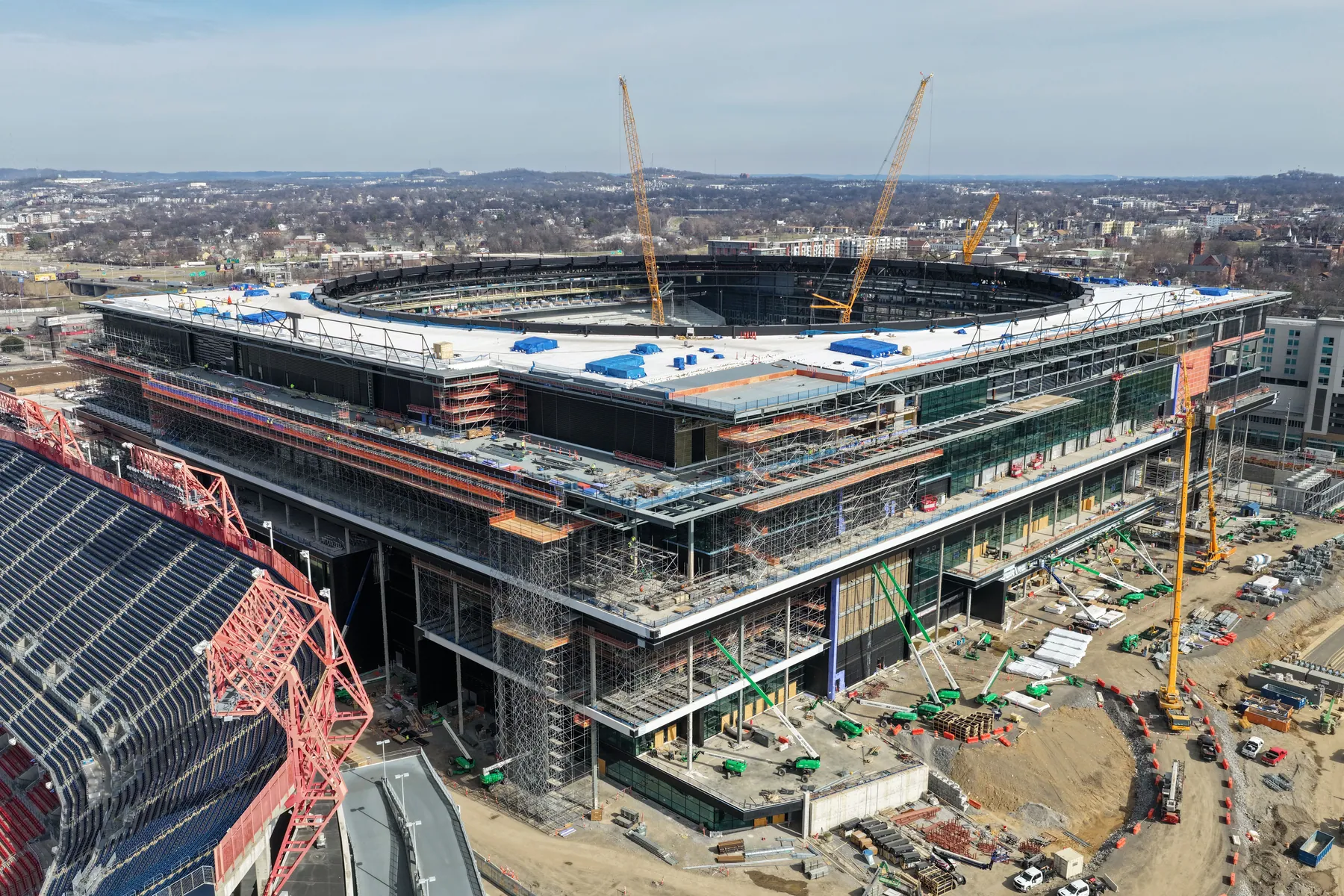
East Bank
The East Bank is the strip facing downtown over the river, where the Titans play now and where a new enclosed stadium, a master-planned district and an Oracle campus are going up.
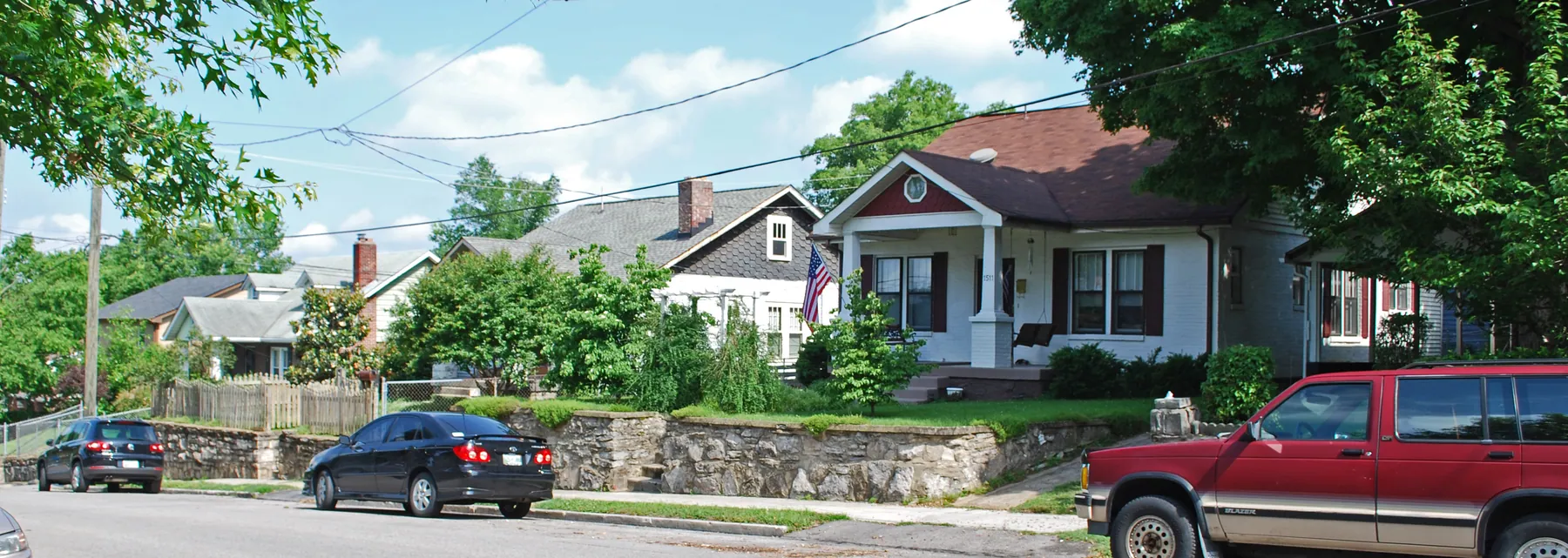
East Nashville
East Nashville covers the big stretch on the far bank of the river from downtown, and the rules can flip between neighboring streets.
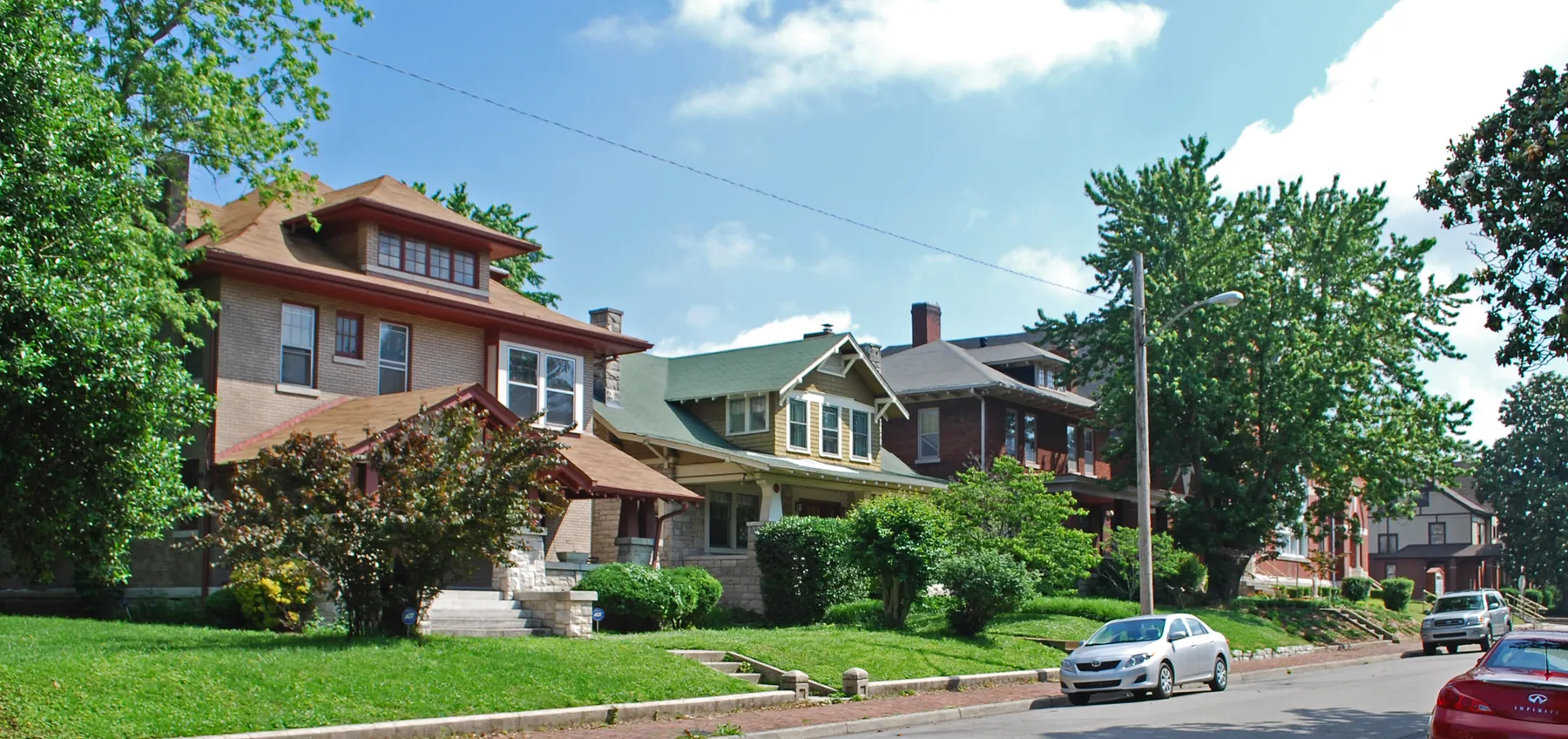
Edgefield
Edgefield is East Nashville's old riverside neighborhood, in ZIP 37206, facing downtown over the Cumberland.