



Mid-Size Apartment Buildings
A building of 50 to 200 units is big enough to need a real operating plan and small enough that one owner or one small fund can still make the call. In Nashville the answer depends first on the zoning under the building, because short-term rental permits are tied to zoning district and issued unit by unit. This page covers what changes at this size.
- Size range
- 50 to 200 dwelling units
- STR permits
- One permit per unit, up to four bedrooms each
- Fire inspection
- Fire Marshal inspection for 3+ dwellings on the property
- Zoning for new non-owner-occupied permits
- Mixed-use, office, commercial and DTC North, South, West and Central
- Issued non-owner-occupied permits, ZIP 37203
- 1,617 (retrieved October 6, 2026)
- Checked
- October 19, 2026
On this page
- What counts as mid-size
- Zoning decides first
- Permits are per unit, with no percentage cap
- The 100-foot rule and Council waivers
- Fire Marshal inspection
- Fair Housing Act accessibility
- Occupancy tax and guest limits
- Nashville scale and where the permits are
- Permits do not transfer
- Operating models
- Operations at this size
- Risks
- What Rad Stay handles
- Questions
- Sources
What counts as mid-size
This page uses 50 to 200 units. Below that, see the small apartment building page.
At 50 to 200 units you rarely turn the whole building into short-term rentals at once. More often an owner converts a block of units, a floor, or a group of furnished units, and keeps the rest on 12-month leases or mid-term stays. The rules below decide how much of the building can legally go short-term.
Zoning decides first
For a mid-size building, zoning settles most of it: only districts listed in Section 6.28.030, set out in our permits guide, are open to new absent-owner permits. Farm and house zoning, the ON and OL office districts, DTC East and the three industrial zones get a blank in that column of the use table.
Two practical consequences follow. A 120-unit garden-style complex zoned RM cannot get new non-owner-occupied permits, whatever its size. Per Metro's permit-types page, someone already permitted on residential zoning can renew, but a sale ends it. A mid-rise in DTC Central or a commercially zoned corridor building can.
Two more checks before you underwrite anything. Any district carrying the NS tag, CS-NS for example, rules out both permit types. A mid-size building governed by a Specific Plan, or sitting inside a PUD, can host short-term units only where that plan's text permits them. Plans can be changed for this: BL2026-1268, passed March 17, 2026, moved a parcel zoned RM20-A into an SP written to allow short-term rentals by owners who live elsewhere. If your building sits in the wrong district, a rezoning or SP amendment is a Council process, and it takes a public hearing.
Permits are per unit, with no percentage cap
Metro has no separate multifamily permit. Each apartment is permitted separately, four sleeping rooms being the limit. A 100-unit building that converts 40 units needs 40 permits, 40 applications and 40 sets of paperwork.
We found no rule limiting the share of a building's apartments that rent short-term. Do not invent a cap, and do not read its absence as permission from a lease, condo declaration or HOA. Each application includes a signed promise that renting breaks no HOA agreement, bylaw, condo or co-op agreement, or lease, and the city's FAQ adds that associations may set tighter rules.
Each permit carries an operating checklist. Before filing, the applicant notifies each adjoining owner in writing, and for an apartment that list takes in the units above and below. Liability insurance of at least one million dollars per occurrence is required. The permit number must appear prominently in every listing. The permit expires 365 days after issue and is renewed yearly. Applying costs $313 according to the February 2026 version of Metro's FAQ; the zoning administrator sets what renewal costs, so ask Metro for today's renewal figure.
The 100-foot rule and Council waivers
Distance matters too: with a park, church, day care or school inside 100 feet, a building gets no new absent-owner permits unless Council waives the rule. At mid-size scale this matters because one nearby church, school or park can block every unit in the building.
The Council may lift that bar through a resolution, once it holds a public hearing, mails notice to owners within 600 feet and the site has shown a sign for 14 days. It takes 21 yes votes, and a whole block of apartments in one development can go into a single resolution. The record shows how this plays out at this size. Resolution RS2024-479 sought waivers for 62 units of the 160 2nd Avenue North building and failed on June 4, 2024. A follow-up, RS2024-580, trimmed the request to 55 apartments there and passed on July 2, 2024. Our Legistar review counted over 30 waiver resolutions filed from 2023 through 2026, nearly every one approved. Waivers are not guaranteed, so build the hearing into your schedule.
The distance rule spares buildings in active development during 2020, meaning a master permit issued by the first of September 2020 or 50 percent built.
Fire Marshal inspection
Under Metro's checklist the Fire Marshal inspects every multifamily structure, defined as three dwellings or more. A mid-size building always falls in that group. A one- or two-family home may submit a signed certification instead; a 50-unit building may not.
Whether the original construction class still fits, and whether short-term units change the building's occupancy class, are questions to put to a licensed architect and to the Fire Marshal. We have not confirmed code thresholds for sprinklers, alarms or change of use in the building code Metro currently enforces, and we are not stating them here. The right order is to ask first, before you spend on furniture. The fire and life safety guide covers what to ask.
Fair Housing Act accessibility
Those federal design rules cover multifamily dwellings first occupied later than March 13, 1991. Under HUD's rules (24 CFR 100.205 and 100.201), any building with four or more units and an elevator is covered in every unit. In a walk-up of four units or more, coverage stops at the ground floor.
For an owner this has two uses. When you buy, ask for the original plans and the certificate-of-occupancy date, because a 1995 elevator building has accessible units that a 1985 one does not. When you convert, do not remove or alter features that make a covered unit usable, such as widened doors, blocking in bathroom walls, or the accessible route. Whether short-term rental use of those units triggers other accessibility duties is a question for an attorney.
Occupancy tax and guest limits
Short stays are taxed differently from leases. Airbnb's help center lists what it collects and remits in Tennessee: 7 percent state sales tax when a booking is 89 nights or shorter, a local sales tax that runs from 1.50 percent to 2.75 percent, and local occupancy taxes on the first 30 days, which it says differ by city and county. It does not state the Nashville rate on that page, and it says hosts remain responsible for other tax obligations. Before you model net income, confirm the Nashville rates with Metro's Collections Office and the Tennessee Department of Revenue, and read the hotel occupancy tax guide linked below.
Operating limits are set per permit. Guests per unit may number double the sleeping rooms, plus four, never past 12 under Metro's operation page. Bookers must be at least 21, no stay may be under 24 hours, and no guest may pass 30 consecutive nights. A unit rented to a guest for 31 days or longer is a different product, which is why mid-term rentals are the usual fallback for units that cannot get a permit.
Nashville scale and where the permits are
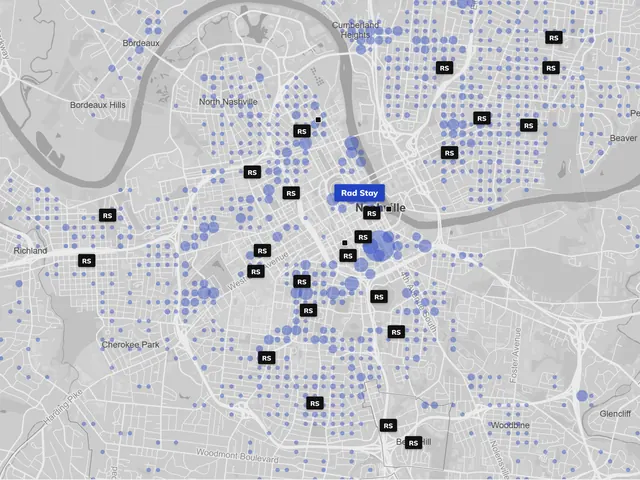
Metro's open data shows 7,022 issued short-term rental permits countywide as of October 6, 2026. ZIP 37203 has 1,617 non-owner-occupied permits and 89 owner-occupied. ZIP 37201 has 338 non-owner-occupied. Those counts are permit records, not buildings, so a single 100-unit building could account for dozens of them.
We have not verified current rents, sale prices or lease-up figures for mid-size buildings and do not quote any here.
Permits do not transfer
A permit belongs to its holder and cannot be assigned. Once the building changes hands, its permits stop being valid, and the buyer applies from scratch under the rules then current. Metro's operation page treats a move from an individual into that person's trust or LLC as a change of ownership.
For a buyer that means the permits in the seller's rent roll are worth nothing at closing. Underwrite the building as if you will reapply for every unit, and check that today's zoning and distance rule still allow it. For a seller it means the permits cannot be sold along with the building.
Operating models
There are three usual ways to put a manager in a building of this size. A management agreement leaves the lease obligations, the permits and the risk with the owner, and the manager is paid a fee. In a master lease the operator rents the units from the owner and rents them out, taking the revenue risk. Because a non-owner-occupied permit belongs to the applicant, a master lease requires working out whose name is on each permit, who carries the million-dollar insurance, and who is the responsible party. A revenue share sits between them. The investment guides compare the first two in more detail.
The operator has to name a responsible party located inside a 25-mile radius, one who can be reached at any hour of any day. At 50 or more units, plan for a staffed line.
Operations at this size
At 50 to 200 units the work is turnovers. Cleaning coordination, linen, restocking and inspection are daily, and they need a schedule built around check-out and check-in times across units. Revenue management and dynamic pricing matter more as inventory grows, because you are pricing against your own units. Booking automation and guest communication keep the front desk off the payroll. Damage protection and a clear policy for noise, parties and parking go in every listing.
Where the lease or HOA documents allow, keep short-term units on one floor or stack, and keep each unit's permit file with its renewal date.
Risks
Revocation is the largest. Three violations of Metro's general rules, after 15 days' written notice, can cost a permit, and then no new one issues for a year. Operating without a permit costs fifty dollars a day. A building-wide problem such as a roof leak, an elevator outage or a fire alarm event hits every guest at once.
Financing is its own question. A lender underwriting a building with short-term units will want to see the permits, the zoning and the operating history, and loan terms depend on the lender. We have no sourced rates to quote.
What Rad Stay handles
The flagship Rad Stay runs is Union Street Lofts, four downtown lofts at 329 Union Street, permitted in April 2023. For a larger building that means revenue management and dynamic pricing, messaging guests, coordinating cleaners, booking automation, damage protection, plus permits and tax filings, plus a review for owners deciding whether to hold, convert, lease or partner. We have not managed a building of this size, and we say so up front.
Questions
Can I put short-term rentals in every unit of a 100-unit building?
The code text we read sets no share of a mid-size building above which short-term units are barred. Every apartment still needs its own permit, the zoning must be one that accepts new not-owner-occupied permits, the 100-foot rule must be met or waived, and your lease, condo or HOA papers must allow it. Confirm with Metro Codes.
Does a short-term rental permit transfer when I sell the building?
No. Metro says permits cannot be assigned, and they end with a sale or even a move from you to your LLC. The buyer then applies again under whatever rules apply on that date.
Does a 100-unit building need a Fire Marshal inspection?
The not-owner-occupied checklist puts any property holding three-plus dwellings under Fire Marshal inspection. A building of this size is covered.
Do Fair Housing accessibility rules apply to my building?
They cover multifamily dwellings first occupied after that March 1991 date: every unit where a four-plus-unit building has an elevator, and the ground floor where it does not. Get the plans and the occupancy date, and ask an attorney about conversions.
What if my building is zoned residential?
Metro's permit-types page closes RM, RS, R and AR2A to new permits for apartments whose owner lives elsewhere. Mid-term stays of 31 days or longer are the usual alternative, and a rezoning or SP amendment needs Council action.
Sources
- Metro Nashville Code, Chapter 6.28 (Section 6.28.030), Municode
- Metro Nashville Code, Title 17 land use table (17.08.030), Municode
- Metro Codes, short-term rental permit types (Wayback copy, February 17, 2026)
- Metro Codes, not-owner-occupied checklist (Wayback copy, February 16, 2026)
- Metro Codes, operation requirements (Wayback copy, February 12, 2026)
- Metro Codes, frequently asked questions (Wayback copy, February 11, 2026)
- Metro Council legislation records (Legistar), RS2024-479, RS2024-580, BL2026-1268
- Metro Nashville Residential Short Term Rental Permits (open data), status Issued, retrieved October 6, 2026
- 24 CFR 100.205, design and construction requirements, Cornell Legal Information Institute
- 24 CFR 100.201, definition of covered multifamily dwellings, Cornell Legal Information Institute
- Airbnb Help Center, taxes Airbnb collects in Tennessee
Checked October 18, 2026.
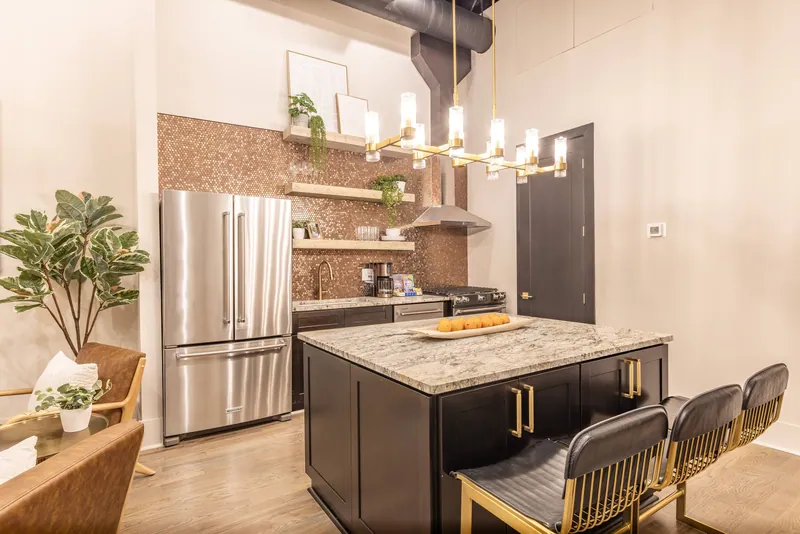
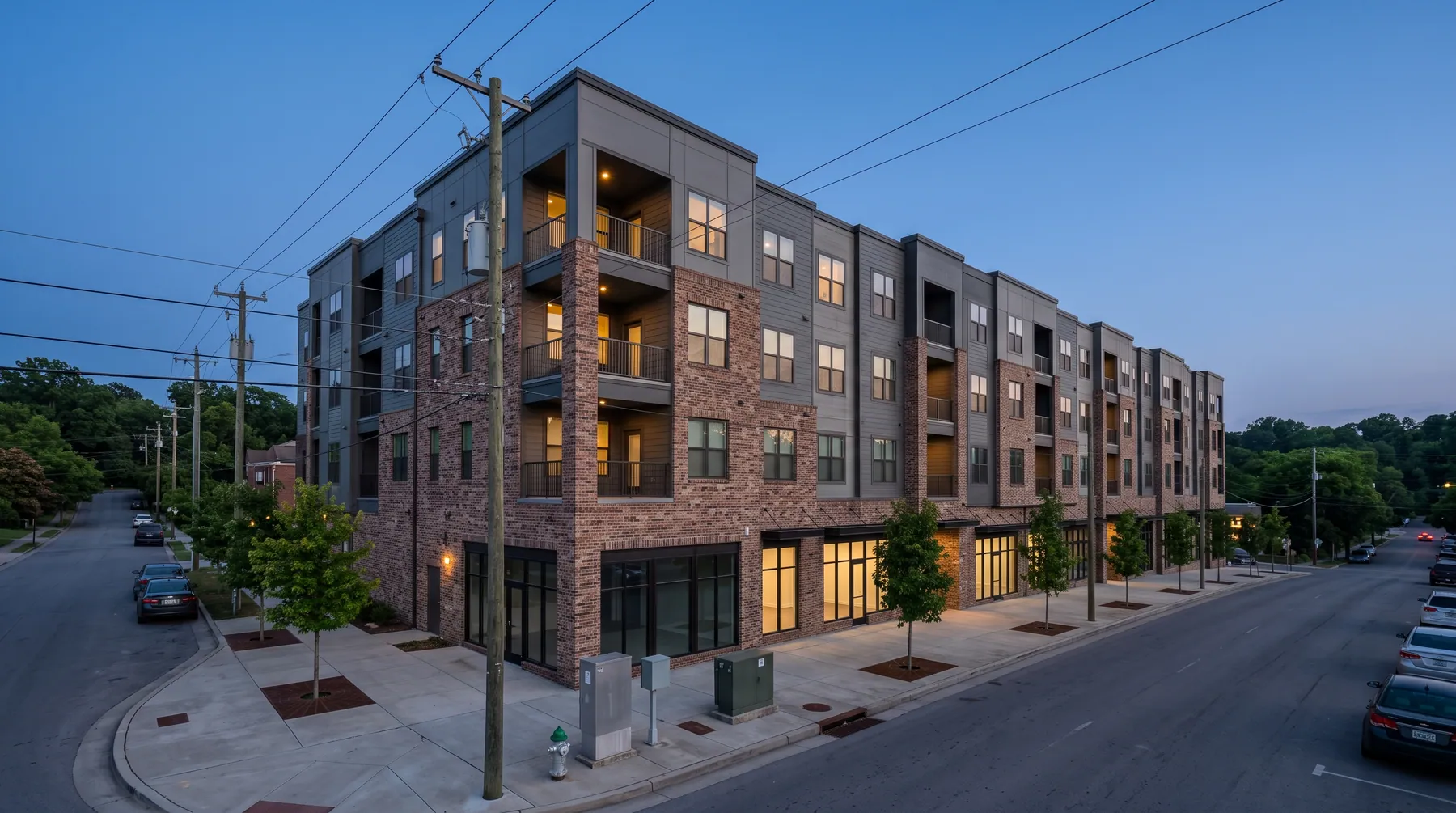
Top image: Illustration of a representative building, not a specific property.
To keep this page, print it or choose Save as PDF in your browser's print window. The printout keeps the sources and the date.
More property types
All 19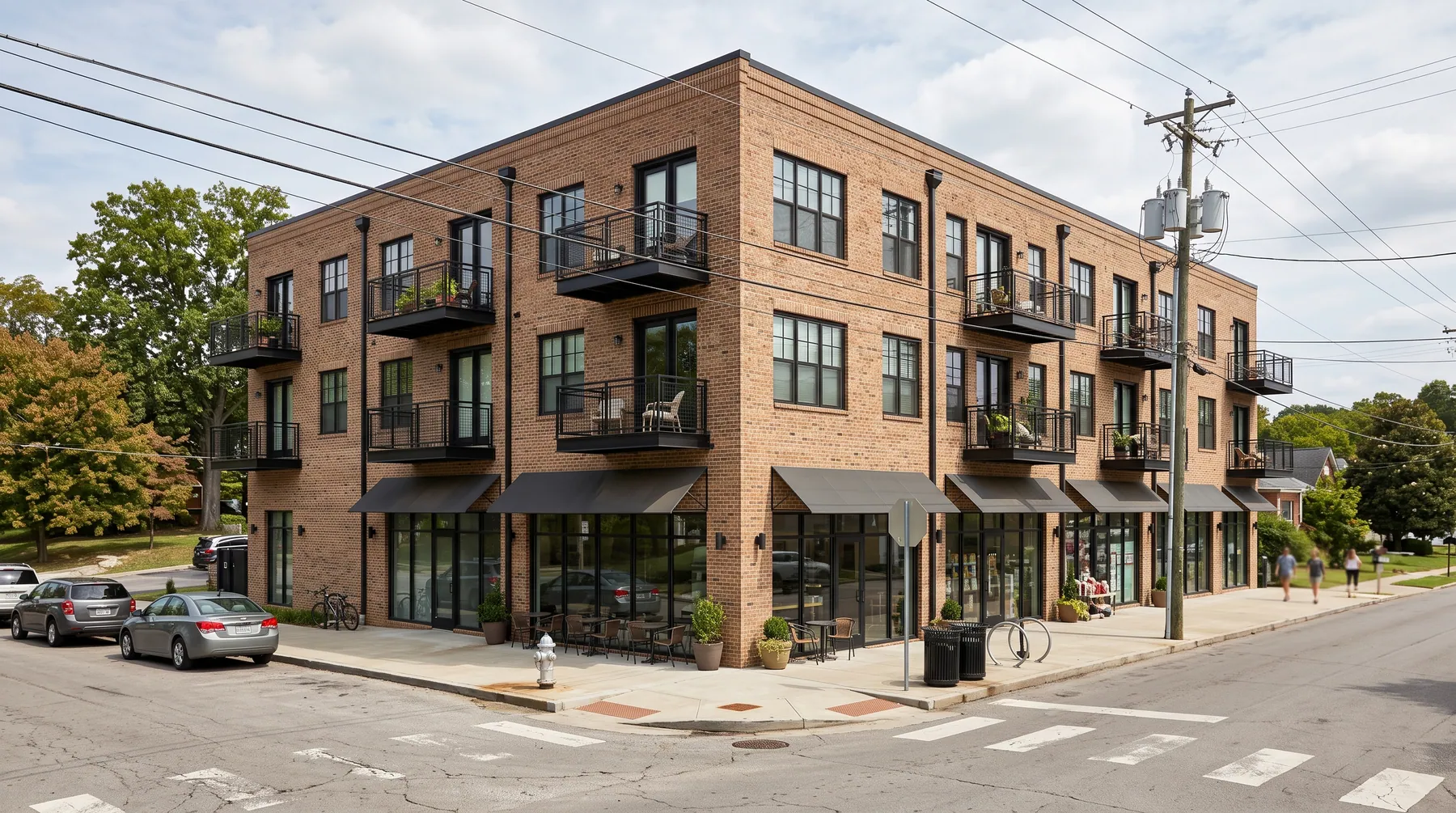
Mixed-Use Buildings
A mixed-use building has a business on the ground floor and homes above it.

Office Buildings
An office building is a rent roll that turns over suite by suite, with lobbies, elevators and restrooms you keep running for everyone.

Retail Storefronts
A retail storefront is sidewalk-level space leased to a shop, salon, restaurant or bar, often with apartments or lofts above it.