










Germantown
Germantown is the 19th-century neighborhood just north of the Tennessee State Capitol, with a minor league ballpark, a state park and the state museum in or beside it. For a building owner it matters for two reasons: ZIP 37208 holds 726 issued permits, and a historic overlay controls what can change on a building's exterior.
- ZIP code
- 37208
- Historic status
- National Register district (1979) and the Germantown Historic Preservation Zoning Overlay
- Issued STR permits (ZIP 37208)
- 726: 198 owner-occupied, 528 non-owner-occupied
- Zoning to check
- Mixed-use, office and commercial districts allow new non-owner-occupied permits; residential districts do not
- Main draw
- First Horizon Park, Bicentennial Capitol Mall State Park, Tennessee State Museum
On this page
- Where Germantown is
- How the building stock developed
- Decline and revival
- Oktoberfest
- Second Avenue North: Chamberlain House and Ferra
- The state campus and the Farmers' Market
- The ballpark and Sulphur Dell
- Germantown zoning and short-term permits
- Distance from the park and the churches
- The historic overlay
- Issued permits in ZIP 37208
- Who visits and why
- Longer stays in Germantown
- Development 2023 to 2026
- Getting around
- Building types that fit
- Checks before a Germantown purchase
- Rad Stay on a Germantown building
- Questions
- Sources
Where Germantown is
Germantown sits immediately north of the state Capitol and downtown. The National Register historic district, listed on August 1, 1979, covers 18 city blocks bounded by Jefferson Street, Third Avenue North, Taylor Street and Eighth Avenue North. The neighborhood people mean when they say Germantown today is somewhat larger than that district, and Metro has no single published boundary for it. When you underwrite a building, use the parcel address and the ZIP code, not the neighborhood name on a listing.
The ZIP code is 37208. That ZIP is bigger than Germantown. Because the ZIP reaches well past the historic blocks, the permit counts below cover a bigger area than the district.
How the building stock developed
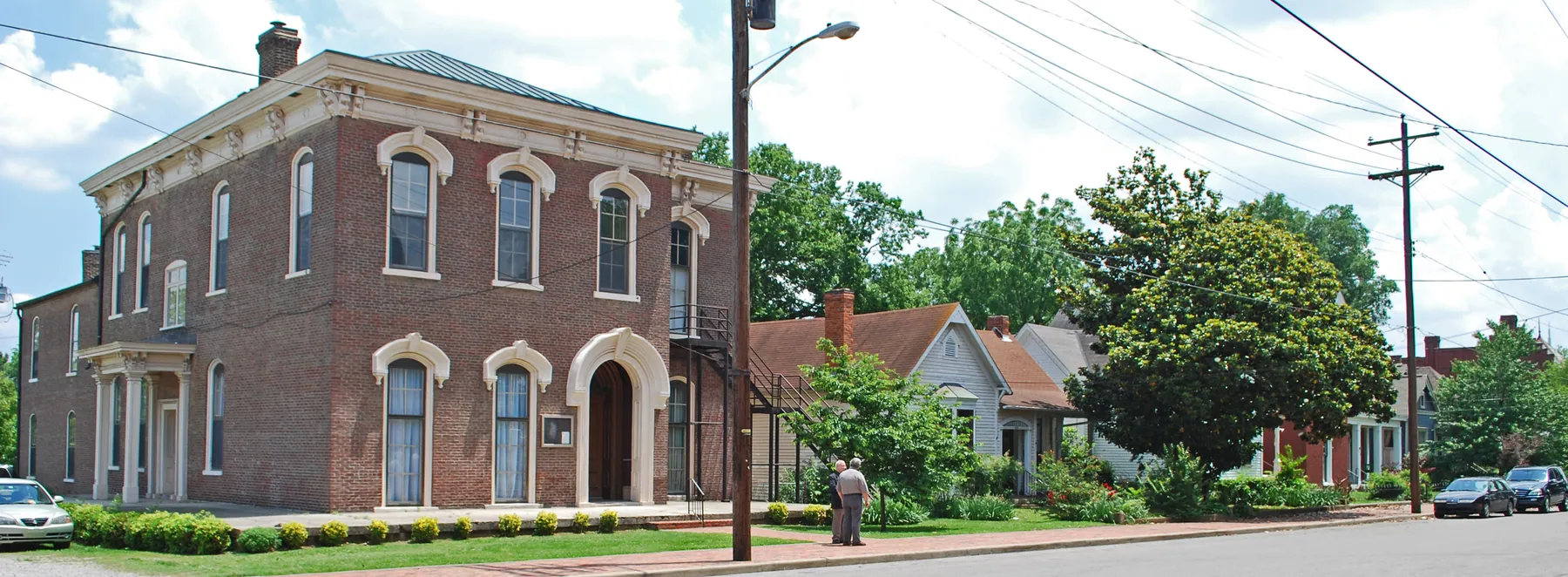
German immigrants began building homes here in the 1840s, and the area was established as Germantown in the 1850s. It is described as Nashville's oldest neighborhood. The National Register nomination sorts its buildings into three periods, 1850-1874, 1875-1899 and 1900-1924, in Italianate, Stick and Eastlake as well as Queen Anne styles. One of the oldest anchors is the Church of the Assumption at 1227 Seventh Avenue North, dedicated in 1859.
What that means for an owner is a block-by-block mix. You will find small brick houses and rowhouse-scale buildings from the 19th century, former commercial and textile buildings, and newer apartment and condominium buildings. A 4-unit building here is more likely a converted or restored older structure. A 100-unit building is almost certainly new construction on a former industrial or vacant parcel. The two have very different rules for exterior work, parking and fire safety.
Decline and revival
A 2012 history of the neighborhood in Metro Jacksonville dates the erosion to about 1915, when streetcar expansion, motor transport, refrigeration and large packing houses cut into the trades Germantown was built on. Many of the German immigrants had worked as butchers. During World War I, anti-German feeling led many families to stop speaking German, and Barth Memorial Church, founded in 1854 on North College Street, moved its services to English. In later decades houses were demolished or altered, and industrial zoning and low property values discouraged repairs.
The turn came in the 1970s. Studies by the Metropolitan Historical Commission in that decade preceded the district's listing on the National Register in August 1979. A neighborhood association formed around 1980 and worked with the Metro Planning Commission on mixed-use zoning to replace the industrial base zoning. Residents bought vacant parcels, and a Community Development Block Grant was converted into a revolving fund for renovating and buying historic houses.
Two later steps still matter to owners. In 1991 protests stopped a planned vehicle emissions test site on the 1200 block of Fifth Avenue North, and MDHA, the city's housing agency, bought the land for residential infill. In 1993, MDHA established the Phillips-Jackson Redevelopment District, with its own design guidelines. That district name appears in current Planning documents for the Second Avenue North projects described below. Zoning is set parcel by parcel, so check each address.
Oktoberfest
The first Oktoberfest was held in 1980 on the second Saturday in October. Members of two historic churches started it, according to the 2012 Metro Jacksonville article, which says it is held on the second Saturday in October each year. It started as a neighborhood event during the same years the area was being rebuilt.
For an owner, a festival weekend is a fixed autumn date to price for. I did not confirm this year's dates, crowd size or footprint from an official source, so check the organizers' own calendar before you set rates or block the calendar.
Second Avenue North: Chamberlain House and Ferra
Proffitt Dixon Partners built Chamberlain House along the Cumberland River Greenway. City Now Next reported on September 25, 2024, at the construction celebration, that the building has 345 apartments: 249 one-bedrooms and 96 two-bedrooms. Trei and Pacific Life were listed as partners, R. G. Anderson as the contractor, and Axiom Architecture, EOA Architects and Manuel Zeitlin Architects the design team. Leasing was scheduled to start in December 2025, with the first residents at the beginning of 2026. City Now Next reported on July 29, 2026 that the community had officially opened, and listed a saltwater pool, a sauna and cold plunge, a Peloton studio, a co-working space and direct greenway access. The two reports give different street addresses (210 Stockyard Street and 912 Second Avenue South), so confirm the parcel with Metro before you cite it.
The same developer has proposed Ferra at 1000 Second Avenue North, next to Chamberlain House. Nashvegas reports about 325 apartments in seven stories, ground-level retail, a corner restaurant on the greenway and a rooftop pool, on the northern part of a 5.98-acre property that Proffitt Dixon bought for $32.53 million in 2021. City Now Next reported on October 12, 2026 that the site is zoned DTC within the Phillips-Jackson Redevelopment District, and that the owner has asked for an overall height modification under the Bonus Height Program, with a Planning Commission date of November 12, 2026. Nashvegas reports a groundbreaking target of the second quarter of 2027 and completion in spring 2028. Those are targets, not approvals, and City Now Next did not state a unit count.
A separate 0.8-acre parcel next to the Jefferson Street Bridge is being marketed by Stream Realty's Nashville office as a possible hotel site, per Nashvegas.
The arithmetic matters for a small-building owner. Chamberlain House's 345 units plus Ferra's proposed 325 come to about 670 new apartments on adjoining ground. If Ferra proceeds, those apartments would compete for long-term and mid-term tenants in the same blocks by 2028. A short-term permit, where the zoning allows one, is a different product, but the rent comparison you give a lender or an investor will be against these buildings.
The state campus and the Farmers' Market
Bicentennial Capitol Mall State Park covers 19 acres, the smallest of Tennessee's state parks, at 600 James Robertson Parkway, and Wikipedia reports more than 2.5 million visits a year. Its features include a 2,200-seat amphitheater, a 95-bell carillon and a World War II memorial. A New Year's Eve celebration has been held there since 2016, drawing more than 200,000 people a year by Wikipedia's account, another date to price for.
The Tennessee State Museum, 1000 Rosa L. Parks Boulevard, opened its current building on October 4, 2018. The building has 137,000 square feet, and the museum charges no admission. In April 2021 the state library and archives opened a new building at the park.
The Nashville Farmers' Market is beside the park. Its own history page says a market opened between Sixth and Eighth Avenues North in 1955, after a $1 million bond authorization by the state legislature in 1949, and that it was renovated in 1995 as part of the park project on state-owned land. The market covers 16 acres from Harrison to Jackson Streets along Rosa L. Parks Boulevard. The 1995 design included four open-air sheds and an air-conditioned market house, which now has nearly 30 restaurants and shops. The market also has a garden center and launched a commissary kitchen in 2024.
These places draw day visitors. There is no data on how many of them stay overnight, so treat them as a reason people know the area, not as a booking forecast.
The ballpark and Sulphur Dell
First Horizon Park, at 19 Junior Gilliam Way, opened on April 17, 2015. It seats 8,500 in fixed seats and about 10,000 with the berm. The City of Nashville owns it and the Nashville Sounds operate it. Nashville SC played its 2018 and 2019 USL seasons there.
The site is Sulphur Dell, a baseball ground from as early as 1870. The first grandstand went up in 1885, and the park was Nashville's main ballpark until it was abandoned in 1963 and demolished in 1969. Ballpark events beyond baseball include the Rock 'n' Roll Nashville Marathon route (since 2016), a Home Run Derby X event on August 31, 2024, celebrity softball games (2015, then 2021 to 2023), college baseball games with Vanderbilt and Belmont, and festivals and concerts. A greenway connects the Cumberland River Greenway to the Bicentennial Mall Greenway at the park, and a 1,000-car state-owned garage sits on Harrison Street.
Germantown zoning and short-term permits
Zoning decides it. Each Germantown unit needs its own permit, so twelve nightly units take twelve, and the investor kind is available only on parcels zoned for business, offices, mixed use or downtown; see our zoning guide.
A seller operating on residential land may renew but cannot pass the permit on.
In practice, corridor parcels zoned for mixed use or commerce are where new absent-owner permits are possible. A building on a parcel zoned residential cannot get one, however many units it has. An owner who lives on site has a narrower owner-occupied route. SP and PUD land needs the plan's approval, so read the plan. Metro has amended SPs by ordinance to add the use, so it can be done, but it is a rezoning process.
Zoning is parcel-specific, and I have not confirmed the district for any particular Germantown address. Check the Parcel Viewer before any offer. Confirm with Metro Codes.
Distance from the park and the churches
Germantown's parks and churches also trigger the 100-foot distance rule, which Council can waive; our multifamily guide explains how. Germantown has several of those uses close together: a state park beside the neighborhood and a church dedicated in 1859 at 1227 Seventh Avenue North. Check those and any school or day care near your parcel.
Council has granted dozens of these since 2023. One 62-unit request for an address on Second Avenue North failed in June 2024, and a 55-unit request at the same address passed a month later. A waiver is possible but never certain, and it adds weeks to a timeline.
The historic overlay
Germantown is one of the Metro Historic Zoning Commission's districts, listed as the Germantown Historic Preservation Zoning Overlay. Its design guidelines were last amended on September 21, 2017. They cover alterations and repairs, new construction, outbuildings, additions, signage, demolition and relocation. An overlay adds design review for exterior changes: additions, signs, demolition and repairs or alterations to existing structures are reviewed by the commission, which applies the guidelines when it considers a preservation permit application. Staff reports for Germantown projects have recommended approval with conditions such as staff sign-off on materials and on the placement of mechanical equipment and utility meters. Historic overlays add no short-term rental rule but do govern exterior work, on top of the base zoning. The permit you can get depends on the base zoning, not the overlay. The overlay decides how you can change the building to get there.
For a manager, the practical effects are on the exterior. Adding a stair for a second egress, enclosing a porch to create another unit, changing windows to fix noise, or adding rooftop mechanical equipment all go through design review. Build that time into a conversion schedule. If you plan to convert a historic Germantown building, ask Metro Historic Zoning staff for guidance before you design anything.
Issued permits in ZIP 37208
As of October 6, 2026, Metro's data shows 726 issued in 37208. Of those, 198 are owner-occupied and 528 are not-owner-occupied. That makes 37208 the third-largest ZIP in the county by issued permits, behind 37203 (1,706) and 37207 (808), out of 7,022 issued countywide.
The mix is more balanced than downtown. In 37203, all but 89 of 1,706 permits are for absent owners. In 37208 it is 528 of 726, or about 73 percent. That reflects the neighborhood's blend of owner-occupied homes and mixed-use corridors, and it tells you a larger share of the permitted units here are in houses and small buildings, not in large commercial-zoned stock. Because the count is at the ZIP level, it includes areas outside the historic blocks. Each permit counts as one record, and a renewal under a new number can add another.
Who visits and why
Two things produce short stays here that the sources support. Baseball: the Sounds' home games and other events at First Horizon Park. And the state's institutions: the Tennessee State Museum and Bicentennial Capitol Mall State Park, which sit in or next to the neighborhood.
The state Capitol is just south of the neighborhood, so some demand may come from people with business there, though I have no data on it. For a manager, mixed demand argues for flexible stay lengths. Metro caps a short-term rental guest at 30 consecutive days, so the same unit can serve a weekend visitor, a two-week project assignment, and, on a lease, a 12-month tenant.
Longer stays in Germantown
No dated, building-level rent report for Germantown with a stated method turned up, so no neighborhood average rent is quoted. Underwrite from comparable listings for your own building.
The case for mid-term demand rests on proximity. Germantown is next to downtown, the state government campus and the River North area, where Oracle plans its River North campus. Oracle announced in 2021 that it would create 8,500 jobs in Nashville, and the mayor's office put the full count at the end of 2031. Metro Council's approval coverage says the campus will include a pedestrian bridge connecting Germantown to the East Bank. Do not underwrite on a bridge opening date. Furnished monthly stays and ordinary leases are the fallback for a building without permits.
Development 2023 to 2026
Two projects show the direction. The first is a hotel site at 1500 Third Avenue North, about 1.01 acres. Nashville Post reported that North Point Hospitality, based in Atlanta, bought it for $6.55 million (the article did not give a closing date) and plans an eight-story hotel, which would be Germantown's first conventional hotel. One report puts the room count at 260, with about 4,000 square feet of street-level commercial space. Metro records showed a specific plan rezoning for the site. Check the current status before you count on it.
The second is the Fulton Germantown Residences, a 210-unit condominium building that stalled before completion. Hoodline reported on July 15, 2026, citing the Nashville Business Journal, that Alcova Capital, a New York firm, had taken control and removed the former manager, and that its marketing page invites buyers to an interest list. Legal claims and recorded liens had frozen progress. For a buyer or manager, this is a lesson about title: a building with recorded liens is a building where you need a clean title search before anything else. It would also add a block of condominium units in Germantown, with each owner's right to rent set by the condominium documents.
Other projects are older. A May 2016 Bisnow article reported 3,260 apartment units underway or planned in Germantown. Bisnow attributed the count to the Nashville Business Journal and wrote that it was unclear how many would be built. That figure is ten years old and should not be read as today's pipeline.
Getting around
Wikipedia's First Horizon Park entry lists a WeGo Music City Circuit drop-off at Fifth Avenue and Harrison Street and a Nashville BCycle station outside the ballpark. Routes change, so check WeGo's latest map for exact stops.
Parking shapes the design of any building here. Metro's code bars RVs, buses and trailers in view at a rental. On game nights the streets near the ballpark fill, so a building with off-street spaces has an edge. If you are converting, count the spaces your zoning requires before you count the units.
Building types that fit
Smaller four- to twelve-unit buildings, such as restored older structures, usually fit a fourplex-to-twelve-unit profile, with the historic overlay shaping any work. Buildings with commercial space downstairs often sit on the mixed-use zoning that permits absent-owner rentals. Larger new buildings may suit lease-up or mid-term furnished use. A hotel conversion would need zoning and fire review that apply to commercial lodging, not the residential permit.
See the related pages for each type. The right choice depends on the parcel's zoning more than on the building's age.
Checks before a Germantown purchase
Start with the parcel's zoning, overlay, and plan status. Next, the 100-foot test against churches, parks, schools and day cares. Then the building's own documents. Each applicant signs that renting breaks no lease or association agreement. Condominium bylaws in a new building may already ban short stays.
Three dwellings or more means a Fire Marshal visit, and Metro's other operating rules are in the multifamily guide. The permit fee in the February 2026 copy of Metro's FAQ is $313, and a permit expires after 365 days. A permit does not pass to a buyer. It ends at the sale, including a transfer into an LLC or trust.
Also ask about flood zone and noise. I did not confirm FEMA flood data for Germantown parcels, so check Metro's maps for the address. Ballpark events bring noise and traffic to the blocks near it.
Rad Stay on a Germantown building
Rad Stay's own building is Union Street Lofts downtown. In Germantown it would offer the same work at any stay length: pricing, guests, cleaning, bookings, damage protection and permit and tax filings. It also considers Germantown buildings for purchase, lease or partnership.
Where zoning rules out nightly permits, the plan shifts to monthly or yearly leasing with the same management work. Owners of a building in 37208 can send the address and unit count; the first step is the parcel's zoning and overlay.
Questions
Is short-term rental banned by the Germantown overlay?
No; the overlay chapter sets no short-term rental rule for historic overlays. Base zoning, under Section 6.28.030, decides the permit. The overlay controls exterior changes, which need a preservation permit.
Can a Germantown building get new permits when the owner lives elsewhere?
Only with qualifying zoning, a clear 100-foot check or a waiver, and a plan that allows it if one applies. Residential districts do not qualify. Confirm with Metro Codes.
How many permits are issued in ZIP 37208?
726 issued on October 6, 2026: 198 owner-occupied and 528 not-owner-occupied, per Metro's open data. The ZIP is larger than Germantown.
When did Germantown become a historic district?
The Germantown Historic District was added to the National Register on August 1, 1979. It covers 18 blocks. Separately, Metro's Germantown Historic Preservation Zoning Overlay controls exterior changes under guidelines amended September 21, 2017.
How many new apartments are going up on Second Avenue North?
Chamberlain House has 345 units (249 one-bedroom, 96 two-bedroom) and opened in 2026, per City Now Next. Ferra, proposed next door, is reported at about 325 apartments, with a Planning review set for November 12, 2026 and completion targeted for spring 2028. Ferra is not approved.
Does the Phillips-Jackson Redevelopment District change short-term rental rules?
The sources reviewed describe a redevelopment district with design guidelines, set up by MDHA in 1993, and are silent on short-term rentals. Base zoning still decides the permit. Confirm with Metro Codes.
Which state attractions are beside Germantown?
Bicentennial Capitol Mall State Park, the Tennessee State Museum (opened in its current building October 4, 2018) and the Nashville Farmers' Market sit next to each other north of the Capitol. The museum charges no admission.
Is a hotel planned in Germantown?
Nashville Post reported that North Point Hospitality bought a site at 1500 Third Avenue North for a planned eight-story hotel. Check current status with Metro Planning before relying on it.
Sources
- Metro Code Chapter 6.28, Short term rental property permits (Municode, text current through June 23, 2026)
- Metro Code 17.08.030, Land use table (Municode)
- Metro Codes: Short term rental permit types (Wayback copy, Feb. 17, 2026)
- Metro Codes: Not-owner-occupied checklist (Wayback copy, Feb. 16, 2026)
- Metro Codes: Short term rental frequently asked questions (Wayback copy, Feb. 11, 2026)
- Metro Codes: Operation requirements (Wayback copy, Feb. 12, 2026)
- Metro Nashville Residential Short Term Rental Permits (open data), status Issued, retrieved Oct. 6, 2026
- Germantown Historic District, Wikipedia
- Church of the Assumption (Nashville, Tennessee), Wikipedia
- First Horizon Park, Wikipedia
- Germantown site eyed for hotel sells for $6.55M, Nashville Post
- New York money muscles in on stalled Germantown condo shell, Hoodline (July 15, 2026)
- Apartments planned near Sounds ballpark, Bisnow (May 17, 2016)
- Oracle's Nashville campus gets green light from Metro Council, NewsChannel 5
- Metro Codes: Apply for a short term rental property permit (Wayback copy, Aug. 22, 2026)
- Germantown Historic Preservation Design Guidelines, amended Sept. 21, 2017, Metro Historic Zoning Commission
- Oracle to Bring 8,500 Jobs to Nashville, Manufacturing.net
- Revitalizing Neighborhoods: Nashville's Germantown, Metro Jacksonville (Dec. 2012)
- Developer Celebrates Construction Of 345-Unit Germantown Development, City Now Next (Sept. 25, 2024)
- Explore Chamberlain House, City Now Next (July 29, 2026)
- 7-Story Germantown Mixed-Use Development Advances, City Now Next (Oct. 12, 2026)
- First Look: Ferra Plans 325 Apartments, Retail and a Greenway Restaurant in Germantown, Nashvegas
- Bicentennial Capitol Mall State Park, Wikipedia
- Tennessee State Museum, Wikipedia
- History, Nashville Farmers' Market
Checked October 18, 2026.
Photo: Andrew Jameson, CC BY-SA 3.0, via Wikimedia Commons. Cropped.
To keep this page, print it or choose Save as PDF in your browser's print window. The printout keeps the sources and the date.
More markets
All 28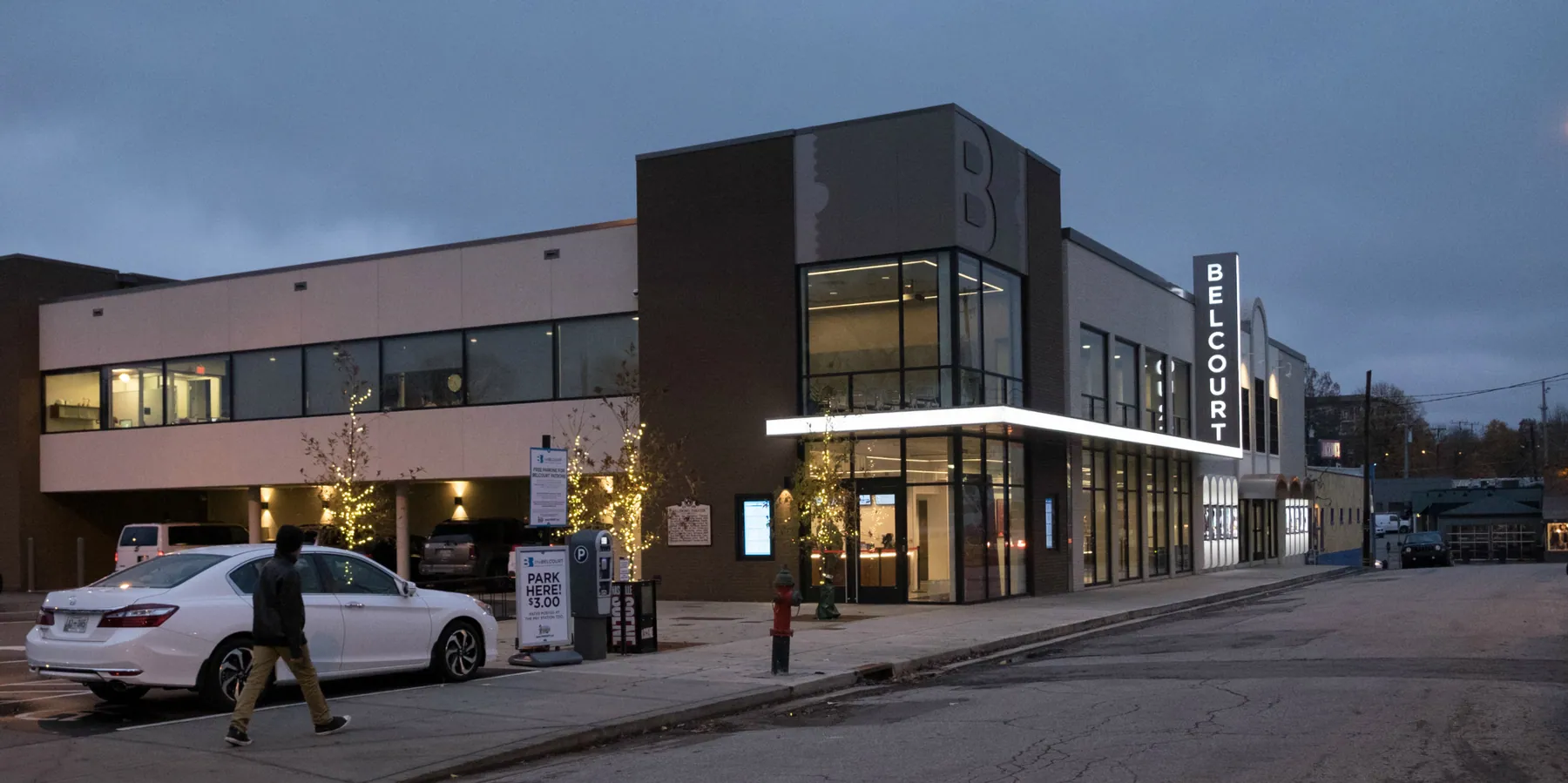
Hillsboro Village
Hillsboro Village is the small commercial district on 21st Avenue South between the Vanderbilt and Belmont campuses, and Belmont-Hillsboro is the residential neighborhood that wraps around it.
Inglewood
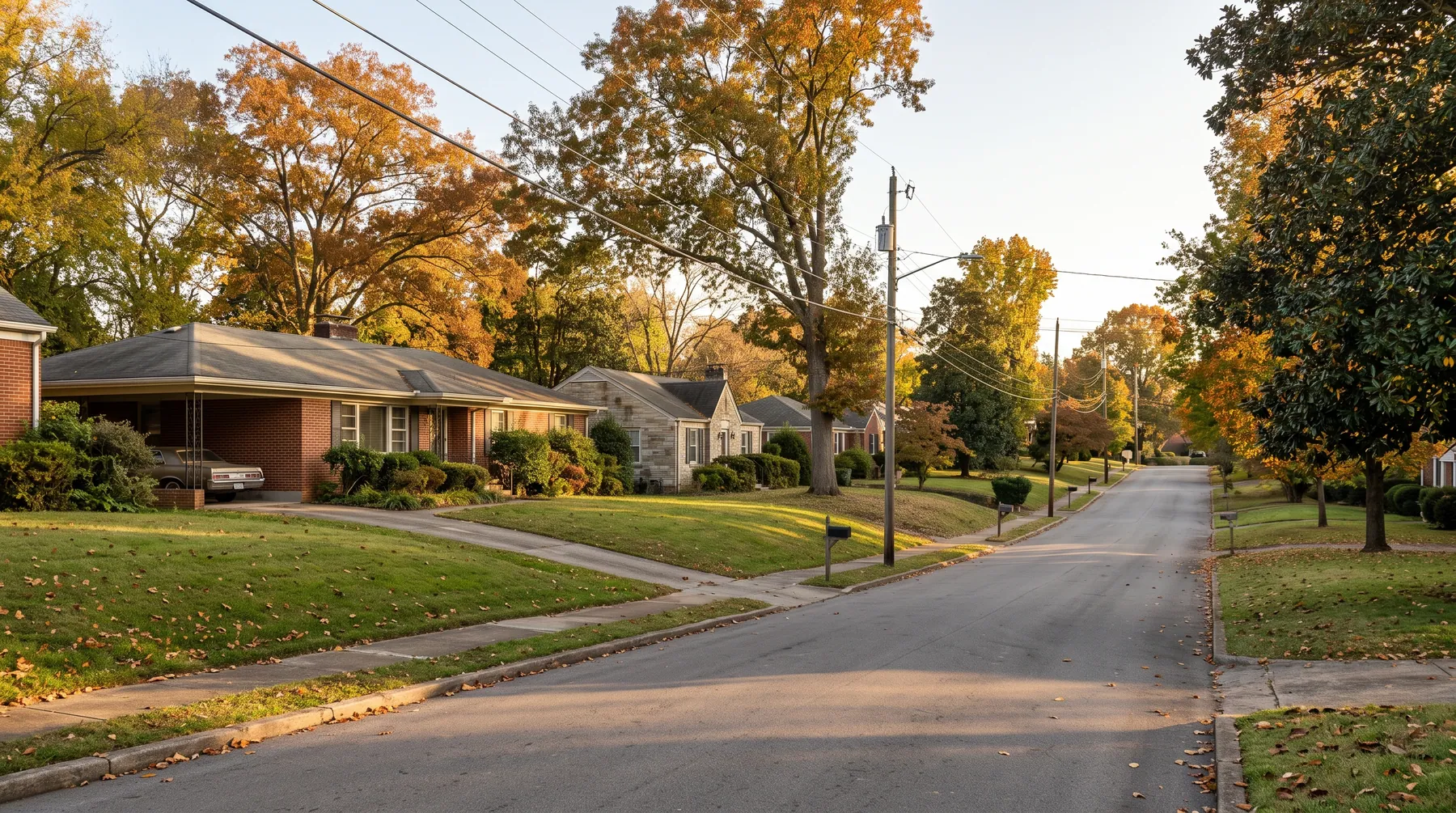
Inglewood is the northern part of greater East Nashville, running along Gallatin Pike in ZIP 37216.
Lockeland Springs
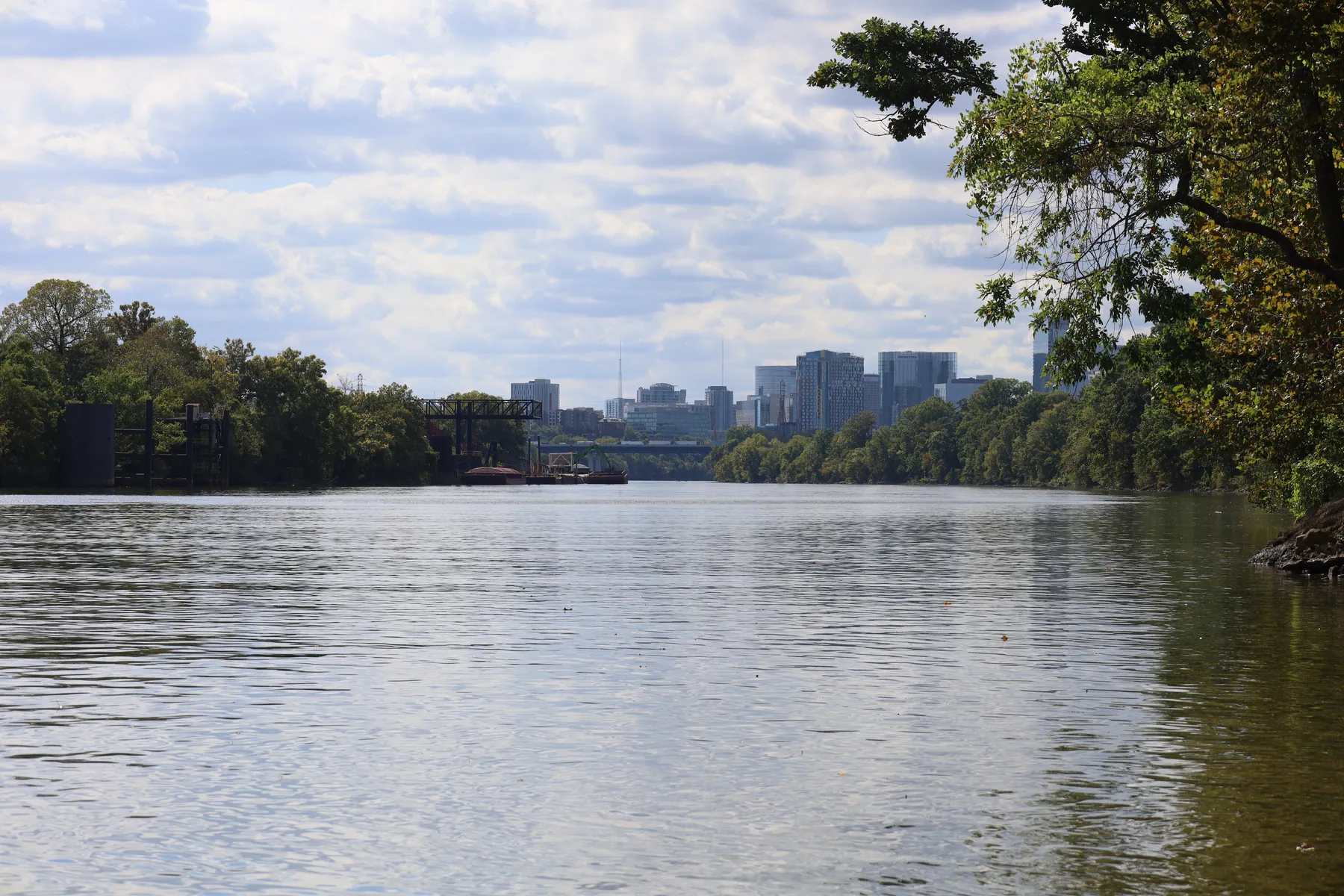
Lockeland Springs is a streetcar-era neighborhood about two miles northeast of downtown Nashville, next to Five Points and Shelby Park.