










Short-Term Rental Permits for Multifamily Buildings in Nashville
Nashville has no separate permit for a short-term rental building. Metro permits each unit on its own, under the Metro Code's Section 6.28.030, and the zoning of the parcel decides which kind of permit, if any, a unit can get. This guide walks an owner of a 4-to-200-unit building through the permit types, the zoning lists, the distance rule, the application, the fees, renewal and enforcement, section by section. General information only, not legal advice; get Metro Codes to confirm each point before you act.
- Governing law
- Metro Code 6.28.030 and 6.28.035; Title 17 zoning
- Permit unit
- One permit per dwelling unit, up to 4 sleeping rooms
- Percentage cap in a building
- None found in 6.28.030, 17.08.030 or 17.16.070
- Permit fee (Feb. 2026 Metro copy)
- $313, plus 2.3% card fee
- Permit term
- 365 days from issue
- Fire Marshal inspection
- Required for 3 or more dwellings on the property
- Issued permits, Oct. 6, 2026
- 7,022 (5,010 not owner-occupied)
On this page
- How Metro permits each unit
- The two permit types
- No multifamily category and no percentage cap
- Where a not-owner-occupied permit is allowed
- Zoning exceptions to check
- The 100-foot distance rule
- The application, step by step
- Fees, timing and taxes
- Operating rules that apply to every unit
- Renewal, sales and ownership changes
- Enforcement and appeals
- A checklist for a building owner
- Questions
- Sources
How Metro permits each unit
It is Metro Code 6.28.030 that governs short-term rental property, which Title 17 (section 17.04.060) defines as a residential dwelling unit containing not more than four sleeping rooms that is used or advertised through an online marketplace for rent for transient occupancy by guests. The word that matters for a building owner is unit. Metro does not issue a building permit for short-term rentals. It issues a permit for each dwelling unit, and each one is judged on its own.
Metro's open permit data shows how that plays out. On October 6, 2026 the Residential Short Term Rental Permits layer listed 7,022 permits with issued status, and downtown ZIP code 37201 held 346 of them. Each of those is one unit. The Union Street Lofts building, 329 Union Street, has four units, 201 through 204, each receiving, in April 2023, its own permit for an absent owner.
The two permit types
Section 6.28.030 has two parts. Part A covers owner-occupied short-term rental property. Part B covers short-term rental property that is not owner-occupied. For a multifamily investor the second one is the one that matters, but the first shows up in small buildings.
Under Part A, the owner must use the dwelling as a primary residence and must be a natural person or persons. A company of any form, partnership, joint venture or trust is ineligible to hold it. The applicant proves occupancy with four documents, two from each of two lists in the code. An owner-occupied listing may not advertise the entire home, with exceptions for a legally permitted detached accessory dwelling unit, an accessory apartment, and a two-family unit where ownership cannot be divided and the owner lives in one unit under a covenant recorded with the county register's office. In single-family and two-family districts only one permit is issued per lot.
Part B applies to a unit the owner does not live in. This is the permit an apartment building uses. The zoning limits, the distance test and the Fire Marshal step below all apply to it. Metro's permit data shows how common it is: of 7,022 issued permits counted on October 6, 2026, 5,010, about 71%, were not owner-occupied.
No multifamily category and no percentage cap
Owners often ask what share of a building can be short-term. Reading 6.28.030, the 17.16.070 use standards, the 17.08.030 land use table and Chapter 17.38, we found no multifamily permit type and no percentage ceiling on a building's short-term units. Metro's current text sets four limits that apply to each unit: the four-sleeping-room maximum, the zoning list, the distance rule and the operating standards. Confirm with Metro Codes that nothing has changed since the June 23, 2026 code version.
The practical limits come from elsewhere. Metro's application requires every applicant to submit a statement that the use would not violate a homeowners association agreement or bylaws, a condominium agreement, a co-op agreement or a lease agreement, and the not-owner-occupied checklist says to submit it whether or not you have an HOA. Metro's FAQ adds that an association's rules may be stricter than the city's. In a condo building, the declaration may block short-term use even where zoning allows it.
Metro adds that it will not permit a home with over four bedrooms. That rule applies per unit. A 20-unit building of one- and two-bedroom apartments clears it easily, but a penthouse or townhome unit with five bedrooms does not.
Where a not-owner-occupied permit is allowed
The districts appear in subsection B.1 of 6.28.030. The not-owner-occupied permit is a use permitted with conditions in MUN and MUN-A, MUL and MUL-A, MUG and MUG-A, MUI and MUI-A, OG, OR20 through OR40-A, ORI and ORI-A, CN and CN-A, CL and CL-A, CS and CS-A, CA, CF, DTC North, DTC South, DTC-West, DTC Central, SCN, SCC and SCR. Section 17.16.070.W repeats the list, and the land use table in 17.08.030 agrees with it.
The same table leaves the use blank, meaning not allowed, in AG and AR2a, RS, R, RM, RN, RL, MHP, ON, OL, DTC East, IWD, IR and IG. Metro's permit-types page says it directly: an AR2A, R, RS or RM parcel cannot receive a fresh not-owner-occupied permit. Existing holders there may be eligible to renew, but the permit ends on any sale or transfer.
This is why an RM-zoned apartment complex, even one with 200 units, is usually a long-term or mid-term building. Check the parcel's zoning district before you underwrite any short-term income. The permit data reflects it: in ZIP code 37203, 1,617 of 1,706 issued permits are not owner-occupied, while in 37206 the split is 296 to 371 the other way.
Zoning exceptions to check
Six situations change the answer even when the base district looks right.
NS districts. Any district carrying the NS suffix, CS-NS (Commercial Service No Short Term Rental) for one, prohibits both permit types.
- Specific Plan (SP) and Planned Unit Development (PUD) parcels: Metro issues permits only if the SP or PUD allows them. Metro Council has amended plans to add the use, for example BL2024-211 in 2024 and BL2026-1268, which passed March 17, 2026 and changed an RM20-A parcel to an SP to permit not-owner-occupied short-term rentals.
- Adaptive residential lots: 17.16.030.F.12 makes a lot developed with an adaptive residential use ineligible when a local street carries most of its frontage or it falls outside the Urban Services District, except where the permit was in good standing before the first of August 2024.
- RN and RL districts: Chapter 17.38, as amended by BL2025-1005 effective December 12, 2025, prohibits not-owner-occupied rentals there and allows owner-occupied rentals only with the Single Family building type.
- New accessory dwelling units: an owner-occupied permit is not a permitted use in a new accessory dwelling unit under 17.16.030.G.12.
- DTC East: it is not on the list in 6.28.030.B.1, so the downtown label alone does not settle it. Confirm the sub-district.
The 100-foot distance rule
Under subsection B.2.d, no new not-owner-occupied permit issues for a location within 100 feet of a religious institution, a public park, a school or its playground, or a licensed day care center or its playground. Distance is measured from parcel line to parcel line. It applies to new permits, including the new application after an ownership change.
Metro Council can waive the rule by resolution after a public hearing. Twenty-one affirmative votes are required, with mailed notice to property owners within 600 feet, plus 14 days of signage at the site. One resolution may cover several units in a single multifamily development, which matters for a building owner who would otherwise need to ask unit by unit.
The rule came from BL2023-1884, which passed August 1, 2023 and took effect August 11, 2023, and BL2024-478 revised the waiver process. Projects underway in 2020, holding a master permit by September 1 of that year or 50% built, are exempt. Legistar shows more than 30 waiver resolutions between 2023 and 2026, almost all of which passed. One failed: Council defeated the 62-unit RS2024-479 for 160 2nd Avenue North that June 4, then on July 2, 2024 passed RS2024-580, for 55 units at that address.
The application, step by step
Since March 11, 2026 applications are online only; Metro says to have every document ready, warns that a draft cannot be saved, and asks for one submission per application. For a not-owner-occupied unit, the code and Metro's checklist call for these pieces:
- Proof of ownership and zoning eligibility for the parcel, with the 100-foot check done first.
- Proof that each adjacent owner was notified in writing before filing, by signature or certified mail. Adjacent means front, behind and to the sides, and above and below where applicable, so in an apartment building the neighbors include the units over and under yours.
- Proof of liability insurance of not less than one million dollars per occurrence.
- The statement that no HOA, condominium, co-op or lease agreement forbids the use.
- Someone responsible for the units, within 25 miles and reachable at all hours every day of the week.
- A Fire Marshal inspection for multifamily structures, defined by the checklist as properties of three or more dwellings. Single- and two-family properties instead submit a certification by a licensed Tennessee engineer, home inspector or architect.
- An Owner Authorization Form if someone other than the owner applies or operates the permit; Metro requires it notarized.
Fees, timing and taxes
Metro's FAQ, February 2026 copy, sets the short-term rental permit fee at $313, with 2.3% added for card processing. Metro's renewal page says the renewal fee is set by the zoning administrator, so confirm the current figure before you budget. For a 40-unit building at $313, application fees alone come to $12,520 before insurance, inspection and neighbor-notice costs. The card fee is extra.
Metro does not publish a guaranteed review time that we could confirm, so build the schedule around the longest items, which are the Fire Marshal inspection and any Council waiver, and ask Metro Codes for current timing.
Taxes sit apart from the permit itself, though Section 6.28.030 requires the holder to collect and remit the applicable sales, room and occupancy taxes, and to show payment at renewal. See the hotel occupancy tax guide on this site for the rate structure.
Operating rules that apply to every unit
Once a unit is permitted, sections 6.28.030.A.5 and B.5 set standards that each listing must meet. A guest may not stay fewer than 24 hours or more than thirty consecutive days. The principal renter must have reached age 21. A unit may be rented to only one party at a time. The guest limit is the sleeping-room count times two, plus four, and Metro's operation page puts the top at 12. The permit holder is barred from serving food.
Inside each unit you must post the occupancy limit and the responsible party's contact information. Website advertising must prominently show the permit number, or a legible image of the permit, or a link to such an image. Under Metro Code 6.28.010, which BL2024-478 extended to these rentals, keep a guest register of names, addresses and arrival and departure dates for at least six months.
In a building, these rules scale. A channel manager that pushes 30 units to four sites needs 30 permit numbers in the right fields and occupancy settings that match each permit.
Renewal, sales and ownership changes
Permits run 365 days from the date of issue. Metro's renewal page says it emails reminders 60 days and 45 days ahead of expiration. A 30-day grace period is available only if there were no documented complaints during the permit period and the applicant gives a reasonable explanation other than neglect or mistake. Operating on an expired permit leads to a six-month wait before the property is eligible again.
No permit may be transferred or assigned to another person, entity or address. When ownership changes, the permit is no longer valid and the new owner must apply under the regulations in effect at that time. Metro's operation page counts retitling between an individual and a trust or LLC, either way. Section 6.28.030 changed on this point in 2024 under BL2024-478, final passage on November 7, 2024.
For a buyer, that means a building's existing permits are not part of the price in the way its rents are. Underwrite as if every unit must qualify again under the code in force at closing, distance rule included. Per Metro, a holder is vested only in the regulations in force on the permit's date, under section 13-7-603 of the Tennessee Code, and an LLC that holds a permit may change members without losing it. We did not read the statute text for this guide, so have your attorney confirm how that provision applies to your structure.
Enforcement and appeals
Operating without a permit brings a court-imposed $50 fine, and each day counts as a separate offense. Advertising a residential property for short-term rental without a permit is also barred. If Metro's zoning administrator finds that a property operated without a permit, it cannot become eligible for one for a year, and after a court finding the wait is three years.
A permit can be revoked after three violations of generally applicable provisions. Metro gives 15 days' written notice. After revocation, no new permit can be issued for the same property for a year. Denials and revocations can be appealed to the Short Term Rental Appeals Board under 6.28.035.
Keep records for every unit as if each permit will be reviewed on its own.
A checklist for a building owner
Pull the parcel's zoning district, and any SP, PUD or overlay language, before anything else. Check each unit's sleeping-room count against the four-room limit. Check the 100-foot distance from religious institutions, schools, parks and licensed day care centers. Read the leases, the condo declaration or the HOA documents. Price the neighbor notices, the insurance and the Fire Marshal inspection along with the $313 fee per unit.
Then decide the mix. Where a unit cannot be permitted, mid-term and long-term rentals are the legal path, and a building can combine them with permitted short-term units. Rad Stay manages short-term, mid-term and long-term rentals and supports permit and tax compliance. Whatever you choose, confirm each step with Metro Codes, because the code and Metro's pages are updated from time to time.
General information from Metro Nashville and State of Tennessee sources, checked October 2026. It is not legal or tax advice. Rules change; confirm with Metro Codes or the agency named before you act.
Questions
Can every unit in my Nashville apartment building rent short-term?
No percentage cap appears in Metro Code 6.28.030, 17.08.030 or 17.16.070. Each unit still needs its own permit, so zoning, the four-sleeping-room limit, the 100-foot rule, and any HOA, condo or lease restriction decide it unit by unit. Metro Codes can confirm.
May an LLC hold a short-term rental permit?
The not-owner-occupied permit is not limited to natural persons. An owner-occupied permit is: the owner must be a natural person who uses the home as a primary residence. Moving a property's title from your own name to an LLC or trust, or the reverse, voids the permit and requires a new application.
Does a Fire Marshal inspection apply to my building?
The checklist applies it to multifamily structures of three or more dwellings. Smaller properties instead file a certification that a Tennessee-licensed inspector, engineer or architect signs.
If I buy a building with permitted units, do the permits come with it?
No. A permit cannot be transferred, and a change of ownership makes it invalid. The buyer must then apply under the regulations current at that time.
What is the permit fee?
Metro's FAQ, February 2026 copy, lists $313 plus a 2.3% card processing fee. The renewal fee is set by the zoning administrator. Confirm both with Metro Codes.
What happens if I list a unit before the permit is issued?
Section 6.28.030 sets a $50 fine for each day of operation without a permit and bars eligibility for a year after the zoning administrator's finding, or three years after a court finding.
Sources
- Metro Code Chapter 6.28, Hotels and Short Term Rental Property, including 6.28.010, 6.28.030 and 6.28.035 (Municode, version June 23, 2026)
- Metro Code 17.04.060, definitions (Municode)
- Metro Code 17.08.030, land use table (Municode)
- Metro Code Chapter 17.16, use standards including 17.16.030 and 17.16.070 (Municode)
- Metro Code Chapter 17.38, residential districts (Municode)
- Metro Codes, Apply for Short Term Rental Property Permit (archived Aug. 22, 2026)
- Metro Codes, Short Term Rental Permit Types (archived Feb. 17, 2026)
- Metro Codes, Not Owner Occupied checklist (archived Feb. 16, 2026)
- Metro Codes, Short Term Rental Property Frequently Asked Questions (archived Feb. 11, 2026)
- Metro Codes, Renew Short Term Rental Property Permit (archived Oct. 12, 2026)
- Metro Nashville open data, Residential Short Term Rental Permits (retrieved Oct. 6, 2026)
Checked October 18, 2026.
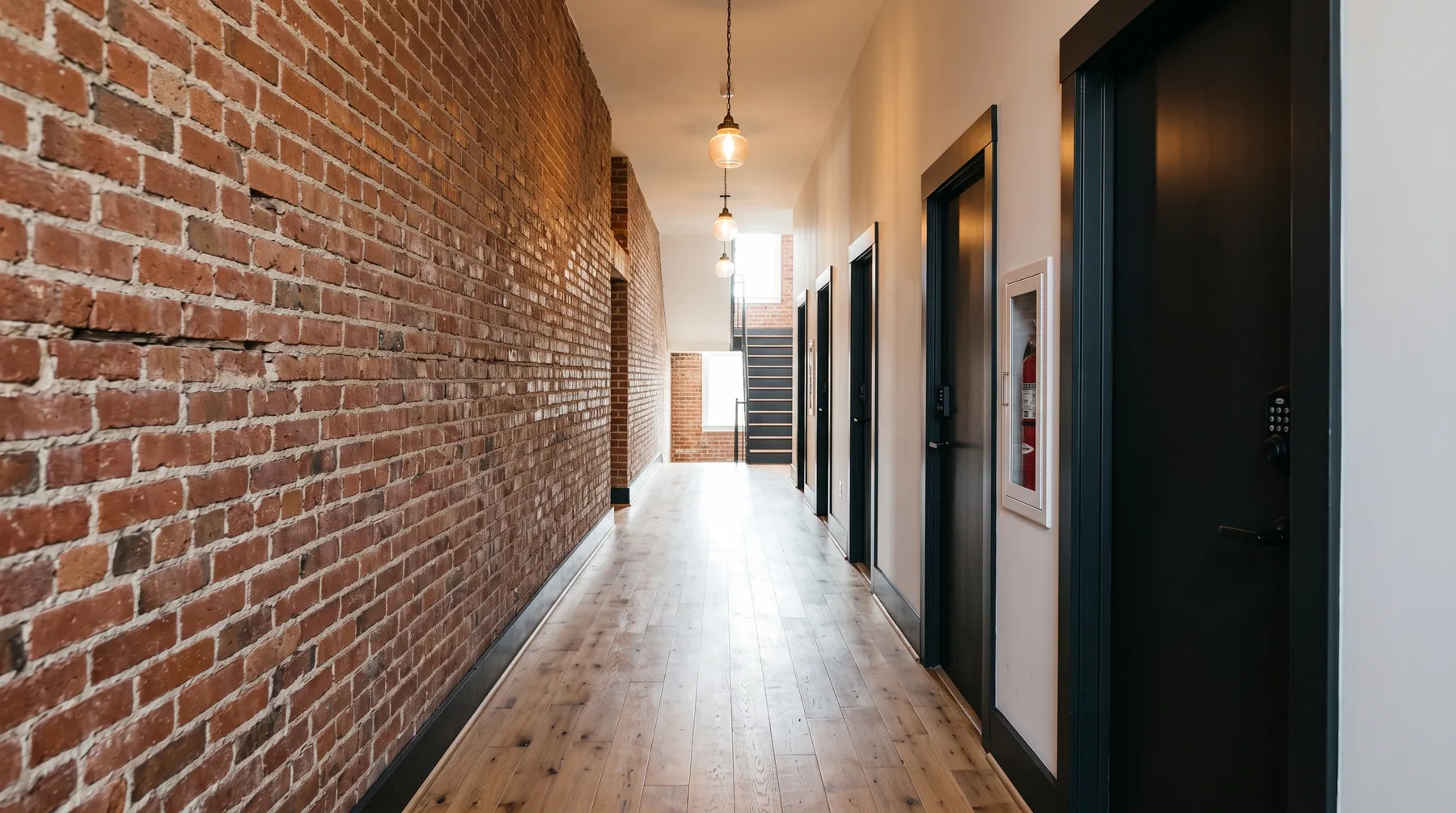
Top image: Illustration of a representative scene, not a specific property.
To keep this page, print it or choose Save as PDF in your browser's print window. The printout keeps the sources and the date.
More str guides
All 4
Converting Apartments to Short-Term Rentals
Converting apartments to short-term rentals in Nashville is a sequence, and the first gate is the zoning of the parcel, not the furniture.
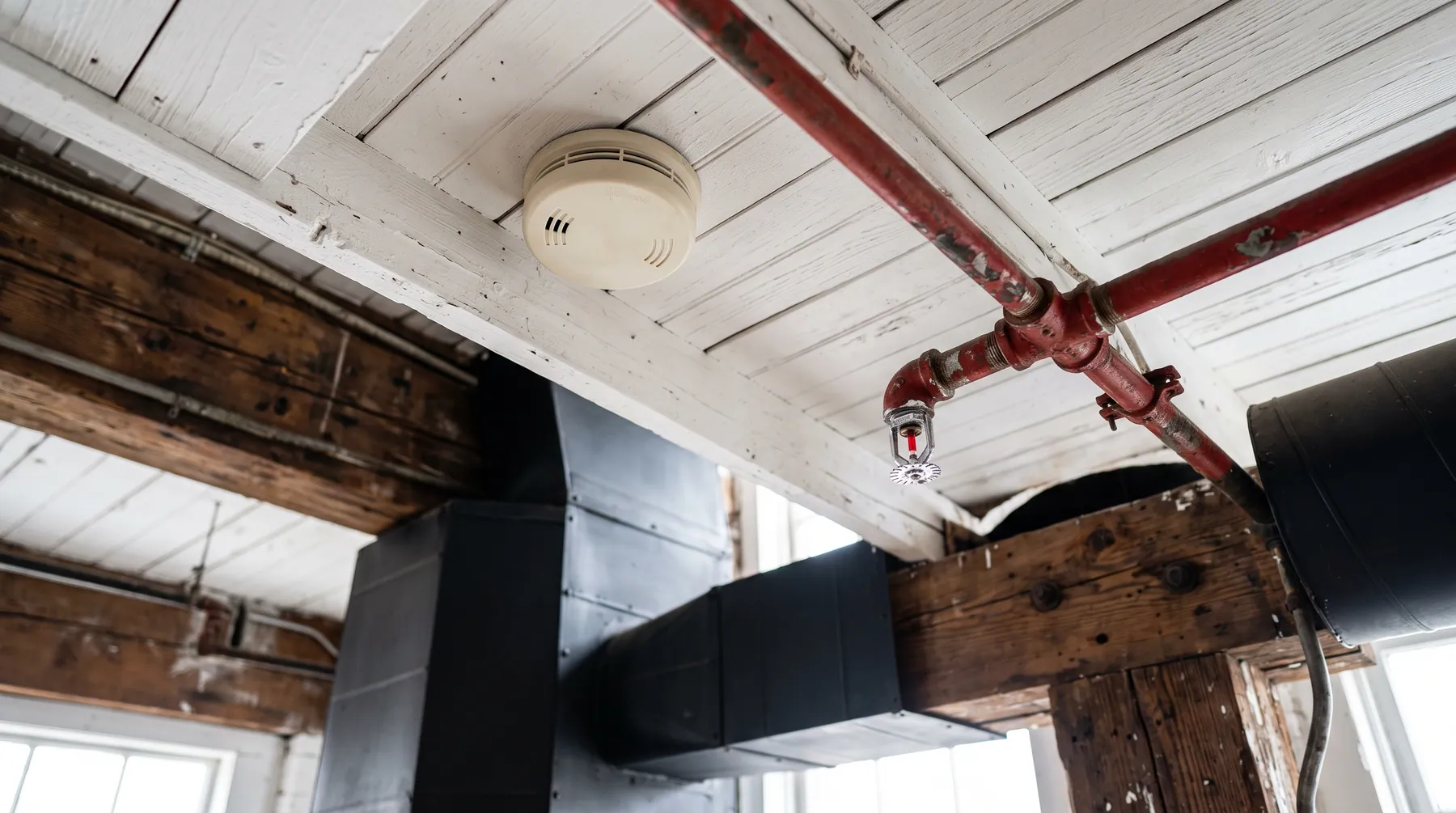
Fire and Life Safety for Short-Term Rental Buildings
Every short-term rental permit in Nashville depends on a fire and life safety check, and in a building with three or more dwellings that check is done by the Nashville Fire Marshal's Office instead of a private inspector.

Hotel Occupancy Taxes in Nashville
A guest who books a short-term rental unit in Nashville pays several layers of tax: Metro's hotel occupancy tax, a per-night charge, and Tennessee state and local sales tax.