










Fire and Life Safety for Short-Term Rental Buildings
Every short-term rental permit in Nashville depends on a fire and life safety check, and in a building with three or more dwellings that check is done by the Nashville Fire Marshal's Office instead of a private inspector. This guide covers who inspects, what the checklist asks for, how Tennessee classifies larger rentals and what an owner of a multi-unit building should confirm before applying.
- Inspector, 3+ dwellings on the property
- Nashville Fire Marshal's Office
- Inspector, one or two dwellings
- Tennessee-licensed architect, engineer or home inspector
- Smoke alarms
- UL 217, interconnected
- Permit limits
- Four sleeping rooms per permit; occupancy twice the sleeping rooms plus four, 12 at most
- Fire inspection requests
- FMORequest@nashville.gov, subject line Short Term Rental
- Liability insurance for the permit
- Not less than $1 million per occurrence
- Rules checked
- October 2026 (Metro Code text current through June 23, 2026)
On this page
- Why the fire check is part of the permit
- Who inspects
- How the Fire Marshal request works
- What the checklist covers
- How the checklist measures each item
- Rules that apply to every permit
- How Tennessee classifies larger rentals
- What changes when the building has many units
- From application to permit
- Insurance and neighbor notice
- Operating conditions that touch safety
- How long a permit and its approval last
- A preparation list before you apply
- What this guide could not confirm
- Questions
- Sources
Why the fire check is part of the permit
Metro Code 6.28.030 requires every short-term rental to meet the state and local building and fire safety codes, including approved smoke alarms that meet the UL 217 standard. Alarms are required in all sleeping areas, in every room along the path out from the sleeping area to the exit door, and on each story of the unit, including basements. Metro Codes' permit page also lists garages.
In Nashville each unit is its own permit, so a building owner is not filing one fire application for the whole building. You are proving the same life safety basics, unit by unit, for every permit you hold or plan to hold.
Who inspects
Metro Codes splits the inspection by building size. For single-family and two-family dwellings, the application includes a certification from a Tennessee-licensed architect, engineer or home inspector. Metro Codes says multifamily structures still require inspection by the Fire Marshal, and its fact sheet puts that at three or more dwellings on the property.
Metro's practical test is the entry: if there is a common hallway or walkway to reach the dwelling, the Fire Marshal inspects. If you cannot tell which applies, Codes asks you to write to strpquestions@nashville.gov before you apply.
How the Fire Marshal request works
The Fire Department's applicant checklist says you must first apply with Metro Codes, and that you may then request the inspection to complete the process. It says to email FMORequest@nashville.gov with Short Term Rental in the subject line, and to include the application number, the address, your name and a phone number.
You should receive an email confirming receipt. The checklist says that if you do not, the request was not received. An inspector is then assigned and contacts you to schedule. For a building with several units, send the application numbers together so the visits can be coordinated, and confirm the approach with the Nashville Fire Department at 615-862-5421, the number Metro's inspection guidelines give for fire code questions.
What the checklist covers
The Fire Department's short-term rental applicant checklist cites the 2012 International Fire Code, which Metro has since replaced. BL2025-1004 took effect the day it passed, October 9, 2025, and put the 2024 International Fire Code in its place, plus the 2024 edition of NFPA 101, the Life Safety Code. The copy reviewed for this guide is a 2022 archived version, so ask the Fire Marshal's Office whether any item has changed before you schedule. The checklist lists:
- A street number at least 4 inches tall, in contrasting colors, visible from the street on the building, mailbox or curb.
- UL 217 smoke alarms in every sleeping room, in every room on the way out of the unit, and on each story including basements and garages.
- Smoke alarms at least 3 feet from anything that moves air, such as return vents, ceiling fans and window units.
- Interconnected alarms, so that when one sounds they all sound, either hard-wired by a licensed electrician or wireless units programmed together. Battery-only alarms that cannot be interconnected are not allowed.
- At least one rescue window in each sleeping room that opens fully to a clear area of 5.7 square feet, at least 20 inches wide and 24 inches high, with the sill no more than 44 inches above the floor. Ground-level rooms may have 5.0 square feet, and a room with a door straight outside is exempt.
How the checklist measures each item
The checklist explains its own terms in plain language. For smoke alarms, an area means a room, and the path of egress means the way out: outside the bedrooms in the hall, plus one in the living area on the way to the door. For a unit with split levels and no door between the adjacent levels, an alarm on the upper level is enough for the lower level if that lower level is less than one full story below.
Anything that moves air counts as a diffuser for the 3-foot rule. On interconnection, the wireless devices have to be individually programmed, and the checklist tells you to check the manufacturer's instructions for how many can be used together, because that varies.
For rescue windows, the checklist tells you to open the window completely, measure the opening only, and multiply width by height. The result must be 820.8 square inches or more, with the minimum width and height met. Measure the 44-inch limit from the finished floor to the sill, or to the lip if a lip stands higher than the sill. A ground-floor room may use 720 square inches, which is the 5.0 square foot figure.
The street number requirement cites Metro Ordinance 085-882 and Section 505 of the International Fire Code. The checklist says the number is for all emergency personnel, not only the Fire Department.
Rules that apply to every permit
Metro's June 2023 inspection guidelines for single and two-family homes say that every property, whatever its construction date, must meet the 2018 codes for smoke detector location and interconnection, egress windows and premises identification to get a permit. Metro has since adopted the 2024 building and residential codes, through BL2025-898 in July 2025. Those guidelines are written for the smaller building types, so ask the Fire Marshal's Office which edition it applies to a multifamily inspection.
Operating rules also bear on life safety. A permit covers at most four sleeping rooms. Occupancy may not exceed twice the number of sleeping rooms plus four, with a maximum of 12 on Metro's operation page. The occupancy limit and the contact for the responsible party must be posted inside the unit, and the responsible party must be reachable 24 hours a day, seven days a week.
How Tennessee classifies larger rentals
The Tennessee State Fire Marshal's Office has a separate classification for transient rental homes, meaning homes occupied for 30 days or less. A rental with three or fewer stories, under 5,000 gross square feet, with 12 occupants or fewer, is treated as a one- and two-family dwelling and may use the fire sprinkler exemption in Tenn. Code Ann. 68-120-101(a)(8)(A).
A rental with four or more stories, 5,000 or more gross square feet, or 13 or more occupants is regulated as an R-3 occupancy under the International Building Code and cannot use that sprinkler exemption. Gross square feet include finished or occupied basements. A basement counts as a story if the finished floor above it is more than 6 feet above the reference ground level, or more than 12 feet above finished ground at any point.
The state began regulating transient rentals this way on February 1, 2016. Its page says a fatal fire in a Tennessee rental home in April 2014 led it to find that some large rentals had been classified as one- and two-family dwellings.
The state page describes the single dwelling unit with independent living facilities. Whether it reaches a unit in a larger building, and which office enforces it in Davidson County, is a question for the Fire Marshal's Office and Metro Codes, not something this guide can settle.
What changes when the building has many units
A house is judged on its own. A building adds shared corridors, stairs and systems that one unit's owner does not control. The checklist items are written per unit, but a Fire Marshal visit to a building will see the common areas on the way in, so an owner of several permitted units should walk the corridors and exits before the inspector does.
Permitting in a shared building also carries non-fire conditions. Every applicant submits a statement that the permit would not violate an HOA agreement, condo documents, co-op agreement or lease. Metro's FAQ says association rules can be more restrictive than Metro's. Metro Code 6.28.030 does not set a percentage cap on short-term rental units in a building, but the 100-foot distance rule and zoning limits still apply, which the permits guide covers.
From application to permit
Metro's online short-term rental application process became effective March 11, 2026, and the application is completed through ePermits. Metro's instructions say to have your documents ready first: you cannot save the application and return to it, and you should not submit it more than once. After you submit, correspondence goes by email rather than through a second application. Uploaded documents must be PDFs. The Metro FAQ, in a February 2026 copy, gives the permit fee as $313.00.
The application includes a floor plan, official or hand drawn, of each floor of the dwelling showing all rooms and the location of windows, doors and smoke detectors. Because each unit is its own permit, that is a plan per unit. Applicants also submit a notarized true and accurate affidavit and proof of payment of all taxes due, including property taxes.
The 2022 Fire Department checklist describes the last step. After the field inspection is complete and approved, the inspector approves it in the computer, and the checklist asks you to allow at least 48 hours. You then return to Codes to pay for the permit. That checklist predates the March 2026 online process, so ask Codes how the inspection approval reaches your application.
Insurance and neighbor notice
The application requires proof of homeowner's fire, hazard and liability insurance, with liability limits of not less than $1 million per occurrence. Metro Codes says a listing company such as Airbnb may offer coverage that meets this, in which case the applicant provides the profile page as proof.
Applicants must also show written notice to the owner of each adjacent property: in front, behind, to the sides and, where applicable, above and below. Letters go to the owner's mailing address, which is not always the physical address. The owner, not a tenant, may sign the letter, or you can mail it certified and fill out the green and white receipt completely. In a condominium or a building with several owners, the neighbors above and below can be separate owners, so allow time to collect signatures or send certified letters.
Operating conditions that touch safety
Metro's operation page lists conditions beyond the inspection that a building owner takes on with each permit:
- The permit holder is responsible for the activity of guests, including compliance with noise and waste management rules.
- The principal renter must be at least 21 years of age, and only one party may rent a unit at a time under separate contracts.
- No food may be prepared for or served to guests by the permit holder or manager.
- No recreational vehicles, buses or trailers may be visible on the street or the property in connection with the rental.
- Signs on the property must comply with Title 17, Chapter 32 of the Metro Code.
- The permit holder collects and remits the sales, occupancy and room taxes that state law or the Metro Code requires.
How long a permit and its approval last
A permit expires 365 days after it is issued unless it is renewed before it expires. Metro's renewal page says renewal reminder emails go out 60 and 45 days before expiration. The Metro Code allows a 30-day grace period only when there are no documented complaints. This guide did not confirm whether renewal triggers a new fire inspection, so ask Codes when you plan the year.
Metro may revoke a permit after three violations of any ordinance or law of general application, or if the application contained false or misleading information. Operating without a permit carries a penalty of fifty dollars a day and a one-year wait for a permit.
Permits are neither transferable nor assignable. Metro's operation page says a change in ownership cancels the permit, including a change from a person to a trust or LLC. If you sell a building, or move units into a new entity, the new owner applies again under the rules in effect then. Metro Code also requires a guest register to be kept at least six months.
A preparation list before you apply
Preparing for the inspection costs far less than failing it and rescheduling. For each unit in the building:
- Measure every bedroom window opening against the 5.7 square foot rescue window standard.
- Test that alarms are interconnected by triggering one and confirming all of them sound.
- Check the 3-foot clearance from vents, fans and window units.
- Confirm the street number is at least 4 inches tall and visible from the street.
- Draw a floor plan of each floor that shows rooms, windows, doors and smoke detectors.
- Prepare the application number list so the Fire Marshal request is complete in a single email.
What this guide could not confirm
Tennessee and Metro adopt specific editions of the International Building and Fire Codes, and the state adopts fire code standards through its rules. The pages that list the current editions were not reachable when this guide was prepared, so it does not state them. Ask the Fire Marshal's Office and Metro Codes which editions apply, and whether sprinkler, fire alarm panel or egress corridor requirements affect your building beyond the per-unit checklist. Read this as general guidance, not legal or engineering advice.
General information from Metro Nashville and State of Tennessee sources, checked October 2026. It is not legal or tax advice. Rules change; confirm with Metro Codes or the agency named before you act.
Questions
Does my building need the Fire Marshal or a private inspector?
Metro's rule of thumb is that a common hallway or walkway to reach the dwelling means the Fire Marshal. Metro's fact sheet ties it to three or more dwellings on the property. Confirm with strpquestions@nashville.gov.
Can I book the Fire Marshal before applying to Metro Codes?
No. The Fire Department's checklist says to apply with Metro Codes first, and the request needs your application number.
Are battery smoke alarms acceptable?
Only if they interconnect. The checklist says battery-only alarms that cannot be interconnected are not allowed. Wireless units programmed together are acceptable.
Do older buildings have to meet the current alarm, window and house number rules?
For smoke detectors and interconnection, egress windows and premises identification, Metro's single and two-family guidelines say yes regardless of construction date. For a multifamily inspection, ask the Fire Marshal's Office which edition it applies.
Is a short-term rental in a large building classified differently?
Under the state's transient rental rules, four or more stories, 5,000 or more gross square feet or 13 or more occupants makes a rental an R-3 occupancy that cannot use the sprinkler exemption in Tenn. Code Ann. 68-120-101(a)(8)(A).
Does selling the building or moving units into an LLC affect the permits?
Yes. Metro's operation page says a change in ownership cancels the permit, including a change from a person to a trust or LLC, and a permit cannot be transferred. The new owner applies under the rules in effect at that time.
Sources
- Metro Code Chapter 6.28, Short term rental property permit (Municode, version of June 23, 2026)
- Metro Codes, Apply for Short Term Rental Property Permit
- Nashville Fire Department, Short Term Rental Inspection Information and Requirements
- Nashville Fire Department, Short Term Rentals Applicant Checklist (2022 archived copy)
- Metro Codes, STRP Single and Two-Family Dwelling Inspection Guidelines (June 26, 2023)
- Metro Codes, Short Term Rental Property Operation Rules and Requirements (March 2026)
- Metro Codes, Renew a Short Term Rental Property Permit (March 2026)
- Metro Codes, Short Term Rental Frequently Asked Questions (February 2026 copy)
- Tennessee State Fire Marshal's Office, Transient Rental Homes
- Metro Council, BL2025-1004, adopting the 2024 International Fire Code and 2024 NFPA 101 Life Safety Code, passed Oct. 9, 2025, approved by the Mayor Oct. 10, 2025 (Legistar)
- Metro Council, BL2025-898, adopting the 2024 International Building Code and 2024 International Residential Code, passed July 15, 2025 (Legistar)
Checked October 18, 2026.
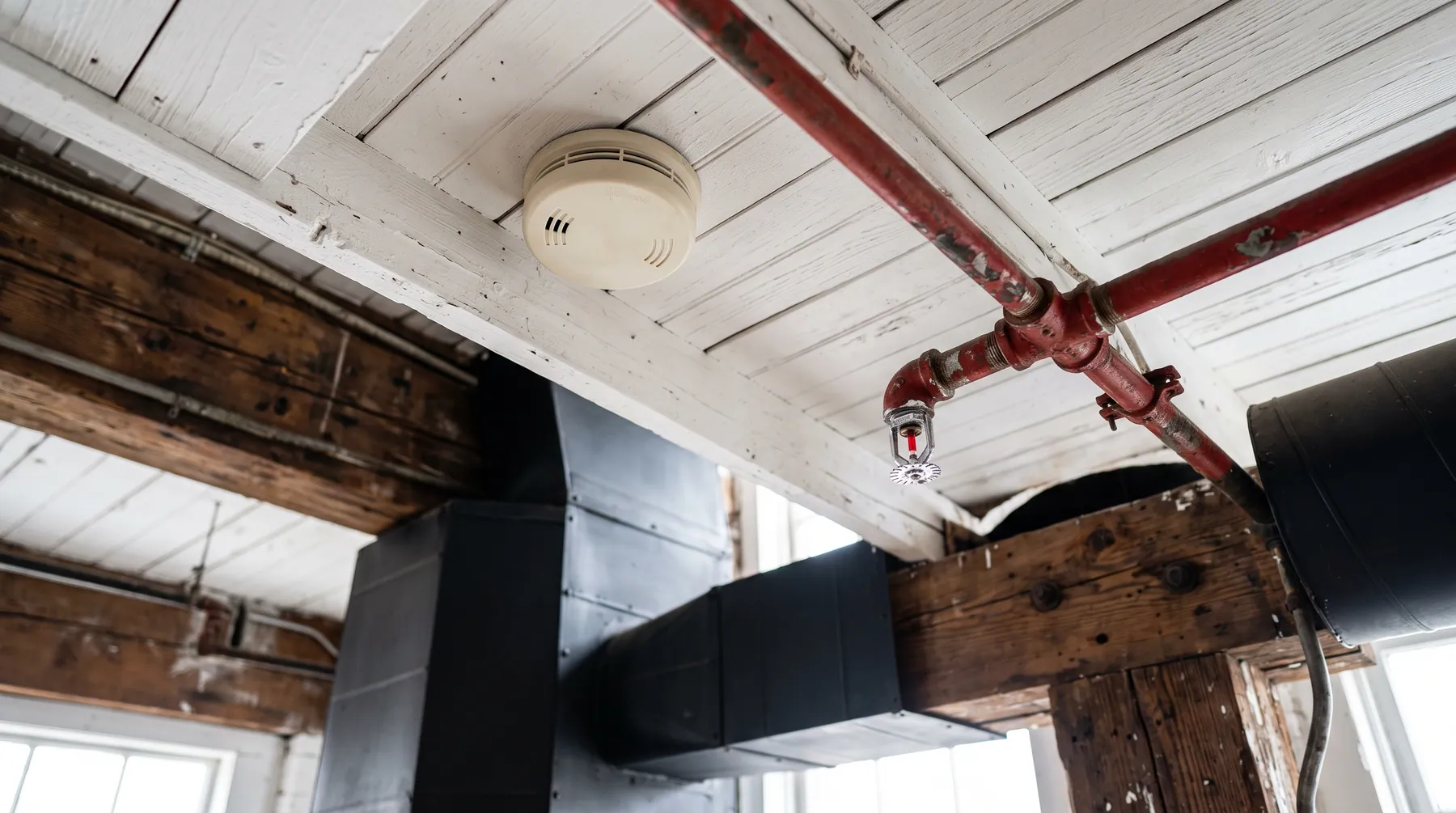
Top image: Illustration of a representative scene, not a specific property.
To keep this page, print it or choose Save as PDF in your browser's print window. The printout keeps the sources and the date.
More str guides
All 4
Hotel Occupancy Taxes in Nashville
A guest who books a short-term rental unit in Nashville pays several layers of tax: Metro's hotel occupancy tax, a per-night charge, and Tennessee state and local sales tax.
Short-Term Rental Permits for Multifamily Buildings in Nashville
Nashville has no separate permit for a short-term rental building.
Converting Apartments to Short-Term Rentals
Converting apartments to short-term rentals in Nashville is a sequence, and the first gate is the zoning of the parcel, not the furniture.