
Townhome Clusters
A townhome cluster is four or more attached or grouped townhomes on one site. Metro counts every townhome as a separate dwelling, so a cluster of eight homes needs eight permits, and zoning and the distance test are applied to each home on its own. This page covers what that does to your options and what to confirm before you commit.
- Permit unit
- One short-term rental permit per townhome
- Bedroom limit
- No more than four sleeping rooms per permit
- Fire Marshal inspection
- Required for 3 or more dwellings on the property
- Permit term
- 365 days, then renewal
- Issued STR permits countywide (2026)
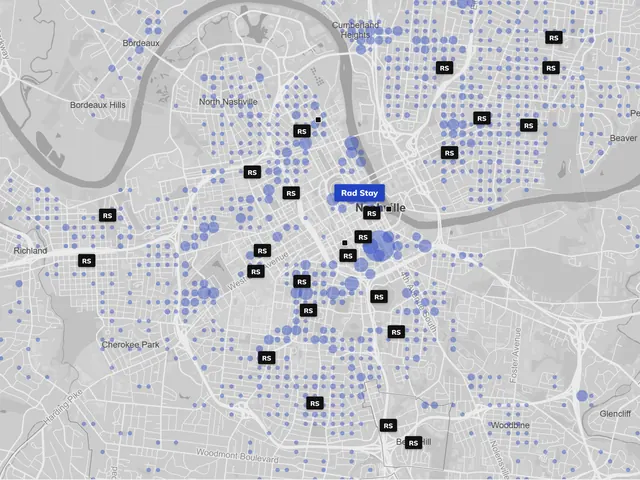
- 7,022, of which 37203 holds 1,706
On this page
- How a cluster differs from other building types
- Zoning districts that allow it
- A permit for every townhome
- The 100-foot distance rule
- Fire Marshal inspection at three or more units
- Ownership, HOAs and the permit
- Operating rules that apply to each unit
- Owner-occupied permits for townhomes in residential zoning
- Rule changes from 2023 to 2025
- Other zoning limits to check
- Operating models and risk
- What Rad Stay handles
- Questions
- Sources
How a cluster differs from other building types
Most multi-unit types on this site share one roof and one entrance. A townhome cluster usually has separate front doors. For a short-term rental plan that changes two things: each townhome is permitted on its own, and a homeowners association may sit between you and the rules.
Metro does not have a separate permit for multifamily or for clusters. In the code's terms, the use means a residential dwelling, capped at four sleeping rooms, that is rented, or offered, to transient guests through an online marketplace. Each townhome is one dwelling unit and one permit.
Zoning districts that allow it
Townhome clusters often sit in residential zoning, while the code reserves fresh not-owner-occupied permits for its office, commercial and mixed-use zones, the shopping-center districts and most of downtown, each with conditions; the permits guide linked below carries the full list. The land use table agrees. AG, AR2a, every residential district (R, RS, RM, RN, RL), DTC East and all industrial zoning are shut to them.
So if your cluster carries R, RS, RM, RN, RL or AR2a zoning, no fresh not-owner-occupied townhome permit can be had. Check the district on the parcel before anything else. Metro's own permit page names AR2A, R, RS and RM as zones barred to any new not-owner-occupied permit. A holder who already has one in those districts can keep renewing it, but it dies on a sale or any other transfer of the townhome.
Two other limits matter. Inside an SP or PUD, the townhome permit question is answered by that plan's own text: no permit unless the SP or PUD says yes. Council has changed a few plans for this purpose, among them BL2024-211, an SP amendment opening the site to not-owner-occupied rentals (passed April 16, 2024), and BL2026-1268, a rezoning from RM20-A into an SP for that same use (passed March 17, 2026). Any lot in an NS district, short for no short-term rental, is closed to both kinds of permit.
A permit for every townhome
Metro's February 2026 FAQ copy lists the fee at $313 for each permit, and each townhome permit lasts 365 days after Metro issues it. Metro emails a renewal reminder twice, at 60 days out and at 45. Past expiry, Metro has discretion to grant a 30-day window to renew, and only for a townhome with no documented complaints, so plan as if the expiry date is final. For eight townhomes that is eight applications, eight renewal dates and eight sets of renewal emails to track.
The application has to show that you gave written notice to the neighboring owners in front, behind, on each side and, in a stacked building, above and below. In a cluster the adjacent properties can be your own other units, so the notice list needs care.
Every townhome permit also needs a liability policy carrying at least $1 million per occurrence, a named responsible party living within 25 miles and answering at any hour, and the permit number shown in each listing.
The 100-foot distance rule
For a not-owner-occupied townhome, the 100-foot test is measured between parcel lines against any school or its playground, any church or other religious institution, any park, and any licensed day care or a playground that it uses; inside that distance Metro issues no new permit. A waiver is possible only through a Council resolution, which takes a public hearing, 21 votes in favor, letters to every owner within 600 feet and a posted sign that stays up 14 days. A single waiver resolution may take in several townhomes of the same development.
Waivers have been granted often. One example from 2024 shows the risk: RS2024-479, which asked to cover 62 apartments at 160 2nd Avenue North, lost on June 4. A second try a month later, RS2024-580, asked for 55 of those units and passed on July 2. When a park or school is close to the cluster, budget time for a hearing and a Council vote before you take a booking.
Fire Marshal inspection at three or more units
Owners of a single home or a duplex can instead file a safety certification signed by someone licensed in Tennessee as a home inspector, architect or engineer. Once three or more dwellings share the property, the not-owner-occupied checklist calls it multifamily, and the Fire Marshal's office does the inspection itself. A cluster of four or more townhomes lands in that second group.
This page does not state building code classification, sprinkler or alarm thresholds. Whether townhomes used for transient stays are treated as residential or as another use group, and what that does to sprinkler and alarm requirements, was not confirmed from an official source for this page. Get the Metro Codes answer on paper before a cluster purchase closes or renovation starts.
Ownership, HOAs and the permit
Permits cannot be sold, assigned or handed to someone else. A change of owner cancels the permit, and whoever owns the townhome next must apply again under whatever rules are in force on that day. Metro applies that even to a townhome you shift into an LLC or trust under your control, or back out again. When a cluster is sold off one home at a time, every buyer starts from zero, and where the zoning is AR2A, R, RS or RM, none of those buyers can obtain a permit for a home they do not live in.
Each applicant also signs a statement that renting the home breaks no lease, no co-op or condominium agreement and no HOA agreement. Metro's FAQ is clear that an association's limits can exceed the city's. Townhome clusters nearly always have an association, so read the declaration before you spend on anything else.
Operating rules that apply to each unit
Metro's operation page caps guests at two per sleeping room plus four, with 12 as the ceiling. Only one party may book at a time, the person renting must be at least 21, every stay runs at least 24 hours and no more than 30 days running. Townhome guests may not be served food by the permit holder, and RVs, buses and trailers must be kept out of view.
Metro, after three violations of the general rules, can revoke a permit by giving 15 days' written notice. Appeals go to the STR Appeals Board. Once revoked, the townhome waits a full year for any new permit. Renting a townhome with no permit at all costs $50 in fines per day. Letting a permit lapse and renting anyway brings a six-month wait for a new one, and if a court finds you operated with no permit, the wait is three years. Keep the guest register on file for six months or more.
Owner-occupied permits for townhomes in residential zoning
The owner-occupied permit works as an accessory use wherever residential use is allowed, NS districts excepted. They do not suit an investor cluster. It requires a human owner who lives in the townhome as a primary residence, so an LLC, corporation, partnership or trust cannot be the permit holder. Proof of that residence comes as four documents, two drawn from each of the code's two lists.
Under that permit the owner may not advertise the whole townhome, with three exceptions: a lawfully permitted detached accessory dwelling, an accessory apartment, or one dwelling in a two-family home with a recorded covenant. BL2025-1005, in force from December 12, 2025, closed RN and RL zoning to not-owner-occupied rentals and left owner-occupied ones there to the single-family building type.
Rule changes from 2023 to 2025
The rules have changed several times, so a cluster pro forma from 2022 may rest on old assumptions. BL2023-1884 created the 100-foot rule; Council passed it August 1, 2023, and it took effect on August 11. Appeals Board review of permit decisions came from BL2023-136, passed on February 6, 2024. Adaptive residential uses were addressed in BL2024-187, passed in July 2024.
BL2024-478 cleared Council on November 7, 2024, and the Mayor signed it five days later. That bill tightened the owner-occupied proof, made any change of owner end the permit, and reworked how waivers are granted. On December 4, 2025 Council passed BL2025-1005 and BL2025-1007, which deal with RN and RL zoning and with accessory dwellings. No further short-term rental ordinance had passed as of the June 23, 2026 Municode text, per Council legislation titles.
Metro's FAQ page still calls BL2020-187 the current law, which is out of date. The text itself lives in Metro Code Section 6.28.030 and in Title 17 for zoning. Use the code, not the FAQ, when the two differ.
Other zoning limits to check
Adaptive residential lots have their own limit. Neither permit is available on an adaptive residential lot whose frontage is mainly on a local street, or which sits outside the USD. Any permit already in good standing before that August 1, 2024 date is spared the limit.
A newly built accessory dwelling cannot carry an owner-occupied permit, worth knowing if the cluster plan adds carriage houses. Chapter 17.36, which holds the historic and design overlays, says nothing about short-term rentals for townhomes or any other use. The single overlay provision there concerns detached accessory dwellings.
The 100-foot rule exempts work that was underway in 2020, defined as holding a master permit no later than September 1, 2020 or being 50 percent built. A new cluster does not qualify.
Operating models and risk
An owner of a qualifying cluster can hire a manager under a management agreement, lease the units to an operator under a master lease, or share revenue. Because permits stay with the owner at the address and cannot be assigned, the party that holds each permit and carries the insurance matters under every model. Put it in writing.
The biggest risk is buying a cluster in a residential district for its rental income. In those districts Metro will not issue a fresh one, and an existing one ends with a sale. Where that leaves short-term rental out, the homes can still earn on 30-day-plus or annual leases, and Rad Stay manages both.
Hotel occupancy and sales tax rules were not confirmed from an official source for this page. Use the tax guide linked below and check rates with Metro and the state Department of Revenue before you set a nightly price.
What Rad Stay handles
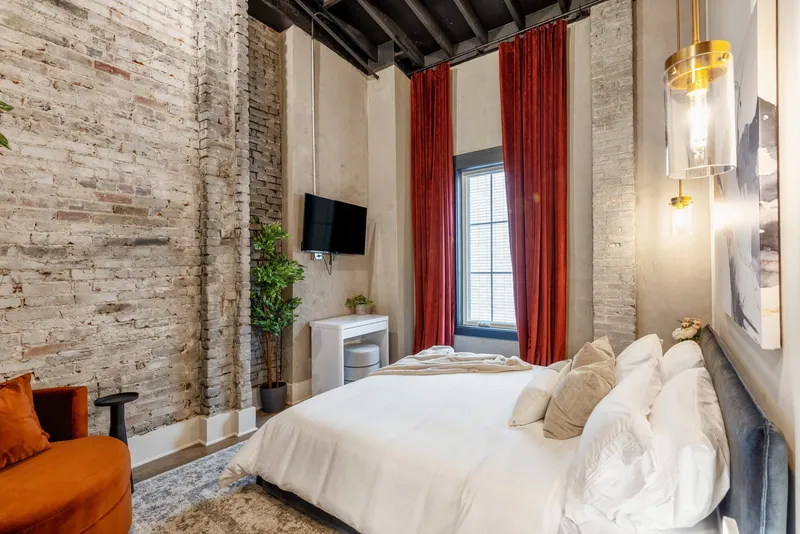
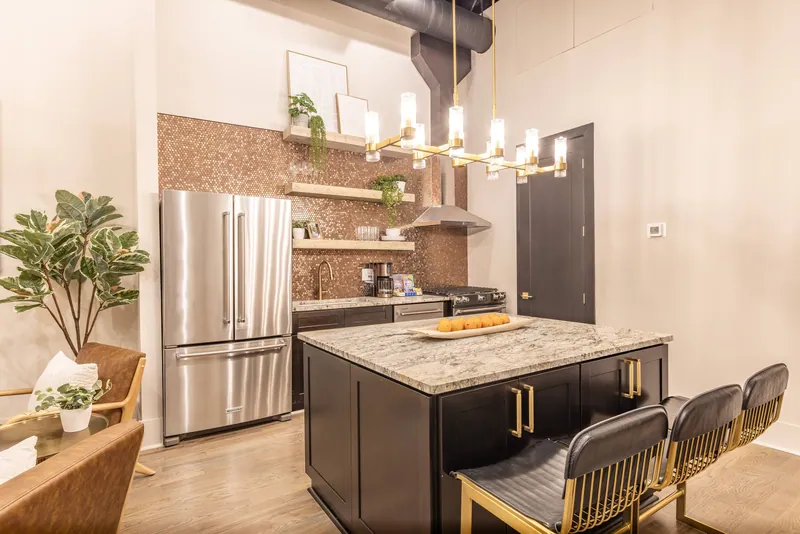
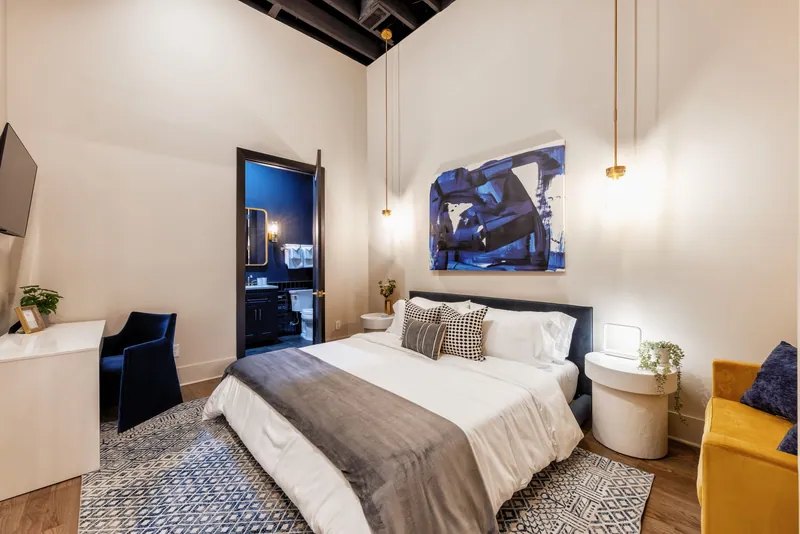
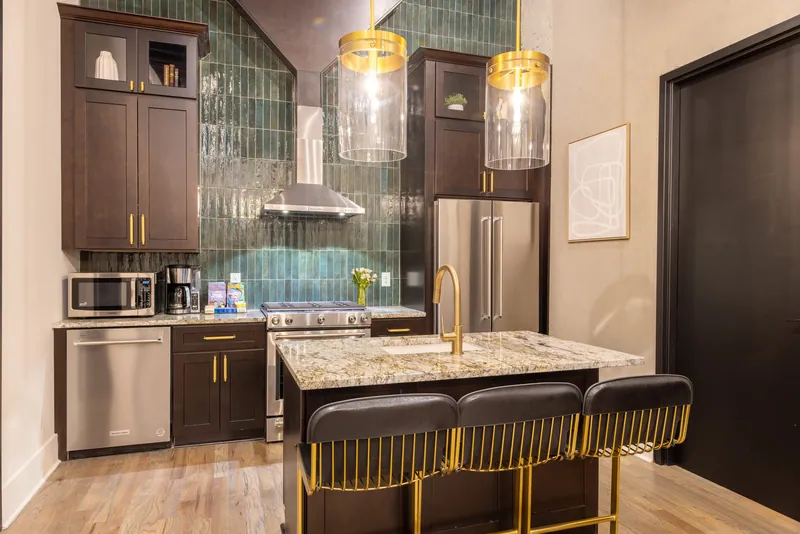
For townhome owners Rad Stay handles short, mid and long stays alike: pricing and revenue management, guest messages, cleaning schedules, automated bookings and damage protection, with permit and tax help on top. It has operated four short-term lofts at Union Street Lofts in downtown Nashville since 2023, each with its own Metro permit. It also looks at clusters Rad Stay could buy, lease or partner on.
For a cluster, the first step is a zoning and permit check, unit by unit, before any numbers are run.
Questions
Can I get one permit for all the townhomes in a cluster?
No. Each townhome gets a permit of its own, and four sleeping rooms is the most any permit covers.
How many homes in one townhome cluster may hold short-term rental permits?
We found no percentage limit for short-term rental units in one multifamily property in Sections 17.38, 17.08.030, 17.16.070.W or 6.28.030. Each home still has to clear zoning, the 100-foot rule and the HOA or SP terms.
My cluster is in a residential district. Can I still get permits?
AR2A, R, RS and RM zoning are closed to fresh not-owner-occupied permits. Permits already issued there may be renewed, though a sale ends them. Confirm your district with Metro Codes.
Does the Fire Marshal inspect a townhome cluster?
Yes, at three or more dwellings, because the not-owner-occupied checklist assigns that inspection to the Fire Marshal for multifamily properties.
If I sell the townhome cluster, do the permits transfer to the buyer?
Permits are not transferable. They do not; the buyer applies fresh under the rules of the day, and the same is true when you move the cluster between your own name and an entity or trust you control.
Sources
- Metro Code 6.28.030 and Title 17 STR provisions, Municode (current through June 23, 2026)
- Metro Code 17.08.030 land use table, Municode
- Metro Nashville, Short Term Rental permit types (archived Feb 17, 2026)
- Metro Nashville, Apply for a Short Term Rental Property permit (archived Aug 22, 2026)
- Metro Nashville, Not-owner-occupied checklist (archived Feb 16, 2026)
- Metro Nashville, Short Term Rental frequently asked questions (archived Feb 11, 2026)
- Metro Nashville, STR operation requirements (archived Feb 12, 2026)
- Metro Nashville, Renew a Short Term Rental Property permit (archived Oct 12, 2026)
- Metro Nashville Residential Short Term Rental Permits (open data), status Issued, retrieved 2026-10-06
- Metro Council legislation search (Legistar), BL2024-211, BL2026-1268, RS2024-479, RS2024-580
Checked October 18, 2026.
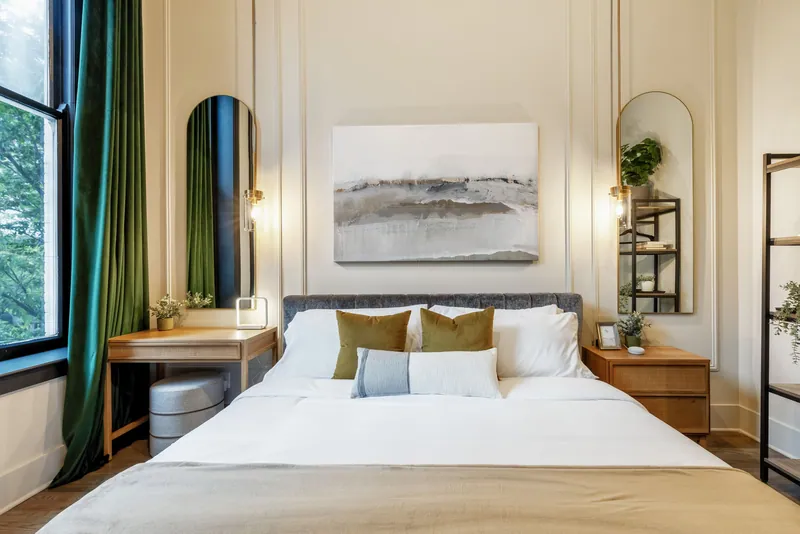
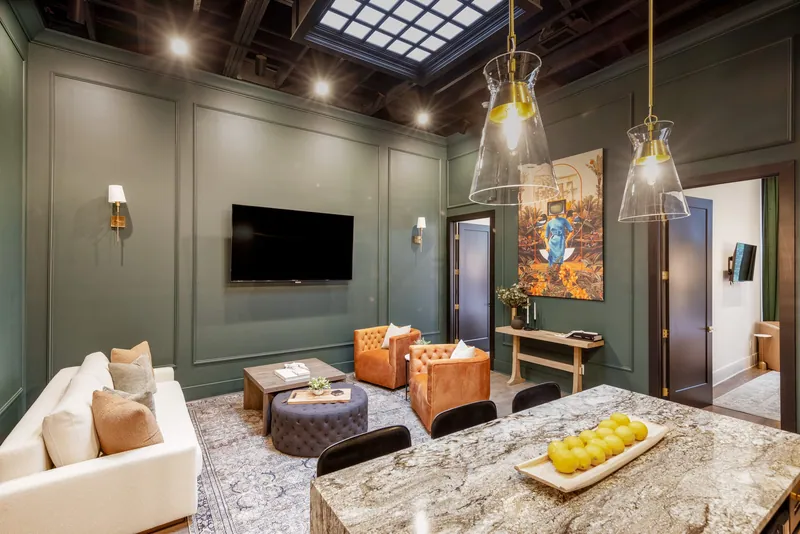
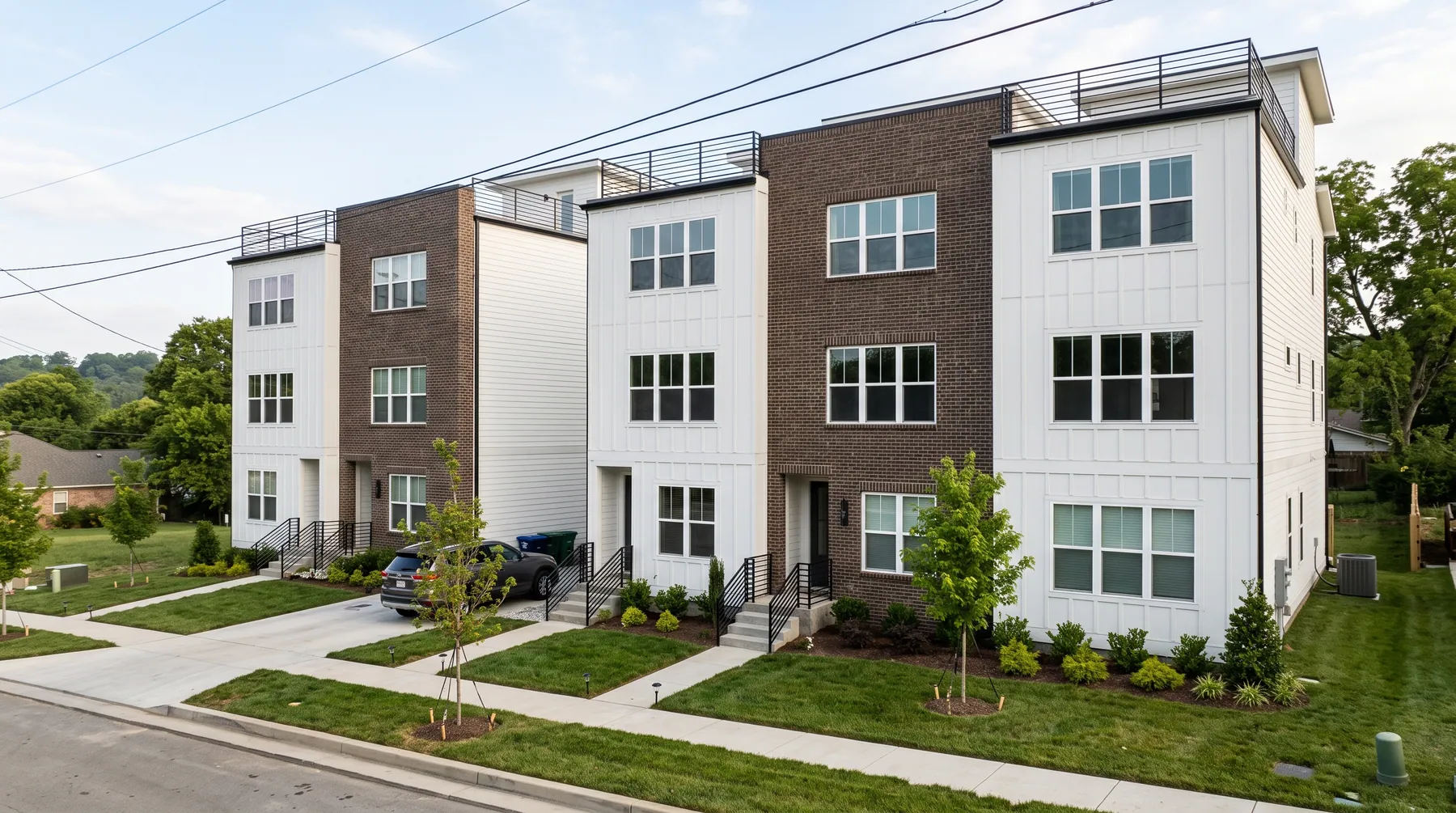
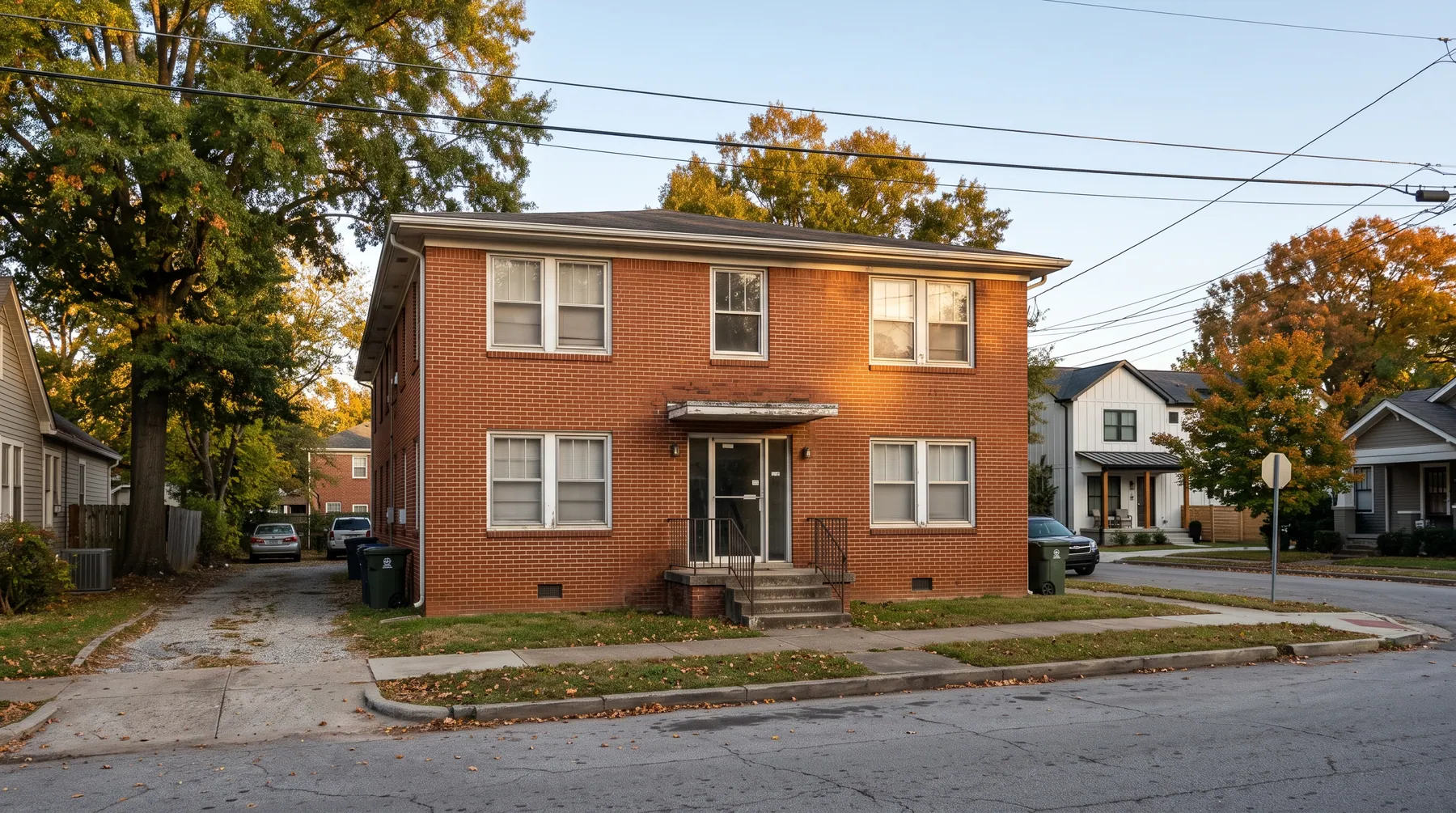
Top image: Illustration of a representative building, not a specific property.
To keep this page, print it or choose Save as PDF in your browser's print window. The printout keeps the sources and the date.
More property types
All 19
Warehouse and Flex Buildings
A warehouse stores and moves goods.
Eightplex
An eightplex is big enough that its layout and zoning drive the rules.
Sixplex
Six units is the size where a Nashville building starts to be run like a small business.