
Twelveplex
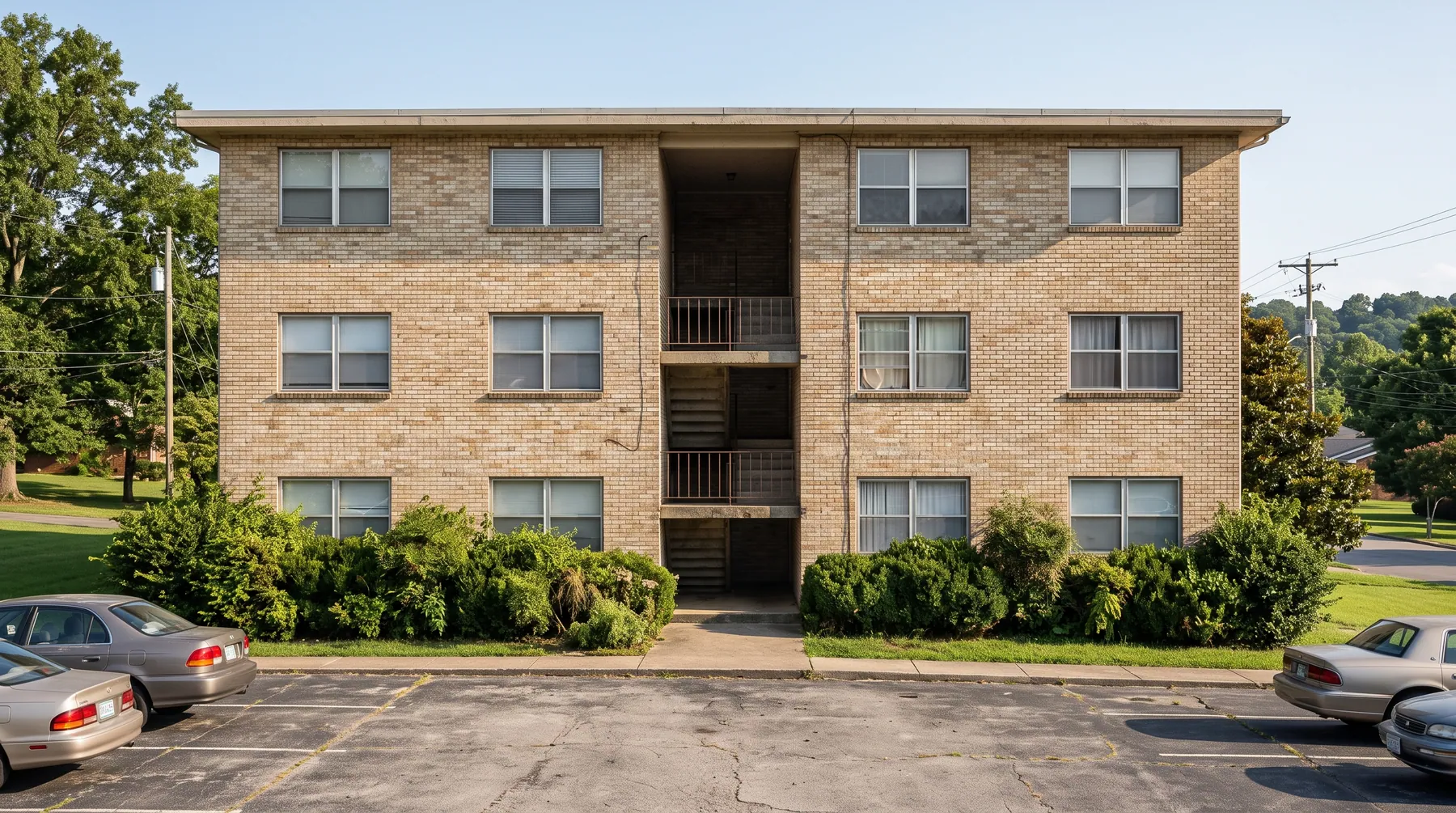
Twelve units can be three floors of four or two floors of six. In Nashville that shape now has its own zoning type, the Multiplex, and a twelve-unit apartment building stays under the fire alarm trigger of more than 16 units.
- Units
- 12
- Design-based building type
- Multiplex (10-25 units), allowed in RL districts and permitted in RM
- R-2 manual fire alarm trigger
- A unit 3 or more stories above exit discharge, or more than 16 units
- Property tax class
- Industrial and commercial, assessed at 40 percent
- Parcels with exactly 12 non-owner-occupied STR permits
- 3 (Metro open data, Oct. 18, 2026)
On this page
- Zoning a twelve-unit building
- Fire alarms and the fourth floor
- Twelve short-term rental permits
- What twelve applications involve
- Accessibility in a walk-up
- Property taxes for twelve units
- Running twelve units
- Mixing stays in twelve units
- Twelveplexes in the Davidson County figures
- What Rad Stay handles
- Questions
- Sources
Zoning a twelve-unit building
The land use table, as BL2025-1005 amended it, lets multi-family buildings go up by right in RM zoning.
Council passed BL2025-1005 on December 4, 2025, creating the RN (Residential Neighborhood) and RL (Residential Limited) districts and design-based building types in Chapter 17.38. Twelve units is too many for a Manor House (six to ten) and fits the Multiplex type: a detached building of 10 to 25 side-by-side or stacked units, typically with one shared entry and sometimes secondary individual entries. Chapter 17.38 scales the type for moderate-intensity neighborhoods or as a transition between low-intensity neighborhoods and corridors. The RL districts allow the Multiplex, and RM districts permit it. Because RN and RL bar short-term rentals by absent owners, a new Multiplex in either district can only house residents.
Fire alarms and the fourth floor
In Group R-2, a manual fire alarm is required once any unit sits three or more stories above the lowest exit-discharge level, once any unit is over a story below that level, or once the building tops 16 units. A twelveplex of three floors of four, with the ground floor at the exit level, stays under all three. Stack the same twelve units four floors high, three per floor, and the top floor is three stories above the exit level, so the alarm is required.
Where the building mostly hosts stays of 30 days or fewer and is classed Group R-1, unit count stops mattering: it needs a manual fire alarm unless it stands two stories or lower with every unit opening straight outside behind one-hour fire partitions, and interior corridors that serve units need automatic smoke detection. In a sprinklered R-1 twelveplex, sprinkler water flow can set off the alarm, with a single manual pull station. Confirm the classification and the current Metro amendments with Metro Codes before you plan the system.
Twelve short-term rental permits
Metro Code 6.28.030 treats each of the twelve units as a separate short-term rental, limited to four sleeping rooms and a single party at a time. Twelveplex permits for absent owners exist, with conditions, only in the code's listed business and mixed-use zones and in four downtown DTC districts (all but East), never where a district carries -NS; the permits guide linked below names each one. DTC East is left off.
Twelve permits mean twelve permit numbers to keep current on every listing, twelve proofs of insurance with at least million per occurrence in liability coverage, and twelve renewals each 365 days after issue. Running a unit with no permit brings a court fine of $50 per day and a one-year bar on permitting the property, three years if a court made the finding. Letting one unit's renewal slip and continuing to book it brings a six-month wait. Metro may revoke a twelveplex permit for a third breach of the general rules, giving 15 days' written notice first, and the property then waits a year for a new one.
A sale ends the permits. So a buyer of a permitted twelveplex is really buying twelve fresh applications, judged under the rules of the closing date.
Section 6.28.035 sends revocation appeals to the STR Appeals Board.
What twelve applications involve
Metro's checklist for permits on units an absent owner rents sends the Fire Marshal to inspect any property where three or more dwellings stand, which takes in every twelveplex.
The application carries the owner's signed word that the permit conflicts with no lease, HOA covenant, condominium declaration or co-op agreement, plus proof that every neighboring owner, the units above and below included where they exist, got written notice. Metro's FAQ also warns that HOA rules can go further than Metro's, which counts if any of the twelve units is a condominium.
No new permit goes to a twelveplex sitting less than 100 feet, parcel line to parcel line, from a park, a school, a church or similar religious site, a licensed day care, or a school or day-care playground. Council may waive that through a resolution passed with 21 votes after a public hearing, and many units of one development can ride on one resolution.
Metro's February 2026 FAQ copy puts the permit fee at $313. At that rate, twelve permits cost $3,756 in fees. Guests must be able to see each listing's permit number, shown as text or as an image.
Waivers are often granted, but nothing guarantees one. BL2023-1884, which Council passed August 1, 2023, created the rule. One 2024 case: Council turned down a 62-unit waiver for 160 Second Avenue North on June 4, then said yes to 55 units at the same building on July 2. A twelveplex inside the 100 feet should budget for the hearing, notice letters to everyone owning property within 600 feet, and two weeks of a posted sign.
Accessibility in a walk-up
Fair Housing Act design standards apply where a building of four-plus units saw its first occupants after March 13, 1991. In a walk-up with no elevator they reach the ground-floor units: an accessible entry and route, usable common areas, wide doors, workable kitchens and baths, reachable switches and thermostats, and walls backed for grab bars. With an elevator, all twelve units are covered.
For new construction, the building code calls for Type B units on any story with an accessible entrance in an R-2 building holding four units or more, and at least one fully Accessible unit in an R-1 building of 1 to 25 units. Type A units start in R-2 buildings with more than 20 units, so a twelveplex does not need one.
Run like a hotel, a short-term twelveplex risks being treated as an ADA place of lodging. The federal test asks whether conditions resemble a hotel's: management and booking handled on or off the property, rooms rented to walk-up or phone guests, linens or housekeeping, and reservations by room type rather than for a promised unit.
Property taxes for twelve units
Property tax is part of the operating budget. Tenn. Code Ann. Tennessee Code 67-5-501 places residential property with at least two rental units in the industrial and commercial class, and 67-5-801 assesses that class at 40 percent of value, against 25 percent for residential property. A twelveplex pays the commercial rate whether its units rent by the night or by the year.
Running twelve units
At Metro's limit, two guests for each sleeping room plus another four, twelve two-bedroom units could hold up to 96 guests. Each unit posts its own maximum and the responsible party's number, and that person must be within 25 miles and on call at all hours during every stay. A guest register kept six months is required by Section 6.28.010.
A three-story walk-up means guests carry luggage up stairs. Put families and guests with mobility needs on the ground floor, keep upper floors for couples and longer stays, and use a lockbox-free entry: one code for the street door and a separate code for each unit, changed with every stay.
Each of the twelve units carries Metro's operating rules on its own. The renter in charge must be at least 21, the permit holder cannot serve food, and no RVs, buses or trailers may be in view. Inside, each unit also lists its guest cap and who to call.
Mixing stays in twelve units
A permitted stay runs from 24 hours up to 30 consecutive nights; past that, the stay is a lease. In a twelveplex a mix of short-stay units on the lower floors and leased or 31-day units above keeps luggage traffic off the top floor and gives a lender stable resident rent alongside nightly income.
Units without permits must not be listed for short stays. A unit switching from leases to nightly use must be permitted first, and in RM, RN or RL zoning no absent-owner permit is available to it.
Twelveplexes in the Davidson County figures
The 2024 American Community Survey counted about 22,474 renter-occupied homes in Davidson County buildings of 10 to 19 units, ahead of roughly 14,520 in buildings with 20 to 49 units. Only about 1,835 homes in the 10 to 19 unit range were owner-occupied. That puts about 92 percent of the county's 10 to 19 unit homes in the renter-occupied column. Those 20-to-49-unit buildings also held 1,974 owner-occupied homes.
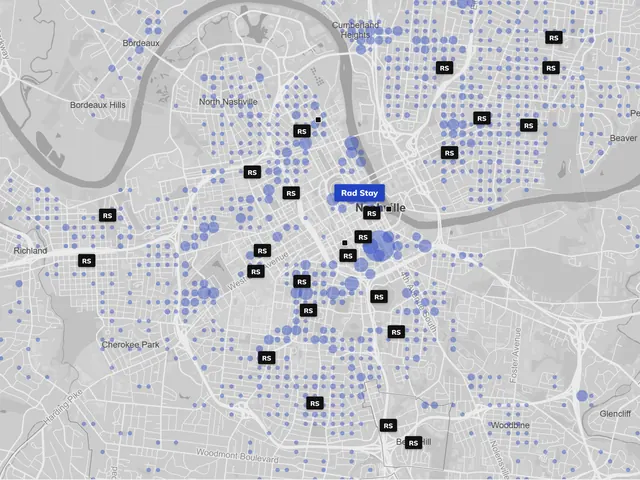
On October 18, 2026, Metro's permit data had three parcels with exactly twelve issued not-owner-occupied permits, out of seven parcels with ten to twelve.
Across the county, 7,022 permits were issued as of the October 6, 2026 open data, 1,706 of them in ZIP 37203, and 1,617 of those were not-owner-occupied. On October 18, four parcels held thirteen non-owner-occupied permits and one held ten, so twelve sits in the middle of a short list of multi-unit parcels rather than at the edge of it.
What Rad Stay handles
Rad Stay works across nightly, monthly and annual rentals and can operate a twelveplex on a blend of the three. We keep each unit's permit and renewal on track, support hotel occupancy and sales tax filings, price units by floor and layout, answer guests, book cleaners and linen service, automate reservations and arrange damage protection. We also look at twelve-unit buildings with owners who would sell, lease or partner on one.
Questions
Is a twelve-unit building a Multiplex under Metro's new zoning?
If it is a detached building, yes. Chapter 17.38 defines a Multiplex as a detached building of 10 to 25 units. It is allowed in the RL districts and permitted in RM districts.
Is a Fire Marshal inspection part of a twelveplex's short-term rental permit?
Yes; Metro's checklist assigns that inspection to any multifamily structure with three dwellings or more on the property.
Does a four-story twelveplex need a fire alarm?
Yes, when any unit sits three stories or more above the lowest exit-discharge level, as top-floor units do in a four-story building whose ground floor is at exit level.
Can I live in one unit and get an owner-occupied permit?
An owner who is a person, not an LLC, can get an owner-occupied permit for the unit they live in as a primary residence, with two proofs from each of Metro's two document groups. That permit does not allow advertising the entire home, and it does not cover the other eleven units.
What does operating without a permit cost?
Section 6.28.030 lets a court can fine $50 per day, a Codes determination brings a one-year wait before the property can be permitted, and a court finding makes it three years.
Is a twelveplex taxed as commercial property?
Yes. In Tennessee, dwelling property of two or more rental units falls in the industrial and commercial class, assessed at 40 percent of value.
Sources
- Metro Code Chapter 6.28, Sections 6.28.010 and 6.28.030 (short term rental property permits), Municode, version of June 23, 2026
- Metro Council Legistar: Ordinance BL2025-1005 (Residential Neighborhood and Residential Limited districts, Chapter 17.38, passed December 4, 2025), Ordinance BL2023-1884 and Resolutions RS2024-479 and RS2024-580
- 2024 International Building Code, Chapters 9, 11 and 30, International Code Council public access
- 24 CFR Part 100, Subpart D, Sections 100.201 and 100.205 (Fair Housing Act design and construction rules), Cornell LII
- 28 CFR 36.104, definition of place of lodging (ADA Title III), Cornell LII
- Tenn. Code Ann. 67-5-501 and 67-5-801 (property classification and assessment percentages), FindLaw
- U.S. Census Bureau, American Community Survey 2024 1-year estimates, Table B25032 (Tenure by Units in Structure), Davidson County
- Metro Nashville Residential Short Term Rental Permits (open data), status Issued, retrieved 2026-10-06 (totals) and 2026-10-18 (permits per parcel)
- Metro Codes, Not-Owner-Occupied Short Term Rental checklist (Wayback copy of Feb. 16, 2026)
- Metro Codes, Short Term Rental frequently asked questions (Wayback copy of Feb. 11, 2026)
Checked October 18, 2026.
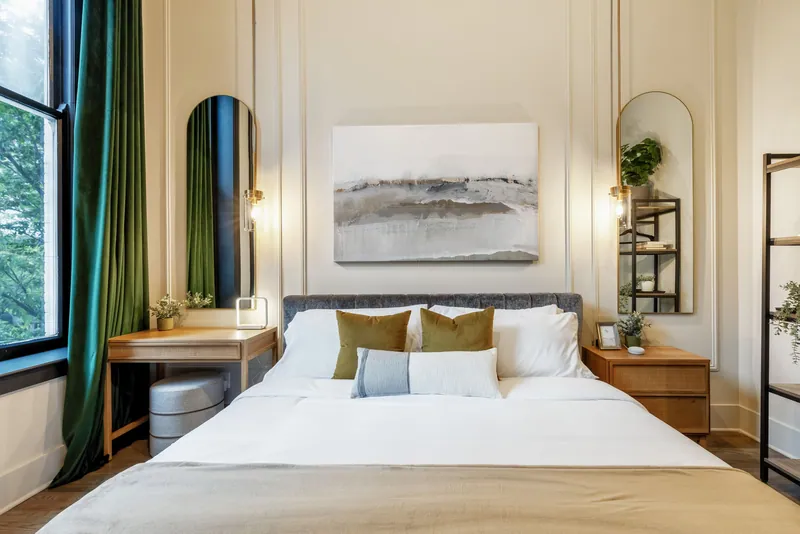
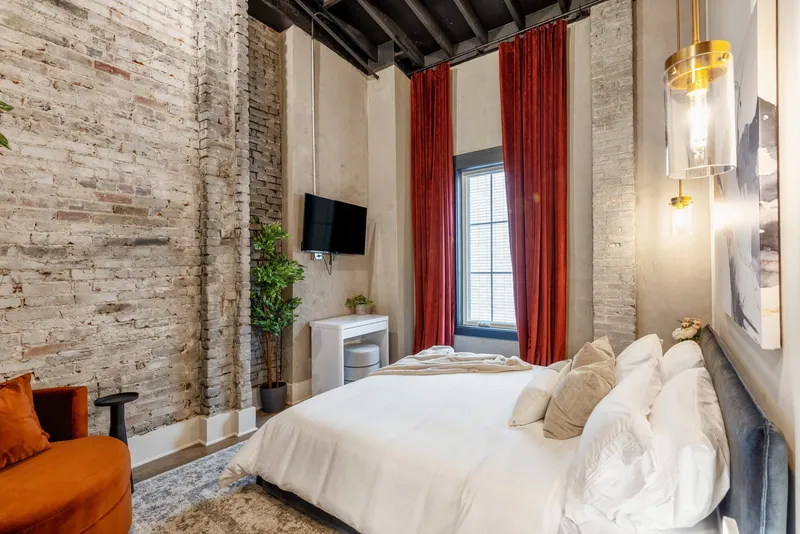
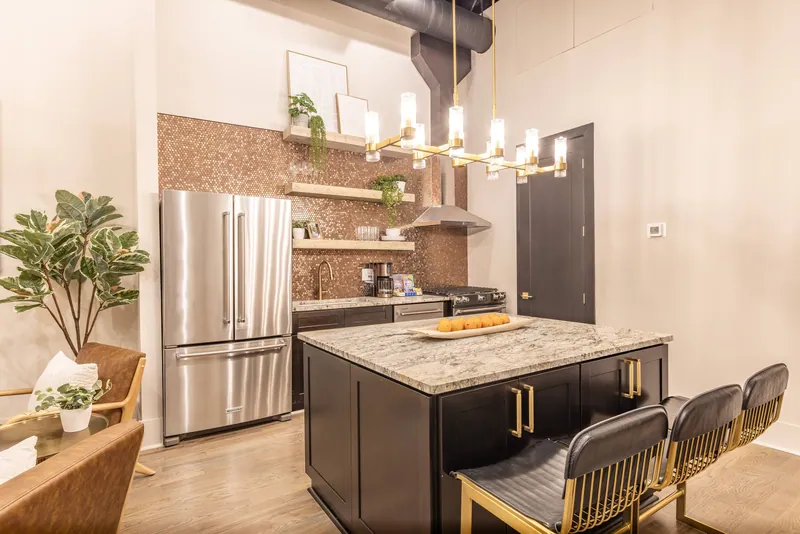
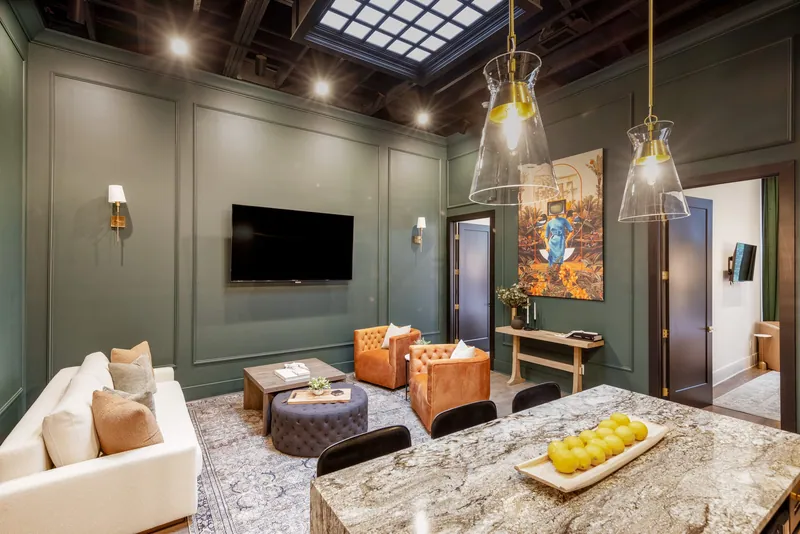
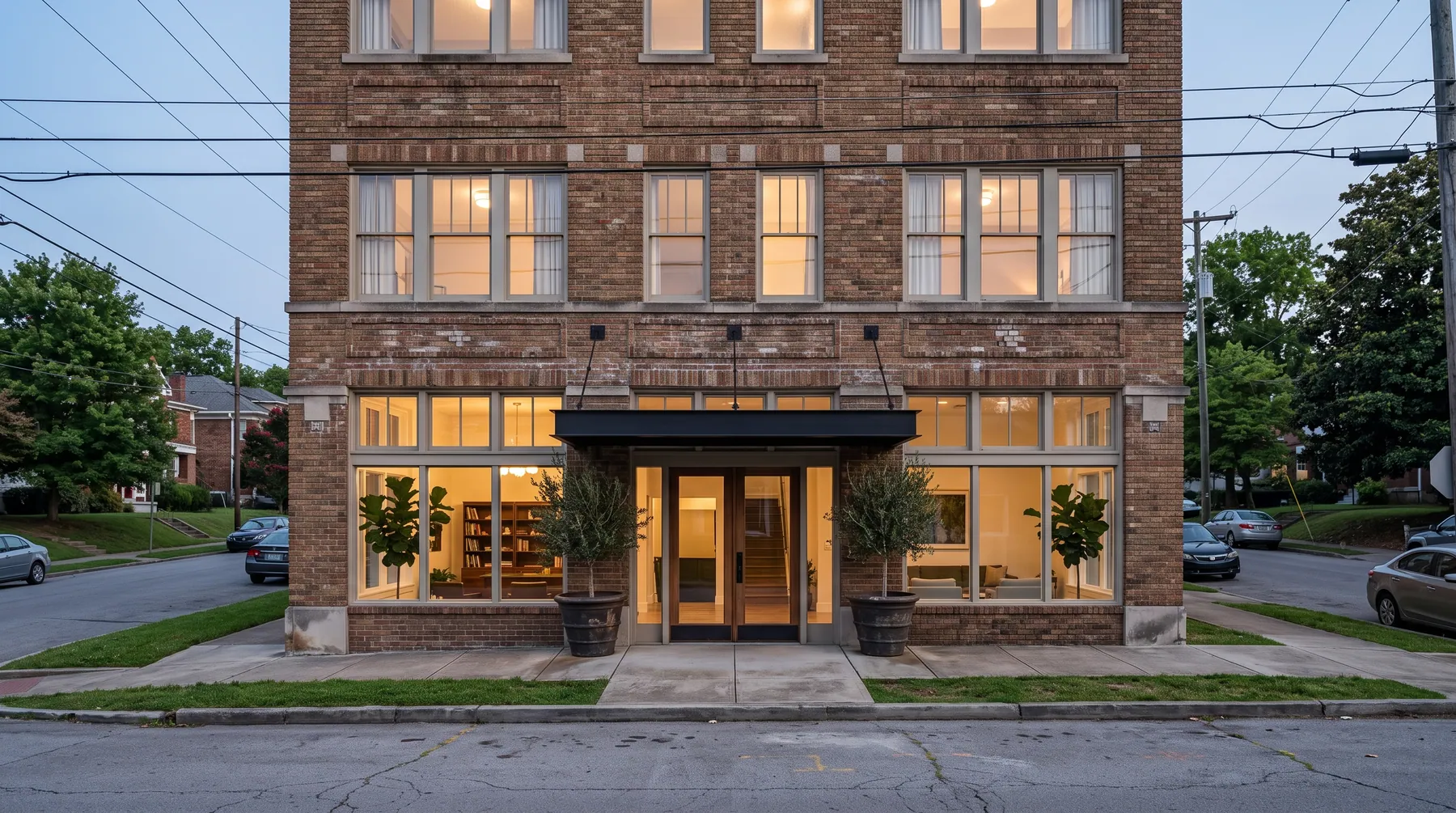
Top image: Illustration of a representative building, not a specific property.
To keep this page, print it or choose Save as PDF in your browser's print window. The printout keeps the sources and the date.
More property types
All 19
Fourplex
A fourplex is the largest building that still fits the one-to-four-unit loan limits, and it is well past the two-unit line where Nashville's building code stops treating a building as a house.
Historic Lofts
A historic loft building in Nashville is usually an old factory, warehouse, bank or store that now holds homes.
Boutique Hotels
A boutique hotel is a small building rented by the night, usually under a few dozen rooms, run as a hotel rather than as apartments.