
Inglewood
Inglewood is the northern part of greater East Nashville, running along Gallatin Pike in ZIP 37216. In Inglewood the question for a building owner is zoning: only commercial or mixed-use parcels can get new permits for absent owners, so each lot's district decides.
- ZIP code
- 37216
- Corridor
- Gallatin Pike (U.S. 31E)
- Overlay to know
- Inglewood Place Neighborhood Conservation Overlay (listed as established 2016)
- Issued STR permits (ZIP 37216)
- 313 (146 owner-occupied, 167 non-owner-occupied)
- Permit data
- Metro Nashville, retrieved Oct. 6, 2026
On this page
- Where Inglewood is
- How the neighborhood developed
- Inglewood Place Historic District
- Housing mix in ZIP 37216
- Housing types in the historic district
- Planned subdivisions along Gallatin Pike
- Projects proposed near Gallatin Pike
- Transit and getting around
- Neighborhood association
- Buildings and housing today
- Inglewood zoning and permits
- Issued permits in ZIP 37216
- Operating rules in brief
- Duplexes and the owner-occupied rules
- Checks before an Inglewood purchase
- Rad Stay on an Inglewood building
- Questions
- Sources
Where Inglewood is
Wikipedia places Inglewood within greater East Nashville, which it says extends to ZIP codes 37216 and 37207, west to Interstate 65 and north to Briley Parkway. It lists Inglewood, South Inglewood, Dalewood and Riverwood as the areas that make up Inglewood. This page uses ZIP 37216 for permit counts.
To the north is Madison. The Madison article on Wikipedia says the Nashville National Cemetery and Spring Hill Cemetery, which sit across Gallatin Pike (U.S. Route 31E) from each other, marked the generally accepted line between Madison and Inglewood before Briley Parkway was built. The East Nashville article describes Ellington Parkway as connecting Briley Parkway with downtown.
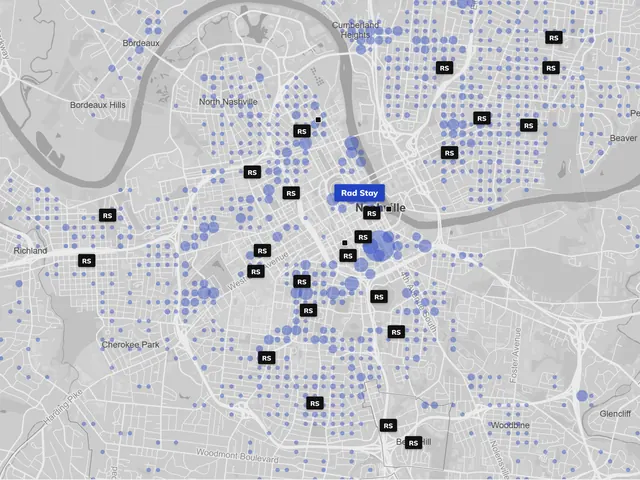
The center point on this page is an approximate position for the Gallatin Pike area, not a Metro boundary.
How the neighborhood developed
Inglewood Place appears in Historic Nashville's easement program as a conservation overlay, and the program dates the neighborhood to 1909, one of Nashville's early streetcar suburbs, laid out in a grid of Craftsman bungalows and Tudor Revival houses. The page labels the overlay itself as established in 2016 and calls it one of Nashville's most cohesive early 20th-century streetcar suburbs.
The National Register nomination for the Inglewood Place Historic District gives the dated record. It says settlers arrived in the 1780s on land grants of 640-acre tracts near the Cumberland River, and that the area stayed farmland through the 19th century. A streetcar line opened in 1891, running from downtown Nashville along Gallatin Road north to Howard Avenue. The Maplewood Improvement Company was chartered in 1892 and laid out Maplewood Park on the west side of Gallatin Road, which the nomination calls Inglewood's first streetcar suburb.
In 1908 investors formed the Inglewood Land Company and raised $200,000 by selling stock to Nashville residents. Shelton and Kirkland Avenues are named for some of those investors. The company laid out Inglewood Place in 1909 as a grid of straight streets running east from Gallatin Road. The 1909 plat shows a public school across the pike, on the site the nomination says is now Liberty Collegiate Academy, along with Maplewood Farm. That tells you Maplewood Park was slow to fill in. The nomination cites sources accessed in 2015, so confirm the school site's current use.
The East Nashville Golf and Country Club was chartered in 1919 on part of the Sharpe farm, with residential lots of one to two acres between Kennedy Avenue and Golf Street (then Golf Club Avenue). The planned 18-hole course was cut to nine holes. By 1933 the large lots were split so more buyers could afford them, Shelton Avenue was extended, and the club had been renamed the Inglewood Golf Club. Shortly after the 1933 subdivision, a lot auction was held on October 4. The nomination says the golf course no longer exists.
Riverside Drive, a winding road with a greenway down its center, was first developed in the 1910s to connect the area to Shelby Bottoms Park. The Works Progress Administration improved it in 1933 as a memorial to fallen soldiers, and in 1959 more than 500 trees, shrubs and tulips were planted along the greenway.
Building peaked in the 1920s and 1930s, continued at a lower rate in the 1940s, and slowed by the 1950s as vacant parcels ran out. The nomination says streetcar operation declined in the 1940s as cars became affordable. It also says Inglewood became its own municipality with its own police and fire departments, and that the county's communities were combined into one city-county government in 1963.
Inglewood Place Historic District
The National Park Service record for the Inglewood Place Historic District (National Register Information System ID 16000117) lists 1909, 1919 and 1933 as the significant years. The nomination places the district about four miles northeast of downtown Nashville and describes a roughly 165-acre portion of the land historically tied to Inglewood Place. It counts 484 parcels, 468 residential buildings and 131 secondary buildings such as garages and sheds. Of 599 total resources, 493, or 82.3 percent, contribute to the historic character, and 106 do not.
The nomination bounds the district on the north by the rear lines of parcels on the north side of Stratford Avenue, on the east by parcels on the east side of Shelton Avenue and Riverside Drive, and on the south by parcels on the south side of Shelton Avenue and the 1100 block of Kirkland Avenue. On the west it follows the rear lines of parcels facing the east side of Gallatin Pike. It also takes in buildings on McChesney, Howard, Jakes, Greenfield and Kennedy Avenues and Katherine, Oxford and Golf Streets.
The 1909 streets, from north to south, are Stratford, McChesney, Howard, Greenfield, Shelton and Kirkland Avenues, crossed by Oxford and Katherine Streets. The nomination says streets are about 30 feet wide, most lack sidewalks, and original lots are mostly 100 feet wide and 175 to 200 feet deep. Golf club subdivision lots are 60 feet wide and 200 feet deep. Those small, regular lots matter if you plan to replace or add a building.
A National Register district is a separate designation from the Metro overlay described above. This page does not claim the two share a boundary, so check the overlay map for each parcel.
Housing mix in ZIP 37216
The U.S. The 2020-2024 American Community Survey's table B25024 counts 9,881 housing units in ZCTA 37216. A ZCTA is the Census Bureau's approximation of a ZIP code. That area covers more than Inglewood.
Detached single-family homes are 7,455 units, or 75.4 percent. Attached single-family units are 581. Two-unit buildings hold 831 units, three- and four-unit buildings 182, five to nine units 356, ten to nineteen 141, twenty to forty-nine 143, and buildings of fifty or more 129. Another 14 units are mobile homes and 49 fall in the Census category for boats, RVs and vans. Buildings with three or more units together hold 951 units, about 9.6 percent of the stock.
Table B25003 shows 2,719 renter-occupied homes out of 9,123 occupied, about 29.8 percent. Table B25042 puts renter-occupied homes by bedroom count at 173 with none (studios), 458 with one, 1,336 with two, 681 with three, 35 with four and 36 with five or more. Two-bedroom homes are the largest group of rentals.
Table B25064 gives a median gross rent of $1,627 for 2020-2024, and table B25077 gives a median value of owner-occupied homes of $447,800. Table B25035 gives a median year built of 1960. Table B25034 shows the age mix: 1,191 units built in 1939 or earlier, 1,356 in the 1940s, 2,381 in the 1950s, 971 in the 1960s, 426 in the 1970s, 976 in the 1980s, 433 in the 1990s, 498 in the 2000s, 1,286 in 2010-2019 and 363 in 2020 or later. About half of the units date from before 1960. Table B01003 counts 19,038 residents.
Table B25004 lists 758 vacant units, of which 54 were for rent and 188 were held for seasonal, recreational or occasional use. The Census gives no count of short-term rentals among them. These are five-year survey estimates with margins of error, so treat them as ranges for planning and not as counts of a single block.
Housing types in the historic district
Inside the National Register district the stock is houses. The nomination counts 229 bungalows (nearly half of all residences), 94 Minimal Traditional houses (20 percent) and 38 Ranch houses (8 percent), plus three American Foursquare houses, two L-front houses and two piano box houses. By style, it counts 102 Craftsman (22 percent), 52 English Cottage Revival (11 percent), 38 Colonial Revival (8 percent) and Tudor Revival (7 percent), with a few Neoclassical, Prairie and Spanish Colonial Revival examples.
Multi-unit buildings exist but are small. The nomination says 17 of the Ranch houses are modest duplexes, mostly built less than fifty years before the nomination. Its inventory lists duplexes at addresses including 3509 A Golf Street (1983), 3512 A and B Golf Street (1983), 3513 A and B Golf Street (1980), 3503 A and B Kennedy Avenue (1955), 3508 A and B Kennedy Avenue (1987), 1200 A and B Greenfield Avenue (1978) and 1326 Stratford Avenue (1966). It also lists a c.1930 bungalow duplex at 1215 McChesney Avenue.
The inventory describes a c.1940 apartment building at 3510 Golf Street. It is a two-and-one-half-story Colonial Revival building with a side-gable roof, brick veneer, a stone foundation and a symmetrical three-bay front, and the nomination counts it as contributing. It has a c.1940 garage behind it. The nomination cites sources accessed in 2015, so verify the parcel before using it as a current comparable.
The inventory also records garage apartments dated from about 1930 to about 1990. A garage apartment is an accessory dwelling, and whether a parcel can carry one is a zoning question for Metro Codes. The inventory lists one more oddity at 3511 Golf Street: a c.1940 log cabin built of squared hewn logs, classed as Frontier Revival.
Planned subdivisions along Gallatin Pike
The nomination lists the planned developments that make up the wider Inglewood area, on either side of Gallatin Road: Maplewood Park (1892), Inglewood Place (1909), East Nashville Golf and Country Club (1919), Tanglewood (c.1920), Haysboro (1923), Riverwood (late 1920s) and Jackson Park (1930). After World War II, farms were divided into home tracts including Rosebank, Burchwood Gardens, Porter Heights, Henderson Gardens and Fortland.
Older buildings predate all of these. The nomination names the plantation houses Evergreen Place (c.1795, not extant), Riverwood (c.1795, listed in the National Register on July 20, 1977) and Fairfax Hall (1802). It also names the Dr. Cleo Miller House, called Ivy Hall, a 1936 Tudor Revival estate on Shelton Avenue that was listed in the National Register on August 25, 1995.
For an owner, the pattern is useful. Streets off the pike were platted for single-family lots in the first half of the 20th century. The pike itself carried the streetcar, and the 1909 Inglewood Place plan put its cross streets at right angles to it. Multi-unit and commercial parcels are the exception, which is why parcel-by-parcel zoning checks matter here.
Projects proposed near Gallatin Pike
Nashville Post reported on March 31, 2023, that an entity affiliated with The Cauble Group was seeking to acquire a 2.7-acre multi-parcel site with a main address of 4102 Gallatin Pike for a mixed-use project with residential and commercial space. The report said a house over a century old at 1103 McAlpine Avenue would stay and a small commercial building, a florist's last, would come down. This page did not confirm whether the project was approved or built.
WKRN reported on August 19, 2025, that the Metro Council was set to vote that night on a proposal for 55 multi-family units on Solley Drive, about 150 feet west of Gallatin Pike in Inglewood. The report does not give the zoning request or the developer, and this page did not confirm the vote's outcome. Search Metro's Legistar record for the current status of both items before you rely on them.
Transit and getting around
WeGo Public Transit's Route 56 Gallatin Pike serves the corridor. WeGo's summer 2025 service changes put its buses on a 15-minute schedule on weekday evenings and weekends. The same changes widened WeGo Link on-demand service around Maplewood and Broadmoor, effective May 31, 2025. Transfer points for that zone are Gallatin and Broadmoor, Greenfield Station, Dickerson Walmart, and Dickerson Pike and Ewing.
Riverside Drive and its greenway link the neighborhood to Shelby Bottoms Park, according to the nomination. For guests, a Route 56 stop within a short walk is worth noting in a listing only after you have checked the actual distance and current schedule on WeGo's site.
Neighborhood association
The Inglewood Neighborhood Association, whose site is inglewood37216.org, says it was formed in 1996 as the Riverwood Neighborhood Alliance, Inc., and is a registered 501(c)(3) not-for-profit. Its site says it meets monthly on the first Thursday from 7:00 to 8:00 p.m. and that anyone who calls 37216 home is welcome. Its listed dates in late 2026 are November 5 and December 3. A building owner planning a conversion or a new permit application can find out there what neighbors are discussing before filing.
In a market where every permit application needs written notice to adjacent owners, an early conversation with the neighborhood association costs little.
Buildings and housing today
Beyond the c.1940 apartment building at 3510 Golf Street and the small duplexes in the nomination's inventory, the sources describe houses, not named multi-unit buildings. No named Inglewood loft or hotel was confirmed, so none is listed.
For an owner or buyer, that means a 4-to-200-unit property here will usually be a small apartment building, a duplex cluster or a mixed-use building on the pike. Look up each lot in the Parcel Viewer; the neighborhood name settles nothing.
Inglewood zoning and permits
Off Gallatin Pike most lots are residential, so no new absent-owner permits; qualifying corridor parcels can apply unit by unit, and planned-unit or SP land follows its plan, as our zoning guide explains.
The fee is $313 per Metro's February 2026 FAQ, and a buyer never inherits a seller's permits.
The 100-foot rule also applies. Inglewood's churches and schools also bring the 100-foot distance rule into play, with Council waivers possible; measure from the lot line before committing.
Issued permits in ZIP 37216
Metro's open data showed 313 issued in ZIP 37216 on October 6, 2026, 167 for absent owners and 146 owner-occupied.
These counts are permit records. They say nothing about how many units book well.
Operating rules in brief
Each permitted unit then runs under Metro's countywide operating rules, which our multifamily guide sets out.
In a multi-unit building, that notice step repeats for every unit permit.
Duplexes and the owner-occupied rules
Off the pike, the owner-occupied permit, for an owner who lives there, is the route. In single- and two-family districts Metro issues one such permit per lot. On a duplex, ownership cannot be divided, the owner must use one unit as a primary residence, and a covenant must be recorded with the register's office. In RN and RL districts, adopted December 2025, not-owner-occupied rentals are prohibited.
Checks before an Inglewood purchase
Inside the Inglewood Place overlay, the easements page says the overlay regulates visible exterior changes: new construction, demolitions and major additions. Minor alterations such as siding replacement are exempt. No historic overlay rule on short-term rentals appears in Chapter 17.36, but an overlay still governs what can be built or changed.
Run through this list for any Inglewood building:
- Zoning district of the parcel, and whether it is on the permit list above
- The 100-foot distance to the nearest school, church, day care or park
- Whether the parcel sits inside the Inglewood Place overlay
- Condo or HOA documents, which each applicant certifies do not bar renting
- Parking and traffic noise on parcels facing Gallatin Pike
Rad Stay on an Inglewood building
Rad Stay manages rentals of a night, a month or a year. Where permits depend on the parcel, that usually means sorting units by what zoning allows, with permitted units on nightly pricing, guest messages, cleaning and permit and tax upkeep, and the rest on longer leases. This is general information, not legal or tax advice. Confirm each rule with Metro Codes.
Questions
How many permits are issued in ZIP 37216?
313 as of October 6, 2026: 167 for absent owners, 146 owner-occupied.
Can any Inglewood street get permits for absent owners?
No; only parcels in qualifying business, mixed-use or downtown districts can, and residential districts cannot. Confirm the parcel's zoning with Metro.
Is there a cap on short-term units in an Inglewood apartment building?
The code sets no percentage cap.
Does the Inglewood Place overlay ban short-term rentals?
The easements page describes it as regulating visible exterior changes such as new construction, demolitions and major additions. Chapter 17.36 gives historic overlays no short-term rental rule.
What share of homes in ZIP 37216 are in larger apartment buildings?
The 2020-2024 ACS (table B25024, ZCTA 37216) puts 951 of 9,881 housing units, about 9.6 percent, in buildings of three or more units. Only 129 units are in buildings with 50 or more. A ZCTA is not the neighborhood boundary.
What is median rent in ZIP 37216?
The American Community Survey 2020-2024 5-year estimate of median gross rent for ZCTA 37216 is $1,627 (table B25064). It covers every rental, houses and yearly leases included, so it is no guide to nightly rates.
When was Inglewood Place laid out, and who developed it?
The National Register nomination says the Inglewood Land Company, formed in 1908 by investors who raised $200,000 in stock, laid out Inglewood Place in 1909 along the Gallatin Road streetcar line. The district expanded in 1919 and 1933.
Is there a large apartment building inside the Inglewood Place Historic District?
Not in the nomination's inventory, which describes a c.1940 two-and-one-half-story apartment building at 3510 Golf Street, small duplexes and one triplex. Confirm current conditions on the parcel.
Which bus serves Gallatin Pike?
WeGo Route 56 Gallatin Pike. WeGo's summer 2025 changes set 15-minute service on weekday evenings and weekends. Check WeGo's site for the current schedule.
Sources
- Historic Nashville easements program, list of local overlays (Inglewood Place)
- Wikipedia, East Nashville, Tennessee
- Wikipedia, Madison, Tennessee
- Metro Code 6.28.030, Municode (current through June 23, 2026)
- Metro Nashville Residential Short Term Rental Permits (open data), status Issued, retrieved 2026-10-06
- Metro Codes, STR permit types (Wayback, Feb. 2026)
- Metro Codes, STR operation requirements (Wayback, Feb. 2026)
- Metro Codes, STR renewal (Wayback, Oct. 2026)
- Metro Codes, STR frequently asked questions (Wayback, Feb. 2026)
- National Register of Historic Places Registration Form, Inglewood Place Historic District, Davidson County (National Park Service)
- National Park Service NPGallery record, Inglewood Place Historic District, NRIS 16000117
- U.S. Census Bureau, American Community Survey 2020-2024 5-year estimates, tables B25024, B25003, B25042, B25064, B25077, B25035, B25034, B25004 and B01003, ZCTA 37216 (via Census Reporter; a ZCTA is not the neighborhood boundary)
- Inglewood Neighborhood Association
- WeGo Public Transit, Summary of service changes, summer 2025
- Nashville Post, Mixed-use project planned for Inglewood (March 31, 2023)
- WKRN via Yahoo News, Metro Council to vote on 5 new housing developments across Nashville (Aug. 19, 2025)
Checked October 18, 2026.
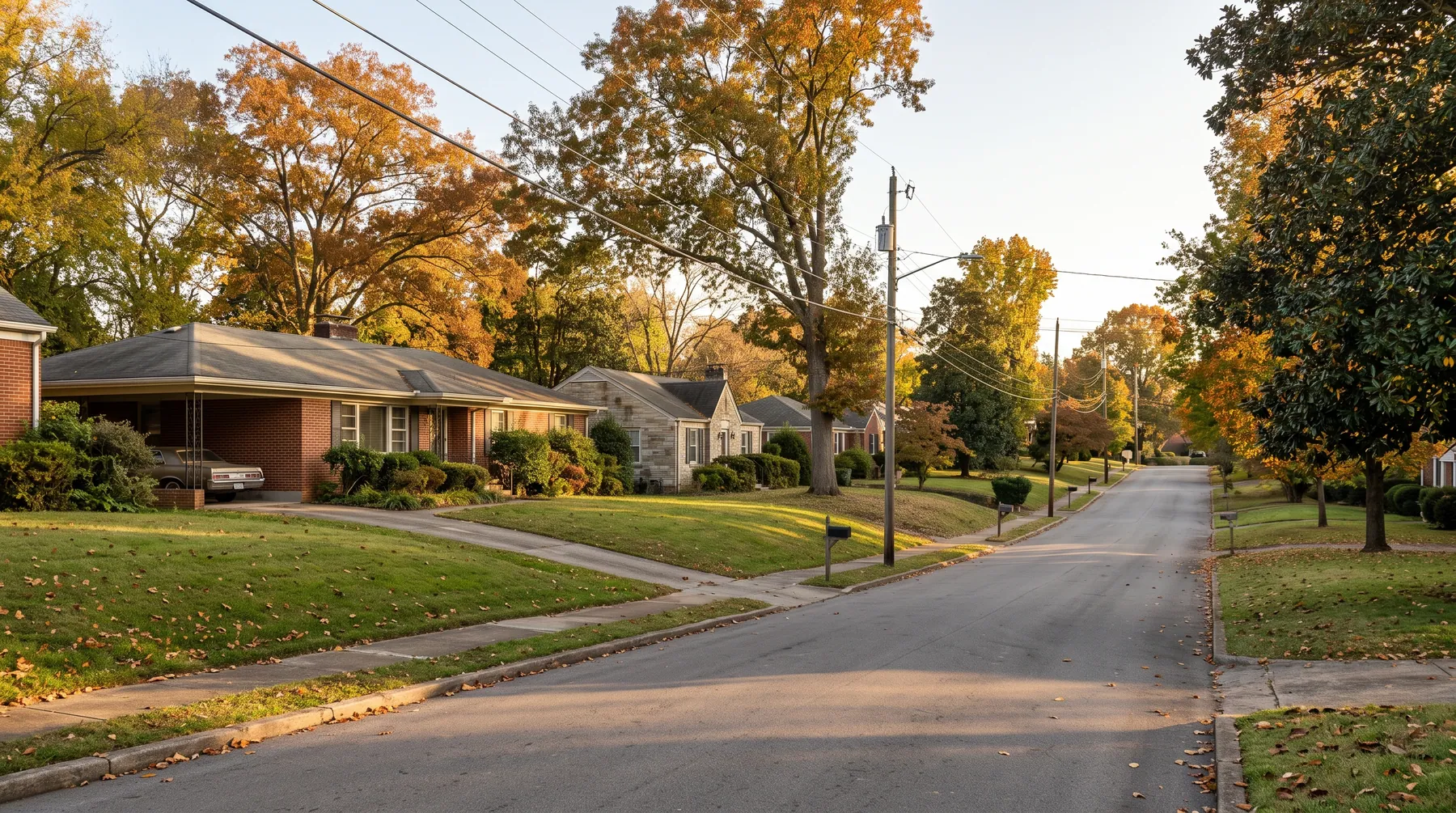
Top image: Illustration of a representative street, not a photo of Inglewood.
To keep this page, print it or choose Save as PDF in your browser's print window. The printout keeps the sources and the date.
More markets
All 28
Lockeland Springs
Lockeland Springs is a streetcar-era neighborhood about two miles northeast of downtown Nashville, next to Five Points and Shelby Park.
Marathon Village
Marathon Village is a group of 1881-to-1912 factory buildings on Clinton Street, near downtown Nashville, now used for offices, shops, a museum and a concert venue.
Melrose
Melrose is the stretch of Eighth Avenue South around Melrose Avenue, just south of downtown and the Gulch.