
Boutique Hotels
A boutique hotel is a small building rented by the night, usually under a few dozen rooms, run as a hotel rather than as apartments. In Nashville that puts it under other rules than a short-term rental building, and in another market: Davidson County hotels averaged 67.0% occupancy and a $199.20 daily rate in 2025. This page is for an owner deciding whether to keep running it as a hotel, convert it to permitted units, or hand it to a manager.
- Davidson County hotel occupancy, 2025
- 67.0%
- Average daily rate, 2025
- $199.20, down 1.3%
- Downtown hotel rooms, Q3 2026
- 14,391 open, 1,786 under construction, 8,000 planned
- STR permit if you convert
- One per unit, up to four sleeping rooms each
- Longest stay on an STR permit
- 30 consecutive days
- Issued STR permits, ZIP 37203
- 1,706 (1,617 non-owner-occupied)
- Rules checked
- Metro Code text current through June 23, 2026
On this page
- What counts as a boutique hotel here
- Nashville examples with a record
- The market you compete in
- Zoning to check first
- If you convert rooms to permitted units
- Building and fire code
- Accessibility
- Taxes
- Financing and operating models
- Operating at this scale
- Risks to price in
- What Rad Stay handles
- Questions
- Sources
What counts as a boutique hotel here
There is no legal category called boutique hotel in Nashville. The word describes size and style: a small property, often in an older or specially designed building, with its own name and design rather than a national brand's standard rooms. For code and tax purposes it is a hotel, and that is the first thing to settle, because a hotel and a short-term rental building follow separate rules.
Metro's short-term permit covers a residential dwelling, four sleeping rooms at most. It does not apply to a hotel room. If your building is licensed and used as a hotel today, the STR permit rules in this page matter only if you decide to change what you rent and how.
Nashville examples with a record
Two Nashville hotels show how older buildings become small hotels. The Hermitage Hotel at 231 6th Avenue North opened in 1910, designed by J. Edwin Carpenter in the Beaux-Arts style. It had 250 guest rooms originally and has 122 now. It closed at the end of 1977, reopened in 1981 as a Park Suite Hotel, and was bought by Historic Hotels of Nashville, LLC in June 2000. Its guest rooms and public areas were refreshed again in 2021 and 2022. It was entered on the National Register in 1975 and named a National Historic Landmark on August 28, 2020.
Union Station, which opened on October 9, 1900 as a train station, became the Union Station Hotel in 1986 and has been a Marriott Autograph Collection hotel since 2012. The National Register listing dates from December 30, 1969.
The Hermitage went from 250 rooms to 122 over its life. Count the keys an older building can hold today, not the keys it once had, because the room count sets what the building can earn.
The market you compete in
Visit Music City, citing STR, says Davidson County hotels hit record room demand in 2025, up 2.6%, but the average rate slipped 1.3% to $199.20 and RevPAR fell 2.1% as supply grew 3.4%.
Downtown shows the pressure. The Nashville Downtown Partnership's third-quarter 2026 report lists 14,391 hotel rooms downtown, 1,786 under construction and 8,000 planned, and it notes that Dolly Parton's Songteller Hotel is now open. A boutique hotel of 20 or 40 rooms sits next to buildings with hundreds. Its edge is location, design, service and a clear identity.
Event nights are the other half of the picture. On July 4, 2026, downtown hotels ran 92.5% occupancy, and for Alan Jackson's final Nissan Stadium concert they ran 98%. A small hotel that prices those dates firmly and discounts soft weeknights earns more than one at a flat rate.
Zoning to check first
Hotel/motel is its own use in the Section 17.08.030 table, and the districts allowing it differ from those that allow short-term rentals. This page does not list them, so get your parcel's zoning from the Metro map and have Metro Codes say in writing whether your hotel use is legal, legal non-conforming, or needs fresh approval. A hotel that has operated for decades may be a pre-existing use, and a change in use can lose that status.
If you plan to convert rooms into short-term rental units, a second list applies. Converting a hotel's rooms into permitted rentals for an absent owner is possible only where our zoning guide shows the parcel's district qualifies. They are not allowed in DTC East or in residential or industrial districts. NS districts bar the use, and SP or PUD land needs its plan's approval.
If you convert rooms to permitted units
Metro has no hotel permit type for short-term rentals. A converted room becomes one permitted unit, four sleeping rooms at most, at the $313 fee given in Metro's February 2026 materials. Turning a 30-room hotel into 30 rentable units means 30 applications, each with neighbor notice, floors above and below included, liability coverage of $1 million, and an on-call responsible party, 25 miles away at most.
Permits last a year and never transfer. A sale, or a move of the hotel into a trust or an LLC, ends the permits, and the new owner files again. A buyer cannot pay for permits you hold.
Guests may stay as long as 30 consecutive days, the guest count may not pass 12 or, if lower, the sleeping-room count doubled plus four, and the holder may not provide food. That last rule matters if your hotel runs a breakfast or restaurant: the restaurant is not part of a permitted rental.
Metro Code has no percentage cap on permitted units in one building. The limits are zoning, the four-bedroom cap and the 100-foot rule. No new permit issues where a church, school or its playground, park or licensed day care lies inside 100 feet of the lot line. Council can grant a waiver by a 21-vote resolution after a hearing, and one resolution is enough for a whole development. In 2024 Council rejected waivers for 62 units at 160 2nd Avenue North on June 4 and approved a 55-unit request for that address on July 2.
As a scale check, Metro's data counts 1,706 issued in 37203, the ZIP for downtown and the Gulch, as of Oct. 6, 2026, and 89 of them are owner-occupied. Permitted units are common there, which means a converted hotel would compete with them as well as with hotels.
Building and fire code
Hotels and rental houses are not in the same building code box. Tennessee's State Fire Marshal sorts transient rental homes by size: three stories or fewer, below 5,000 gross square feet and no more than 12 occupants qualifies for the state's sprinkler exemption, while four stories or more, 5,000 square feet or more, or 13 occupants or more makes the home R-3 under the IBC, with no exemption. The state page does not discuss hotels, so treat those thresholds as a reference for the rental side, not a hotel rule.
For a hotel, have the Nashville Fire Marshal and Metro Codes say which occupancy class applies, which sprinkler and alarm systems the building needs, and what changing its use would require. Any property holding three dwellings or more gets a Fire Marshal inspection. Older buildings are the usual problem: an upgrade done for a change of use can cost far more than the permits.
Historic buildings add a layer. The Hermitage and Union Station are both listed on the National Register. If your building is listed or lies in a Metro historic overlay, check with Metro Historic Zoning before planning work.
Accessibility
Under Title III of the Americans with Disabilities Act, a hotel is a public accommodation. New construction and alterations must meet the 2010 ADA Standards, and in an existing building the owner must remove architectural barriers where that is readily achievable. Ask an accessibility consultant how those duties apply to a listed or older building.
If rooms become leased apartments or mid-term homes, have an attorney confirm which accessibility and housing laws apply to each part of the building before you design it.
Taxes
A hotel collects Metro's hotel occupancy tax. As Metro Code Chapter 5.12 reads, that is 6% under Section 5.12.020 plus 1% under Section 5.12.150, with a charge for each room and night under Section 5.12.120 that Metro Finance's return sets at $2.50. Of that, 50 cents has a sunset in Section 5.12.140, which BL2026-1493 pushes to May 2032 once in force, so confirm current rates with Metro's Collections Office before underwriting. Once a guest has stayed 30 days in a row, no occupancy tax is owed after day 30.
Tennessee also taxes vacation lodging with sales tax for stays under 90 consecutive days, and the state says a property management company must register for and collect it. Hotels are covered by their own filings, so ask your accountant how a hotel with some mid-term units should report each line.
Financing and operating models
This page has no Nashville lender terms to quote, so get quotes from lenders who finance hotels and ask what operating history they require.
Three structures are common. Under a management agreement, the income, licenses and permits remain the owner's, who pays a manager. Under a master lease, one operator takes the whole hotel at a fixed rent and carries the operating risk. A revenue share falls in between. Under a lease or revenue share, the operator's income and your tax filings need to be set out clearly in writing, and a Tennessee attorney should draft it. Our master lease and management agreement guide compares them.
Operating at this scale
A boutique hotel needs front-desk coverage or a reliable self check-in setup, housekeeping every day, a maintenance person who knows the building, and revenue management that reprices as event dates approach.
Risks to price in
The risks you can check in advance:
- Hotel use that is not clearly legal under the current zoning, or a change in use that ends non-conforming status.
- New supply downtown: 1,786 rooms under construction and 8,000 planned as of Q3 2026.
- Rates that slipped 1.3% in 2025 while supply grew 3.4%.
- Permits on converted units that are lost at sale.
- Fire and accessibility work triggered by a change of use or a renovation.
- The 30-day cap on STR permits, which excludes mid-term guests.
What Rad Stay handles
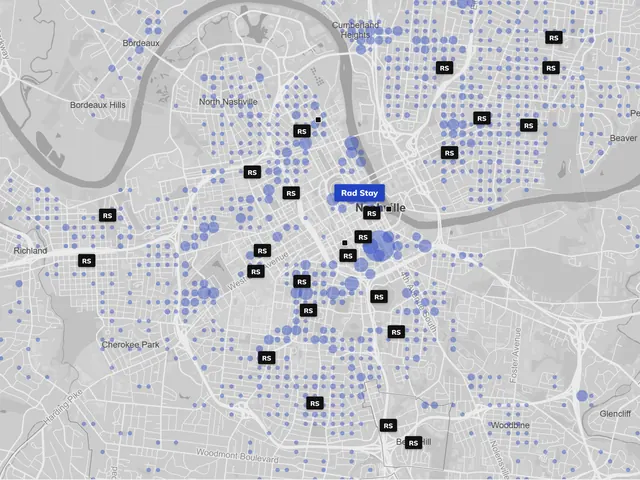
Rad Stay manages rentals of every length in Nashville, and Metro permitted its own four lofts at 329 Union Street in April 2023. That is a four-unit building, not a hotel, and a hotel brings its own licensing and staffing. For an owner weighing a conversion, Rad Stay can take on permits and taxes, rates, guest messages, cleaning, reservations and damage protection for the permitted units, and review the hotel for purchase, lease or partnership.
Questions
Do I need a short-term rental permit to run a boutique hotel?
No, if the building is licensed and operated as a hotel. The Metro permit covers residential units with a four-sleeping-room limit. Rooms rented as separate units each need a permit. Confirm your classification with Metro Codes.
What happens to STR permits when I sell a converted hotel?
They end. Permits do not transfer; a buyer applies again under the current rules.
Can a converted hotel room host a guest for 60 days?
Not on a short-term permit, since permitted stays end at 30 nights. Longer stays are leases or monthly arrangements with their own tax treatment.
Does the ADA apply to a small hotel?
Yes. Hotels and inns are places of public accommodation under Title III. New work must meet the 2010 ADA Standards, and existing buildings must remove barriers where readily achievable.
How is a boutique hotel's income affected by Nashville's new supply?
Countywide, 2025 occupancy was 67.0% and the average rate fell 1.3% as supply grew 3.4%. Downtown has 1,786 more rooms under construction as of Q3 2026, so identity and event-night pricing matter.
Sources
- Visit Music City, Research and Hospitality Stats (checked Oct. 2026)
- Nashville Downtown Partnership, Market Conditions Report 2026 Q3
- Visit Music City, summer 2026 events release, July 28, 2026
- Metro Code Chapter 6.28, Short term rental property permit (Municode, version of June 23, 2026)
- Metro Codes, Short Term Rental Permit Types (Wayback copy, Feb. 17, 2026)
- Metro Nashville Residential Short Term Rental Permits (open data), status Issued, retrieved Oct. 6, 2026
- Tennessee State Fire Marshal's Office, Transient Rental Homes
- Metro Code Chapter 5.12, Hotel Occupancy Privilege Tax (Municode)
- Tennessee Department of Revenue, Important Notice 17-24, Short-Term Rental of Vacation Lodging
- Wikipedia, Hermitage Hotel
- Wikipedia, Union Station (Nashville)
- ADA.gov, ADA Title III primer
- Metro Code 17.08.030, land use table (Municode)
- Metro Finance, Short-Term Rental Tax return (510), taxes payable after July 1, 2023, line "Number of rooms rented per night x $2.50" (archived copy, October 22, 2026)
- Metro Council, BL2026-1493, passed Sept. 1, 2026, Mayor approved Sept. 4, 2026; Section 4 moves the 5.12.140 B date, Section 10 sets the effective date (Legistar)
Checked October 18, 2026.
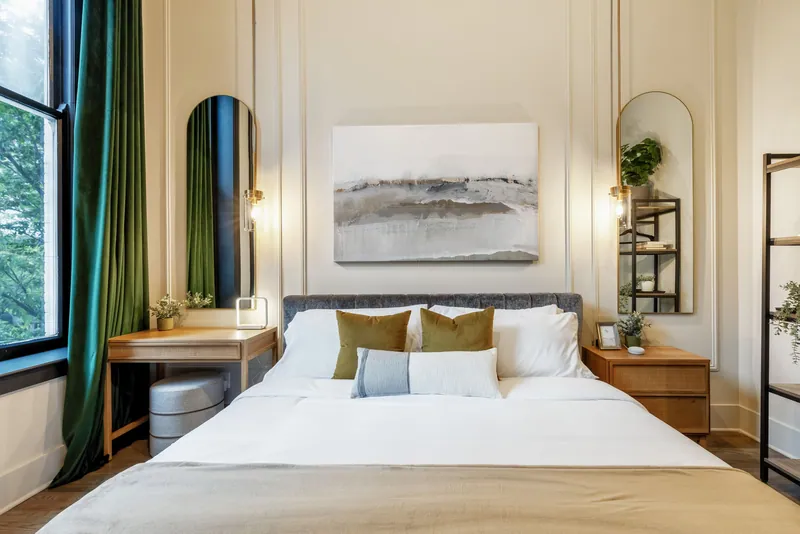
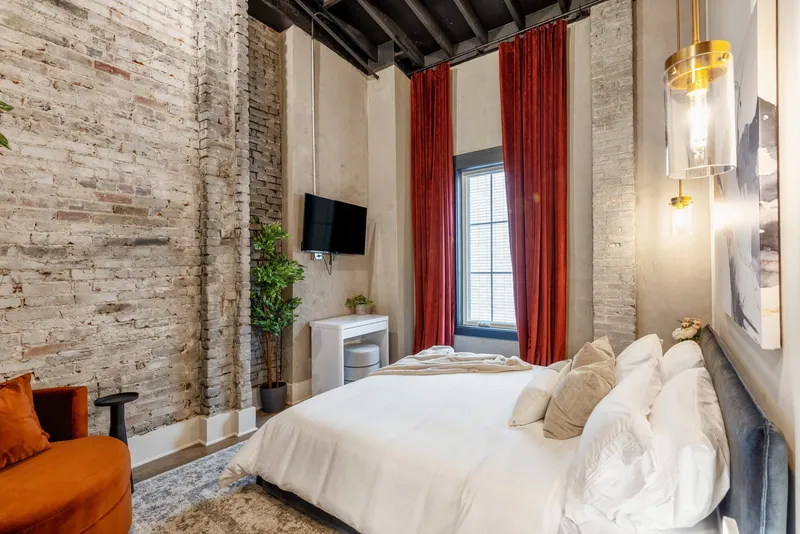
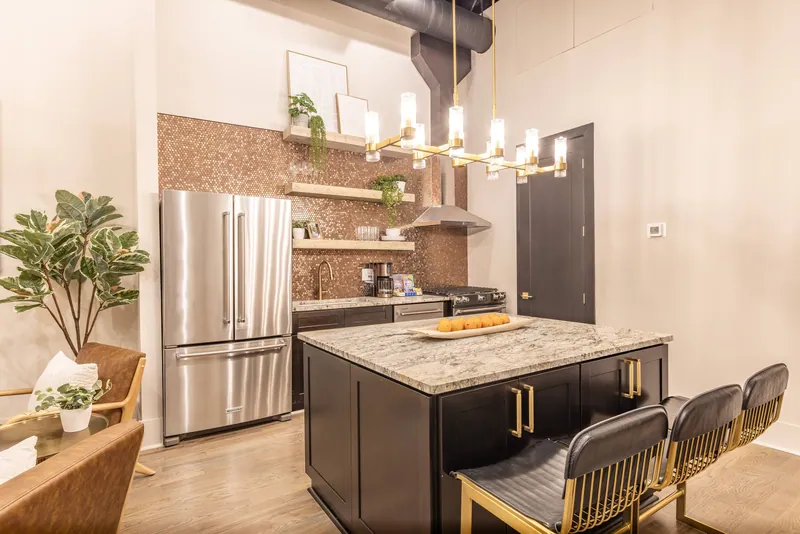
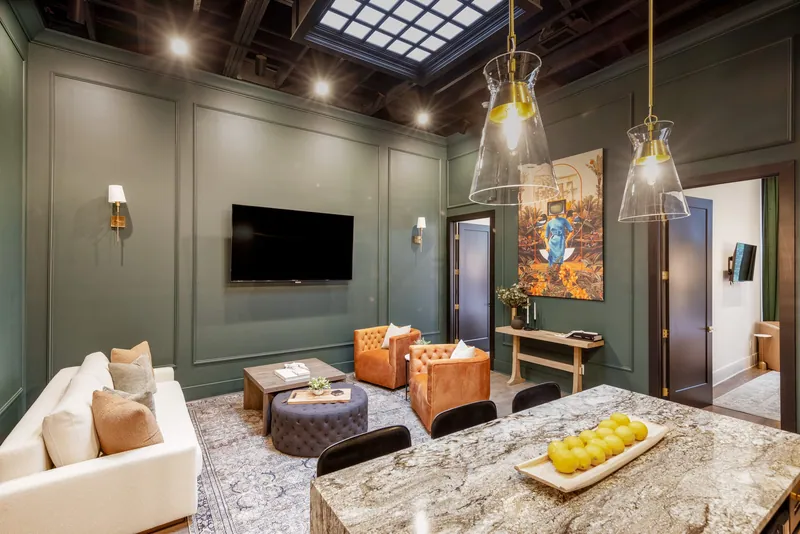
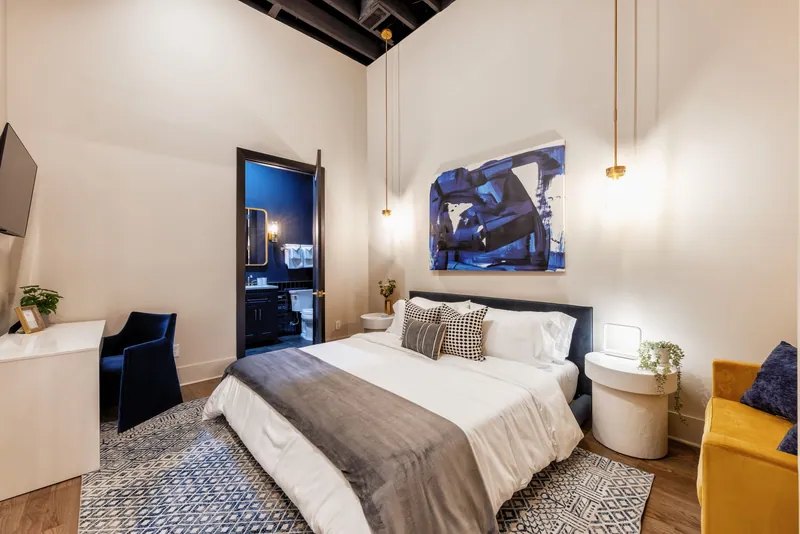
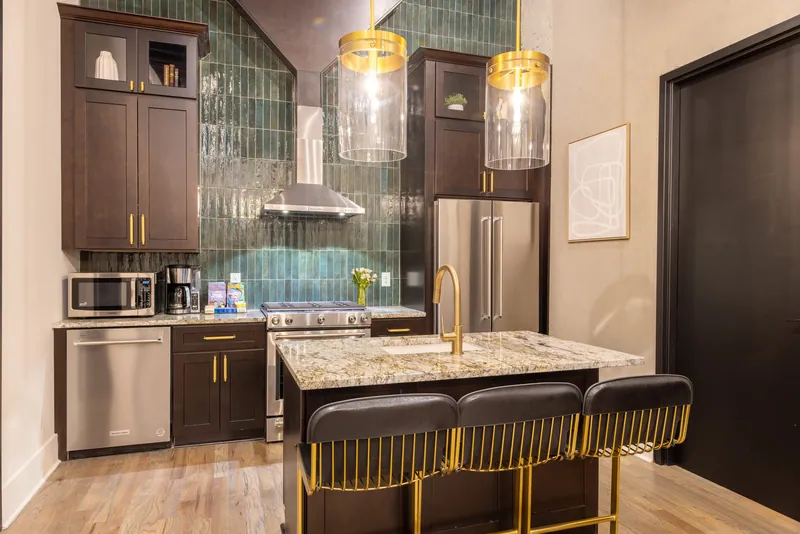
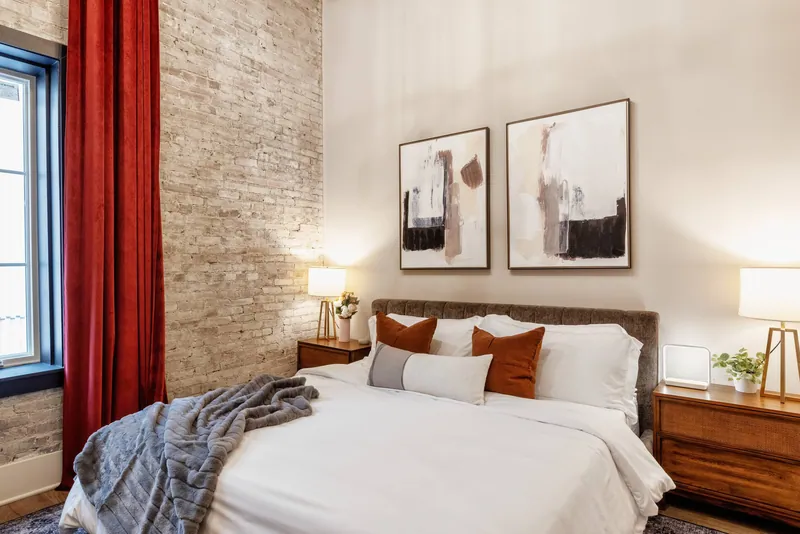
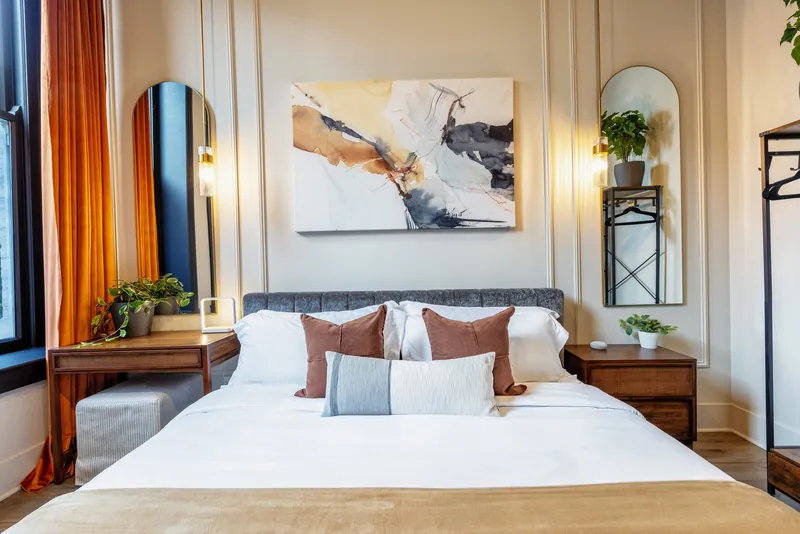
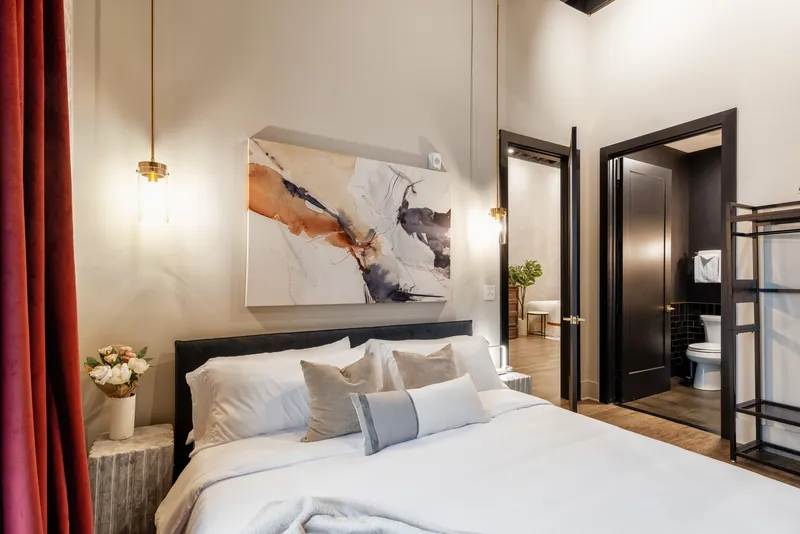
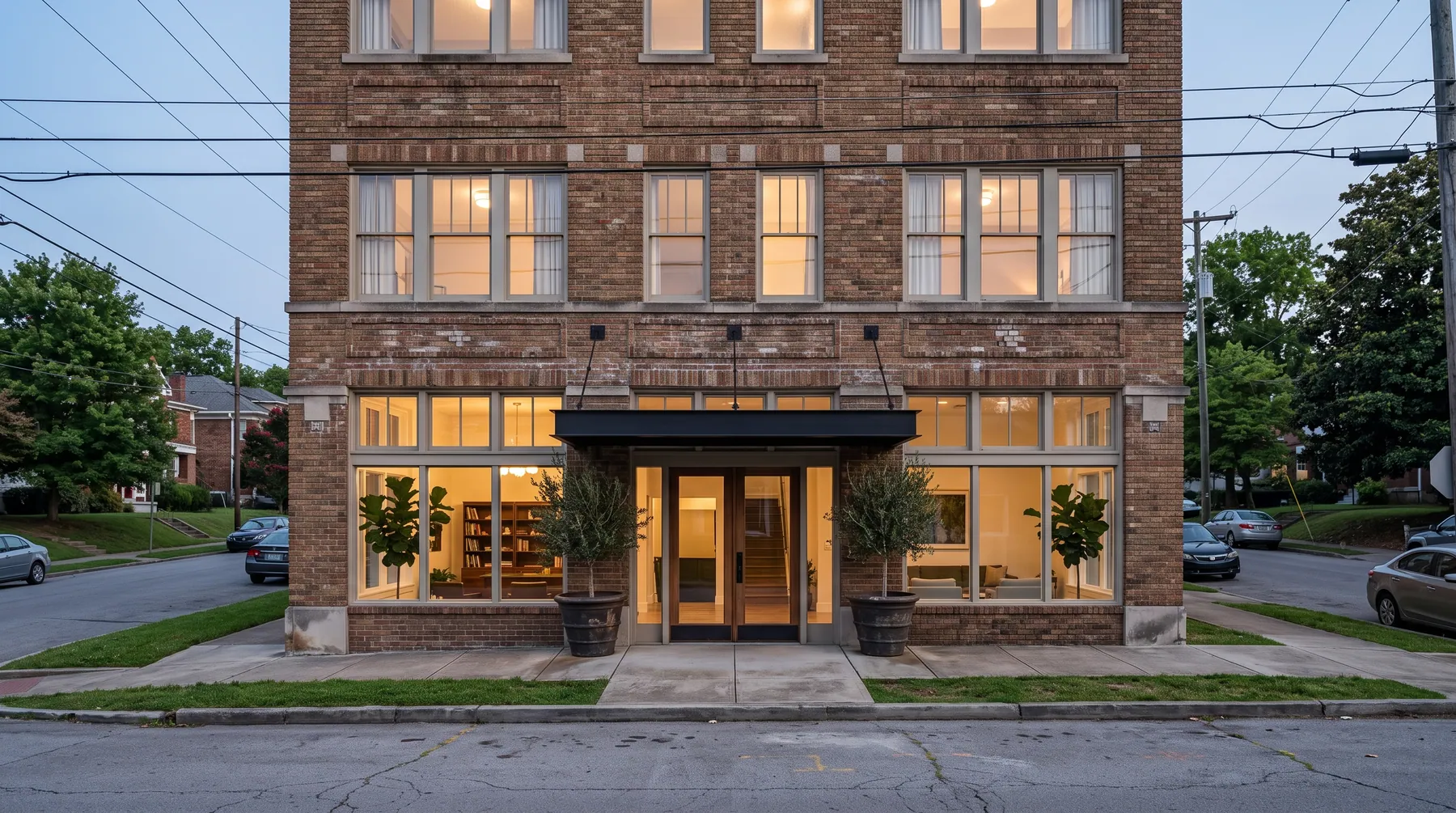
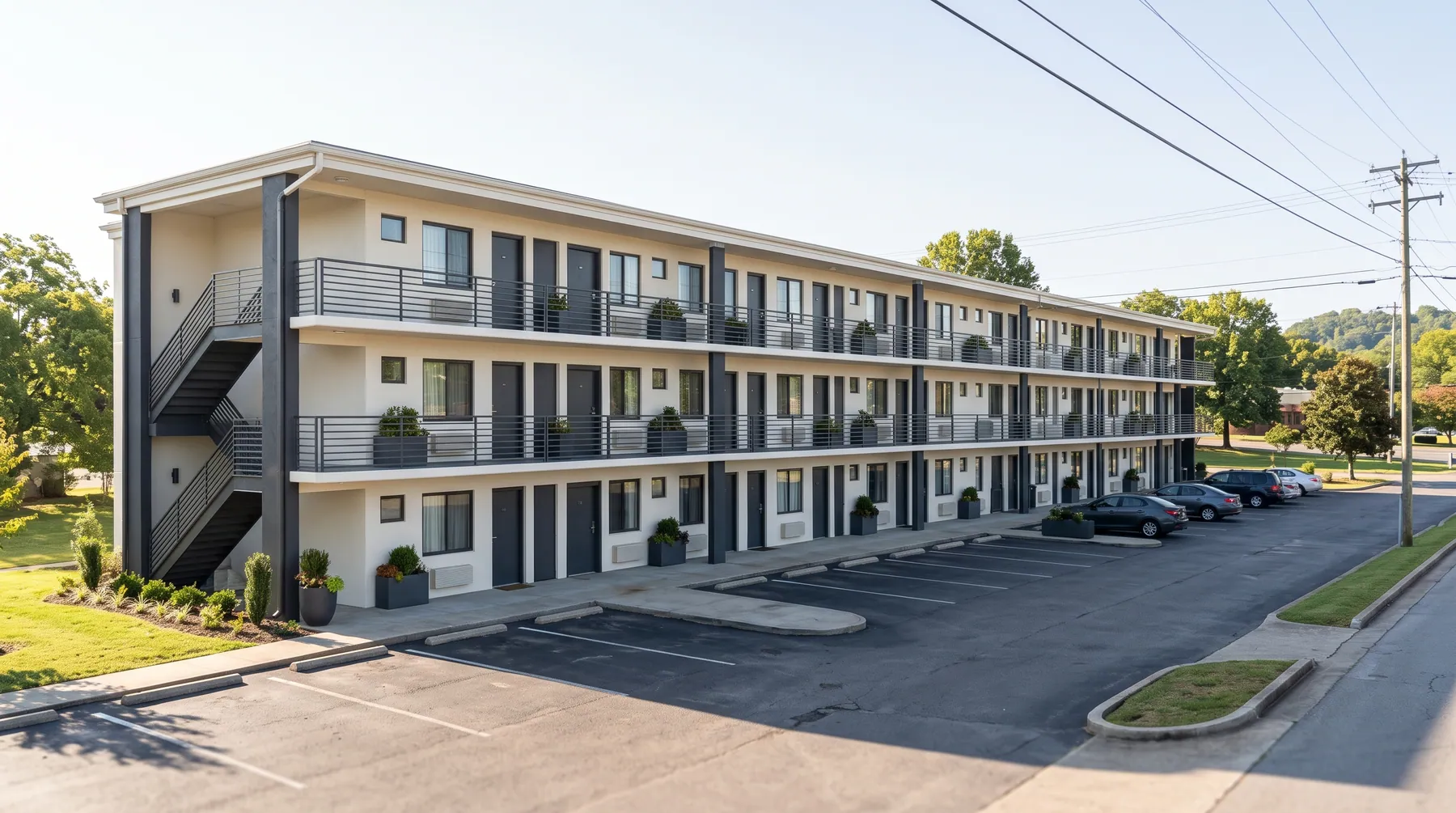
Top image: Illustration of a representative building, not a specific property.
To keep this page, print it or choose Save as PDF in your browser's print window. The printout keeps the sources and the date.
More property types
All 19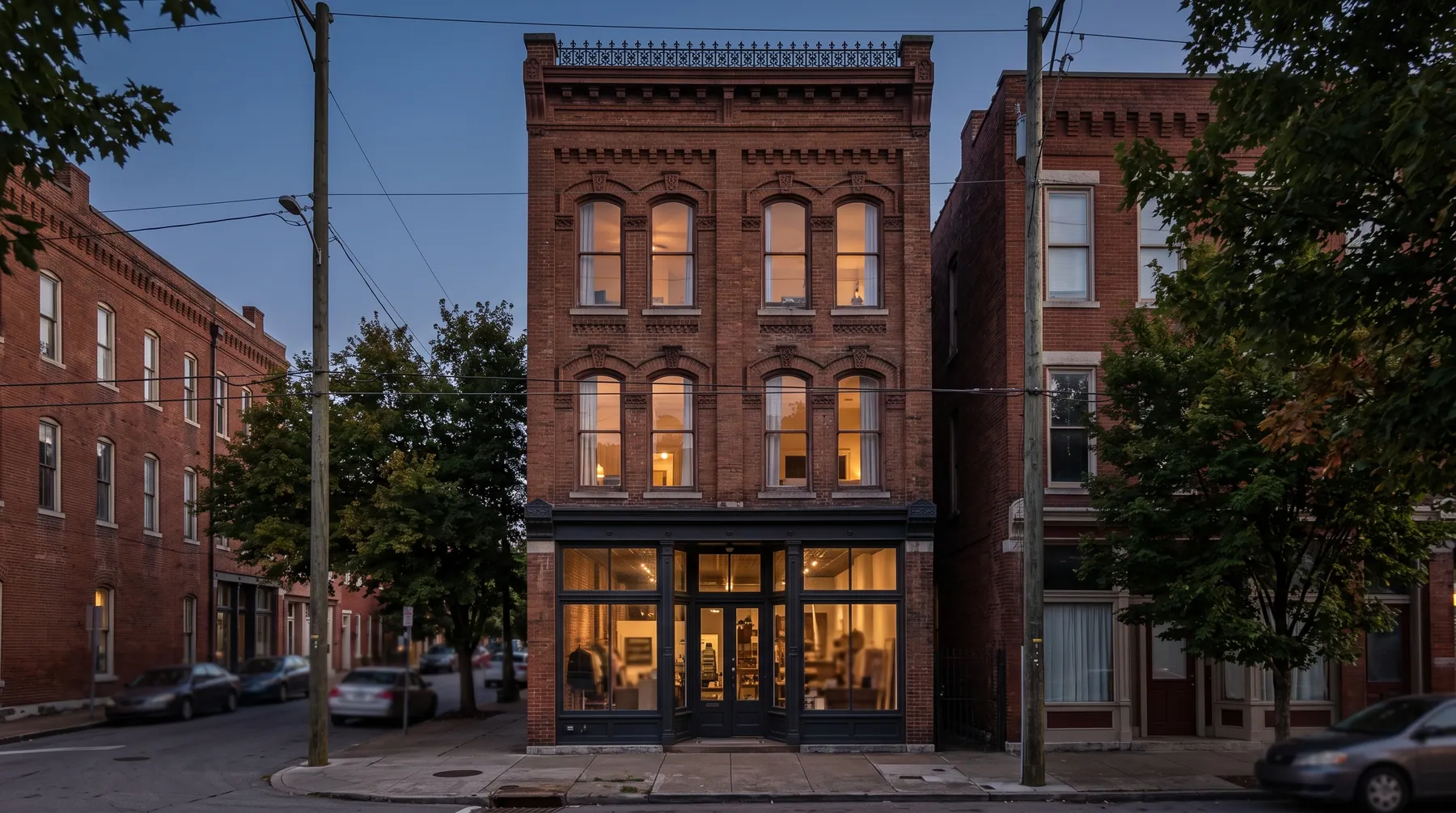
Historic Downtown Buildings
A historic downtown building is an older brick commercial structure of three or four stories or more, built between the 1870s and the 1930s, with shops or offices at street level and open floors above.
Hotel to Extended-Stay Conversions
A hotel or motel that stops renting by the night and starts renting furnished units by the week or month is a different business under Metro's rules.
Industrial Buildings
An industrial building is where the work happens: light manufacturing, assembly, fabrication, repair.