



Short-Term vs Mid-Term vs Long-Term Rentals
In Nashville the three rental models are separated by law. Metro's short-term rental permit stops at 30 consecutive nights, Metro's occupancy tax stops at 30 days, Tennessee's vacation-lodging sales tax stops at 90 days, and anything longer is a tenancy under landlord-tenant law. This guide walks an apartment-building owner through each model and the rules that decide which one the building may run.
- Longest stay under a Metro STR permit
- 30 consecutive days per guest (Metro Code 6.28.030)
- Issued STR permits, Davidson County
- 7,022 (Metro open data, retrieved October 6, 2026)
- Issued STR permits, ZIP 37203
- 1,706, of which 1,617 not owner-occupied
- Metro occupancy tax
- 7% plus a flat amount per room per night, $2.50 on Metro Finance's return form (checked November 12, 2026); confirm with Metro
- Tennessee sales tax on vacation lodging
- State rate 7% plus a local rate, on rentals under 90 consecutive days (Tennessee Department of Revenue SUT-47; Airbnb collects on 89 nights or fewer)
- Tennessee landlord-tenant act applies in
- Counties over 75,000 people, including Davidson (Tennessee Code 66-28-102)
- Rules checked
- October 2026
On this page
What the three terms mean
The three stay lengths are industry labels. Nashville law draws only one of those lines: a guest at a permitted short-term rental property, an STRP in Metro's terms, may stay at most 30 consecutive days. Everything on one side of that line is regulated as a short-term rental, with a permit, posted rules and occupancy taxes. Everything on the other side is a tenancy.
In practice, owners use the terms like this. Short-term means nightly or weekly stays, booked through Airbnb, Vrbo or direct, under a Metro permit. Mid-term means furnished stays of roughly one to several months, usually written as a lease. Long-term means an unfurnished or furnished lease of a year or more, or a month-to-month tenancy after the first term. The sections below take each in turn, then the taxes, then how to decide for a building.
Short-term rentals under Metro Code
Chapter 6.28 of the Metro Code sets the rules, and the text on Municode was current through June 23, 2026 when we read it. Metro offers two permits, one for an owner living on the property and one for an owner who is not. A building owner living elsewhere needs the second. Permits are issued per unit rather than per building, and in the code sections reviewed we found no cap on the count or share of nightly units.
No permitted unit may have over four sleeping rooms, and Metro will not permit a property with more than four bedrooms. Metro's other operating rules on guest caps, renter age, insurance, listings, renewals and fines are covered in our multifamily permits guide, linked below.
Permits are not permanent. A 30-day grace period exists only for rentals with no documented complaints.
Scale matters here. On October 6, 2026, 7,022 permits carried Issued status in Metro's open data. In ZIP 37203, 1,617 of the 1,706 issued permits are for non-owner-occupied units. Those figures count permit records, not buildings, and they change as permits renew or lapse.
Where a building cannot be short-term
Zoning decides first. Only certain districts qualify for new absent-owner permits; DTC East and residential zoning do not, SP or PUD sites depend on the plan, and the permits guide names the rest.
Metro lets an existing holder on R, RS, RM or AR2a land renew, but a sale ends the permit. Districts carrying an NS suffix prohibit the use outright.
Two further tests apply to a not-owner-occupied permit. First, distance: houses of worship, schools, parks and licensed child care centers each create a 100-foot zone where Metro grants no fresh absent-owner permit, though a Council resolution covering many units can waive it. Second, each application includes a certificate that renting is allowed by every lease and every condo, co-op or homeowners agreement, so a building's papers can be tighter than Metro. Confirm both with Metro Codes before you underwrite a building around short-term income.
The 30-night line
Section 6.28.030 sets the minimum stay at 24 hours and the maximum at 30 consecutive days for any guest. A guest who wants 31 nights cannot be booked as a short-term rental under the permit. That is the line that separates a short-term rental from a lease in Nashville.
Three separate clocks run near it, and owners mix them up. The permit clock ends at 30 consecutive days. The occupancy tax also turns on 30 days: Airbnb says it collects the local tax on a booking's first 30 days, and Metro's code calls a guest transient below 30 days. The state sales tax clock is longer, because Tennessee's vacation-lodging rule covers rentals of fewer than 90 consecutive days, and Airbnb collects sales tax on reservations of 89 nights or fewer.
The practical result: a 45-night furnished stay is not a permitted short-term stay, may still carry sales tax under the 90-day rule, and carries occupancy tax for its first 30 days. Which tax treatment fits a specific lease is a question for Tennessee Revenue and your tax professional. Do not guess at it, and do not let a platform listing accept a 31-night booking by accident.
Mid-term rentals
A mid-term rental in Nashville is a lease, usually with a furnished unit, a fixed end date and a monthly rent. Past the 30-day line no STR permit is needed, and the zoning limits on absent-owner permits are written for STR permits. That is why monthly rental often answers for a building in RM or other residential zoning, where nightly permits cannot be had.
The demand comes from people needing a furnished place for a few months. Vanderbilt University Medical Center, at 1211 Medical Center Drive, is a Level I trauma center. As of 2023, Wikipedia says, it had a staff near 40,000 and 1,741 licensed beds. Employees starting a new job, visiting clinicians and families of patients are the kind of guests who may need weeks or months of housing. We do not have a Nashville-wide count of mid-term stays, so test demand with your own inquiries before converting a building.
A mid-term unit is managed like a small apartment with extras. The unit needs a desk, reliable internet, a full kitchen and laundry. Rent is collected monthly, deposits follow Tennessee's rules (below), and cleaning happens mid-stay by agreement rather than at every turnover. Turnover is far lower than short-term, so the cleaning and guest-communication load drops, while the rent and lease administration load rises.
Long-term rentals and Tennessee tenant law
Tennessee's landlord and tenant act, the URLTA, applies only in counties of over 75,000 people (Section 66-28-102), Davidson County among them. Subsection (c)(3) of that section excludes transient stays in hotels, motels or similar lodgings subject to occupancy taxes. A signed lease for a month or longer is on the tenancy side, but where a particular furnished stay falls is a question for a Tennessee real estate attorney.
A few rules shape how you run a long-term building:
- A landlord must keep deposits in a separate account used for nothing else, at a regulated bank or lending institution, and disclose its location at lease signing (Section 66-28-301).
- A tenant may ask for a joint move-out inspection, and the landlord can require it within four calendar days of the tenant vacating; both sides sign a list of damage and estimated repair costs (Section 66-28-301).
- Rent is due without demand at the agreed time. A five-day grace period applies, and a late fee cannot exceed 10% of the rent past due (Section 66-28-201).
- If rent is unpaid and the breach can be cured by paying, the tenant has 14 days after written notice to pay or the agreement terminates (Section 66-28-505).
- Either side can end a month-to-month tenancy by giving written notice 30 days or more ahead of the rent date the notice names (Section 66-28-512).
Taxes by model
Short-term stays carry the most tax. Metro Code Chapter 5.12 imposes a hotel occupancy tax on transients, anyone staying less than 30 days. The rate is 7% of the charge plus a fixed sum per room per night, and Metro Finance's return form charges $2.50 for every room night. The last 50 cents of that amount reached its code end date on May 21, 2026, and an ordinance adopted on the first of September 2026 carries it to 2032 once convention center debt is refinanced, so ask Metro Collections what applies in the month you file.
Tennessee sales tax is a separate layer: 7% state tax plus a local rate on the full price including required fees, for vacation lodging rented under 90 consecutive days (Tennessee Department of Revenue SUT-47; Airbnb Help Center). For Tennessee bookings up to 89 nights, Airbnb says it collects state and local sales tax. When a platform collects, you do not report those bookings on your sales tax return. On direct bookings, you or your management company collects and remits.
Long-term residential leases are outside the hotel tax and the vacation-lodging rule. Do not assume that a lease of 90 days or more is untaxed in every respect, and do not assume your business-tax position stays the same when the mix changes. A rental building with several models needs a tax professional who can map each unit to the right return.
Comparing the work
Short-term revenue is set nightly, so the owner pays for pricing discipline, fast guest messaging, same-day cleaning and a permit calendar. Mid-term revenue is set monthly. Long-term revenue is set annually, and the work moves to leasing, collections and maintenance requests.
The compliance load runs the other way. Short-term needs the most paperwork per unit: the permit, adjacent-owner notices, insurance, a 24-hour responsible party, two tax filings and an annual renewal. Long-term needs a lease, a deposit account and landlord notices. Mid-term sits between them, with a lease and often a furnished unit's insurance and inventory.
Vacancy shows up differently too. A vacant short-term night is lost the moment it passes, and a vacant long-term month usually means turnover and marketing time. Neither is better by default. The better model for a unit is the one whose income, cost and legal exposure you can document for that unit, in that zoning district.
Choosing a model for a building
Start with the zoning and the documents, not the pro forma. Find the parcel's zoning district and hold it against subsection B.1's list. Check the 100-foot distance for a school, park, day care or religious institution. Read the deed restrictions, the lease or the HOA rules. A building in DTC Central or a mixed-use district can run all three models. An RM-zoned building is closed to new absent-owner permits, so unless it already holds permits it chooses between monthly and yearly leases.
Then look at what you are buying. Permits do not transfer. A sale ends the permits, Metro's operation page says, and so does a retitling into a trust or LLC the owner controls; the buyer then applies anew. A seller's permit history is a fact about the past, not income you can underwrite.
Mixed buildings are allowed. Because permits are per unit, a twelve-unit building can rent some units nightly and lease others, subject to zoning, the fire inspection and its documents. A structure of three dwellings or more gets its Fire Marshal inspection building-wide, not unit by unit.
Switching models later
Moving a unit from short-term to a lease is easy. Moving back is the hard part. Permits last a year unless renewed, and a unit in a district now closed to absent-owner permits may never regain one. If you plan to lease a short-term unit for a year and return to nightly bookings, ask Metro Codes in writing what happens to the permit before you sign the lease.
If you move a long-term unit to short-term, the work goes the other way. A permit must exist before any advertising, along with neighbor notices, insurance and, at three or more dwellings, the Fire Marshal visit. Tenants under lease keep their rights, so a conversion generally waits until leases end. Have an attorney review the timeline and the notices.
Where Rad Stay fits
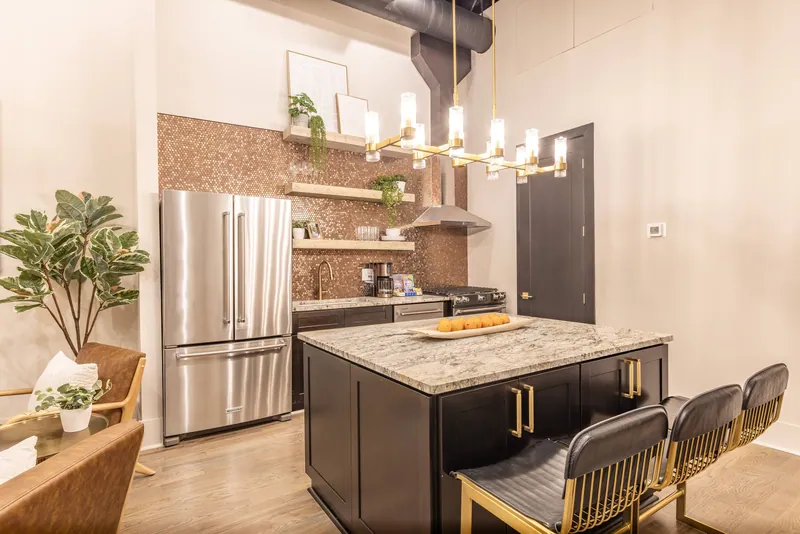
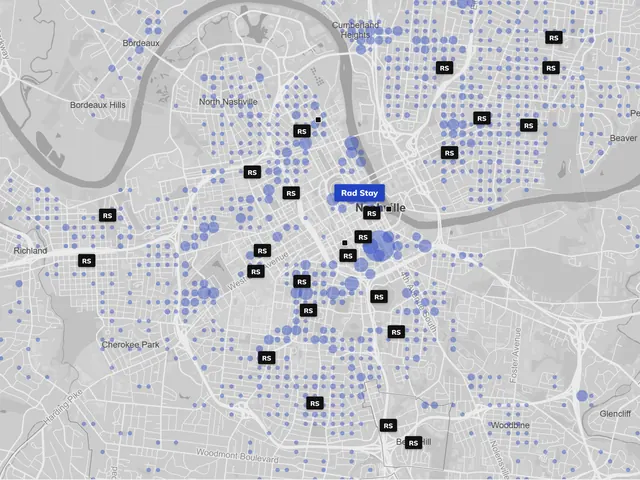
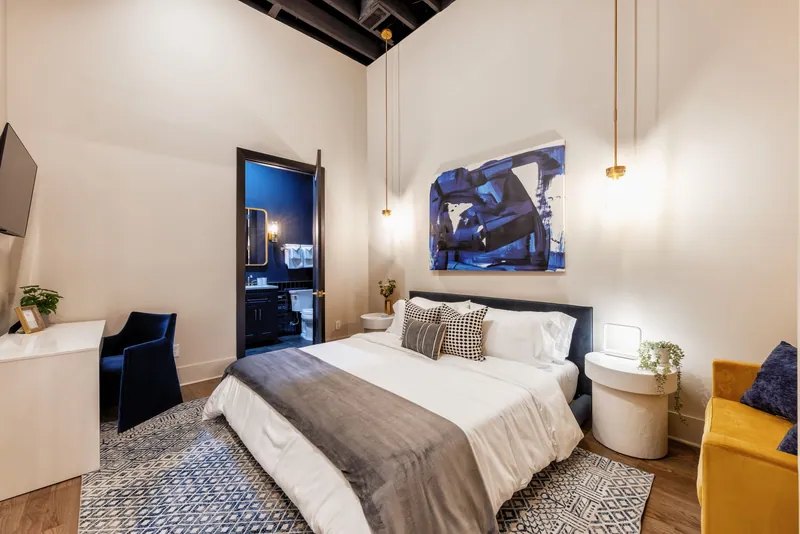
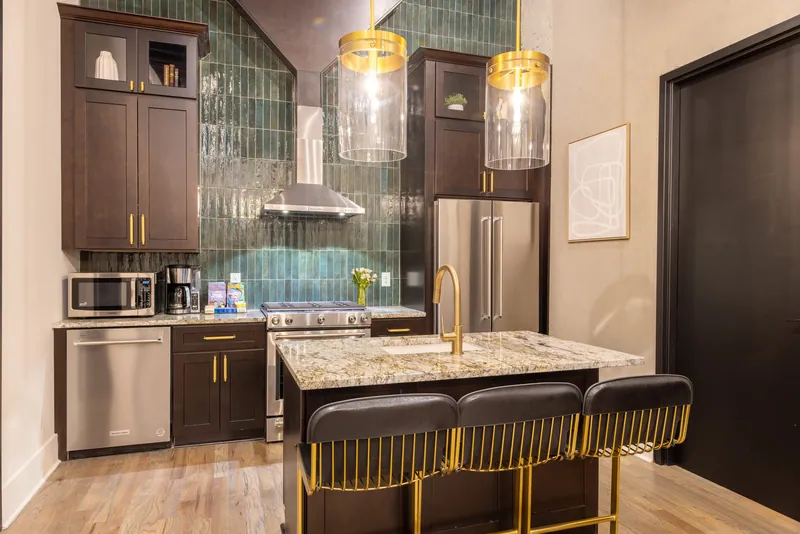
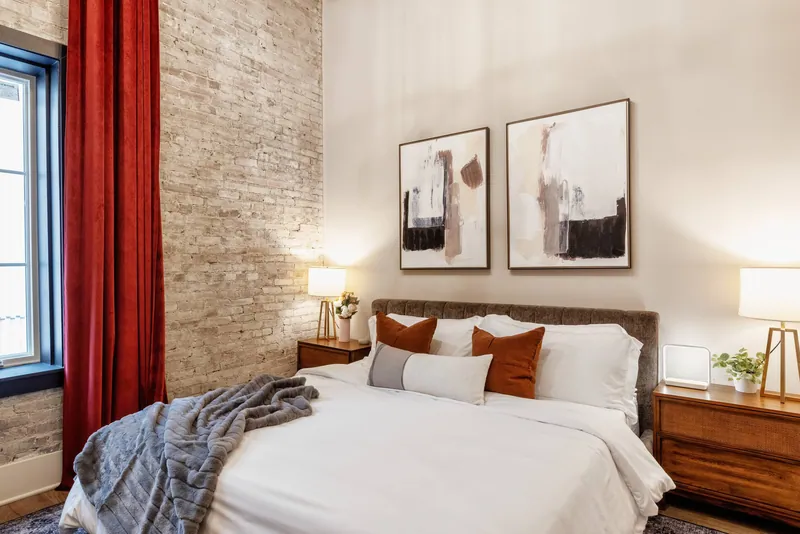
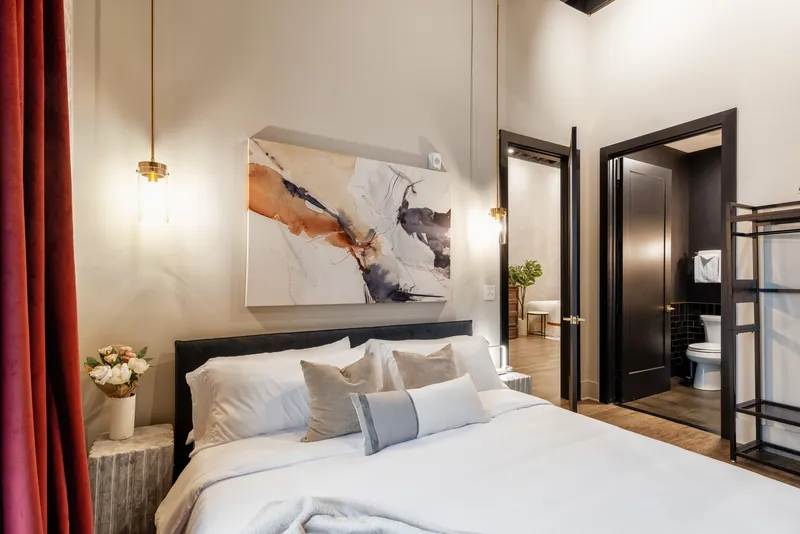
Rad Stay's own building, Union Street Lofts, has four downtown lofts, each holding a not-owner-occupied permit dated April 2023. It also manages residential leases of 30 days and up and commercial, industrial and warehouse space. When an owner brings a building, the first question is which units can legally run each model, and the answer comes from the zoning, the permit rules and the documents above, not from a preference.
Questions
Can I rent a permitted unit to one guest for 45 days?
Not under the STR permit. Section 6.28.030 caps every stay at 30 consecutive nights. A 45-day stay is a different arrangement, usually a lease, and its tax treatment should be confirmed with Tennessee Revenue. Ask a Tennessee attorney to review the agreement.
Does Metro cap the number of my units that rent nightly?
The code sections we read set no such cap. A separate permit per unit, plus zoning, the distance rule, the Fire Marshal inspection and the building's papers, still decide it. Confirm with Metro Codes.
Do a seller's STR permits come with the building?
No; a sale ends them and they cannot be transferred, so the new owner files under current rules. Where a district no longer issues absent-owner permits, the answer may be no permit at all.
Do I pay tax on a mid-term stay?
It depends on the length. Metro occupancy tax covers stays of less than 30 days and does not apply after a guest's 30th continuous day. Tennessee sales tax covers vacation lodging under 90 consecutive days. Ask Tennessee Revenue and your tax professional about the stay you have in mind.
How much notice does Tennessee require to end a month-to-month lease?
Thirty days' written notice before the rent date named in the notice, from either side (Tennessee Code 66-28-512). Your lease may add terms, so have it reviewed.
Sources
- Metro Nashville Code Chapter 6.28, Short term rental property permit (Municode, version June 23, 2026)
- Metro Nashville Codes, Short term rental permit types (Wayback copy, February 17, 2026)
- Metro Nashville Residential Short Term Rental Permits (open data), status Issued, retrieved October 6, 2026
- Metro Nashville Code Chapter 5.12, Hotel Occupancy Privilege Tax (Municode)
- Tennessee Department of Revenue, SUT-47 Short-Term Rentals Are Subject to Sales Tax
- Airbnb Help Center, Tax collection in Tennessee
- Tennessee Code Section 66-28-102, applicability (FindLaw)
- Tennessee Code Section 66-28-201, rent and late fees (FindLaw)
- Tennessee Code Section 66-28-301, security deposits (FindLaw)
- Tennessee Code Section 66-28-505, tenant breach (FindLaw)
- Tennessee Code Section 66-28-512, periodic tenancy notice (FindLaw)
- Wikipedia, Vanderbilt University Medical Center
- Metro Finance, Short-Term Rental Tax return (510), taxes payable after July 1, 2023, line "Number of rooms rented per night x $2.50" (archived copy, October 22, 2026)
- Metro Council, BL2026-1493, passed Sept. 1, 2026, Mayor approved Sept. 4, 2026; Section 4 moves the 5.12.140 B date, Section 10 sets the effective date (Legistar)
Checked October 18, 2026.
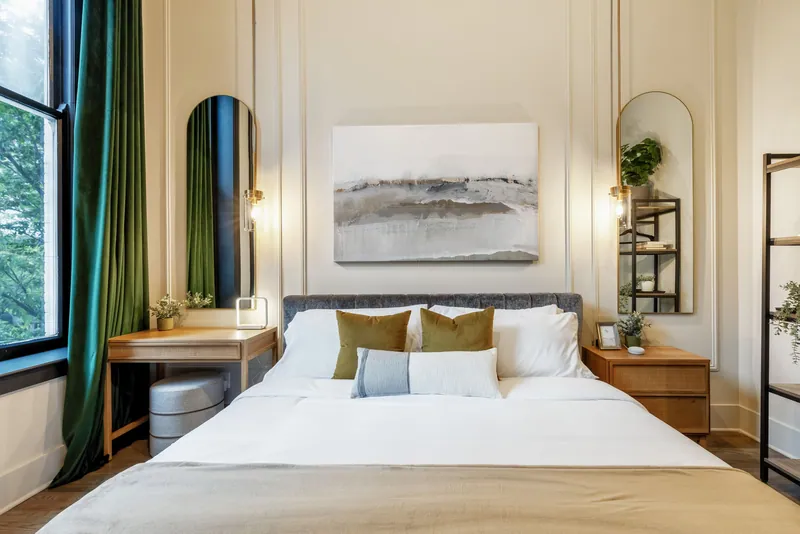
Top image: Illustration of a representative scene, not a specific property.
To keep this page, print it or choose Save as PDF in your browser's print window. The printout keeps the sources and the date.
More management guides
All 4
Choosing a Property Management Company in Nashville
If you own a Nashville apartment building, the manager you hire carries legal duties on top of the daily work: a state license, Metro's short-term rental permit rules, and the handling of other people's money.

Managing a Historic Building in Nashville
If your Nashville building is old enough to have a history, three separate systems may touch it: a Metro zoning overlay, a federal listing, and the federal rehabilitation tax credit.

Property Management Fees Explained
A management fee is a price for a list of duties, and the list changes with the kind of rental.