

Historic Downtown Buildings
A historic downtown building is an older brick commercial structure of three or four stories or more, built between the 1870s and the 1930s, with shops or offices at street level and open floors above. Those upper floors can become permitted short-term rental units, as the Union Street Lofts did at number 329, but an old building's age shapes its zoning, its fire review, its accessibility duties and the approval of any exterior work.
- Typical building
- Brick commercial buildings of 3 or 4 stories or more, built 1870s to 1930s
- Zoning to know
- DTC (Downtown Code); DTC East does not allow new non-owner-occupied permits
- Permit rule
- One short-term rental permit per dwelling unit, up to four sleeping rooms each
- Issued STR permits, ZIP 37201
- 346 (8 owner-occupied, 338 non-owner-occupied), retrieved Oct. 6, 2026
- Fire review
- Fire Marshal inspection when the property has 3 or more dwellings
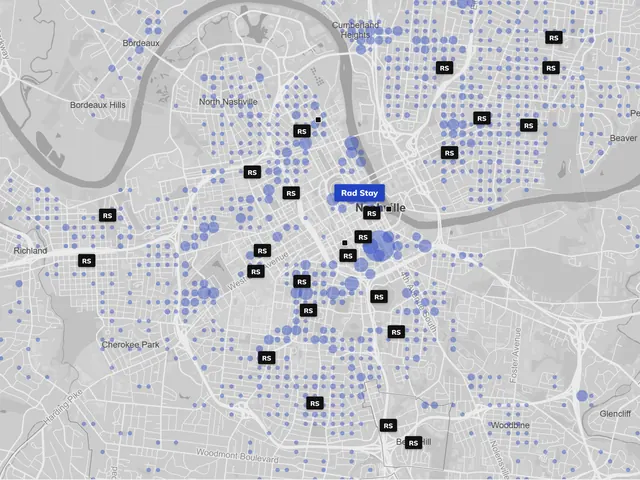
- Rad Stay example
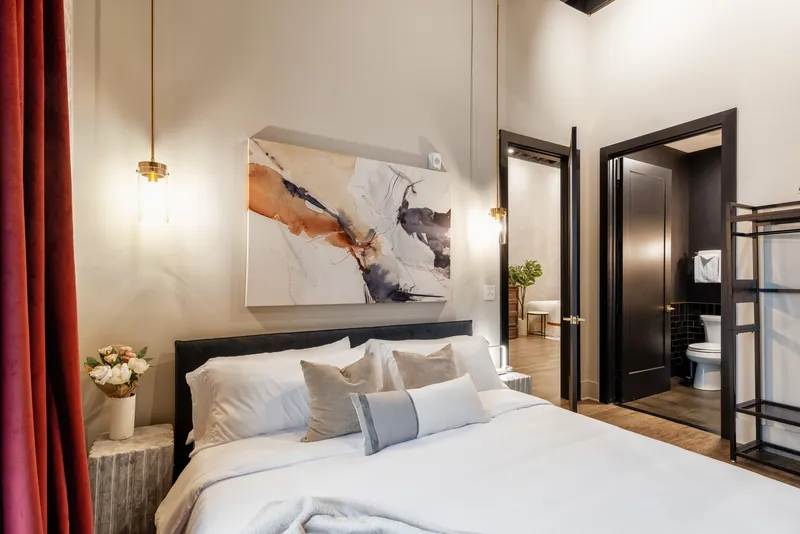
- Union Street Lofts, 329 Union St, Units 201-204, permits issued April 2023
On this page
- What counts as a historic downtown building
- Why the upper floors are a different asset
- Zoning districts that allow it
- Short-term rental permits, unit by unit
- Building and fire code questions
- Fair Housing Act accessibility
- Historic review and tax credits
- Taxes on short stays
- Financing and operating models
- Operations at this scale
- Risks to price in
- What Rad Stay handles
- Questions
- Sources
What counts as a historic downtown building
In this guide the term means an older commercial building in the downtown core, not a house and not a former factory. Nashville has several clusters of them. The Second Avenue Commercial District was built mostly in the 1870s and 1880s, in Victorian Italianate style, in buildings three and four stories tall. Wikipedia dates the street's National Register listing to 1972 and says it began as Market Street before taking the name Second Avenue in 1903.
Printers Alley is the other cluster. Its historic district, roughly 5 acres of Romanesque, Queen Anne and Italianate buildings, has had National Register status since August 26, 1982. It became Nashville's printing center around 1830, and by 1915 it held two large newspapers, 13 publishers and 10 print shops.
Retail or a restaurant often takes the ground floor. The question to answer first is whether the upper floors are approved dwelling units today.
Why the upper floors are a different asset
A historic commercial building was designed for work, so its stairs, windows and utilities were laid out for something other than residents. Check each of them against what a dwelling unit needs.
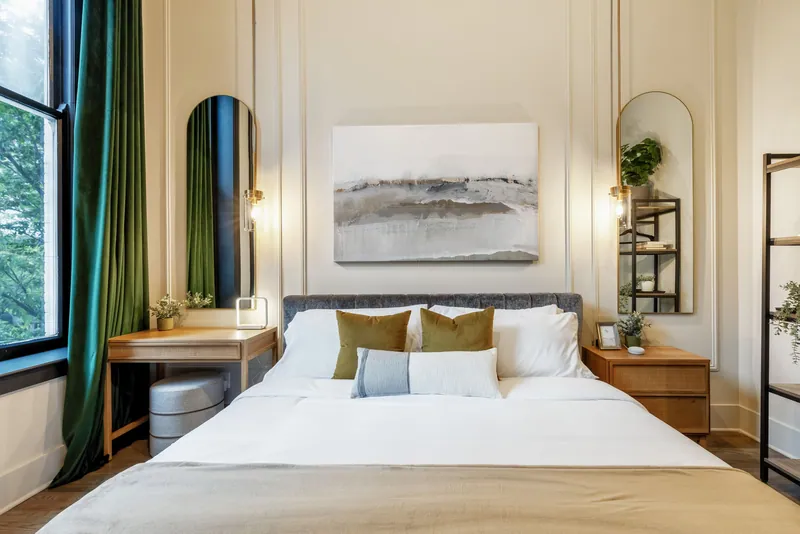
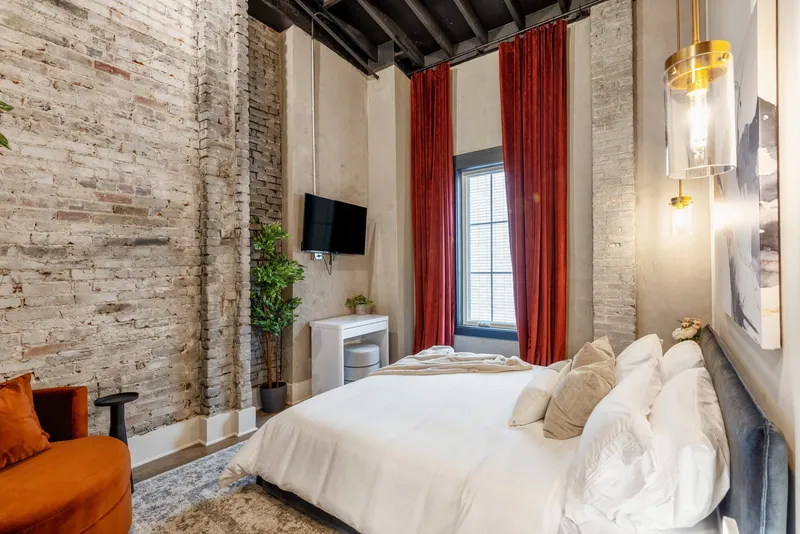
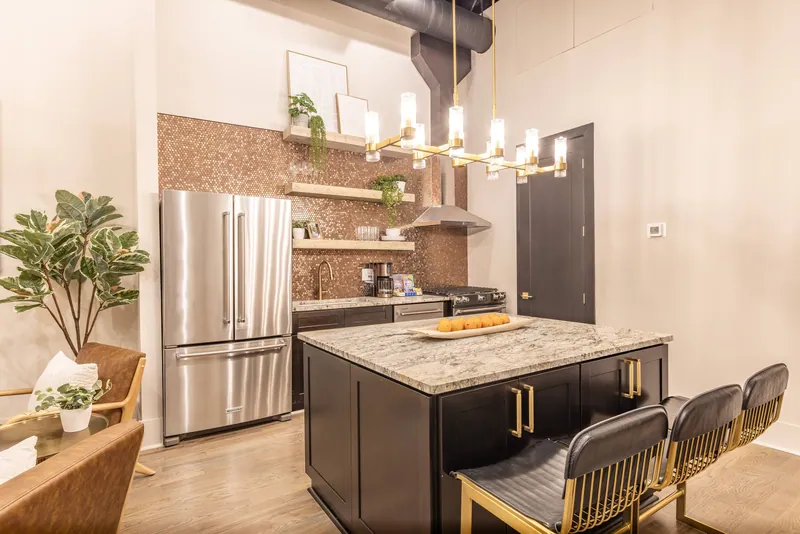
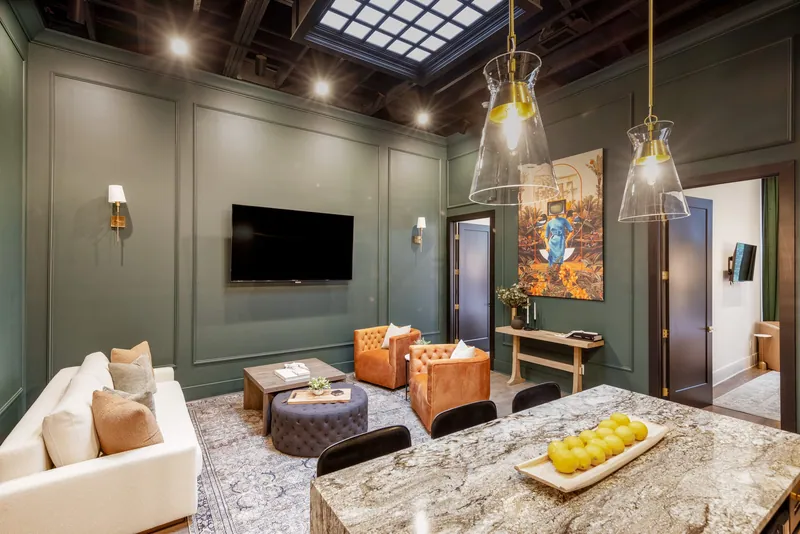
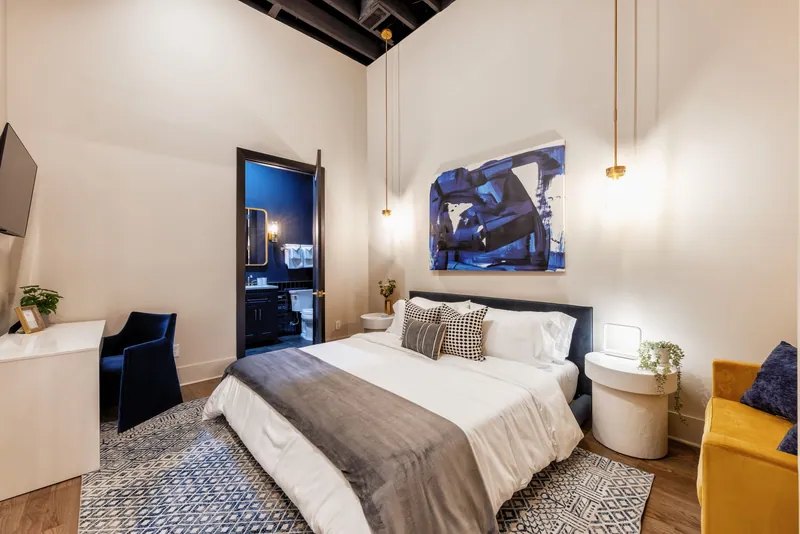
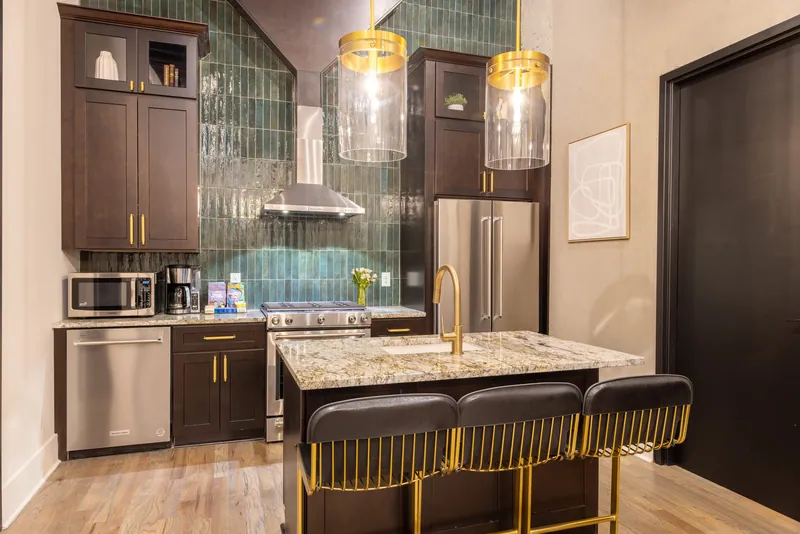
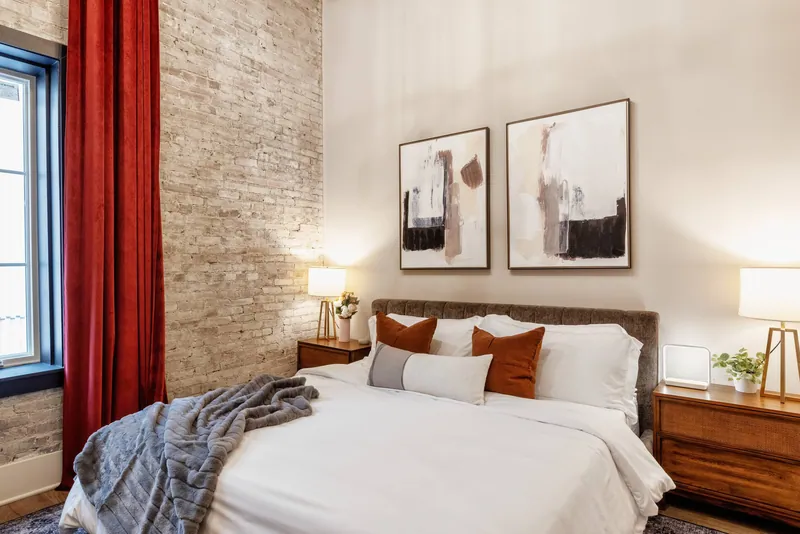
Union Street Lofts shows the scale. Its four lofts, 201 through 204, occupy 329 Union's second floor. Metro's parcel records list two brick structures on the parcel with recorded years built of 1890 and 1935, and show a Historic Preservation District overlay in effect since September 1, 2023 under ordinance BL2023-2053. The four lofts hold 214 Airbnb reviews averaging 4.98, and the host is a Superhost.
A building with four units has four permits to track and one set of shared systems, and the units sit above a business with its own tenant.
Zoning districts that allow it
Most of the downtown core is zoned DTC, the Downtown Code. Downtown, an old building whose owner lives elsewhere can win new permits for its upper floors, with conditions, only in four parts of the DTC zone, namely Central, North, West and South, under Section 6.28.030. DTC East is left out, so an old building there cannot get any new permit of that kind. Outside the core, the list also reaches several business and mixed-use districts such as MUN, MUL, MUG, MUI, OG, CN, CL and CS.
Residential districts (R, RS, RM, RN, RL) and industrial districts are excluded. Any NS-suffix district bars both permits, and a parcel under an SP or PUD needs that plan's approval of the use. Check which DTC subdistrict your parcel is in before anything else, because the answer decides whether a new permit is possible at all.
Historic overlays do not change that test. Neither Chapter 17.36's historic overlay sections, numbered 17.36.100 to 17.36.120, nor its urban design overlay sections, numbered 17.36.270 to 17.36.320, mention short-term rentals. The base district decides the permit. The overlay governs what you may do to the building, which is covered below.
Nor does the code limit what share of an old building's units may carry permits. The 100-foot rule covers new permits only: Metro will not issue one when the old building's parcel lies under 100 feet from a park, a school, a school's playground, a licensed day care, or a church or similar house of worship. Twenty-one Council votes on a resolution can waive it, and several units of one development can share that resolution. Measure parcel line to parcel line before you make an offer.
Short-term rental permits, unit by unit
Every loft or apartment needs its own permit, limited to four sleeping rooms. There is no separate multifamily permit type. With a 365-day term per permit, an old building with several units carries several renewal dates unless all its permits were issued on one day. The four at 329 Union Street were all issued in April 2023.
In ZIP 37201, Metro's open data shows 346 issued permits as of October 6, 2026, of which 338 are non-owner-occupied. Countywide the total was 7,022. These are permit records, not live listings.
Each upper-floor unit carries its own limits: guests no more than twice the sleeping rooms plus four, a lead renter 21 or older, stays from a day up to 30 nights, a contact for the property 25 miles away at most, a liability minimum of $1 million an occurrence, and the permit number in each listing.
A permit cannot be transferred. Any change of owner, a move from you into your trust or LLC included, cancels the old building's permits, and each unit has to qualify afresh. Buying an old building that already has permits, price it on the assumption that every unit must qualify again.
Building and fire code questions
Metro's checklist has the Fire Marshal inspect each property of three-plus dwellings; for smaller ones, the certification instead comes from a home inspector, engineer or architect holding a Tennessee license.
We have not confirmed the building code thresholds Metro enforces today for sprinklers, alarm systems, or turning an office or storage floor into dwellings, so this page leaves them out. Before design starts, put three questions in writing to the Fire Marshal's office and a licensed architect: what occupancy class the upper floors carry now, what class dwelling units require, and whether the building needs sprinklers, an alarm panel or a second exit.
Fair Housing Act accessibility
Fair Housing Act design requirements reach multifamily dwellings whose first residents moved in after March 13, 1991. Under the statute, covered dwellings are all units of a four-plus-unit building with an elevator, and in a four-plus-unit walk-up, the units on the ground floor. HUD's rule at 24 CFR 100.205 also treats a dwelling as pre-1991 if it was occupied by that date, or if its last building permit or renewal was issued by June 15, 1990.
For a building from the 1890s with upper-floor lofts and no elevator, the covered units would be the ground-floor dwellings only, and many of these buildings have none. A conversion that adds new dwellings after 1991 is a different question, and whether a given project is covered is one to put to an architect and an attorney.
Historic review and tax credits
If the building sits in a Metro historic overlay, exterior work needs approval first. For Second Avenue, the Metropolitan Historic Zoning Commission established the Second Avenue Historic Preservation Overlay District in March 1997, and exterior alterations there require its approval. Metro's overlay data shows a Historic Preservation District overlay in effect since September 1, 2023 in the area of 329 Union Street. Ask Metro Planning before you commit to a design.
Federal law offers a credit for rehabilitating an income-producing historic building. Under 26 U.S.C. 47, the credit is 20 percent of qualified rehabilitation expenditures, taken ratably over five years. The building must be a certified historic structure: either on the National Register itself or certified by the Secretary of the Interior as significant to a registered historic district. It must also be substantially rehabilitated, meaning qualifying spending during a 24-month period exceeds the greater of the building's adjusted basis or $5,000. Review of the work falls to the National Park Service and the state historic preservation office.
The credit comes with recapture rules that we did not confirm for this page, and it comes with design standards that can limit what you do to interiors and exteriors. Talk to a tax advisor and the state preservation office before you buy on the assumption of a credit. Whether short-term rental use qualifies as the income-producing use is also a question for them.
Taxes on short stays
A nightly stay and a lease carry different taxes. Airbnb's help center says that in Tennessee it collects state sales tax at 7 percent and local sales tax at 1.50 to 2.75 percent on stays of up to 89 nights, together with local occupancy taxes, usually 0 to 8 percent, on the first 30 days. Nashville's own rate is not given there. Confirm it with the state Department of Revenue and Metro's Collections Office before you project net income for the upper floors.
Financing and operating models
We did not confirm lender terms for this property type, so this page quotes no rates or loan sizes. Ask any lender three things: whether it will underwrite income from short-term rental units, how it treats commercial space below the units, and how it values a building with permits that must be re-issued on sale.
There are three common ways to run the upper floors. The owner on a management agreement keeps the building and its permits and pays a manager to handle listings, pricing, guest messages, cleaning and compliance. A master lease has an operator take the whole upper floor for a fixed payment and keeps what the short-term rentals bring in. Under a revenue share, income is split between operator and owner by an agreed formula. Each changes who holds the permit, the insurance and the risk, so the permit application's statement that the rental will not violate any lease or agreement has to match what you signed.
Operations at this scale
The building below you is part of operations. The ground-floor lease should say who controls the front door, deliveries and trash. Metro may allow a renewal filed as much as 30 days late, but not for a unit with documented complaints, and the permit can be revoked on a third general-provisions violation, after 15 days' written notice.
Schedule turnovers for the whole building, since every unit can check out on the same morning.
Keep one sheet for each unit with its permit number, the date it was issued, its guest cap and its listing links, and hold the guest register six months or longer.
Risks to price in
- A permit that is not issued: wrong DTC subdistrict, a nearby church or park within 100 feet, or upper floors that are not approved dwellings
- Life-safety work in an older structure, which you should price before you buy
- Historic review that slows exterior work or limits the design
- Permits that end when ownership changes, so a sale or a move into an LLC restarts the process
- Fines of fifty dollars a day for operating without a permit, and a one-year wait after revocation
- A shared building with a business downstairs, where a complaint about either use can reach both
What Rad Stay handles
Short, mid-length and long stays all fall to Rad Stay, and where an old building cannot be permitted, leasing by the month or year keeps the units earning. For a building like this we take care of listings and channels, rate setting, answering guests, organizing cleaners, automating reservations, covering damage, plus permit and tax paperwork.
We also review old buildings an owner might want us to buy, lease or join as a partner. If you own an older downtown building, send us the address, floor plans of the upper floors, the number of units and sleeping rooms, the ground-floor lease, and any existing permits, and we will tell you whether we would consider it.
Questions
Can a historic downtown building be used for short-term rentals?
Often yes. New permits for absent owners are possible in four downtown DTC districts, not in DTC East, and the upper floors have to be approved dwelling units first. Every unit is permitted separately.
Does a historic overlay block short-term rental permits?
Chapter 17.36's overlays, historic and urban design alike, set nothing about short-term rentals, leaving the permit to the base district while the overlay rules exterior changes such as windows, signs and storefronts.
Will the Fire Marshal need to inspect the building?
Yes, when the property holds at least three dwellings. Metro's checklist sends the inspector to multifamily structures, while smaller properties submit a Tennessee-licensed engineer's, architect's or home inspector's certification. Sprinkler and alarm thresholds were not confirmed here, so ask the Fire Marshal.
Does the Fair Housing Act's accessibility standard reach an 1890s building?
The design standard reaches multifamily dwellings first lived in after that March 1991 date. Where an old walk-up has four or more units and no elevator, only its ground-floor units are covered. New dwellings added after 1991 raise a separate question for an architect.
Is there a tax credit for restoring one of these buildings?
Federal law gives a 20 percent credit, over five years, for substantial rehabilitation of a certified historic structure used for income. Confirm eligibility and recapture rules with a tax advisor and the state preservation office.
If I sell the building, what becomes of its permits?
They lapse at the sale and cannot be transferred; the buyer applies under the current rules, and so do you if you move the building between your personal name and a company or trust.
Sources
- Metro Code chapter 6.28 (6.28.030), Municode, current through June 23, 2026
- Metro Code chapter 17.36, overlay districts, Municode
- Metro Codes, Not-owner-occupied checklist (Wayback copy, Feb. 2026)
- Metro Nashville Residential Short Term Rental Permits (open data), status Issued, retrieved Oct. 6, 2026
- Metro Nashville open data, Parcels with Building Characteristics and Zoning Overlay Districts layers (329 Union St)
- Wikipedia, Second Avenue Commercial District
- Wikipedia, Printer's Alley
- 42 U.S.C. 3604(f)(7) (Cornell LII, https://www.law.cornell.edu/uscode/text/42/3604) and 24 CFR 100.205
- 26 U.S.C. 47, rehabilitation credit, Cornell LII
- Airbnb Help Center, taxes Airbnb collects in Tennessee
Checked October 18, 2026.
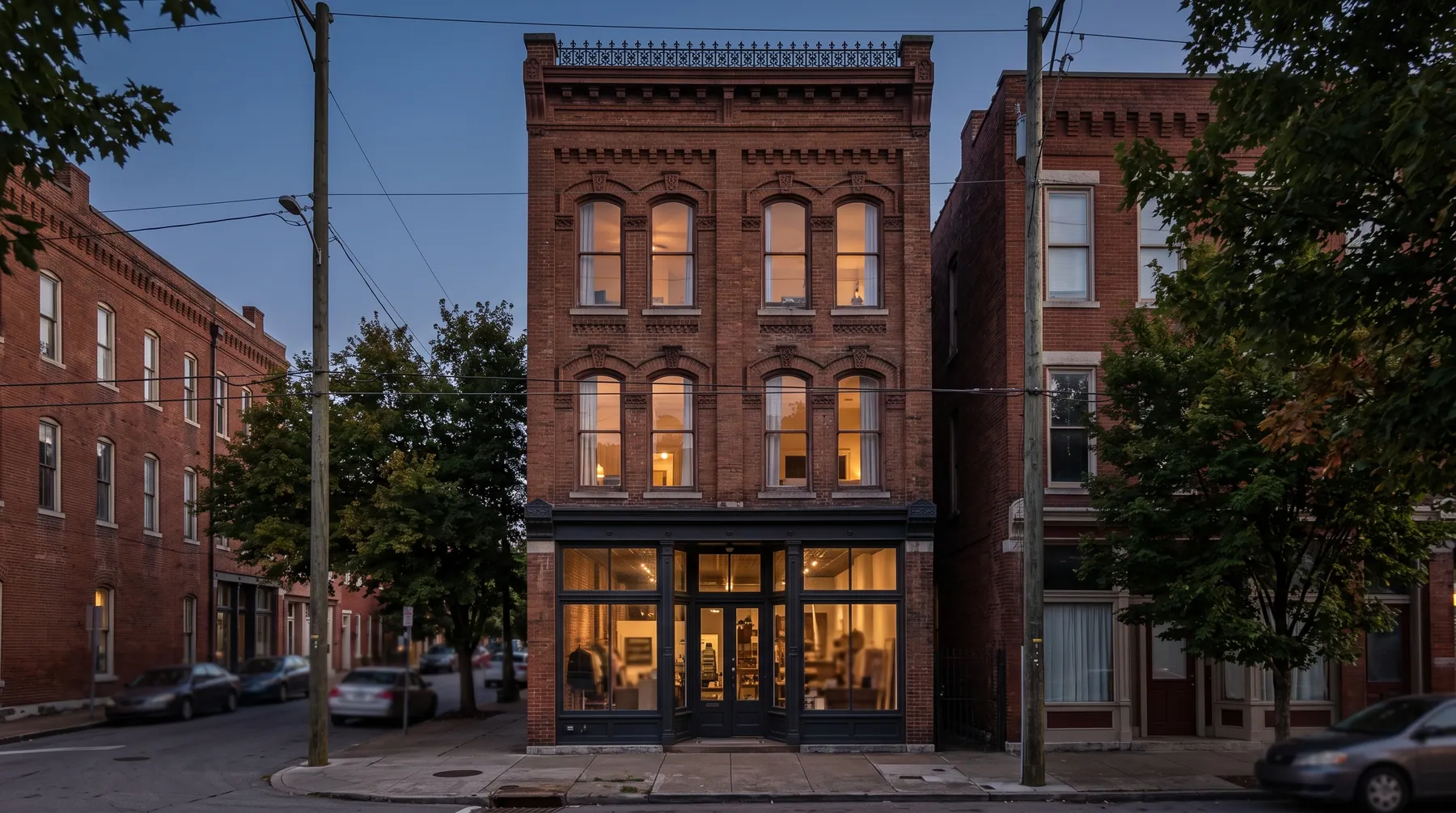
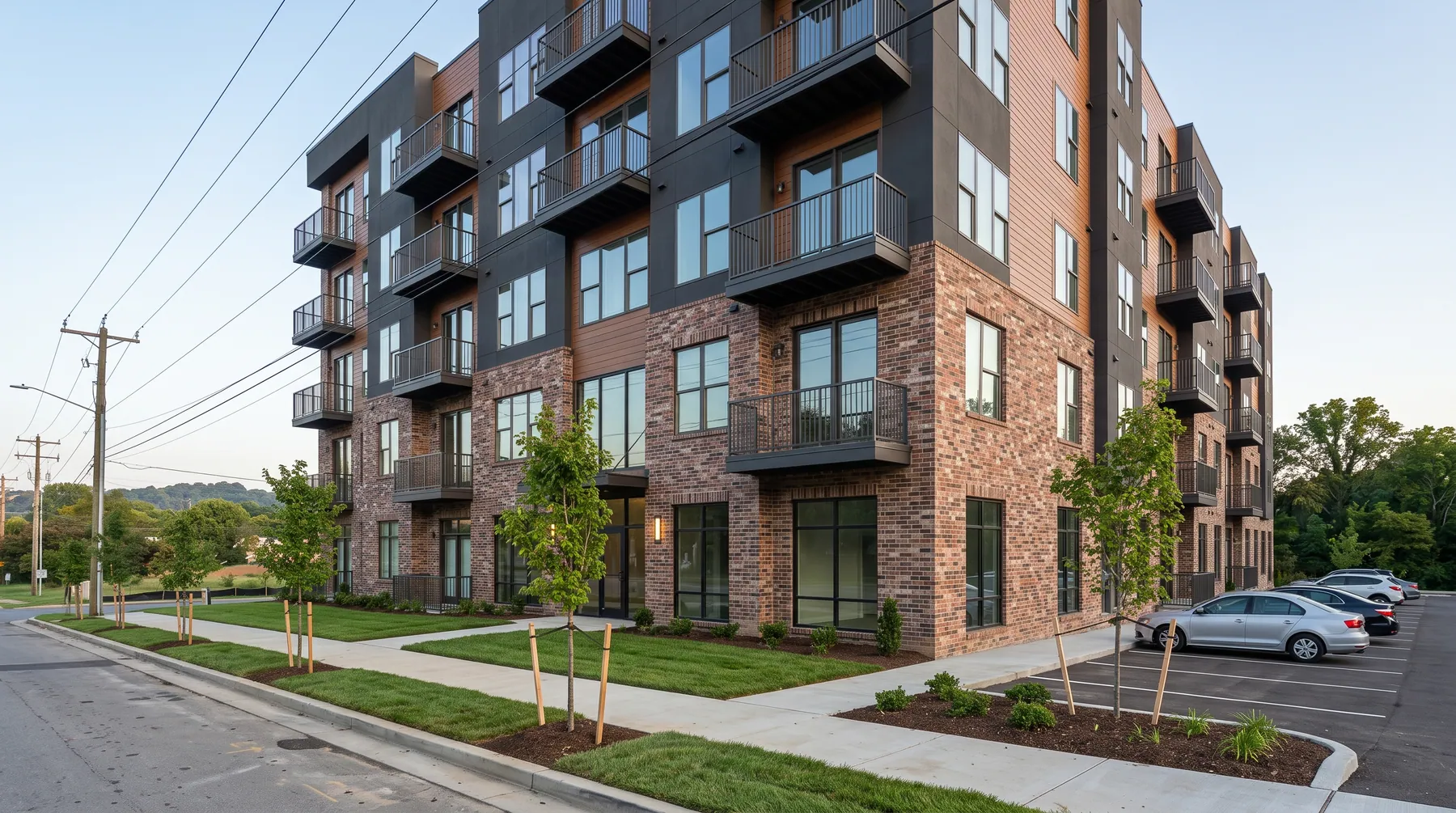
Top image: Illustration of a representative building, not a specific property.
To keep this page, print it or choose Save as PDF in your browser's print window. The printout keeps the sources and the date.
More property types
All 19
Hotel to Extended-Stay Conversions
A hotel or motel that stops renting by the night and starts renting furnished units by the week or month is a different business under Metro's rules.
Industrial Buildings
An industrial building is where the work happens: light manufacturing, assembly, fabrication, repair.
Lease-Up Buildings
A lease-up building is a new apartment building that is filling its units for the first time.