
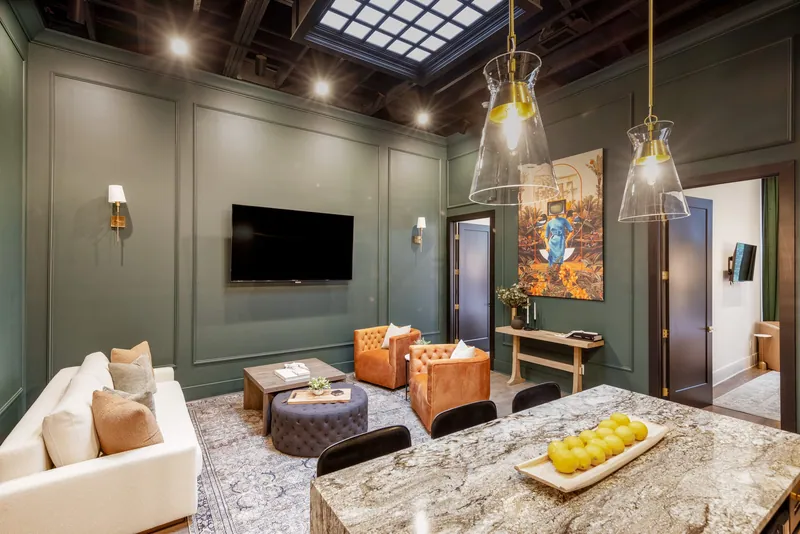
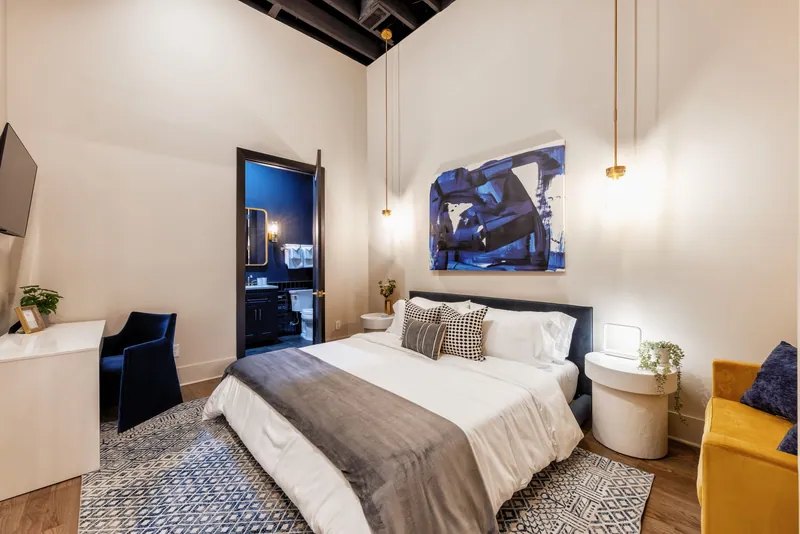
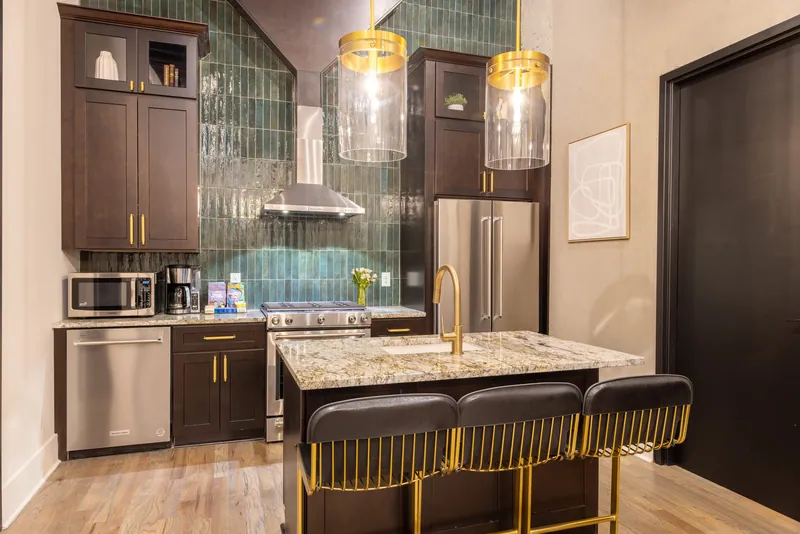
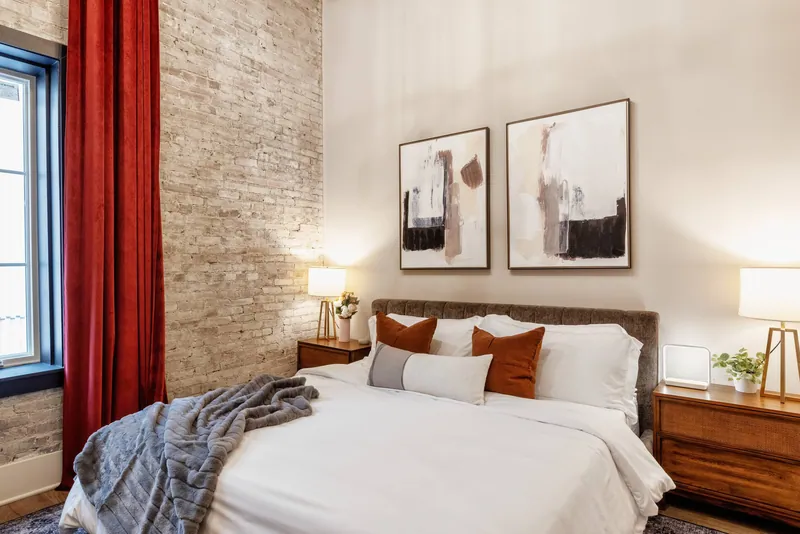
Interior Design and Furnishing
In Nashville, a furnishing plan begins at the drafting table, before any paint chip. Metro's permit file asks for a floor plan showing every room, window, door and smoke detector, and the number of sleeping rooms on that plan sets how many guests the unit may legally hold. This page covers what a furnishing project includes, the choices that stay with you as the owner, and the city, state, federal and platform rules that shape the room plan.
- Sleeping rooms per permit
- Four at most (Metro Codes apply page, 2026)
- Guest cap
- Twice the sleeping rooms plus four, never above 12
- Floor plan
- Rooms, windows, doors and UL 217 smoke detectors
- Dressers
- Federal tip-over rule for units made after Sept. 1, 2023
- Indoor cameras
- Banned on Airbnb since April 30, 2024
On this page
- What a furnishing project includes
- The sleeping plan comes first
- Drawing the floor plan Metro asks for
- Federal rules for dressers and bunk beds
- Locks, cameras and devices under Airbnb's rules
- What has to be posted inside the unit
- Taxes on what you buy for the unit
- Furnish what the camera will show
- What you decide as the owner
- Furnishing step by step
- Questions
- Sources
What a furnishing project includes
A furnishing project takes an empty or tired unit to the day the photographer arrives. The order rarely changes: tape-measure each room, fix the sleeping plan, sketch the plan Metro will review, pick and price pieces, place orders, take deliveries and build flat-pack items, stock kitchen and baths, fit the lock, router and thermostat, and finally test the unit from a guest's point of view ahead of the photo shoot.
Each step feeds the next. The bed count drives the linen order, the linen order drives closet and storage space, and the storage plan decides whether a dresser or open shelving goes in the bedroom. Getting the sleeping plan wrong early means buying twice.
A building of several units runs that list once per door, plus one extra document, a common spec sheet. When every unit uses the same mattress size, towel color and lock model, spare parts fit everywhere and a cleaner can turn any unit without a separate checklist.
The sleeping plan comes first
One Metro permit covers four sleeping rooms or fewer; a five-bedroom place, by the city's own application page, cannot get one. Whether a den or office counts as a sleeping room is a question to settle with Codes staff before you file, so decide early which rooms are sleeping rooms and furnish the rest as living space.
The guest limit follows from that count. The city's math for guests is two per permitted sleeping room, add four, and stop at 12 whatever the result. So a pair of bedrooms means eight people at most, and four bedrooms means 12, regardless of how many pull-outs or bunks the rooms could hold. Beds beyond the cap add comfort for a group, not legal guests.
That arithmetic is why furnishing and listing are planned together. A one-bedroom loft tops out at six guests, two plus four, so a bed and a sofa bed that sleep six are as far as the furniture budget needs to go. Buying for the cap and no further keeps money out of furniture that cannot earn.
Drawing the floor plan Metro asks for
Codes wants a drawing of every level, and a hand sketch is accepted, marking each room plus where its windows, doors and detectors sit. Every alarm needs a UL 217 listing. Put one in each bedroom, one in any room a sleeper passes through to leave, and one per floor, counting the garage and basement.
Furniture can block that plan. A tall wardrobe in front of a bedroom window, a headboard under the only detector, or a bookcase narrowing the hallway to the exit can all fail a walk-through. Place the big pieces on paper before the truck arrives, and keep windows and the exit path clear.
Who inspects depends on the building. Houses and duplexes need a sign-off from a state-licensed architect, engineer or home inspector, filed with the application. At three dwellings and up, the inspection belongs to the Fire Marshal's office. A shared corridor or walkway to the front door is the usual signal that the Fire Marshal will be the one walking through.
Federal rules for dressers and bunk beds
Two federal product rules matter in a rental bedroom. The Consumer Product Safety Commission's clothing storage rule, 16 CFR part 1261, adopts the ASTM F2057-23 standard for free-standing dressers, chests and similar pieces at least 27 inches tall, weighing 30 pounds or more, with at least 3.2 cubic feet of enclosed storage. It covers units made after September 1, 2023, which must pass three stability tests and carry warning labels. Buy units made under that rule and still anchor them to the wall, because a guest's child can climb a dresser as easily as your own.
Bunk beds have their own federal rule, 16 CFR part 1513. Any bed whose foundation sits more than 30 inches off the floor needs at least two guardrails, one on each side, and the top of each rail must stand at least 5 inches above a mattress of the maximum thickness the maker allows. The instructions must state the mattress length and width. Order the mattress the instructions call for. A thicker one shortens the rail and defeats the rule.
Bunks are popular with group bookings, so the question comes up early. They can make a four-bedroom unit sleep its full 12 comfortably. They cannot raise the cap.
Locks, cameras and devices under Airbnb's rules
Airbnb banned indoor security cameras on April 30, 2024. No room inside is exempt, a switched-off camera still counts, and every exterior camera must be named in the listing along with the spot it covers. Noise monitors may be used indoors if disclosed, but never in bedrooms, bathrooms or sleeping areas. Plan device positions with those lines in mind before drilling holes.
Door access needs a second look in 2026. Article 4169 in Airbnb's help center covers this. On stays booked from November 20, 2026, guests cannot be made to download an outside app or sign up on some other site, and a phone-app lock needs a second entry method for any guest who requests one. A keypad lock with a code, or a keypad plus a secure key box, meets that need. An app-only lock does not.
Article 4169 also stops hosts from requesting an Airbnb guest's phone, email or a copy of their ID, apart from a few cases that a law or a written building rule creates. Keep guest-facing technology inside what the platform allows.
What has to be posted inside the unit
City rules also want the local contact's name and number displayed in the unit, for a person who answers day or night through every stay. Build a place for it into the design: a framed card by the entry door or inside the kitchen cabinet the guest opens first, not a sticker on the fridge that disappears after a month.
The same spot can hold the occupancy limit, the Wi-Fi details and the trash schedule. One card, one place, replaced whenever the information changes.
Taxes on what you buy for the unit
The Tennessee Department of Revenue's June 2026 short-term rental manual says owners owe use tax on items used to provide the rental when no Tennessee sales tax was paid. Its example: a host orders furniture from a seller in another state, no Tennessee tax appears on the invoice, and the host owes use tax. Keep invoices for every piece, and flag any order that arrived without Tennessee tax so your accountant can report it.
Utilities run the other way. The same manual says gas, electricity and other energy sold directly to the homeowner for use in a short-term rental unit counts as residential use and stays exempt from sales tax. Set the utility accounts up in the owner's name for the unit, not as a commercial account, unless your accountant advises otherwise.
Furniture, linens and smart devices are also capital and operating costs for income tax. That treatment belongs with your accountant, not your manager.
Furnish what the camera will show
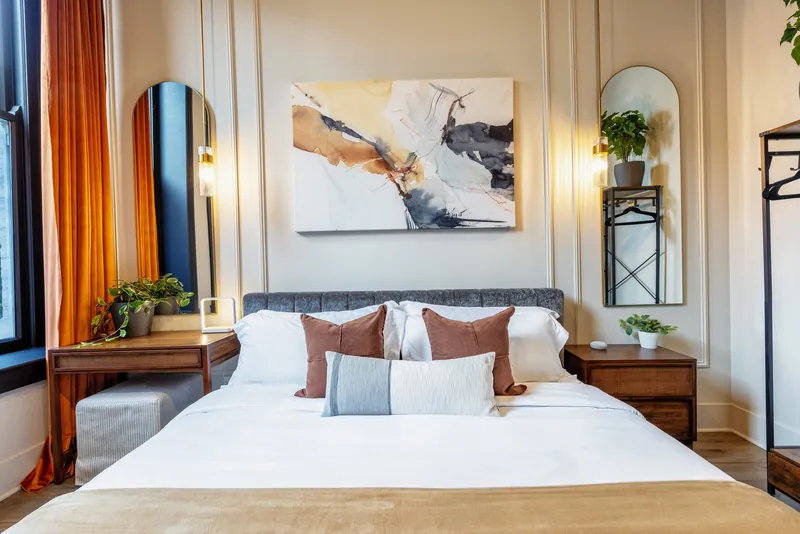
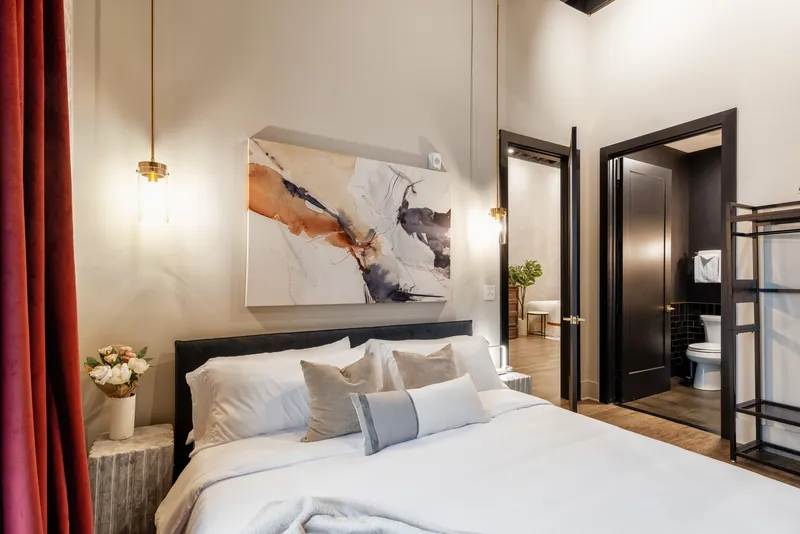
Guests rate the listing against the photos. Airbnb's Guest Favorite badge weighs at least five reviews and high marks across its rating categories, accuracy and cleanliness among them, and a bedroom that looks roomier or newer online than at check-in drags those scores down. Furnish first, photograph second, and keep the pieces in the photos in the unit.
Durable choices pay off here. Washable slipcovers, solid wood or metal frames, and lighting on separate switches photograph well and still look the same after a season of turnovers. The listing page covers how photos and descriptions are written once the unit is done.
What you decide as the owner
- The budget and the finish level, approved before anything is ordered.
- Which existing furniture stays, and which is replaced or sold.
- Which rooms you designate for sleeping, because that choice sets your legal headcount.
- Whether to allow pets, which changes fabric, flooring and cleaning costs.
- Whether to add bunk beds or sofa beds for group bookings.
- Which lock, thermostat and noise devices to install, within platform rules.
- Who owns the furnishings if the management agreement ends; put it in writing.
Furnishing step by step
- Measure every room and confirm the number of sleeping rooms.
- Draw the floor plan with windows, doors and UL 217 detector positions.
- Set the guest cap from Metro's formula and plan beds to match it.
- Price furniture, linens, kitchen kit and devices for your approval.
- Order, receive, assemble and anchor every clothing storage unit.
- Install the lock, Wi-Fi, thermostat and posted contact card.
- Do a mock arrival, correct every miss, and only then schedule photos.
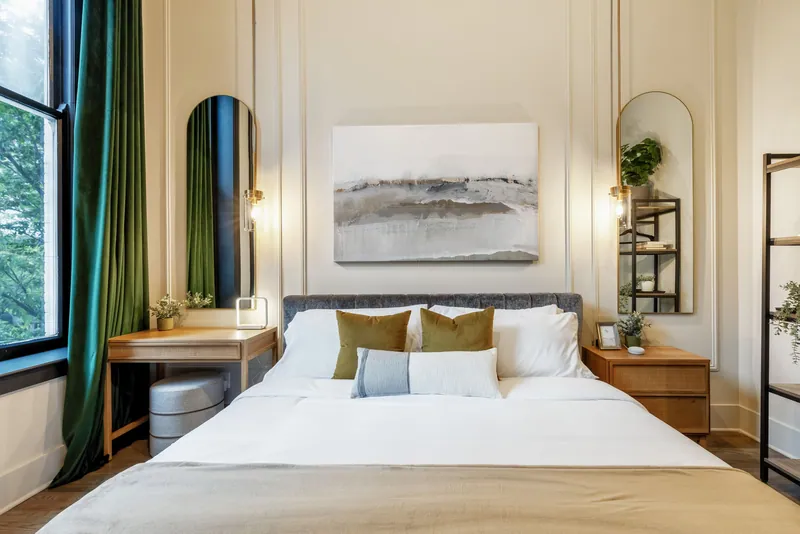
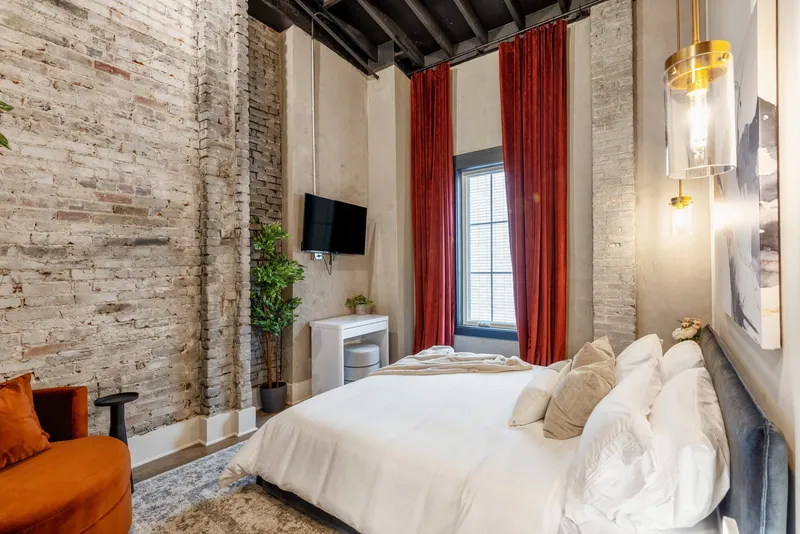
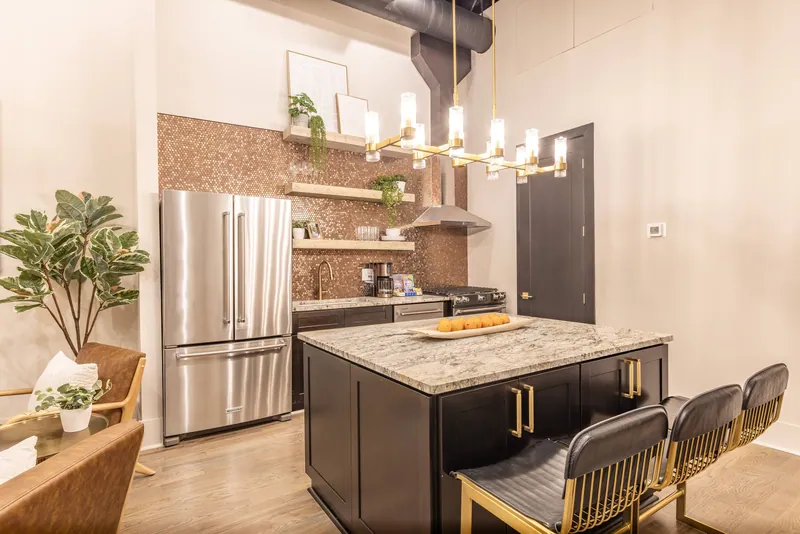
Union Street Lofts, four short-term rental lofts at 329 Union Street in the Printers Alley block, run by Rad Stay since 2023.
- 4.98average rating across 214 Airbnb reviews of the four lofts
- Guest Favoritebadges on the lofts' Airbnb listings, with Superhost status
- 4 of 4lofts hold Metro non-owner-occupied permits, issued April 2023
- WKRN News 2segment on the lofts, published June 11, 2026
Airbnb figures from the four listings as read October 4, 2026. Permits from Metro Codes. Read the case study · See the portfolio
Questions
Can I add bunk beds to fit more guests?
Bunks can make a group more comfortable, but they do not change the legal limit. The city formula is two guests per sleeping room, four more on top, and 12 as the hard stop. Buy bunks that meet the federal bunk bed standard and use the mattress size marked on the bed.
Does a home office count as a bedroom?
It can, depending on its layout, and that matters because a permit covers four sleeping rooms at most. Label it on your drawing as you will actually use it, and put the question to Codes staff before you file if it is a close call.
Do I need to anchor dressers in a rental?
Dressers made after September 1, 2023 must pass the federal stability tests, but anchoring them to the wall is still the safe choice in any unit where children may stay.
Can I use a smart lock that needs an app?
Only with a backup. On Airbnb trips booked from November 20, 2026, an outside app cannot be mandatory, and a guest who asks gets a different way in. A keypad code covers it.
Do I owe tax on furniture I bought online?
When an online seller skipped Tennessee sales tax, the state expects use tax from you on anything that equips the rental. Keep the invoices and give them to your accountant.
Sources
- Metro Codes, Apply for Short Term Rental Property Permit (page updated Oct. 1, 2026; Wayback copy Nov. 5, 2026)
- Metro Codes, Short Term Rental Property Operation Rules and Requirements (Wayback copy Feb. 12, 2026)
- Metro Code Chapter 6.28, text current through June 23, 2026 (Municode)
- Airbnb Help Center, Use of cameras and recording devices (article 3061)
- Airbnb Help Center, Limiting host-imposed contracts and other requirements (article 4169)
- Airbnb Help Center, Guest Favorites (article 3496)
- Tennessee Department of Revenue, Taxation of Short-Term Rental Units (June 2026; Wayback copy Sept. 7, 2026)
- Tennessee Department of Revenue, SUT-48 Short-Term Rentals Reporting Requirements (Wayback copy Aug. 7, 2025)
- Federal Register, Safety Standard for Clothing Storage Units, 88 FR 28403 (May 4, 2023; GovInfo)
- 16 CFR Part 1513, Requirements for Bunk Beds (2025 edition; GovInfo)
Checked November 12, 2026.
To keep this page, print it or choose Save as PDF in your browser's print window. The printout keeps the sources and the date.
More services
All 15Listing Setup and Optimization
A listing is the page a guest books from, and in Nashville it also carries legal duties: Metro wants the permit number on it, and the guest count, stay length and house rules it advertises have to match the permit.
Maintenance and Inspections
Maintenance keeps a rental working between guests, and scheduled inspections find the loose handrail or slow leak before a guest does.
Managing Multi-Unit Buildings
A building with several rental units is one asset to its owner and a stack of separate permits to Metro.