
Listing Setup and Optimization
A listing is the page a guest books from, and in Nashville it also carries legal duties: Metro wants the permit number on it, and the guest count, stay length and house rules it advertises have to match the permit. Setup builds each listing from facts about the unit. Optimization keeps it accurate as reviews, seasons and platform rules change.
- On every listing
- The unit's Metro permit number or an image of the permit
- Most guests you can list
- Two per sleeping room plus four, 12 at most
- Stay length under a permit
- 24 hours minimum, 30 consecutive days maximum
- Airbnb data rule
- No soliciting guest contact details, bookings from Nov. 20, 2026
- FTC fee rule
- Total price with mandatory fees shown most prominently, since May 12, 2025
On this page
- What listing setup covers
- The permit number belongs on the listing
- Guest count, stay length and age settings
- House rules that match city rules
- Airbnb's November 2026 rules for listings
- Price display and taxes
- Ratings and badges on Airbnb
- What this looks like at Union Street Lofts
- Choices that stay with the owner
- Listing setup step by step
- Questions
- Sources
What listing setup covers
Setup is the work done before the first reservation: an inventory of the unit, a photo shoot once it is furnished and cleaned, a title and description, the amenity checklist, house rules, check-in steps, the cancellation policy, minimum and maximum stay settings, and the price settings the revenue side will manage. Each platform asks for the same facts in a different form, so the job starts with one master record of the unit and adapts it per channel.
Optimization is the ongoing part. Reviews, guest questions and booking patterns show where the listing and the stay disagree. A guest who could not find parking, or expected a bathtub, is telling you which sentence to rewrite or which photo to add.
The permit number belongs on the listing
Under section 6.28.030, any ad or online write-up of a permitted rental has to show the permit number where a reader sees it at once, or else carry a readable photo of the permit. Where a building holds several permits, every listing carries the number issued to that unit alone.
Publish only after the permit is issued. To Codes, an unregistered unit is an unpermitted one. Expect citations and a year before an application is accepted, and under the code a judge can fine $50 for each day it ran. A listing that goes live early is the easiest evidence of that.
Renewal affects the listing too. Each permit runs a year, and the renewal page puts the duty to renew squarely on the owner. Log that expiry next to your monthly listing check so both get looked at together.
Guest count, stay length and age settings
The guest maximum you enter on each platform should come from the permit, not the bed count. Take the permitted bedrooms, double them, add four, and cap the answer at 12. The code makes advertising more guests than that limit grounds for revoking the permit.
Stay length has limits in both directions. The city forbids paid stays under a day and limits a single guest to 30 nights in a row on a short-term permit, which makes the maximum-nights box on each platform as important as the minimum. Stays beyond that run under different rules, covered on the mid-term rentals page.
Two more city limits shape the listing. The person who books must be 21 or older, and one booking party holds the whole unit at any given time. That second rule means a single permitted unit cannot be split into separately booked rooms. Set the age requirement in the platform's house rules and list each unit as one whole booking.
House rules that match city rules
Copy a handful of city operating limits into the house rules, so they are visible before checkout. Guests keep to Metro's sound and garbage ordinances. No RV, bus or trailer tied to the stay may sit in view on the lot or the street. And the host does not cook or serve meals for guests. Writing them in plain words gives you a written basis if a guest breaks them.
If you live on site, there is an extra restriction. A resident-owner permit may not be marketed as a whole-house rental. The exceptions are short: a lawfully permitted backyard cottage, an accessory apartment, or a duplex half meeting the covenant terms in the code. If your permit is owner-occupied, the listing type has to reflect that.
Airbnb's November 2026 rules for listings
We reread Airbnb's article 4169 on November 12, 2026. Its stricter version governs every reservation made from November 20, 2026. Hosts may not solicit personal data at any point in the booking or stay, including phone numbers, home addresses, email addresses, ID documents, financial details or background checks. Hosts may check ID in person at check-in if the house rules say so, but cannot hold on to a copy.
The same article bars requiring a third-party app or registration on another website, requiring a separate contract outside the listed exceptions, which include monthly stays, and asking guests to review the stay on another site unless the listing is a hotel. When statute or a written association rule calls for guest details, spell out in the listing's extra rules which details and why, so a guest reads it before reserving, and gather nothing beyond what the rule names.
For a condominium or managed building whose association requires guest registration, that disclosure is part of setup. Read the association's written rule first, then write the house rule to match it in substance.
Price display and taxes
A federal pricing rule applies too. The FTC's fee rule, in effect since May 12, 2025, reaches every business that sells or advertises lodging for short stays. Agency guidance says a mandatory cleaning charge belongs inside the advertised total, and that total must appear more prominently than every other price except the final amount due. Taxes and other government charges can sit outside it, provided the guest sees them before paying. That applies to your own website and ads, not only to platform listings.
On Airbnb, taxes are added at checkout. On its Tennessee tax article, Airbnb says it adds the state's 7% and the local sales percentage to trips no longer than 89 nights, and local occupancy tax to each trip's first 30 nights. Vrbo's US tax table lists Tennessee sales tax as collected for bookings below 90 nights, and local lodging tax starting in January 2021. Set nightly prices without tax built in, and let the platform add it.
A guest who books on your own site is another matter: the tax on that stay is yours or your manager's to collect and report. The occupancy tax support page explains the split.
Ratings and badges on Airbnb
Airbnb evaluates listings for its Guest Favorites badge automatically every day. The factors it names include at least five reviews, high marks in its six rating categories, and host cancellations and quality-related service issues of about 1% on average.
Superhost status is assessed every three months, looking back 12 months. A host qualifies with an average of 4.8 or better, either ten completed trips or three trips adding up to 100 nights, a reply within a day to nine messages in ten, and fewer than one cancellation per hundred bookings. A listing that describes the stay accurately protects the accuracy score, which feeds both.
What this looks like at Union Street Lofts
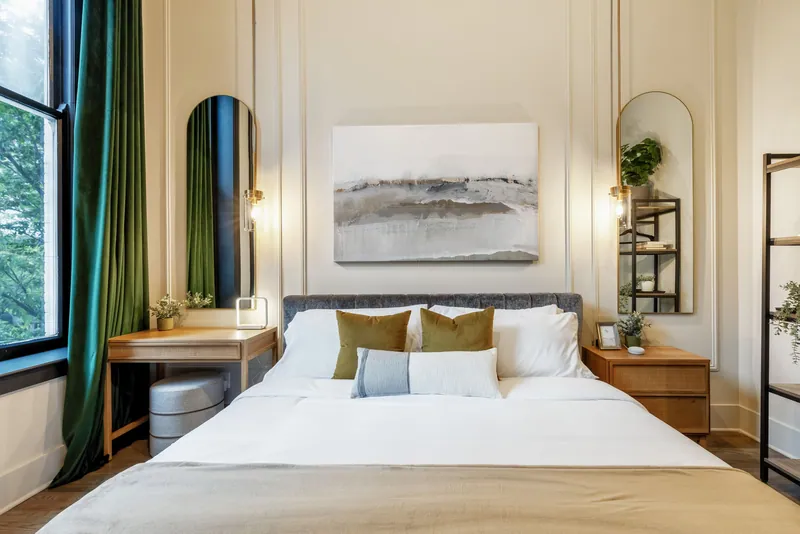
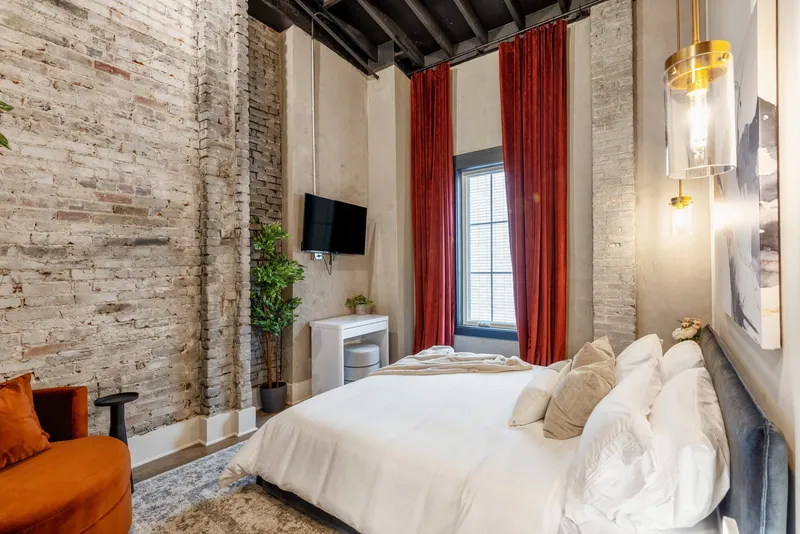
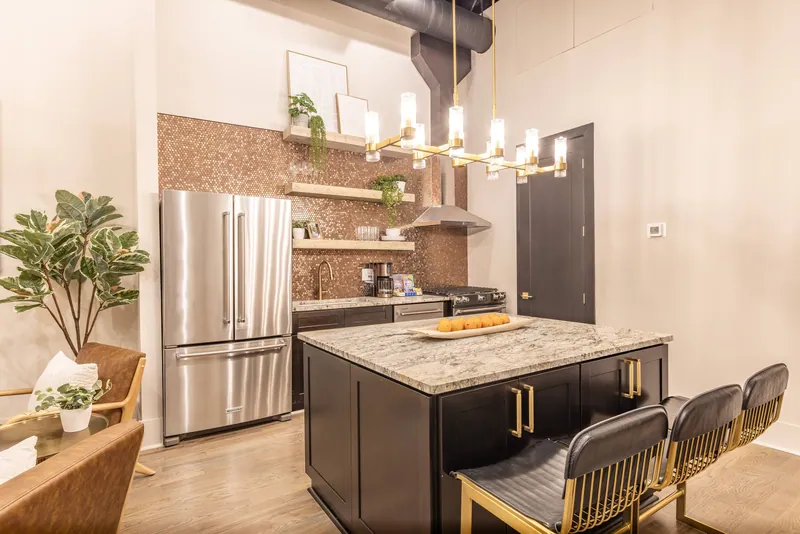
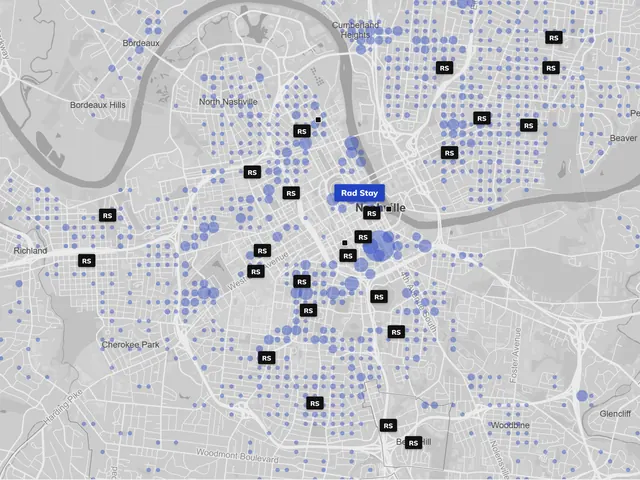
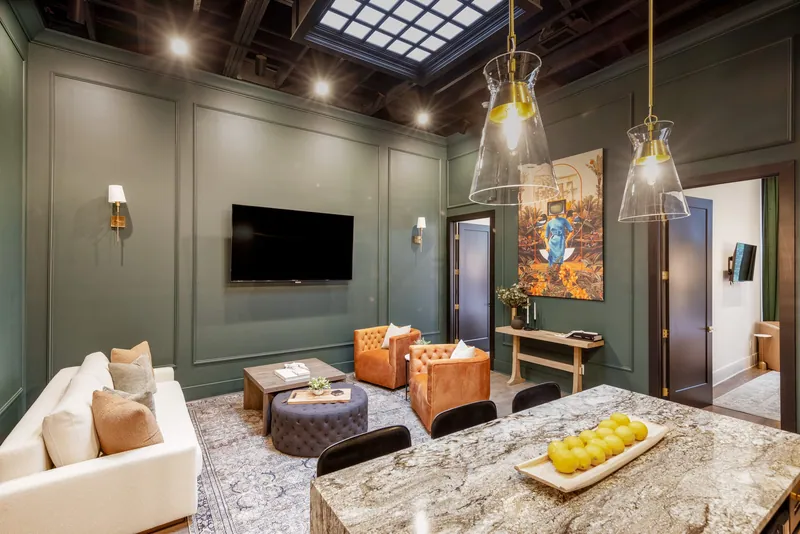
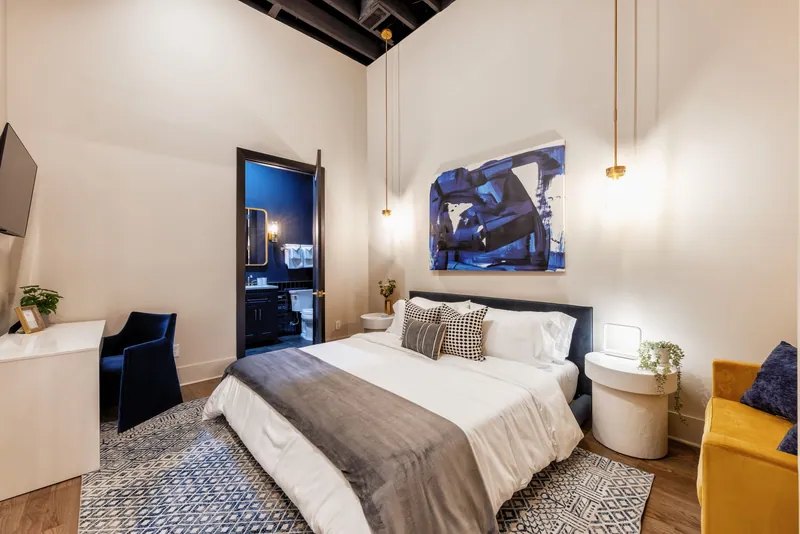
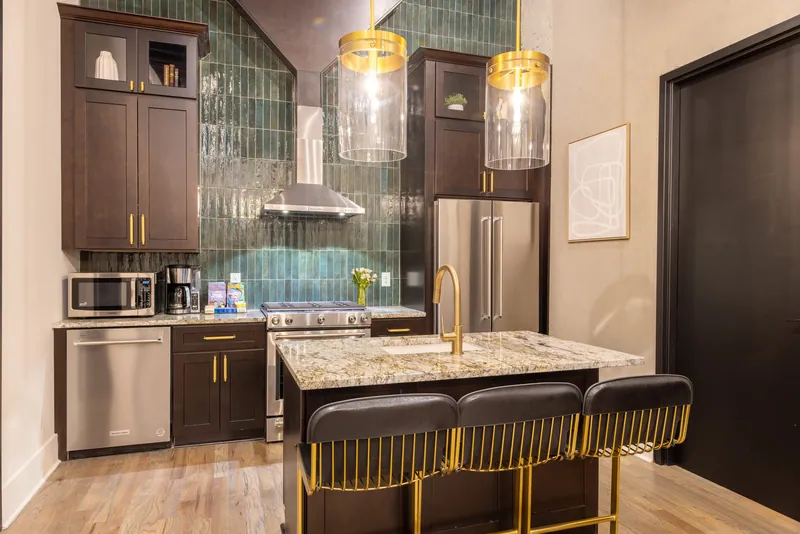
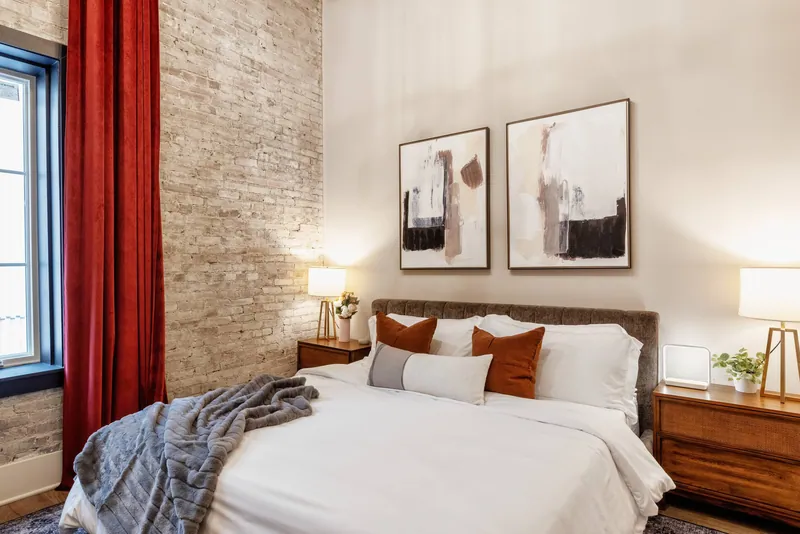
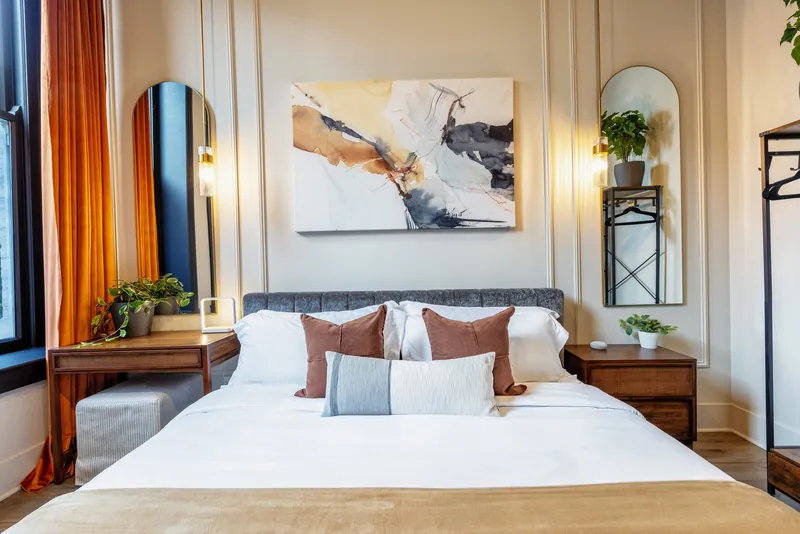
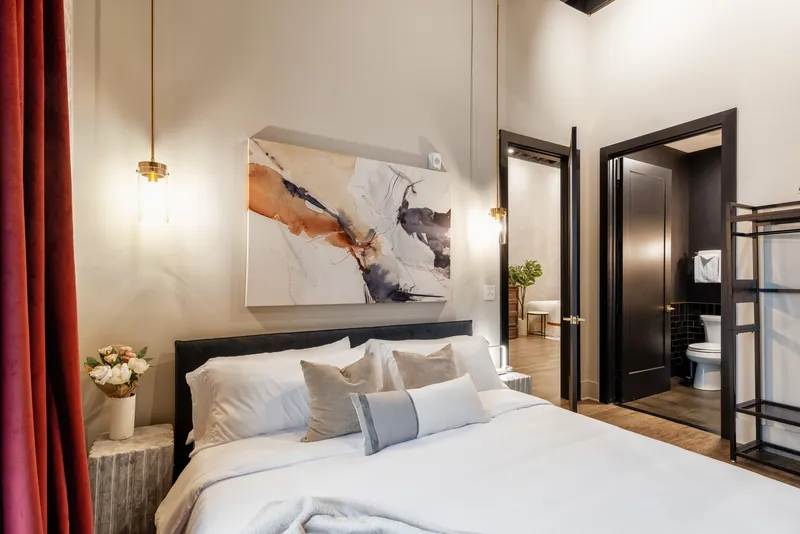
Rad Stay is the host for Union Street Lofts, whose four units carry the numbers 201 to 204 on the floor above street level at 329 Union. Metro issued the four lofts separate not-owner-occupied permits in April 2023, and guests book each one from a listing of its own. Across the four, Airbnb guests have left 214 reviews that average 4.98, and the host, Kasra, holds Superhost status.
Choices that stay with the owner
- Which channels the unit appears on, and whether you also take direct bookings.
- The cancellation policy you can accept for each season.
- Minimum stay, maximum stay within the 30-day permit limit, and check-in times.
- Whether pets are allowed, and any fee for them.
- House rules beyond the city's, written so a guest can follow them.
- How the building, its history or its neighbors are described.
Listing setup step by step
- Confirm the permit number, sleeping rooms and guest cap for each unit.
- Photograph the unit once it is finished and cleaned.
- Write one master description from facts a guest can see or check.
- Adapt it to each platform, with stay limits, age rule and house rules set.
- Add the permit number to every listing and every ad.
- Publish, then review guest feedback each month and update what it shows.
Union Street Lofts, four short-term rental lofts at 329 Union Street in the Printers Alley block, run by Rad Stay since 2023.
- 4.98average rating across 214 Airbnb reviews of the four lofts
- Guest Favoritebadges on the lofts' Airbnb listings, with Superhost status
- 4 of 4lofts hold Metro non-owner-occupied permits, issued April 2023
- WKRN News 2segment on the lofts, published June 11, 2026
Airbnb figures from the four listings as read October 4, 2026. Permits from Metro Codes. Read the case study · See the portfolio
Questions
Can my listing go live while the permit is pending?
No. An unregistered rental is handled as an unpermitted one, which means citations and a year before you may file. Publish once the permit is issued and its number is on the listing.
Can I rent the bedrooms of one unit to different guests?
Not under one permit. The city forbids renting a unit to two groups at once on separate bookings, so each permitted unit goes to a single party per stay.
Can I ask Airbnb guests for an email address for the building's entry system?
From November 20, 2026 bookings on, Airbnb says no to collecting a guest's email or phone and no to mandatory outside apps. The exception is a legal requirement or a written association rule, disclosed in the house rules ahead of the reservation. Keep entry within Airbnb's tools or offer a keypad code.
Does Airbnb collect Tennessee taxes on my bookings?
Yes for platform bookings. On trips up to 89 nights the platform charges state and local sales tax, and it charges occupancy tax on a reservation's first 30 nights. Keep its tax reports, and handle tax yourself on any booking made outside the platform.
What does Airbnb require for Superhost?
A 4.8 or higher overall rating, at least 10 reservations or three totaling 100 nights, a 90% response rate within 24 hours and cancellations under 1%, checked every three months over the past year.
Sources
- Metro Code Chapter 6.28, text current through June 23, 2026 (Municode)
- Metro Codes, Short Term Rental Property Operation Rules and Requirements (Wayback copy Feb. 12, 2026)
- Metro Codes, Short Term Rental Property Frequently Asked Questions (Wayback copy Oct. 22, 2026)
- Metro Codes, Renew Short Term Rental Property Permit (page updated Oct. 16, 2026; Wayback copy Oct. 22, 2026)
- Airbnb Help Center, Limiting host-imposed contracts and other requirements (article 4169, opened Nov. 12, 2026)
- Airbnb Help Center, Occupancy tax collection and remittance by Airbnb in Tennessee (Wayback copy May 21, 2026)
- Vrbo Help, Where Vrbo collects and remits taxes, US N-Z (Wayback copy Sept. 5, 2025)
- Federal Trade Commission, The Rule on Unfair or Deceptive Fees: Frequently Asked Questions
- Airbnb Help Center, Guest Favorites (article 3496)
- Airbnb Help Center, Superhost requirements (article 829)
- Rad Stay, home page
Checked November 12, 2026.
To keep this page, print it or choose Save as PDF in your browser's print window. The printout keeps the sources and the date.
More services
All 15Maintenance and Inspections
Maintenance keeps a rental working between guests, and scheduled inspections find the loose handrail or slow leak before a guest does.
Managing Multi-Unit Buildings
A building with several rental units is one asset to its owner and a stack of separate permits to Metro.
Mid-Term Rentals
A mid-term rental is a furnished home taken for a month or more, typically by someone on a work posting, a family waiting on a closing, or a person who needs weeks of housing instead of a weekend.