










Buying a Multifamily Building for Short-Term Rentals in Nashville
In Nashville the permit, more than the rent roll, sets what a multifamily building can earn by the night, and it does not convey with the deed. Each unit needs its own Metro permit, issued to the new owner under the rules in effect on the day you apply. This guide covers what to check, in what order, before you commit to a purchase.
- Permit unit
- One permit per dwelling unit, up to four sleeping rooms each
- Cap on STR units in a building
- None in Metro Code 6.28.030 or Title 17 (checked Oct. 2026)
- Transfer at sale
- Not allowed; the new owner applies fresh
- Distance rule
- 100 feet from a religious institution, school, park or licensed day care
- Fire inspection
- Fire Marshal, for 3 or more dwellings on the property
- Issued non-owner-occupied permits countywide
- 5,010 (Metro open data, retrieved Oct. 6, 2026)
On this page
- Start with the permit, not the building
- How Metro counts units
- Zoning decides whether you can apply
- Distance limits and Council waivers
- No percentage cap, but other limits apply
- Fire Marshal inspection for 3 or more dwellings
- Buying through an LLC or trust
- Buying a building that already operates
- What the permit counts say about competition
- Operating rules that carry costs
- Contract terms that protect a buyer
- Questions
- Sources
Start with the permit, not the building
A building that is running short-term rentals today may not be able to do it under your ownership. The Metro Code, at 6.28.030, says a short-term rental property permit "shall not be transferred or assigned." A buyer therefore holds no permit at closing and must apply afresh under whatever regulations govern on that date. On Metro's operation page, retitling the building from yourself to your trust or LLC, or the reverse, is that kind of change too.
The seller's booking history tells you what the building earned. It does not tell you what you are allowed to do. The first question for any building of 4 to 200 units is whether you can get a permit for each unit you plan to rent by the night. The rest of the analysis comes after that answer.
How Metro counts units
Metro does not have a multifamily permit type. Section 17.04.060 describes a short-term rental property as a residential dwelling, with a four-sleeping-room maximum, that is advertised or used for transient occupancy through an online marketplace. Permits are issued apartment by apartment. Metro's apply page adds that no property with over four bedrooms can be permitted for short-term use.
In practice that sets a unit mix test. A building made up of one- and two-bedroom units clears that limit easily. A unit with five bedrooms cannot be permitted at all, and a large unit cannot be split on paper. Count the sleeping rooms in every unit against the plans, not against the listing descriptions, because Metro rules turn on sleeping rooms.
The cost scales by unit too. Metro's February 2026 frequently-asked-questions page lists the permit fee as $313. If that fee applies to each permit, a 12-unit building comes to $3,756 in application fees alone, and the permits then renew every 365 days. Confirm the current fee and the renewal fee with Metro Codes before you budget.
Zoning decides whether you can apply
First, permits for units an absent owner rents out are open only in the districts 6.28.030.B.1 names and 17.16.070.W repeats, covering the mixed-use and office families, the commercial and shopping-center zones, and DTC North, South, West and Central downtown; the permits guide linked below lists each code. Table 17.08.030 matches that list, leaving the use out of agricultural zoning, every residential district from RS to RL, DTC East and industrial land.
Four details trip up buyers. First, NS districts, such as CS-NS, prohibit both permit types. Second, where a Specific Plan or PUD governs the parcel, Metro will issue a permit only when the plan document permits it, so read the plan as well as the base zoning. Council has changed plans to add the use, including BL2024-211 in 2024 and, in March 2026, BL2026-1268, which put an SP allowing not-owner-occupied rentals. Third, an apartment building in a residential district generally cannot get new not-owner-occupied permits. Metro's permit-types page lets current holders renew in the four residential and agricultural zones it names (AR2A, R, RS, RM), but selling the building ends those permits.
Fourth, converted buildings. Subsection F.12 of Section 17.16.030 shuts out both permit types where the lot was built out for adaptive residential use and fronting chiefly onto a local street, or located outside the Urban Services District, though permits in good standing on August 1, 2024 stay eligible. Ask whether the building was converted under adaptive residential rules before you assume a permit is available. Look up the parcel's zoning on Metro's zoning map, then read the code section for that district yourself. Confirm the result with Metro Codes in writing before you waive a contingency.
Distance limits and Council waivers
Subsection B.2.d of 6.28.030 refuses a new permit to any applicant whose parcel lies within 100 feet of a church or similar religious institution, of a school or its playground, of a park, or of a licensed day care center or its playground. Because the gap is measured between parcel lines, a church or a pocket park on the next lot can stop a plan the zoning allowed.
A waiver exists. It takes a Council resolution after a public hearing, with 21 affirmative votes. Owners within 600 feet get mailed notice, a sign stands on the site for 14 days, and a whole group of apartments in one development may share a single resolution. Council has passed more than 30 of these resolutions since 2023, almost all of them, according to Legistar.
Not every one passes. RS2024-479, which asked for waivers covering 62 units, address 160 2nd Avenue North,, failed on June 4, 2024. The owner came back with a narrower request for 55 of them, RS2024-580, and it passed on July 2, 2024. The lesson for a buyer is timing. A waiver adds weeks of public process and some political risk, so build it into the purchase contract as a condition, with a closing date that can move.
Buildings already in active development in 2020, meaning they held a master permit issued on or before September 1, 2020 or were 50 percent built, sit outside the distance rule.
No percentage cap, but other limits apply
Buyers often want to know how much of a building can rent by the night. Neither Section 6.28.030 nor 17.16.070.W, the land use table or Chapter 17.38 caps the portion of a multifamily building that may rent short-term. Other things still limit the count: zoning, the distance rule, the four-bedroom limit per unit, association documents, leases already in place and the fire inspection.
Every application includes a statement that the rental would not violate any homeowners association agreement, bylaws, condominium agreement, co-op agreement, lease agreement, covenant or easement. Metro's checklist wants that statement even from a building with no association. The FAQ also warns that an association is allowed to be stricter than the city. In a condominium building, that means you need the declaration and bylaws in hand before you offer on units, and a written answer from the board if the text is unclear.
Existing tenants matter as much. A unit under a long-term lease is not available to rent by the night until the lease ends, and Tennessee landlord-tenant rules govern how it ends. Ask a Tennessee real estate attorney how to sequence lease expirations with your permit filings.
Fire Marshal inspection for 3 or more dwellings
A single-family home or duplex may file a certification instead, from someone holding a Tennessee license as a home inspector, engineer or architect. A multifamily structure, which the not-owner-occupied checklist defines as a property of three or more dwellings, is inspected by the Fire Marshal instead. That puts a government inspection between you and your first permit.
In an older building, ask the seller for the last fire inspection report, any fire alarm panel service records and any open citations. Budget for the cost of whatever the inspection finds, and write who pays into the contract. The companion guide on fire and life safety for short-term rental buildings covers this in more detail.
Buying through an LLC or trust
Most investors buy in an entity. For a not-owner-occupied permit that works: the rule requiring a natural person applies to owner-occupied permits, where the owner must live in the unit as a primary residence. If you are buying a building to run short-term rentals in a commercial or downtown district, you will almost always be applying for the not-owner-occupied type.
The trap is moving title after you have the permit. Shifting the building from your own name into a trust or LLC, or the reverse, counts as a new owner and voids every permit. Decide at closing which entity will hold the building, and do not retitle it later without checking with Metro Codes first. Metro's summary document also cites Tennessee Code 13-7-603 on vested rights, and notes that a permit-holding LLC can swap members without losing its permit. That is Metro's reading. Have your attorney confirm it against the statute before you rely on it.
Buying a building that already operates
An operating building gives you data. It also gives you history to check. Pull the permit records for every unit from Metro's open data layer and compare them with what the seller says. Ask for the written notices Metro sent about complaints. A unit with complaints on file from its last permit term does not get the discretionary 30-day grace on a late renewal, and three breaches of the general provisions can lead to revocation after 15 days' written notice, with an appeal to the STR Appeals Board.
Check for unpermitted operation. Renting with no permit draws a $50 fine for every day and a year before Metro will issue a new permit, stretched to three years when a court makes the finding. Ask the seller how long each unit was listed before its permit was issued. Ask for each unit's permit number and issue date, and compare them with when the listings went live.
Then check the money. Ask for at least 12 months of platform payout statements and calendars, the expense ledger, and proof that room, occupancy and sales taxes were collected and remitted. Airbnb's help center says reservations cannot be handed to a new host or account, so future bookings will not move to you on closing. Plan to rebuild your calendar from the day you are permitted.
Once you hold permits, they run on a clock. Permits last 365 days from issue, and the renewal page says Metro emails reminders twice, 60 and 45 days ahead of that date. Put every unit's expiration date on one calendar at closing. Metro's FAQ lists a card processing fee of 2.3 percent on top of the permit fee, which adds up across many units.
What the permit counts say about competition
Metro's open data showed 7,022 short-term rental permits with status Issued on October 6, 2026: 2,012 owner-occupied and 5,010 not-owner-occupied. ZIP 37203 held 1,617 of the not-owner-occupied permits, ZIP 37207 held 562, 37208 held 528, 37212 held 357 and 37201 held 338.
Those numbers show where permitted operators already compete. They say nothing about whether your building can get permits, and they are not occupancy or revenue. Rad Stay's own experience is limited to the four Union Street Lofts units at 329 Union Street, which received not-owner-occupied permits from Metro in April 2023. A four-unit set of permits in a downtown district is a small case, and a 100-unit building has different economics and a different operating load.
Operating rules that carry costs
Run the operating rules against your plan before you price the building. Each holder must name a responsible party within a 25-mile range, reachable 24 hours a day, every day. The policy has to carry $1 million or more of liability coverage per occurrence. Each unit may host two guests for every sleeping room, plus four, up to the 12-guest maximum on Metro's operation page. Stays run from 24 hours to 30 consecutive days, one party at a time, with a principal renter who is at least 21. Each unit must post its guest cap and the responsible party's phone contact, every listing must show the permit number, and the permit holder may not cook for or serve food to guests.
Two of these affect underwriting directly. Because permitted stays end at 30 days, anything 31 nights or longer falls outside the permit, which makes mid-term rental the path to test for units that cannot be permitted. Confirm with Metro Codes how your zoning treats it. And the responsible-party rule means a 100-unit building needs a staffed, reachable operation every night of the year. Metro also requires a guest register kept at least six months.
Contract terms that protect a buyer
Put the permit risk in the contract, in this order: a due diligence period long enough to read the zoning, the SP or PUD text, the association documents and the leases; a contingency tied to written confirmation from Metro Codes that each planned unit is eligible; a second contingency for any distance waiver, with a closing date that can extend; and a repair or credit clause for items the Fire Marshal requires.
Ask for all of it to be reviewed by a Tennessee real estate attorney. Taxes, financing and entity structure are outside what this page covers: confirm property tax classification and the tax treatment of short-term rental income with the Davidson County Assessor of Property and a CPA, and confirm room, occupancy and sales tax registration with Metro and with Tennessee's Department of Revenue. The companion guides on underwriting and on financing small multifamily in Tennessee pick up there.
Questions
Does the seller's short-term rental permit transfer to me?
No. Metro Code 6.28.030 bars transfer or assignment, and the permit stops being valid when ownership changes. You apply for your own permit under the rules in effect when you file.
Is there a limit on how many apartments in one building can rent by the night?
Not a percentage limit. No such limit appears in Chapter 17.38 or in Sections 17.16.070.W, 6.28.030 and 17.08.030, as of the June 2026 code. Zoning, the distance rule, the four-bedroom limit per unit, association documents and leases still limit the number.
Can I get permits for a building in a residential zoning district?
Generally not for new not-owner-occupied permits. Those permits are confined to the districts that 6.28.030.B.1 names. An SP or PUD may allow it if its text says so. Confirm with Metro Codes and read the plan document.
What if a church or school is within 100 feet of the building?
No new permit is issued unless Metro Council passes a waiver resolution after a public hearing, with 21 affirmative votes. Council passed most waiver requests from 2023 to 2026, and failed at least one 62-unit request in 2024. Make the waiver a purchase contingency.
Can the building be sold with permits already in place?
The permits end at sale. A buyer can apply, but only under the current rules, and a permit held under older rules cannot be passed to the buyer.
Sources
- Metro Code chapter 6.28, including 6.28.030 Short term rental property permit (version current through June 23, 2026), Municode
- Metro Code 17.04.060, definitions (short term rental property), Municode
- Metro Code 17.08.030, land use table, Municode
- Metro Code chapter 17.16, including 17.16.070.W, Municode
- Metro Codes, Apply for a Short Term Rental Property Permit (archived Aug. 22, 2026)
- Metro Codes, Not-owner-occupied checklist (archived Feb. 16, 2026)
- Metro Codes, Short term rental permit types (archived Feb. 17, 2026)
- Metro Codes, Operation requirements (archived Feb. 12, 2026)
- Metro Codes, Renew a short term rental property permit (archived Oct. 12, 2026)
- Metro Codes, Short term rental frequently asked questions (archived Feb. 11, 2026)
- Metro Nashville Council legislation search (Legistar), resolutions RS2024-479 and RS2024-580
- Metro Nashville open data, Residential Short Term Rental Permits, status Issued, retrieved Oct. 6, 2026
- Airbnb Help Center, Merging accounts or transferring ownership
Checked October 18, 2026.
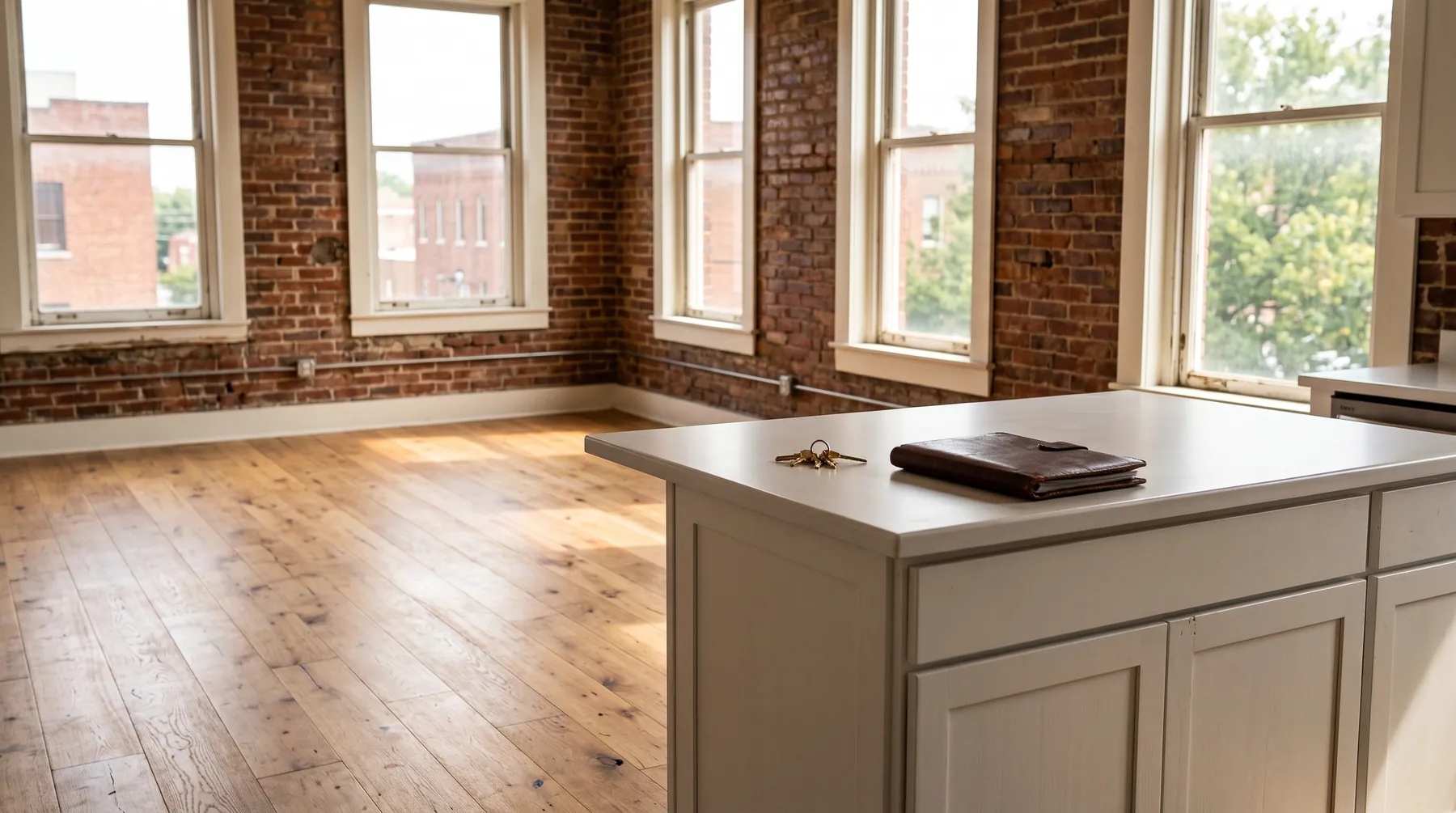
Top image: Illustration of a representative scene, not a specific property.
To keep this page, print it or choose Save as PDF in your browser's print window. The printout keeps the sources and the date.
More investment guides
All 4
Financing Small Multifamily in Tennessee
Financing a four-to-200-unit building starts with a question the loan documents do not answer: what income can the building legally earn after you close? In Nashville, short-term rental permits do not transfer to a buyer, so that question has a specific answer under Metro Code.

Master Lease vs Management Agreement
An owner who wants someone else to run a Nashville building has two basic contracts to pick from: a management agreement, which leaves the owner as operator of record, and a master lease, under which an operator rents the whole building and runs it.

Underwriting a Short-Term Rental Building
Underwriting a short-term rental building means turning a unit count into a revenue line, then taking out everything that sits between the guest's payment and your net operating income.