










Tenplex
At ten units, an owner in the right district faces a real choice: ten separate short-term rental permits, a lodging use that Metro's zoning code calls hotel/motel, or a building of residents. Ten units also sits at the boundary of Metro's newest building types and close to the unit counts that trigger fire alarms.
- Units
- 10
- Design-based building types
- Manor House (6-10), Multiplex and Low-rise Courtyard Flats (10-25)
- Hotel/motel use permitted
- MUL, MUG, MUI, OG, ORI, CL, CS, CA, CF, all DTC subdistricts, SCR
- Standpipes required
- 4 or more stories, or top floor more than 30 feet above fire access (IBC 905.3.1)
- Davidson County homes in 10-19 unit buildings
- 28,811 (ACS 2024 1-year)
- Parcels with 10 to 12 non-owner-occupied STR permits
- 7 (Metro open data, Oct. 18, 2026)
On this page
Where ten units fit
Section 17.08.030 allows multi-family buildings by right in RM zoning, MUN, MUL, MUG, MUI, OR20 through OR40, ORI, CF, the DTC subdistricts and SCR, and with conditions in OG, the CN, CL, CS and CA commercial districts, and the SCN and SCC centers. RS and R districts do not allow them.
In RM zoning the number is the density: ten units on a quarter acre equals 40 an acre and calls for RM40, while on a half acre it equals 20 and RM20 is enough. OR20 and OR40 carry the same 20 and 40 units an acre in their names.
Ten is where Metro's design-based building types overlap; BL2025-1005 adopted them, passing December 4, 2025 and taking effect eight days later. A Manor House holds six to ten units. A Multiplex is a detached building of ten to 25 units, and Low-rise Courtyard Flats are ten to 25 units around a shared court that replaces the rear yard. Multiplex and Courtyard Flats are allowed with conditions only in the RL districts, and all three types are permitted by right in RM districts. In RN and RL zoning, no unit may be rented short-term by an absent owner.
The RL districts also offer a voluntary attainable housing incentive for most building types, including Multiplex and Courtyard Flats. Reserving 10 percent of units for households earning up to 80 percent of the area median, or 5 percent for those at 60 percent or less, earns as many as two more stories, no unit cap and no parking requirement for the income-qualified units. The set-aside units must be built and run to the same standards as the rest.
Ten short-term rental permits
Each dwelling gets its own absent-owner permit under Section 6.28.030; a tenplex unit can hold up to four sleeping rooms and only one booking at once. Such permits exist, with conditions, only in districts our zoning guide lists, and DTC East is not among them. An -NS suffix rules them out.
Ten permits mean ten applications, ten liability policies with limits of at least $1 million an occurrence, ten renewal dates and ten permit numbers on every listing. With Metro's February 2026 FAQ listing $313 a permit, ten cost $3,130 before the 2.3 percent card charge. Three general-provision violations let Metro revoke a tenplex unit's permit after 15 days' written notice, after which the property waits twelve months to reapply. Unpermitted nightly rental of any of the ten units carries a daily fine of $50.
New permits need 100 feet of clearance from any licensed day care, park, school playground, school or place of worship, unless the property wins an exempting Council resolution, which requires 21 Council votes following a public hearing. One hearing and resolution can take in several units of one development when the same owner applies for them at once.
With ten dwellings on site, the Fire Marshal inspects with the not-owner-occupied permit checklist in hand. Each applicant also confirms in writing that no lease and no condominium, co-op or HOA agreement bars renting. Permits cannot be transferred and lapse at a sale, so the buyer starts over; ask Metro Codes how a purchase affects existing permits before closing.
Ten permits or a hotel/motel use
Metro's land use table lists hotel/motel as a separate use, permitted by right in MUL, MUG, MUI, OG, ORI, CL, CS, CA, CF, all five DTC subdistricts and SCR. That list includes DTC East, where absent-owner permits are barred, and omits MUN, OR20 through OR40, CN, SCN and SCC, where they are allowed.
Chapter 6.28 puts duties on hotels too. Under Section 6.28.010, every hotel, rooming house and short-term rental keeps its guest register for six months or more, and a hotel's register must be shown to police when the chief or a deputy chief asks in writing. Section 6.28.040 bars renting a room for less than ten hours or discounting early checkout within ten hours. Section 6.28.050 requires a hotel or motel that takes cash to accept at least one other form of payment and to give receipts.
Whether a ten-unit building can be approved as a hotel/motel use, and what the building code then demands, is for Metro Codes and your architect to answer. A hotel is plainly an ADA place of lodging, and the building code treats occupants staying 30 days or less as transient.
Building and fire code at ten units
The International Building Code, as Title 16 adopts it, classes buildings by length of stay; ask Metro Codes which edition covers your project. A residential building whose occupants are primarily permanent is Group R-2; one whose occupants mostly stay 30 days or less is Group R-1.
A ten-unit R-2 building stays below the 16-unit count that triggers a manual fire alarm, so height decides: a manual alarm is needed once any unit is three-plus stories above the exit level. R-1 buildings need a manual fire alarm unless the building is two stories or lower and every unit, behind one-hour fire partitions, opens directly to the outside. Interior corridors serving R-1 units need automatic smoke detection.
Height adds more. A building of four stories or more, or one whose top floor sits over 30 feet above the lowest fire department access, needs a standpipe under Section 905.3.1. NFPA 13R sprinklers are limited to Group R buildings of four stories or less within set heights; taller buildings need full NFPA 13 sprinklers. Where a building of four stories or more has an elevator, one car at least must take a 24-by-84-inch ambulance stretcher.
Accessibility at ten units
Under 24 CFR 100.201 and 100.205, a tenplex with a first occupancy date after March 13, 1991 is a covered multifamily dwelling. With an elevator, all ten units must meet the design requirements; without one, only the ground-floor units do. The requirements include an accessible entrance and route, accessible common areas, usable doors, kitchens and bathrooms, accessible controls, and reinforcement for grab bars.
New R-1 buildings of up to 25 units need one or more fully Accessible units under the building code. For a new R-2 building with more than 20 units it requires Type A units, so a ten-unit building is under that count.
The ADA counts an inn, hotel or motel as a place of lodging, and also any facility whose guest rooms serve mostly stays of roughly 30 days or less under hotel-like conditions. The regulation names management and booking whether on site or off, rooms for walk-in or call-in guests, housekeeping or linen service, and selling a room type without a promised unit before check-in. A ten-unit building run that way may be covered.
Financing a tenplex
Fannie Mae's Small Mortgage Loan program lends up to $9 million on existing, stabilized properties with five or more units, at up to 80 percent loan-to-value with a minimum 1.25 debt service coverage ratio. Confirm current terms with a Fannie Mae lender, and check that the lender allows short-term rental income in the underwriting.
If you are offered an FHA-insured multifamily loan, read 12 U.S.C. 1731b first. Multifamily housing financed with a National Housing Act insured mortgage may not run for transient or hotel purposes beyond what the statute allows, and any rental under 30 days is transient.
However it rents, a tenplex is taxed by Tennessee as industrial and commercial property, the class for any residence holding two or more rental units.
Running ten units
Ten one-bedroom units can host as many as 60 guests at once, at six per unit under Metro's sleeping-room formula. Each unit posts its own cap and the responsible party's 24-hour number, and bookings need an adult of 21 or older.
Outside the Urban Zoning Overlay, Section 17.20.030 sets multifamily parking at one space per bedroom up to two bedrooms, so ten one-bedroom units need ten spaces and ten two-bedroom units need 20. Section 17.20.040 says no parking is required inside the UZO except as it notes, which makes guest arrival by rideshare part of the plan there.
A manager who lives nearby can handle lockouts, deliveries and noise before neighbors call. Electronic locks on the main door and each unit, a central linen room, and a written turnover checklist per unit keep ten cleanings consistent.
Mixing stays in ten units
A permitted stay lasts between 24 hours and 30 nights in a row. Because every unit is permitted separately, a split such as half nightly and half leased means ten permit decisions, one per unit. Each unpermitted unit risks $50 a day in fines, and its owner waits twelve months for a new permit.
If the building is a hotel/motel use instead, the FHA-insured loan rule and the ADA lodging definition still apply, and Metro Codes decides the zoning and building-code path.
Ten-unit buildings in the Davidson County numbers
According to the 2024 American Community Survey, there are 28,811 housing units in Davidson County buildings that have ten to nineteen units, roughly 7.5 percent of all units, give or take 4,402. About 22,474 of the occupied ones were rented and 1,835 owner-occupied, so this size of building is overwhelmingly rental stock.
Metro's permit data for October 18, 2026 had one parcel with exactly ten issued not-owner-occupied permits, among seven parcels holding ten to twelve.
What Rad Stay handles
Units let by the night, the month or the year all fall within Rad Stay's work, and it helps owners decide which units go where. For a tenplex it keeps permits and taxes current, sets rates, answers guests, schedules cleaners, automates reservations and sets up damage coverage. It also reviews ten-unit buildings before an owner buys, leases or partners on one.
Questions
Do I need ten short-term rental permits for a ten-unit building?
Yes, if every unit operates as a short term rental. Metro Code 6.28.030 permits one dwelling unit at a time, and each listing must show its own permit number.
Can a ten-unit building be run as a hotel instead?
Hotel/motel is a separate use in Metro's zoning table, permitted in MUL, MUG, MUI, OG, ORI, CL, CS, CA, CF, all DTC subdistricts and SCR. Whether a specific building can be approved that way depends on Metro Codes and the building code.
Does a ten-unit building need a fire alarm?
As an R-2 apartment building, only when a unit sits at least three stories above exit level or over a story below it. Yes, as an R-1 short-stay building, unless it is no taller than two stories with an outside door for every unit.
Can I build a ten-unit Multiplex in an RL district for short-term rentals?
Not as nightly rentals run by an absent owner. Chapter 17.38 prohibits them in RN and RL districts. A Multiplex there is a building for residents and stays longer than 30 days.
Does a ten-unit building need sprinklers?
Any new building containing a Group R fire area must be sprinklered under IBC Section 903.2.8. Buildings of four stories or less within the height limits may use NFPA 13R; taller ones need NFPA 13. For an existing building without sprinklers, ask Metro Codes what a change to short-term use requires.
Will an FHA-insured loan allow nightly rentals?
Generally no. 12 U.S.C. 1731b forbids transient or hotel use of multifamily housing with FHA-insured mortgages beyond what the statute allows, and treats any rental under 30 days as transient.
Sources
- Metro Code Chapter 6.28, Sections 6.28.010-6.28.050 (registers, short term rental permits, hourly rental limits, payments), Municode, version of June 23, 2026
- Metro Code of Ordinances, Sections 17.08.010-17.08.030 (land use table), 17.20.030-17.20.040 (parking) and Chapter 17.38, Municode, version of June 23, 2026
- Metro Council Legistar, BL2025-1005, December 4 substitute (Chapter 17.38 building types, Table 17.38.010.B-1 incentive)
- Metro Codes, Not Owner Occupied Short Term Rental checklist (Fire Marshal inspection, lease and HOA statement), Wayback copy of February 16, 2026
- Metro Codes, Short Term Rental frequently asked questions (permit fee), Wayback copy of February 11, 2026
- International Building Code (2024 edition section numbers), Chapters 2, 3, 9, 11 and 30, International Code Council public access; Metro's adopted edition to be confirmed with Metro Codes
- 24 CFR Part 100, Subpart D, Sections 100.201 and 100.205 (Fair Housing Act design and construction rules), Cornell LII
- 28 CFR 36.104, definitions of place of lodging and place of public accommodation (ADA Title III), Cornell LII
- Fannie Mae Multifamily, Small Mortgage Loan Program Term Sheet
- 12 U.S.C. 1731b, transient or hotel use of multifamily housing with FHA-insured mortgages, Cornell LII
- Tenn. Code Ann. 67-5-501, property classification definitions, FindLaw
- U.S. Census Bureau, American Community Survey 2024 1-year estimates, Tables B25024 (Units in Structure) and B25032 (Tenure by Units in Structure), Davidson County
- Metro Nashville Residential Short Term Rental Permits (open data), status Issued, retrieved 2026-10-06 (totals) and 2026-10-18 (permits per parcel)
Checked October 18, 2026.
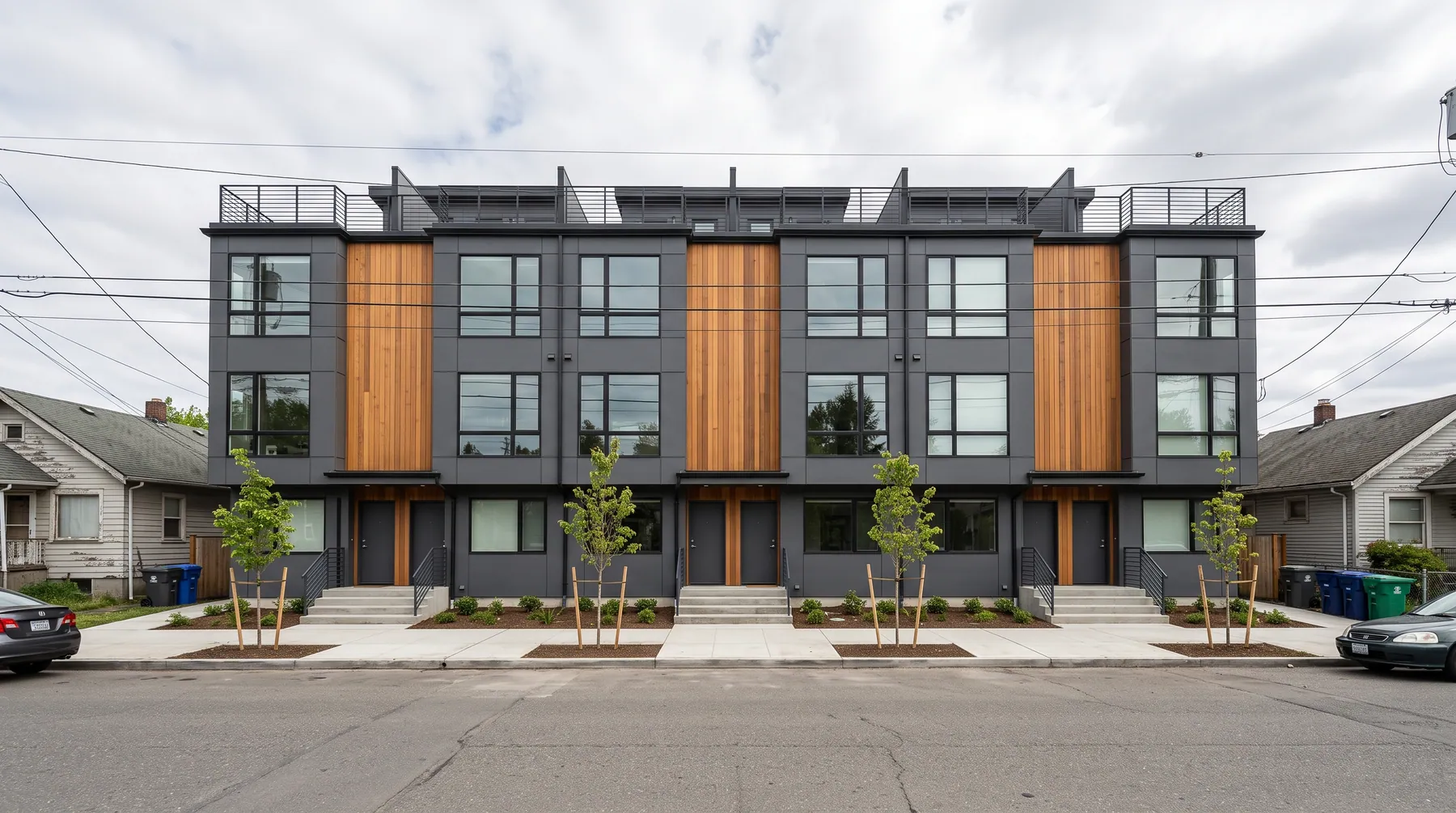
Top image: Illustration of a representative tenplex, not a specific property.
To keep this page, print it or choose Save as PDF in your browser's print window. The printout keeps the sources and the date.
More property types
All 19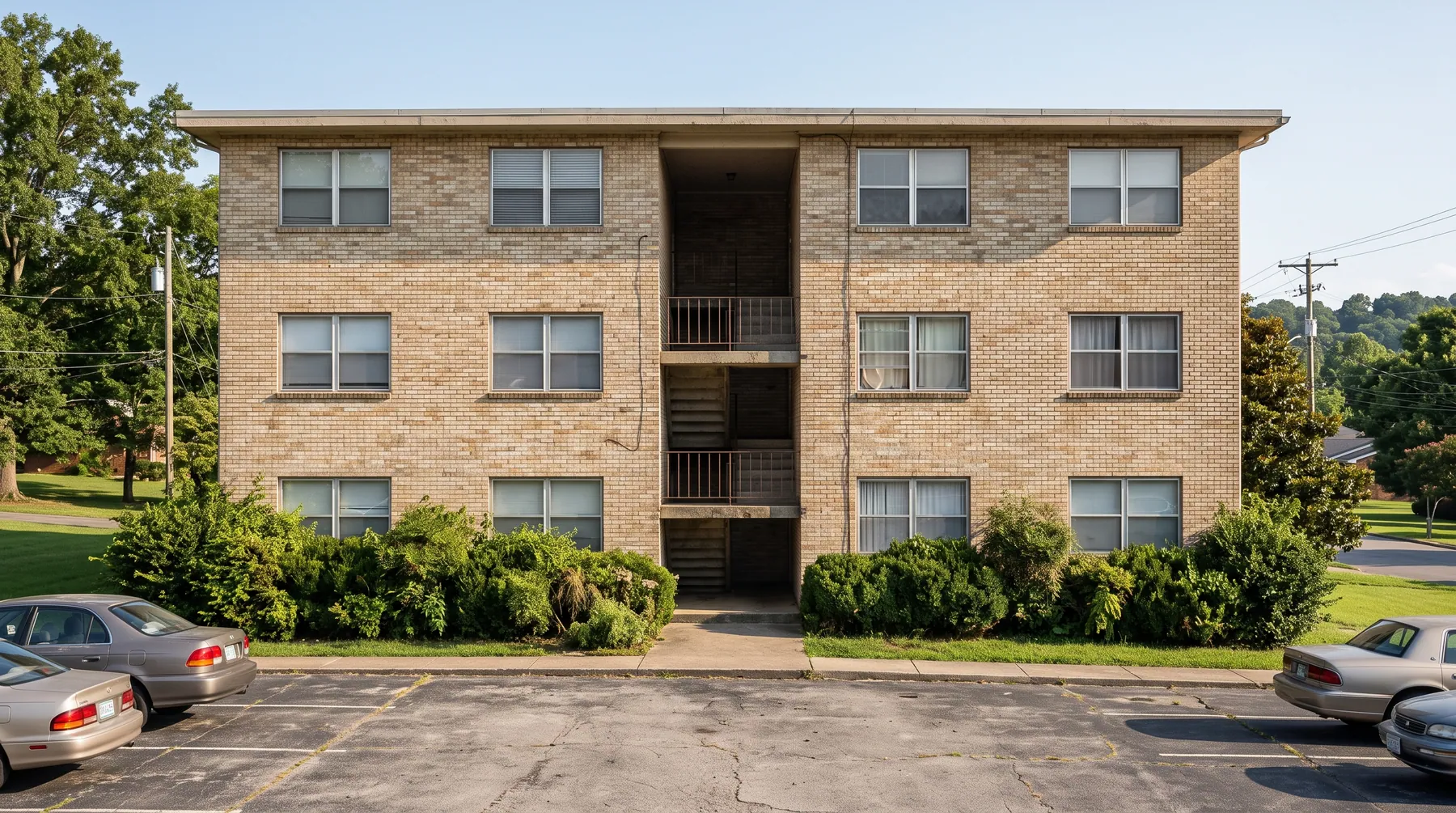
Twelveplex
Twelve units can be three floors of four or two floors of six.
Fourplex
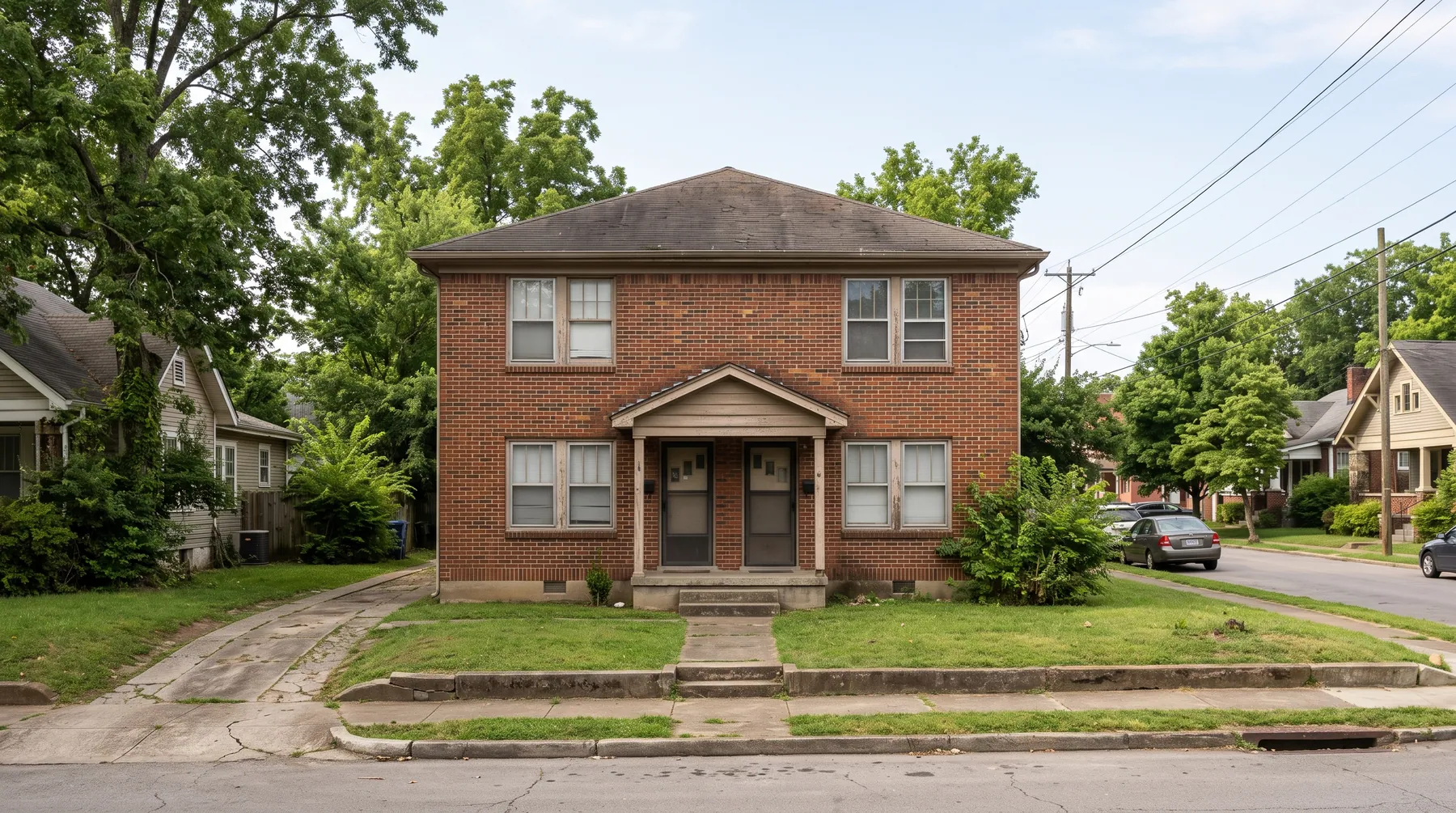
A fourplex is the largest building that still fits the one-to-four-unit loan limits, and it is well past the two-unit line where Nashville's building code stops treating a building as a house.
Historic Lofts
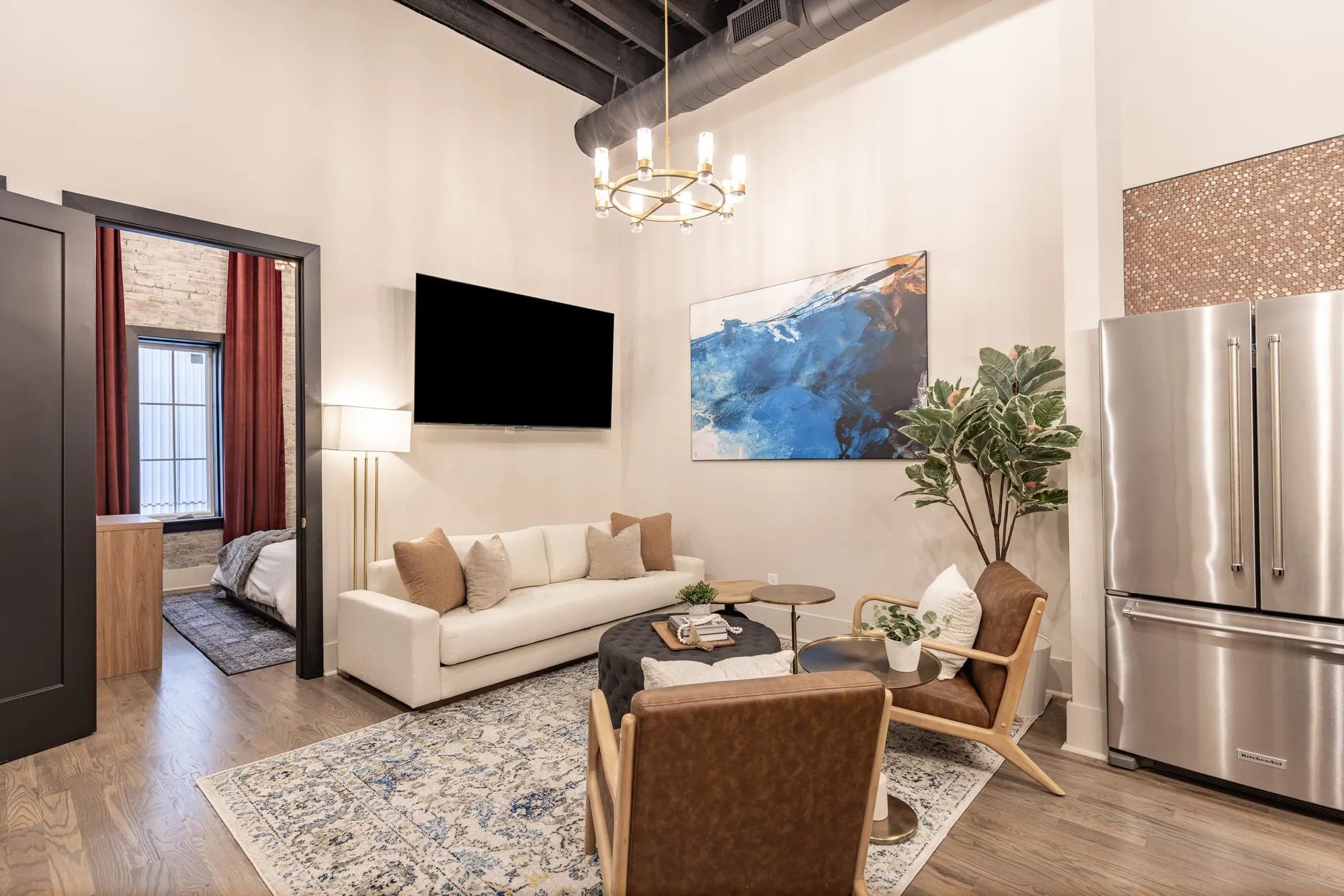
A historic loft building in Nashville is usually an old factory, warehouse, bank or store that now holds homes.