










Lease-Up Buildings
A lease-up building is a new apartment building that is filling its units for the first time. Some owners place a block of those units with a short-term or mid-term operator while the rest sign 12-month leases. Metro's permit rules, the building's zoning and the contract you sign decide whether that works.
- Permit unit
- One non-owner-occupied permit per dwelling unit, up to four sleeping rooms
- Percentage cap on STR units in a building
- None found in Metro Code (checked through June 23, 2026)
- Fire Marshal inspection
- Required for 3+ dwellings on the property
- Maximum guest stay
- 30 consecutive days
- Issued non-owner-occupied permits, ZIP 37203
- 1,617 (retrieved October 6, 2026)
- Checked
- October 19, 2026
On this page
- What a lease-up building is
- Zoning decides whether a block of units can be short-term
- Permits: one per unit, applied for by the building
- The 100-foot rule and why new buildings are different
- Building and fire code, and what we could not confirm
- Fair Housing Act accessibility applies in full
- Taxes on a short-term block
- Operating models for a block of units
- Financing and operations
- What Rad Stay handles
- Questions
- Sources
What a lease-up building is
A lease-up is the period after a new building opens and before most of its units are rented. The owner has a loan to service and a building to fill, and every vacant unit costs money. That pressure is why some owners look at flexible-stay operators for part of the building.
Nashville has several large new towers. Wikipedia's list of the city's tallest buildings shows Modera McGavock in the Gulch (396 units, 29 floors, completed 2025) and Albion Music Row (458 units, 29 floors, completed 2026). Alcove, listed as the tallest for-rent residential building in Tennessee, was completed in 2023. The list does not say how any of them leased up, who operates them or whether they have short-term units, and this page does not claim any do.
One documented example of an early start is the 505 tower at 505 Church Street. Its Wikipedia article says the tower opened to its first tenants on October 1, 2017, before it was completed in January 2018, with 350 apartments and 178 condominiums by Giarratana Development. The article adds that the financing terms did not allow condo sales during construction, so no condo sales were planned at first. Financing terms can limit how a new building is used.
Zoning decides whether a block of units can be short-term
A lease-up building can carry absent-owner short-term permits only if its parcel sits in one of the business, office, mixed-use, shopping-center or downtown districts Section 6.28.030 names; the permits guide linked below has the full list. Residential and farm zoning, the two smaller office districts (ON, OL), the East DTC district and industrial land are all left out.
Many new towers sit on Specific Plan (SP) or Planned Unit Development (PUD) parcels. On a planned site, Metro waits for the SP or PUD text to allow the use. That ordinance is the first document to read, before the pro forma. Council has amended plans for this purpose. Plans get changed for this; in March 2026 BL2026-1268 put one former RM20-A site under a new SP that allows it. An amendment like that needs a Council bill, so build it into the schedule.
Permits: one per unit, applied for by the building
Metro has no multifamily permit type. Each lease-up unit is permitted separately and capped at four sleeping rooms each. Placing 30 units with an operator means 30 applications. Nothing in the code sections we read limits the share of a new building's units that can rent short-term, so the real limits are zoning, the distance rule, and the lease or association documents.
The application must prove written notice went to each adjoining owner, which in a stacked lease-up building includes the neighbors overhead and underneath. It also carries the applicant's statement that renting is permitted under any lease, condominium agreement or association rule. The operator must keep a liability policy whose per-occurrence limit is $1 million or higher, print each listing with its permit number, and renew each permit within 365 days of issue. Metro's February 2026 FAQ lists the fee as $313. Ask Metro Codes what the application and renewal fees are today.
Permits are not transferable. If the building is sold, the permits end and the buyer reapplies. For a lease-up building that is a financing point: a lender or buyer should value the building as if every short-term unit must be permitted again.
The 100-foot rule and why new buildings are different
Distance can kill a lease-up deal as well; before you count on new absent-owner permits, read the 100-foot test and the Council waiver in our permits guide.
The exemption for 2020 projects helps only a building that held a master permit by the September 1, 2020 date or was half built. A building that started later does not have it. Legistar shows how waivers go for large buildings. RS2024-479, a 62-unit request for 160 2nd Avenue North, failed in Council that June 4. RS2024-580, a trimmed request for 55 of them, won on July 2, 2024. Over 30 waiver resolutions from 2023 to 2026 were found, and almost all passed. Build the hearing into the lease-up schedule, because every listing must show a permit number.
Building and fire code, and what we could not confirm
Every lease-up building holds three or more dwellings, so Metro's checklist puts it on the Fire Marshal's inspection list. A house or duplex can file a licensed architect's, home inspector's or engineer's certification instead.
We did not confirm whether the International Building Code treats a block of transient units as a different occupancy group than the apartments around it, which would be R-1 rather than R-2. We also did not confirm what a change of use would trigger for sprinklers, alarms or separations. We are not stating thresholds from memory. A new building comes with its own plans and certificate of occupancy, so before the operator buys furniture, get written answers from the building's architect and the Fire Marshal's office on whether transient units change its classification.
Fair Housing Act accessibility applies in full
Federal design and construction rules reach multifamily dwellings first occupied after the March 13, 1991 cutoff, which takes in every lease-up building. Under 24 CFR 100.205, in a building with an elevator every unit is covered. In a walk-up, the rules reach just the ground floor. They call for an entrance on an accessible route, usable public and common areas, doors a wheelchair fits through, a path a wheelchair can follow into and around each unit, switches and thermostats in reach, grab-bar backing in bathroom walls, and kitchens and baths a wheelchair user can work in.
A new Nashville building is almost certainly covered. For the owner, the practical point is that an operator's furnishing plan must not undo those features: oversized furniture in a kitchen, thresholds, or a bed placed against reinforced bathroom walls can take a covered unit out of compliance. Ask an attorney whether short-term use of covered units adds duties.
Taxes on a short-term block
A short-term block adds tax filings that a 12-month lease does not have. We could not open Metro's tax pages or the Department of Revenue's pages during our check, so this page states no rates or due dates. Confirm today's occupancy and sales tax rates with Metro Finance's Collections Office and the Tennessee revenue department.
In a master lease, decide in writing who files the returns. See the guide on hotel occupancy taxes.
Operating models for a block of units
There are three usual structures. With a management agreement, the units, the leases and the risk stay with the owner, and a manager is paid to handle bookings, guests and cleaning. With a master lease, an operator pays the owner a set rent for the units, furnishes them, and takes the revenue risk. A revenue share sits between the two and splits what the units earn by a written formula. The investment guide compares the first two in detail, and we do not publish fee levels.
Since the permit belongs to whoever applied for it, a master lease on a lease-up building should name who applies and renews, who carries the $1 million policy, who files the taxes and who serves as the responsible party. That person must be based within 25 miles and answer the phone at all hours.
Master leases carry counterparty risk. Wikipedia reports that Sonder, which leased and managed its own rentals and reportedly managed over 9,000 units in more than 40 cities, saw Marriott end its licensing agreement on November 9, 2025, shut down operations on November 10 and file for Chapter 7 liquidation on November 13, 2025. An owner who had put a block of units under a master lease with a single operator would have had to refill them. If you sign one, ask about the operator's financial backing, a termination right, a security deposit and who owns the furniture.
Financing and operations
We did not research lender terms, so we quote no rates, loan covenants or lease-up concession data. Ask your lender before signing anything: whether a short-term block counts as residential income, whether the permits and the operator's insurance must be on file, and whether a master lease needs consent. The 505 example above shows that loan terms can restrict use.
At building scale the work is turnovers. Cleaning has to be scheduled around check-outs and check-ins in many units on the same day, linens and supplies restocked, and each unit inspected. Pricing is set against your own long-term units, so revenue management matters more. Access is part of the guest experience: fobs, garage passes, package rooms, elevator reservations for moves and who may let a guest in. Each unit's own rules still apply: one party at a time, a lead guest who is at least 21, stays from one day to 30, and no more guests than four plus twice the sleeping rooms, with 12 the hard top.
Group short-term units together where the lease allows it, and keep a file on each unit showing its permit number and renewal date. Metro sends renewal reminders at 60 and 45 days. Metro may revoke a permit on 15 days' notice for a third violation of the general rules and refuse a new one for a year, while unpermitted renting brings $50 a day in fines.
What Rad Stay handles
Nashville rentals of every term, nightly through yearly, are managed by Rad Stay. Its flagship, Union Street Lofts, number 329 on the downtown block of Union Street, has four lofts with April 2023 not-owner-occupied permits. We have not run a lease-up building, and we say that first.
For an owner filling a new building, we can check the zoning, the plan documents, the distance rule and the permit schedule, then take on rate setting, guest questions, cleaner bookings, reservation automation, damage coverage, and permit renewals and tax returns. We also review lease-up buildings with owners who want to hold, lease or partner. When short-term is not allowed or not best for a unit, mid-term and long-term are the fallback. This page gives general information and no legal or tax advice.
Questions
Can I put some units in a new Nashville apartment building on Airbnb?
Only in a district that allows new non-owner-occupied permits, or an SP or PUD that allows them, and only after each unit has its own permit. The sections we read contain no percentage cap in a building, but your lease, loan and any association documents may restrict it.
Does the permit transfer to the operator or the buyer?
Under the code a permit cannot be assigned, and it ends when the building changes owners. A master lease must say who holds the permits, and a buyer applies again.
Do I need a Fire Marshal inspection?
Metro's checklist calls for one whenever three or more dwellings share a property. Ask the Fire Marshal and your architect whether transient units change the building's classification.
Do the Fair Housing Act accessibility rules apply to a new building?
Almost certainly. They reach multifamily buildings first lived in after March 13, 1991, and every unit where an elevator serves the building.
What if a unit cannot get a permit?
No guest may stay past the 30th consecutive night. Units that cannot be permitted can be rented on mid-term or 12-month leases, which is why a lease-up plan should not depend on every unit going short-term.
Sources
- Metro Nashville Code Chapter 6.28, Short term rental property permit (Municode, version of June 23, 2026)
- Metro Nashville Code 17.08.030, Land use table (Municode)
- Metro Codes, not-owner-occupied checklist (Wayback copy, February 16, 2026)
- Metro Codes, frequently asked questions (Wayback copy, February 11, 2026)
- Metro Council legislation records (Legistar), RS2024-479, RS2024-580, BL2026-1268
- Metro Nashville Residential Short Term Rental Permits (open data), status Issued, retrieved October 6, 2026
- 24 CFR 100.205, Design and construction requirements (Cornell Legal Information Institute)
- Wikipedia, List of tallest buildings in Nashville
- Wikipedia, 505 (Nashville)
- Wikipedia, Sonder Holdings
Checked October 18, 2026.
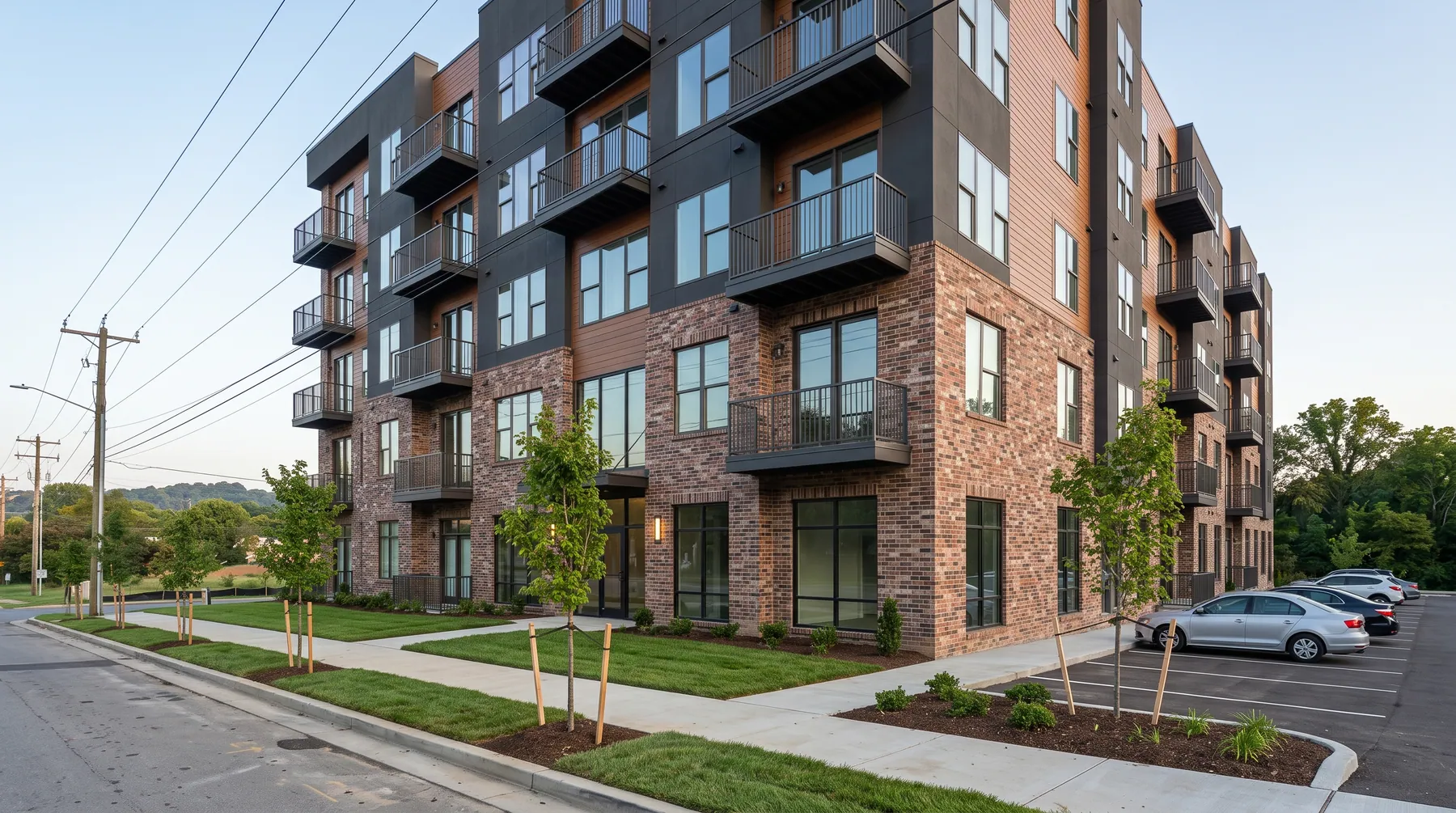
Top image: Illustration of a representative building, not a specific property.
To keep this page, print it or choose Save as PDF in your browser's print window. The printout keeps the sources and the date.
More property types
All 19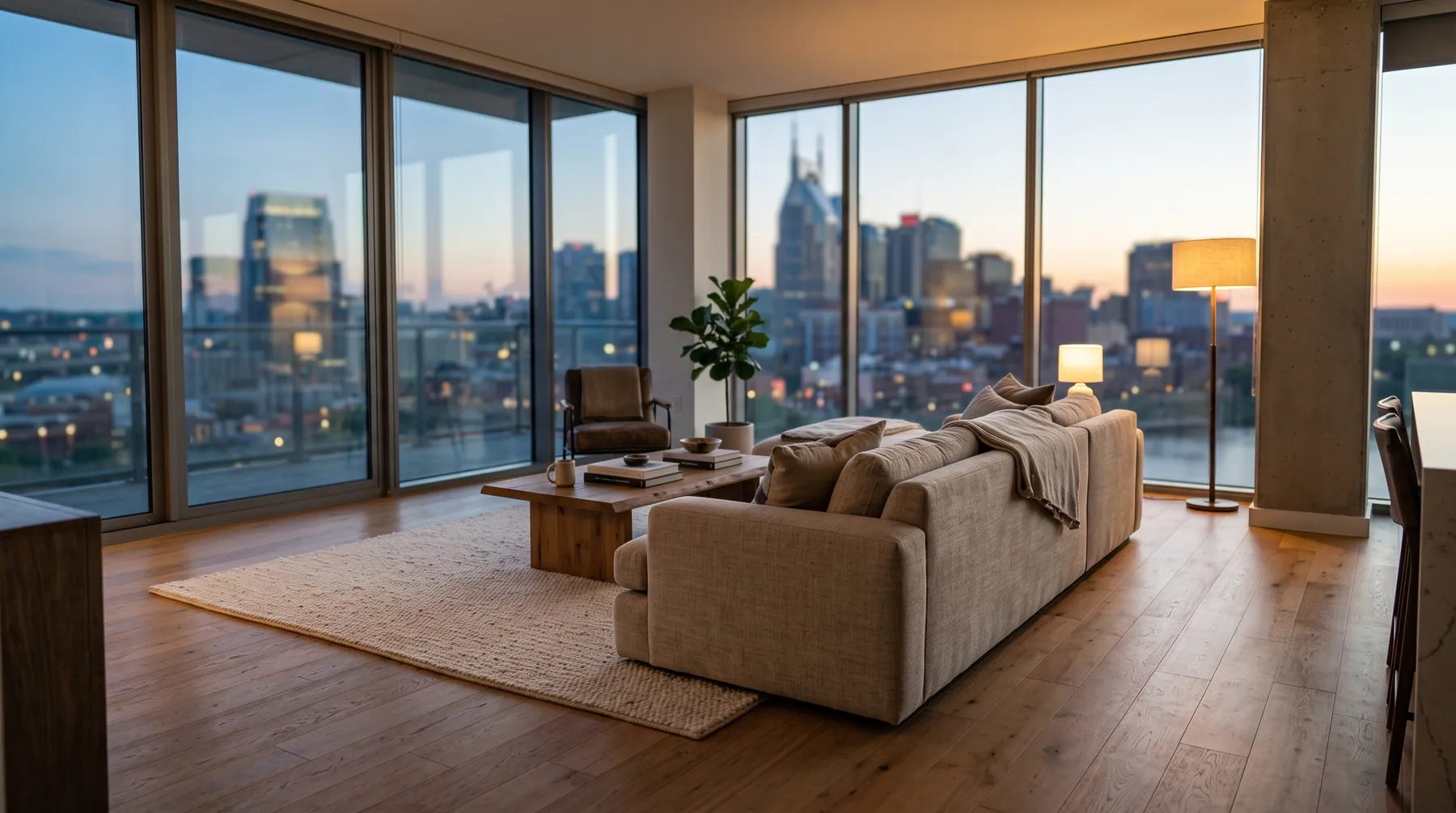
Luxury Apartment and Condo Units
A unit in a Nashville tower is owned or leased one apartment at a time, inside a building whose rules you did not write.
Mid-Size Apartment Buildings
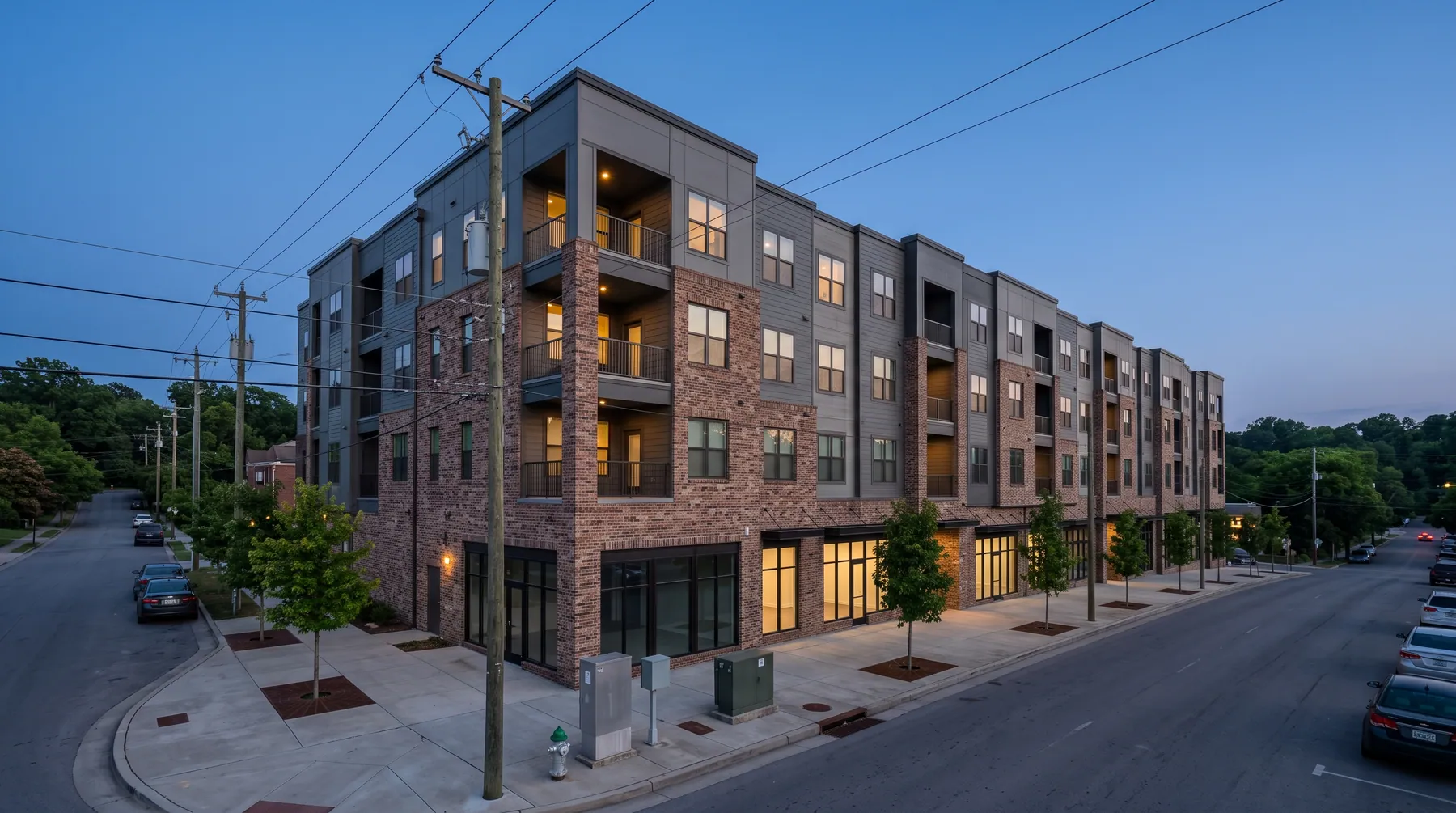
A building of 50 to 200 units is big enough to need a real operating plan and small enough that one owner or one small fund can still make the call.
Mixed-Use Buildings
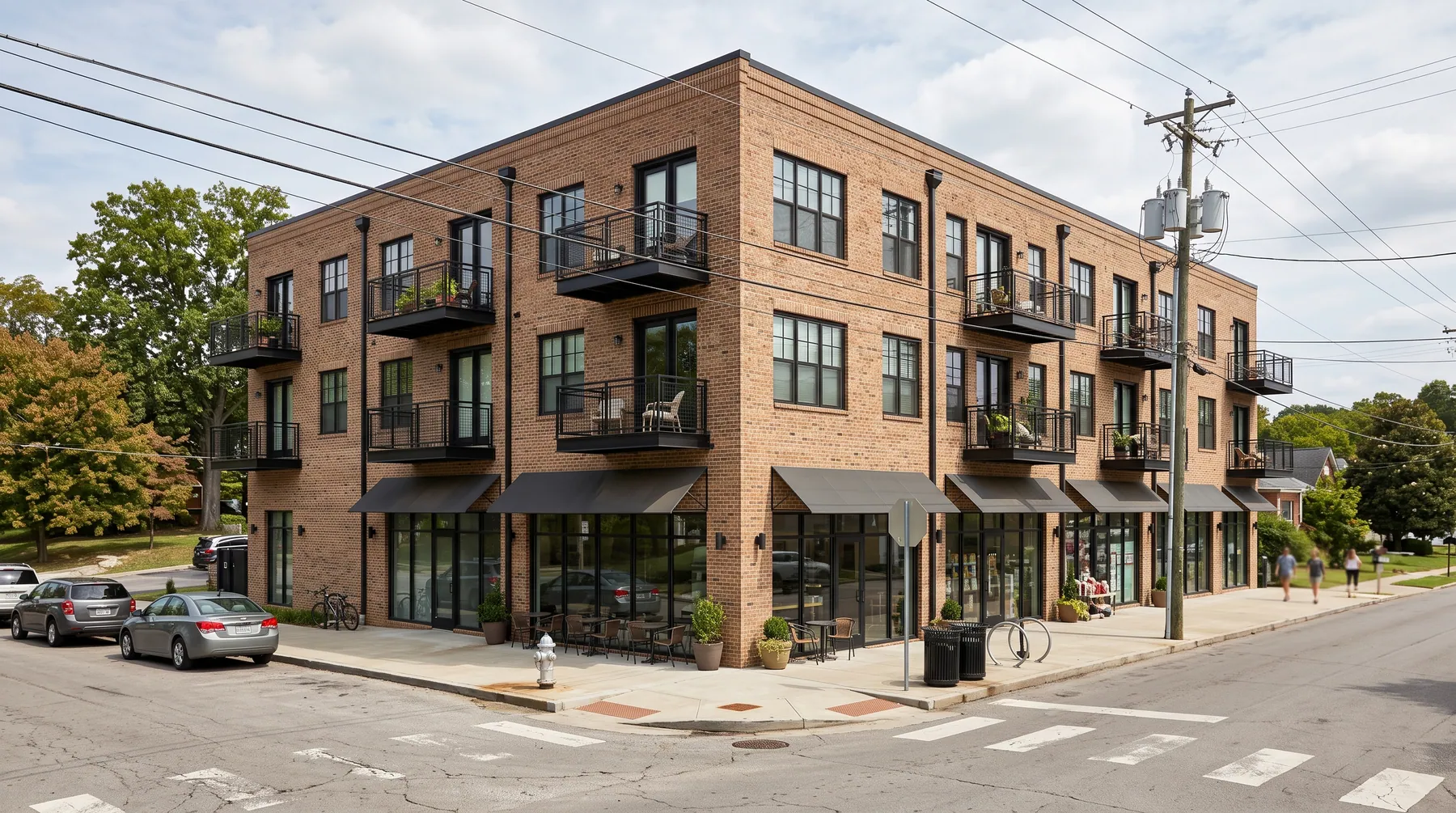
A mixed-use building has a business on the ground floor and homes above it.