










Music Row
Music Row is the studio, label and publishing district around 16th and 17th avenues south, southwest of downtown Nashville. It mixes old low-rise music buildings, houses, new apartment towers and office zoning, and that mix limits what an owner can do with a building. This page covers the zoning, the permit numbers and the buildings that matter to an owner of 4 to 200 units.
- ZIP codes
- 37203 and 37212
- Core streets
- 16th and 17th Avenues South (Music Square East and West)
- Zoning to know
- ORI, OR20 through OR40-A and OG (STR-eligible office districts); residential districts are not
- Issued STR permits, ZIP 37203
- 1,706 (89 owner-occupied, 1,617 non-owner-occupied), Oct. 6, 2026
- Issued STR permits, ZIP 37212
- 461 (104 owner-occupied, 357 non-owner-occupied), Oct. 6, 2026
- Newest tower
- Albion Music Row, 29 stories, 458 apartments, fully open by July 2026
On this page
- Where Music Row is
- ZIP codes and boundaries
- How the district developed
- RCA Studio B and the studios that remain
- Preservation fights and what they changed
- Buildings and housing today
- Zoning districts present and what they mean for STR permits
- The 100-foot rule and building checks
- Permits issued in 37203 and 37212
- Who visits and why
- Longer stays on Music Row
- Development 2023 to 2026
- Getting around
- Building types that fit
- Checks before buying on the Row
- Rad Stay on a Music Row building
- Questions
- Sources
Where Music Row is
The neighborhood sits southwest of downtown Nashville in Davidson County. Wikipedia describes it as centered on 16th and 17th Avenues South, which carry the names Music Square East and Music Square West inside the district, plus several side streets. The article gives a center point of about 36.148 north, 86.793 west.
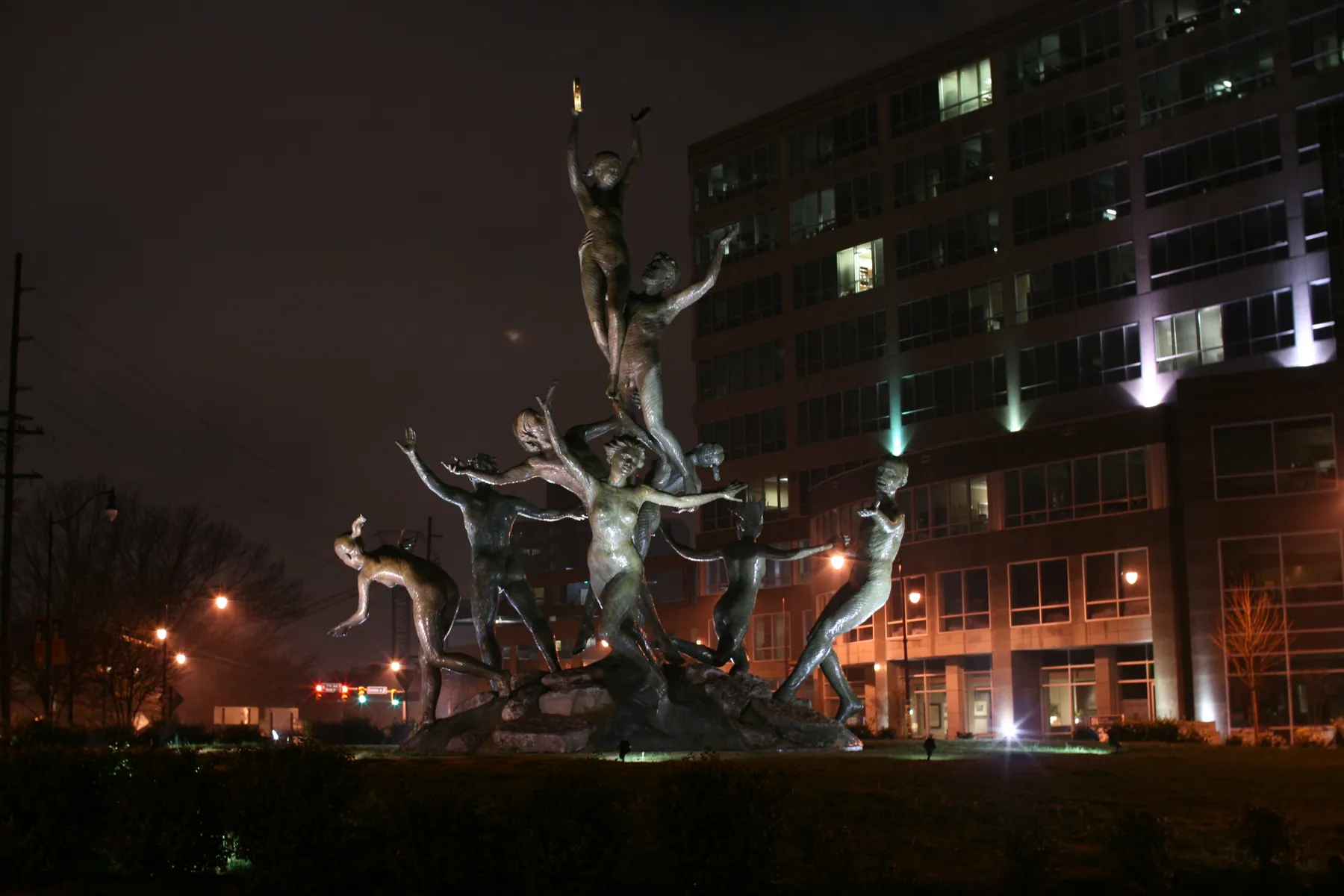
The Music Row Roundabout is the district's best-known landmark. It sits where Demonbreun Street, Division Street, 16th Avenue South and Music Square East meet, and it holds the Musica sculpture. A small park beside it, Owen Bradley Park, has a life-size bronze of Owen Bradley seated at a piano.
Belmont University, home of the Mike Curb College of Entertainment and Music Business, lies just south across Wedgewood Avenue. Wikipedia also places Vanderbilt University next to the area. Those two campuses explain a lot of the daytime and academic-calendar traffic you will see here.
ZIP codes and boundaries
Music Row has no single ZIP code. Wikipedia gives 37212 for the district, while Metro's records put Music Row rental addresses in both 37203 and 37212. Each ZIP is larger than the Row, so any permit count for these ZIPs describes a wide area, not just the studios.
If you are comparing two buildings, check each parcel's ZIP, zoning district and any overlay separately instead of relying on the name 'Music Row' in a listing.
How the district developed
The district began in 1954, when the first commercially successful recording studios and music offices opened along 16th Avenue South. By the early 1960s national labels were cutting a big share of their country records in Row studios, and by the late 1960s RCA Victor, Decca and Columbia held most of their country sessions there. From the 1970s through the 1990s the district grew into a dense center for recording, publishing, management and artist services.
RCA Studio B opened in 1957 and recorded more than 47,000 songs. The Hall of Fame runs daily scheduled tours of it, and the studio joined the National Register in 2012.
The CMA opened its $750,000 headquarters in 1967 in a modernist building on Music Square East at Division, which housed the Hall of Fame too from April 1967 until December 2000. The museum moved to a downtown building in May 2001, and the old building has since been torn down.
Demonbreun Street had its own stretch of history. Wikipedia says the strip once held down-market tourist attractions and vanity museums that disappeared in the late 1990s, and that it was later redeveloped with upscale restaurants and bars.
For an owner this history explains the building stock. Much of the Row is small, low-rise, built for offices or studios, and sits on lots that developers have found attractive for something taller.
RCA Studio B and the studios that remain
Wikipedia traces RCA Victor's Nashville start to 1954, when it opened a recording facility in a building at 1525 McGavock Street. The company then moved to a purpose-built studio. Dan Maddox built it at 1611 Hawkins Street, now Roy Acuff Place, finished it in November 1957 for $37,515 and leased it to RCA for twenty years. The cinderblock building has a studio room of 40.5 by 26.25 feet with a 13-foot ceiling.
Wikipedia says the studio produced 60 percent of the Billboard country chart hits between 1957 and 1977. Elvis Presley's first RCA Victor session there is credited with "Heartbreak Hotel," and in October 1967 Dolly Parton drove her Chevrolet through the building's side wall while rushing to her first session. Recording stopped in 1977, and the studio went to the Hall of Fame for tours. Dan Maddox donated it to the Hall in 1992, and the article also says the Mike Curb Family Foundation bought it in 2002 and leased it to the Hall for $1 a year, so the ownership history needs a check before you quote it. From 2001 to 2011 Belmont University's Mike Curb College co-operated the studio for analog recording classes.
The district has also been a subject for songwriters. Wikipedia lists Dolly Parton's 1973 song "Down on Music Row" and the 1999 song "Murder on Music Row," later recorded by George Strait and Alan Jackson. In October 2017 the RCA Studio A signs returned to the building after nearly 50 years, according to the same article.
For an owner, this is a working district where reuse and demolition sit side by side. The studios that remain are often small commercial buildings on lots that developers want, which is the pressure the next section describes.
Preservation fights and what they changed
Wikipedia notes that the entire Music Row district was submitted for historic recognition in May 2016, and that in October 2017 the RCA Studio A signs came back.
Redevelopment pressure shaped the district in the 2010s. On May 30, 2019, the National Trust named Music Row one of America's 11 Most Endangered Historic Places. The Trust counted 50 demolitions on Music Row since 2013 and said 64 percent of them were for new development permitted through Specific Plan rezonings. It also reported that RCA Studio A was narrowly saved from demolition.
The Trust recommended that Metro end Specific Plan exemptions that encourage demolitions, remove proposed height increases anywhere in the Music Row area and designate Music Row a Cultural Industry District. In 2018 WPLN reported that transfer of development rights was under discussion, so owners of historic properties could sell unused height to developers in Midtown and the northern end of the Row. The same report said the 2016 Music Row guidelines had set heights of three stories at the south end near Belmont, five stories for most of what the plan called the Music Row Village, eight stories (up to 12) toward the north, and 20 or more stories near the roundabout.
I did not open the current Metro Planning plan text for this page, so it does not state what is allowed by block. If you are buying here, ask Metro Planning which plan and height limits apply to your parcel.
Buildings and housing today
Music Row is not a neighborhood of one building type. Three kinds of property sit within a few blocks of each other: low-rise studios and offices from the district's first decades, houses and small residential buildings on the edges, and new mid-rise and high-rise apartment buildings toward Midtown and the Gulch.
The studio-and-office buildings are the ones owners ask about. A recent example is 1033 16th Avenue South, long known as Emerald Sound Studio and more recently Benchmark Sound. It is a five-story, 8,560-square-foot building with three studios, songwriting rooms and a 17-space parking lot with a bus pad, on about 0.32 acres. It was listed in June 2025 at $4.65 million and, according to Hoodline, sold around February 25, 2026 for about $3.85 million to TMEC Nashville, Inc. Hoodline reports that the building dates to the early 1980s, when producer-songwriter David Malloy and Even Stevens commissioned it from studio architect Tom Hidley. Artists it documents as recording there include Johnny Cash, Eddie Rabbitt, Faith Hill, George Strait and Bon Jovi. The listing said the building would be delivered empty as tenant leases expired. Historic Nashville put it on its 2025 Nashville Nine list of endangered properties, announced December 15, 2025, and described it as part of the "creative heart of Music Row." The buyer's plans are not public, including whether Benchmark Sound will keep operating there. Avison Young represented the seller and French King Fine Properties represented the buyer, according to the same report.
That sale shows what a Music Row building can be worth to an investor, and it shows the uncertainty. A five-story studio with a parking lot has few comparable sales on the Row, and what it can become depends on its zoning, covered next.
Zoning districts present and what they mean for STR permits
Zoning decides the permit. Section 6.28.030 opens new absent-owner permits, with conditions, only in districts it lists, and the office districts common on the Row, ORI and OR20 through OR40-A, are among them; residential, industrial and DTC East parcels are not. Our zoning guide lists every district.
One district that appears on Music Row is ORI. Hoodline says 1033 16th Avenue South is zoned ORI, Office/Residential Intensive, a district it describes as allowing higher-intensity office or multifamily projects. That describes the district, not any one building, so check the zoning in the parcel viewer and find out whether the parcel sits under an SP or PUD, whose plan must allow the use.
Specific Plan and PUD parcels follow their own documents. Metro has amended some plans to permit not-owner-occupied rentals, and many Music Row parcels were rezoned through Specific Plans, so read the plan, not just the base district.
Residential lots on the edges of the Row are different.
A building with several dwellings is not capped.
- Eligible base districts on or near the Row include ORI, OG and OR20 through OR40-A (confirm per parcel).
- Residential districts (R, RS, RM, AR2a) allow no new not-owner-occupied permits.
- Specific Plan and PUD parcels: only if the plan says so.
- NS-suffix districts prohibit both permit types.
The 100-foot rule and building checks
Then the distance test, which a nearby park, church, school or licensed day care can fail unless Council grants a waiver. Metro measures parcel line to parcel line.
Owen Bradley Park, beside the roundabout, counts, and so does any nearby church, school or day care. Measure every parcel before you underwrite, because a clean zoning district does not clear the distance rule.
Every applicant attests that renting breaks no lease and no association agreement. In a Music Row condo building, read the declaration first.
Permits issued in 37203 and 37212
Metro's open data counts issued permits by ZIP code. I retrieved the layer on October 6, 2026. On October 6, 2026, 37203 had 1,706, all but 89 of them for absent owners. ZIP 37212 had 461, of which 104 were owner-occupied and 357 were non-owner-occupied. Metro-wide the layer showed 7,022 issued permits, so these two ZIPs together hold about 31 percent of them.
The split tells you about the building stock. That 95 percent share fits a ZIP of apartment and condo buildings on commercial and mixed-use land. In 37212, 77 percent are non-owner-occupied, a ratio that leans toward the investor-owned condos and townhomes near Midtown but includes more owner-occupied rentals than 37203.
These counts include the whole ZIP and not just Music Row. They also count permit records with an Issued status on the retrieval date, so they are not a count of units that are currently listed or booked. The 1,706 figure should not be read as market saturation on the Row itself.
A permit lasts a year and is not transferable; a sale ends it, and so does a transfer into or out of an LLC. Price a building with an existing permit as if the permit may not survive the sale.
Renewal reminders come by email two months and six weeks ahead. Repeat violations can cost a permit for a year, and renting without one costs $50 a day. Each unit in a building carries its own permit record, so a manager needs a calendar for every unit, not one for the building.
A permit is also tied to the person or company that holds it. Metro's materials say a permit-holding LLC may swap members, but the permit ends when the property changes owners. Ask your attorney how that applies to a purchase structure, and confirm with Metro Codes.
Who visits and why
The reasons to stay here are tied to the music business. RCA Studio B tours run through the Hall of Fame. Wikipedia describes the district as full of labels, publishers, licensing firms and studios, which means a stream of visiting writers, artists, engineers and executives who want a base near a session or a meeting. Belmont's entertainment and music business college and Vanderbilt's campus bring parents, prospective students, visiting professors and performers.
Visitor counts, occupancy and event calendars for the Row were not confirmed, so none appear here. If you need demand numbers for a specific building, ask a manager for that building's reports instead of using a district average.
Longer stays on Music Row
A district built around studios and offices can draw guests who stay longer than a weekend, such as people on a recording project or a work assignment. A mid-term furnished stay avoids the 30-consecutive-day limit that Metro puts on any guest of a short-term rental permit. Thirty nights is the most a permitted stay can run; anything longer is a lease.
For rent levels, the one dated figure I confirmed is for Albion Music Row, where a July 2026 trade report, citing Apartments.com, says monthly rates start at $1,679 across studio to three-bedroom units, with sizes from 357 to 1,815 square feet. That is a starting asking rent for one new tower, not an average for the Row. Do not use it as a rent for an older building, and ask for a dated rent roll or broker comps on any building you are evaluating.
Likely long-term renters are people who work at the district's offices and studios or at the nearby campuses. No published employer count or renter survey for Music Row turned up, so that describes the setting rather than measured demand.
Development 2023 to 2026
The largest new project is Albion Music Row, developed by Albion Residential on the former Beaman auto dealership property in Midtown. A trade report dated July 20, 2026 describes a 29-story, 458-apartment tower designed by Hartshorne Plunkard Architecture, with Clark Construction as builder. Vertical construction began in December 2024, move-ins started in spring 2026, and the building was originally expected in fall 2026 but is now fully open.
The project team named in the report also includes Barge Civil Associates, Hodgson Douglas and I.C. Thomasson. It offers studios and one-, two- and three-bedroom units, a pool, a gym, laundry, a podcast studio, a clubhouse, a rooftop terrace and coworking, plus 4,000 square feet set aside for a street-level restaurant. Albion says it is considering a 2027 start for a second tower. A second tower would add to the apartment supply in the same submarket, which matters if you plan to run furnished mid-term units nearby.
In February 2026 the Emerald Sound building at 1033 16th Avenue South changed hands for about $3.85 million, down from a June 2025 asking price of $4.65 million, and the buyer's plans are unknown. The first Hall of Fame building on Music Square East came down after the museum moved downtown in 2001, so the district has lost big buildings before. The earlier preservation record is relevant context: from 2013 to 2019 the National Trust counted 50 demolitions on the Row, and the Studio A building was nearly lost. Expect any redevelopment proposal for a Music Row studio to draw scrutiny from preservation groups.
Getting around
RCA Studio B stands at 1611 Roy Acuff Place. Drive times and walking routes were not confirmed, so none are given.
I did not confirm WeGo route numbers that serve 16th and 17th Avenues South, the distance to Nashville International Airport, or parking rules for the Row, so this page does not state them. Check WeGo's current route map and Metro's parking rules for the block before you advertise transit or parking in a listing. Parking matters more than usual here, because the older studio lots are small, as the 17-space lot at 1033 16th Avenue South shows.
Building types that fit
The mix of office zoning, aging low-rise buildings and new towers points to a few property types. A small apartment building or converted office on an ORI parcel can suit nightly or monthly use if it clears the distance test. A mixed-use building with commercial space on the ground floor suits the corridor character of the Row. A historic low-rise has the most upside and the most friction, because of the preservation interest in the district. A new tower such as Albion is marketed as apartments with monthly rates, so it is a long-term comparison and not a short-term one.
Small residential-zoned buildings at the Row's edges are harder, since new absent-owner permits are not available to them, so they run on monthly or yearly leases.
Checks before buying on the Row
Start with the parcel: base zoning, any SP or PUD, any overlay, and its distance to churches, schools, parks and day cares. Ask Metro Planning whether a historic or conservation overlay covers it. Chapter 17.36, as of June 23, 2026, set no overlay rule for short-term rentals. Confirm with Metro Codes.
Then check flood exposure, noise and bylaws. Flood status for Row parcels was not confirmed, so check the FEMA map for the address. Noise is a real operating issue in a district with recording studios, offices, bars and construction. In a condo building, read the declaration first.
Plan for the paperwork too: neighbor notice, the liability policy, permit numbers in listings and the $313 fee in Metro's February 2026 FAQ. None of this is legal or tax advice; check current rules with Metro Codes first.
Rad Stay on a Music Row building
Rad Stay can mix nightly, monthly and yearly units in one Row building. The permit rules above shape the work: a 24-hour responsible party, adjacent-owner notices, posted occupancy limits and a clean record on noise complaints.
It also reviews Row buildings for sale, lease or partnership. For a building on the Row, start with the parcel check above, then sort which units fit nightly guests and which suit furnished monthly stays.
Questions
Which ZIP code is Music Row in?
Wikipedia lists 37212, and Metro's permit records show STR addresses in both 37203 and 37212. Check the ZIP of the specific property.
Can I get a non-owner-occupied STR permit on Music Row?
Only if Metro's list includes the zoning, as it does ORI, OG and OR20 through OR40-A, and the lot passes the 100-foot test. Specific Plan and PUD parcels follow their own plan. Residential lots get no new non-owner-occupied permits.
How many permits does Metro show for the Row's ZIP codes?
On October 6, 2026, 37203 had 1,706 and 37212 had 461. Both ZIPs cover more than Music Row.
Is there new apartment supply on Music Row?
Yes. Albion Music Row, a 29-story tower with 458 apartments, was reported fully open in July 2026, with a second tower under consideration for a 2027 start.
Sources
- Music Row, Wikipedia
- RCA Studio B, Wikipedia
- Nashville's Music Row named one of America's 11 Most Endangered Historic Places, National Trust for Historic Preservation, May 30, 2019
- After delays, Nashville pursues ideas to preserve Music Row, WPLN, Sept. 27, 2018
- Albion delivers 458-unit residential community in Midtown Nashville, REBusiness, July 20, 2026
- Storied Music Row studio snapped up in quiet multi-million sale, Hoodline, March 2026 (also the source for the ORI zoning and building details)
- Metro Code chapter 6.28, Short term rental property permit (Municode, current through June 23, 2026)
- Metro Nashville Residential Short Term Rental Permits (open data), status Issued, retrieved Oct. 6, 2026
- Metro Codes: Permit types, short term rentals (Wayback copy, Feb. 17, 2026)
- Metro Codes: Apply for a short term rental property permit (Wayback copy, Aug. 22, 2026)
- Metro Codes: Not-owner-occupied checklist (Wayback copy, Feb. 16, 2026)
- Metro Codes: Short term rental FAQ (Wayback copy, Feb. 11, 2026)
- Metro Codes: Renew a short term rental property permit (Wayback copy, Oct. 12, 2026)
- Metro Codes: Operation requirements (Wayback copy, Feb. 12, 2026)
Checked October 18, 2026.
Photo: WV-Mike, CC BY-SA 4.0, via Wikimedia Commons. Cropped.
To keep this page, print it or choose Save as PDF in your browser's print window. The printout keeps the sources and the date.
More markets
All 28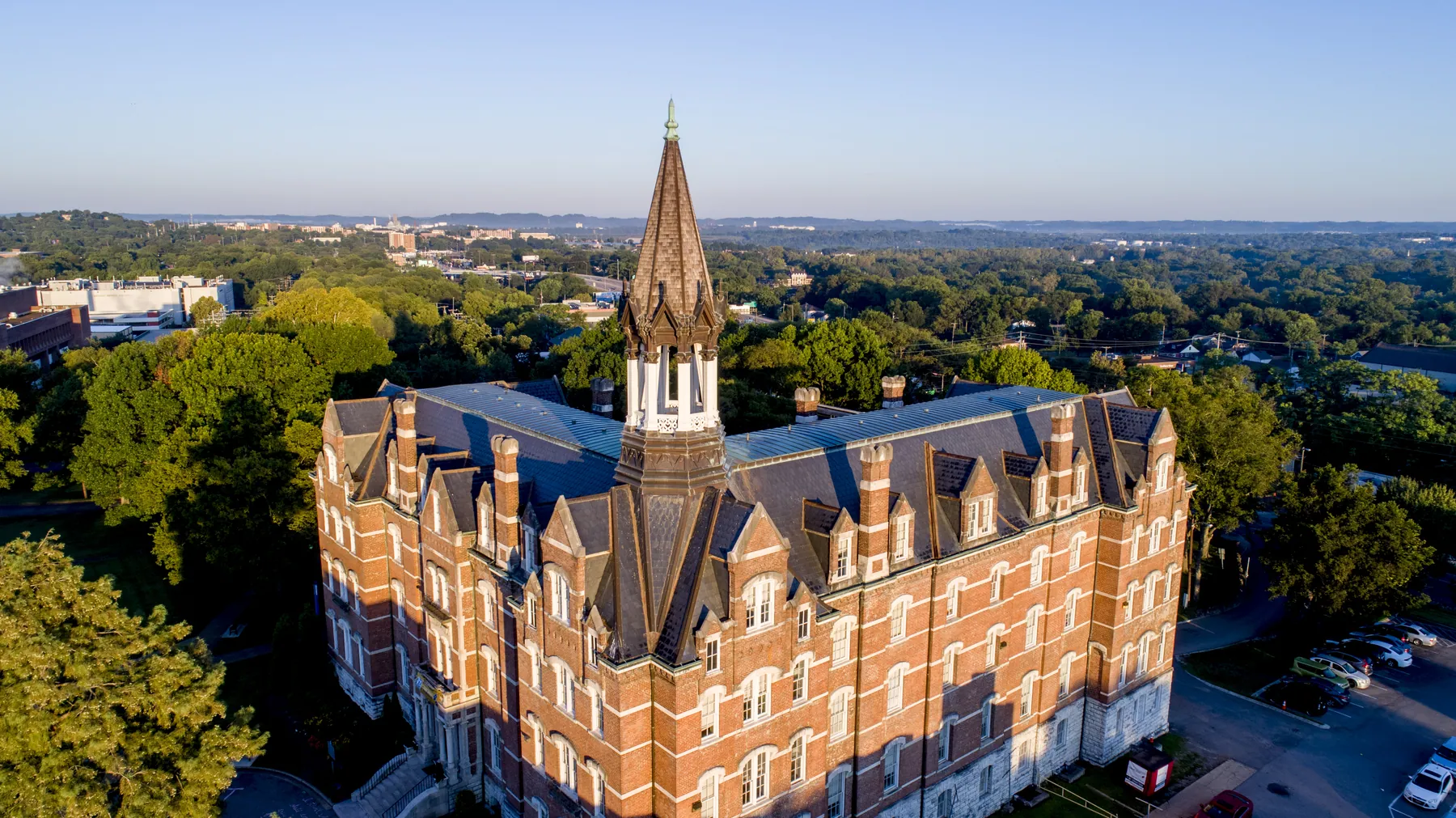
North Nashville
North Nashville is the part of Nashville north and west of downtown that holds Fisk University, Meharry Medical College and Tennessee State University, along with Jefferson Street, long the center of Black Nashville.
Printers Alley
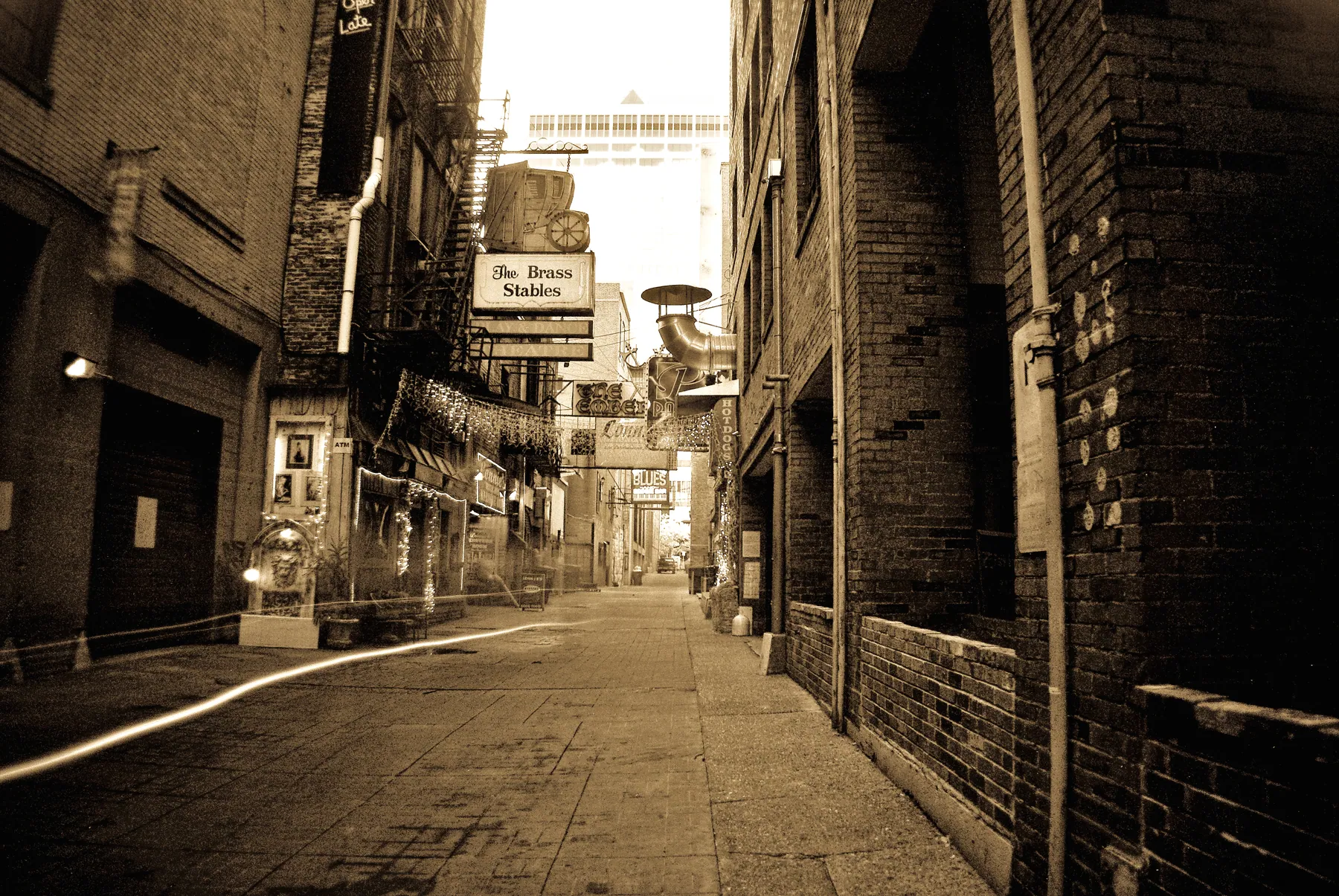
Printers Alley is a short alley in downtown Nashville between Union and Church Streets, and the blocks around it hold hotels, nightclubs, old printing-trade buildings and upper-floor lofts.
Rutledge Hill
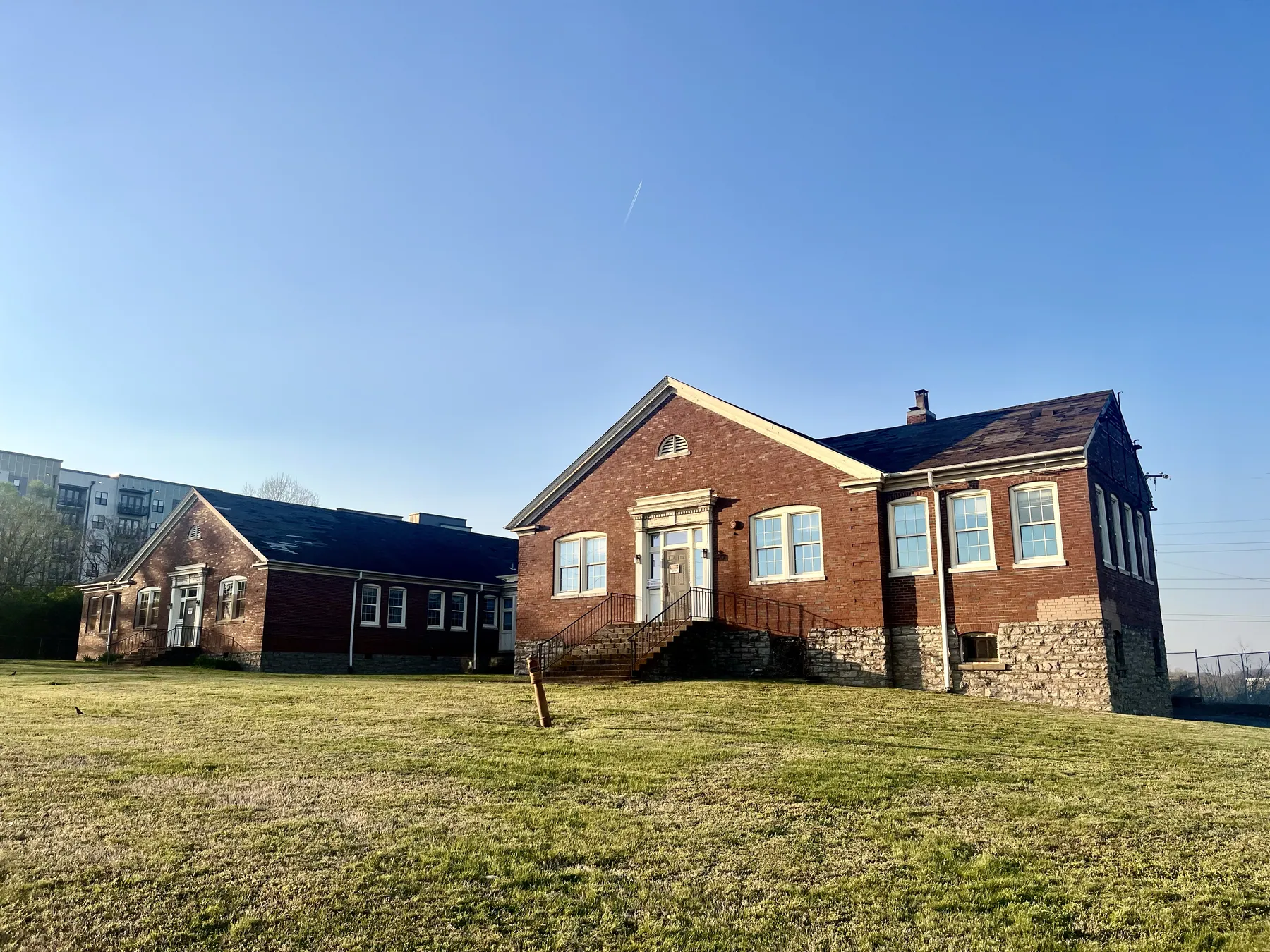
Rutledge Hill sits just southeast of downtown Nashville, and Rolling Mill Hill, the former Nashville General Hospital site, is next to it.