
Salemtown
Salemtown is a small neighborhood just north of Germantown and downtown, built around the cotton and bag mills and now a mix of restored houses, townhomes and apartment buildings. For someone with a bigger building the first question is zoning: most lots here are residential, and on residential zoning Metro grants no new permits for apartments rented by an owner living elsewhere. The second is the conservation overlay that covers part of the neighborhood.
- ZIP code
- 37208
- Issued STR permits, ZIP 37208 (Oct. 6, 2026)
- 726: 198 owner-occupied, 528 non-owner-occupied
- Overlay
- Neighborhood conservation zoning, approved by Metro Council in 2013 (about four and a half blocks)
- Park
- Morgan Park, Hume Street and Fifth Avenue North
- Neighborhood association
- Salemtown Neighbors, established 2005
- New not-owner-occupied permits
- Only in the districts listed in Metro Code 6.28.030.B.1; not in R, RS, RM or AR2a
On this page
- Where Salemtown is
- How the building stock developed
- Buildings and housing today
- Walking the neighborhood
- Zoning and the conservation overlay
- The overlay boundaries and review
- Salemtown zoning and short-term permits
- Rules that apply once you hold a permit
- How the rules changed
- Issued permits in ZIP 37208
- Prices and buyers
- Who visits and why
- Longer stays in Salemtown
- Development to watch
- Parking
- Which building types fit
- Checks before a Salemtown purchase
- Rad Stay on a Salemtown building
- Questions
- Sources
Where Salemtown is
Salemtown sits just north of Germantown and downtown Nashville. Its center is Morgan Park, on the block at Hume Street and Fifth Avenue North. The neighborhood association describes it as a historic neighborhood just north of Germantown and downtown, and it does not publish street boundaries on its about page.
A 2013 Tennessean article reposted by Aerial Development Group gave the limits as Hume Street to Dominican Drive, at the edge of MetroCenter, with Rosa L. Parks Boulevard to the west and the river to the east. Check the parcel on Metro's map rather than trusting the neighborhood name in an ad.
Salemtown's ZIP is 37208, an area larger than Salemtown, which matters when you read permit counts (see below).
How the building stock developed
Salemtown grew up around mills. The Nashville Scene's 2021 walk of the neighborhood says Samuel Dodd Morgan founded the Warioto Cotton Mills and the Morgan-Hamilton Bag Co., later Werthan Mills. Many mill workers came from DeKalb County, about 60 miles east, and the area was first known as Kalb Hollow.
In 1909 the Nashville Park Board bought Frederick Laitenberger's beer garden, which filled the whole block at Hume Street and Fifth Avenue, and made it a park for the mill workers. The Scene says a fountain in the park commemorates a sulphur spring that is now buried. A group of Methodist women opened a settlement house for the new workforce, which later merged with other Methodist projects into the Bethlehem Centers of Nashville.
Fehr School was built in 1924. Salemtown Neighbors says that on September 9, 1957, it admitted four African American first graders under the Nashville Plan, one of the first Nashville schools to desegregate. The Scene dates the protest around the integration to a different year, so confirm the date before you quote it. The Scene says the neighborhood stayed working-class until fairly recently.
That older housing is mostly small houses. Prices have since moved: the Scene reported in 2021 that home prices were in the high six or low seven figures, and ties the pressure to Germantown, new condo and apartment construction, and the conversion of Werthan Mills into luxury lofts.
Buildings and housing today
You will find three kinds of stock. First, restored mill-era houses, including a 121-year-old house under renovation at Fifth and Buchanan when the Scene walked the area in 2021. Second, newer townhomes and semi-attached infill houses. The Scene describes the new houses on Fifth as shorter and wider than the tall, skinny builds in other changing neighborhoods. Third, loft, condo and apartment buildings at the neighborhood's edges.
The most-cited multi-unit names come from the 2013 Tennessean article. It lists Evergreen Real Estate's 92-unit apartment building at Rosa L. Parks Boulevard and Hume Street, SWH Residential Partners' 282-unit Flats at Werthan Mills, a development at Fifth and Garfield, a project at Sixth and Garfield, and the 24-home Salemtown Cottages along Rosa L. Parks Boulevard, planned by three developers. That article is from 2013, so treat those as planned projects at the time, not a current inventory. Confirm any building's current ownership, unit count and status before you underwrite it.
On Buchanan Street, the Scene found vacant lots, commercial space and warehouses on the north side in 2021, including a warehouse with an abstract mural, and residences on the south side. Small commercial buildings and former industrial buildings like these are where owners sometimes find a zoning path that houses do not have.
Walking the neighborhood
The Scene's 2021 walk is about one mile. It starts at the southwest corner of Morgan Park, goes north on Fifth Avenue North, turns right on Buchanan Street, right on Third Avenue, and returns to the park by the greenway. That loop covers most of what a guest would see on foot.
Fifth Avenue has wide sidewalks, leaving room for pedestrians beside two-way traffic, and curb bump-outs planted with trees slow cars. The sidewalk ends at Buchanan and Third, where a brick ranch house stands. Third Avenue slopes down to the northeast side of Morgan Park, and a greenway connector enters the park along an abandoned watercourse.
Morgan Park has a community center that combines a late-20th-century addition with the small park building from the early 1900s, plus a large open lawn. Two Baptist churches, Clifton Avenue United Baptist and Cowan Street Missionary Baptist, are near Fifth and Garfield, which matters for the distance rule described below.
Zoning and the conservation overlay
A 2013 Tennessean report said the Metro Council approved conservation zoning regulations that year, covering about four and a half city blocks, to guide new construction and restrict tear-downs of historically significant houses. The Scene noted in 2021 that the neighborhood is not technically a designated historic district but keeps its classic character through active homeowners. Ask the Metro Historic Zoning Commission whether a specific parcel is inside the overlay and what review applies to exterior work, additions and demolition.
The overlay does not decide which rental permit you can get. Chapter 17.36 attaches no short-term rental condition to historic overlays; base zoning decides. If a building is inside the overlay, expect design review time on exterior changes and ask the Commission before you plan any addition.
The overlay boundaries and review
Metro's own records give the overlay a firmer outline than the 2013 press account. Metro Planning's record for BL2013-370 describes the request as applying the Salemtown Neighborhood Conservation Overlay District to properties along 4th Avenue North and 5th Avenue North, between Garfield Street and I-65, covering 26.16 acres. The Metro Historic Zoning Commission and Councilmember Erica Gilmore were the applicants. Use those figures over the "four and a half blocks" estimate when you size up a parcel.
The Metropolitan Historical Commission's June 2013 newsletter says Mayor Karl F. Dean signed BL2013-370 on May 9, 2013. It says the district contains over 150 properties and that Salemtown became the 23rd neighborhood in Nashville with neighborhood conservation or historic preservation zoning.
Metro Planning's design guideline page lists Salemtown among the districts reviewed under the conservation overlay guidelines written for districts from around 1900, in two parts: general guidelines, and district chapters with history, maps and local rules. Read the Salemtown chapter before you plan a porch, an addition, new infill or a demolition. The page also tells owners to use Metro's Parcel Viewer to find out which historic overlay a property is in.
A parcel that is not along 4th or 5th Avenue North between Garfield Street and I-65 may fall outside the overlay even though it is called Salemtown, so check each address.
Salemtown zoning and short-term permits
Of Metro's two permits, the investor one, not-owner-occupied, is issued new only where Section 6.28.030 lists the district, a group of business, mixed-use and downtown zones, and never on AR2A, R, RS, RM or NS-tagged land; Metro's permit page adds that holders already operating in those residential zones may renew but lose the permit when they sell. Each Salemtown unit would need its own permit, with four sleeping rooms the limit, and the code caps neither the number nor the share of units in a building that hold one. Our zoning guide, linked below, lists every district.
So a four-unit building on a residential Salemtown lot cannot become a nightly rental for an absent owner. The owner-occupied kind requires a person whose primary home is the property, which rules out an investor-owned apartment building. Find the parcel's district in Metro's Parcel Viewer, then compare it with that list.
Two more tests apply to non-owner-occupied permits. The parcel also has to clear Metro's 100-foot test, measured between parcel lines, from each licensed day care, park, school and church. Council can waive this by resolution after a hearing. Morgan Park is a park, and the Scene names churches near Fifth and Garfield, including Saint Petka, consecrated in 2019, as well as the Fehr School building, which it says is occupied by a Head Start program. Measure each parcel. For the full permit rules, see the Metro guide linked below.
Rules that apply once you hold a permit
Every permitted unit is then held to Metro's operating rules for the whole county, covering the guest cap, a lead renter no younger than 21, the 30-night limit, a responsible party on call, liability cover of $1 million, notice to adjoining owners, the permit number on listings and the six-month guest register; our multifamily guide sets them out.
Metro's FAQ, as of February 2026, lists a $313 fee.
Permits expire 365 days after issue. Three breaches of the general rules can lead to revocation, and renting unpermitted means $50 in fines each day and a year before any new permit.
How the rules changed
Four recent changes matter to a buyer. The rules have moved quickly: the 100-foot rule came with BL2023-1884 in August 2023, BL2024-187 in July 2024 shut some adaptive-residential lots out, BL2024-478 in November 2024 tied permits to the owner, and in December 2025 BL2025-1005 barred investor permits from its newly created RN and RL districts.
Going by Legistar's titles, Metro has passed no short-term rental ordinance after June 23, 2026. Check the current text with Metro Codes before acting, since a buyer is held to the rules in force on the application date.
Issued permits in ZIP 37208
ZIP 37208 had 726 issued permits in Metro's October 6, 2026 open data, 198 of them owner-occupied and 528 not. That is a ZIP-wide count. It covers more than Salemtown, so it overstates Salemtown on its own.
The number does not show whether your parcel qualifies. A permit in a residential zone can be renewed but does not survive a sale, and a nearby permit was issued under whatever rules applied when it was filed. Permits expire 365 days after issue, which is why an existing permit should never be priced into a purchase without a plan to reapply.
Prices and buyers
The Scene reported in 2021 that home prices in Salemtown were in the high six or low seven figures. The 2013 Tennessean article described new Fifth Avenue North townhomes of 2,200 square feet expected to cost about $350,000, and said Aerial Development Group had 50 homes under construction or in planning in the neighborhood. It reported that buyers included young professionals and empty nesters moving from Franklin and Brentwood. These figures are 13 and 5 years old, so use them as history and pull current sales for any underwriting.
The 2013 article also says the area had lost nearby manufacturing jobs over the years and places Salemtown near Germantown and the Farmers Market, with Lockeland Springs, Inglewood and The Nations among other nearby neighborhoods.
Who visits and why
We found no visitor profile for Salemtown itself, so none is given. The sources do establish location: the neighborhood sits beside Germantown and downtown, and Morgan Park offers a community center, an open lawn and a greenway link. The Scene reported that a Metro Water Services wastewater project would bring full sidewalk coverage, which Councilmember Freddie O'Connell called effectively a linear park.
For underwriting, guest demand here will depend on the draw of the surrounding neighborhoods. Pull demand data for the specific address from your own booking history or a market data provider and date it.
Longer stays in Salemtown
Where a building cannot be permitted, monthly and yearly leases are the options. Permitted stays cap at 30 nights; for a longer furnished stay, Metro Codes can tell you how it is treated. No dated 2026 rent figure exists for Salemtown alone, and ZIP 37208 data covers more than the neighborhood, so no rent numbers appear here. Get current comparables from listings in the last 90 days before you set a rent.
Development to watch
The documented project list is from 2013 and is described above. The Scene's 2021 walk counted five cranes in the neighborhood. This page cites no 2023 to 2026 source naming a new multi-unit project in Salemtown, so look at Metro Planning's active rezoning cases and building permit data for the blocks around any building you are considering. A new apartment building next door changes parking, noise and construction access for a year or more.
Parking
Parking is the practical limit for houses and small buildings. A building with no off-street spaces should plan around street parking, so count the spaces before you count the units. RVs, buses and trailers may not be in view at a permitted rental. Check transit options and drive times to the specific address at the hours your guests arrive.
Which building types fit
Two- to eight-unit buildings on residential lots suit monthly and yearly leasing best, since permits for absent owners are closed there. Mixed-use buildings and former commercial or warehouse buildings in qualifying districts are the ones to test for nightly rental, a parcel at a time. Townhomes are part of the newer construction in the neighborhood. Historic and mill-era buildings may carry extra design review if they are in the overlay.
Checks before a Salemtown purchase
Work through these in order. They cost little and each can end a deal.
The Tennessean puts the Cumberland River on the neighborhood's east edge, so also check the parcel against FEMA's flood map and Metro's maps.
- Base zoning of the parcel, then the list of districts where new absent-owner permits may issue
- Whether the parcel is in the conservation overlay, and what the guidelines say about your planned exterior work
- Distance in feet to Morgan Park and to any licensed day care, school or church
- Condo or HOA documents, since every applicant signs that renting violates neither
- Fire Marshal inspection, which Metro requires for buildings with three or more dwellings
- Whether existing permits are in good standing, since they expire in 365 days and do not transfer on sale
Rad Stay on a Salemtown building
Rad Stay manages buildings of Salemtown's size for guests staying one night, one month or one year. For a building like those above, the work matches Union Street Lofts: permit and tax upkeep, pricing, answering guests, cleaner scheduling, automated bookings and damage protection. On a block with close neighbors it also means clear arrival directions, a responsible party who answers day or night as Metro requires, and a calendar of each unit's renewal date. Rad Stay also reviews Salemtown buildings you are thinking of buying, leasing or entering as a partner.
Questions
Can a Salemtown building get new short-term permits when its owner lives elsewhere?
Yes, but only where Section 6.28.030 lists the parcel's district, for instance a business, mixed-use or downtown district, and only with no church, park, school or licensed day care inside 100 feet. Residential zoning (AR2a, R, RS, RM) is not eligible. Metro Codes can confirm it.
Is there a cap on how much of one building can rent short-term?
You will find no percentage limit in Section 6.28.030 or in the land use table. Each unit is permitted separately, and condo or HOA rules may be stricter than Metro's.
Does the conservation overlay ban short-term rentals?
It does not; short-term rentals go unmentioned in Chapter 17.36's historic overlay text. The overlay guides new construction and restricts tear-downs. The base zoning decides rental permits.
Does the 726-permit figure for ZIP 37208 describe Salemtown?
No. It covers the whole ZIP, which includes more than Salemtown. It was retrieved October 6, 2026.
Do a seller's permits come with the building?
No. Metro lets no permit be assigned or transferred; after a change of owner, the new owner applies fresh under the rules in force then, and deeding the building into an LLC or trust you control counts as one.
Is a Fire Marshal inspection required?
Metro's checklist brings the Fire Marshal out to every property holding three-plus dwellings. Single homes and duplexes submit a Tennessee-licensed home inspector's, architect's or engineer's certification.
How big is the Salemtown conservation overlay?
Metro Planning's record for BL2013-370 gives 26.16 acres along 4th and 5th Avenues North between Garfield Street and I-65. The Historical Commission's June 2013 newsletter says it contains over 150 properties. Confirm a specific parcel on Metro's Parcel Viewer.
When did the overlay take effect?
The Historical Commission's newsletter says Mayor Karl F. Dean signed BL2013-370 on May 9, 2013.
Sources
- Metro Code chapter 6.28, Short term rental property permit (Municode, current through June 23, 2026)
- Metro Code 17.08.030, land use table (Municode)
- Metro Code chapter 17.36, overlay districts (Municode)
- Metro Codes, STR permit types (Wayback copy, Feb. 17, 2026)
- Metro Codes, apply for an STR permit (Wayback copy, Aug. 22, 2026)
- Metro Codes, not-owner-occupied checklist (Wayback copy, Feb. 16, 2026)
- Metro Codes, STR operation requirements (Wayback copy, Feb. 12, 2026)
- Metro Codes, renew an STR permit (Wayback copy, Oct. 12, 2026)
- Metro Codes, STR frequently asked questions (Wayback copy, Feb. 11, 2026)
- Metro Nashville open data: Residential Short Term Rental Permits, status Issued (retrieved Oct. 6, 2026)
- Walk a Mile: Salemtown, Nashville Scene (Sept. 16, 2021)
- About Salemtown, Salemtown Neighbors
- Salemtown mixes charming historic homes with roomy new construction, The Tennessean (June 2, 2013), reposted by Aerial Development Group
- BL2013-370, Metro Planning record: Salemtown Neighborhood Conservation Overlay District (Wayback copy)
- Metropolitan Historical Commission newsletter, June 2013 (Wayback copy)
- Metro Planning, Historic Zoning Commission district boundaries and design guidelines (Wayback copy, 2026)
Checked October 18, 2026.
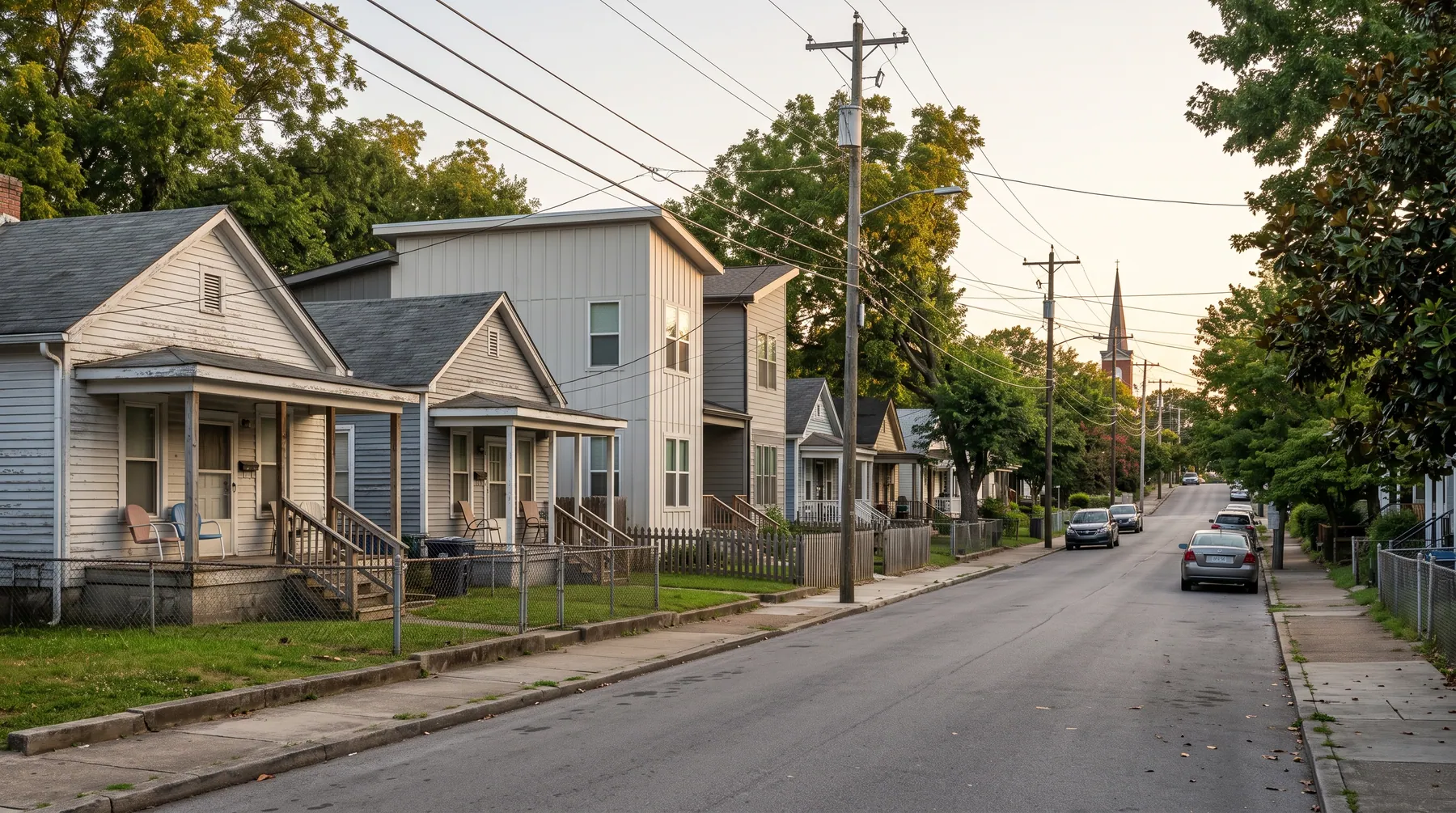
Top image: Illustration of a representative street, not a photo of Salemtown.
To keep this page, print it or choose Save as PDF in your browser's print window. The printout keeps the sources and the date.
More markets
All 28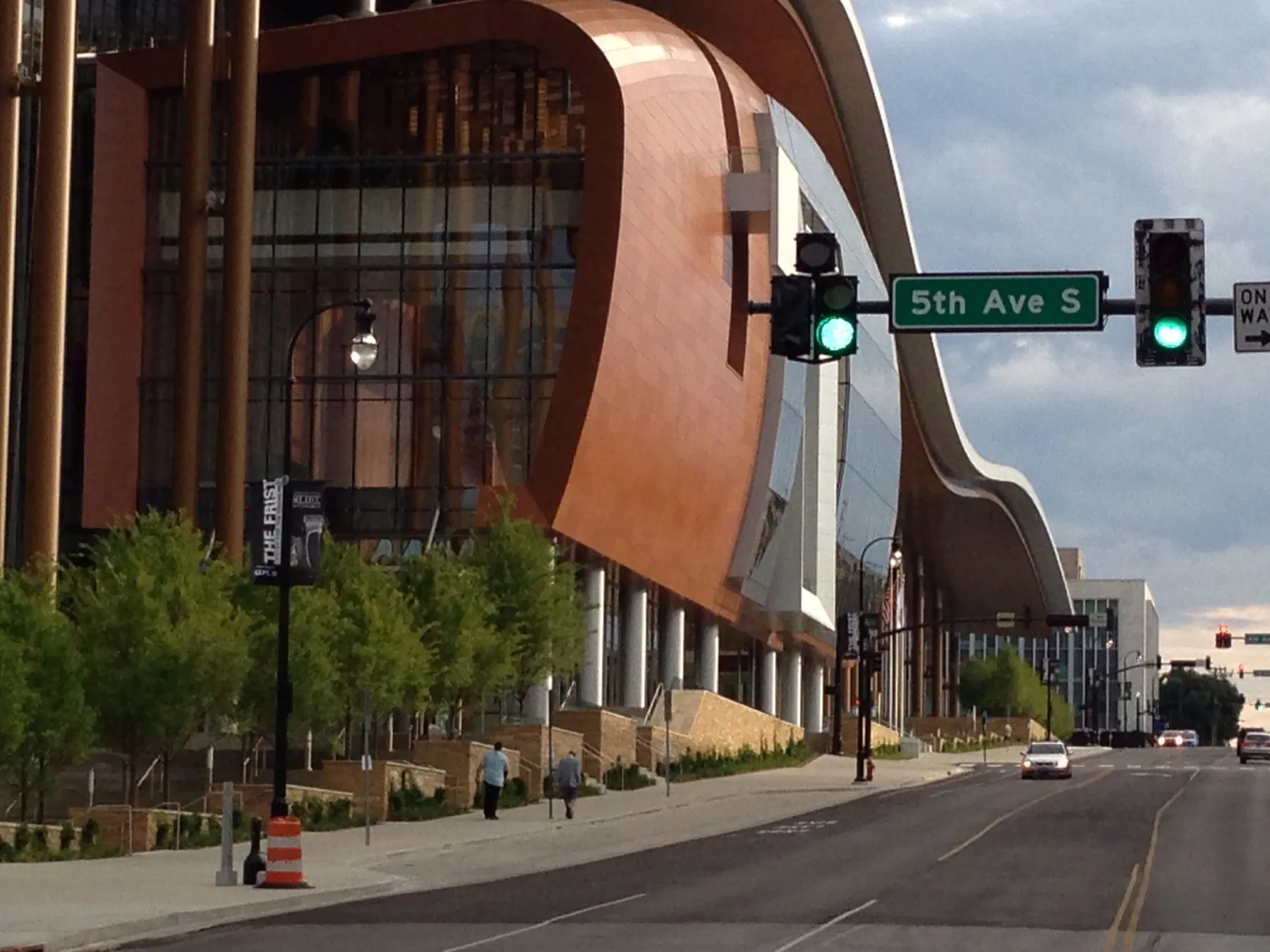
SoBro
SoBro is the part of downtown Nashville south of Broadway: the Music City Center, the Schermerhorn concert hall and a run of new residential and hotel towers.
Sylvan Park
Sylvan Park is a West Nashville neighborhood that the Nashville Land Improvement Co.
The Gulch
The Gulch is a former rail yard on the south edge of downtown Nashville, now a district of apartment and condo towers, offices and hotels.