


Cleaning Standards Between Stays
Every stay ends with a short window to put a unit back to the condition the listing promised. The platforms set a floor for that work, guests grade it in a separate cleanliness rating, and a few Nashville details (trash pickup, holiday schedules, safety signs) belong in the same pass. This guide covers what the rules require and the standard an owner should write down for each unit.
- Airbnb floor
- Clean and free of health hazards such as mold and pests before check-in
- Between every stay
- Laundry, trash out, floors vacuumed or swept, surfaces wiped (Airbnb)
- Checkout chores
- Hosts may not charge guests a fee for skipped cleaning tasks (Airbnb)
- Damage window
- 14 days after checkout on Airbnb and on Vrbo
- Metro curbside service
- Single-family homes up to quadplexes in the Urban Services District
- Checked
- November 12, 2026
On this page
- What Airbnb requires of hosts
- How guests grade cleanliness
- Cleaning comes before disinfecting
- A written standard for each unit
- Linens, towels and laundry
- Bed bug checks at every turnover
- Safety checks that ride along with cleaning
- Trash and recycling in Nashville
- Damage the crew finds
- Cleaning fees and the price guests see
- Turnovers in a multi-unit building
- What the owner decides
- Questions
- Sources
What Airbnb requires of hosts
Airbnb's ground rules for home hosts set the minimum. A listing should be clean and free of health hazards, with mold and pests named as examples, before each check-in. Between stays the host is expected to do the laundry, take out the trash, vacuum or sweep and wipe down surfaces. The same rules say the home must match its listing page from check-in to checkout, so a broken lamp or a stained sofa that the photos do not show is an accuracy problem as well as a cleaning one.
The guest side of the rules matters for planning. Guests are asked to leave a place that does not need excessive or deep cleaning, but a host may not charge a guest a fee for skipping a cleaning or checkout task. In Airbnb's wording, the fee a host sets for cleaning pays for the ordinary reset after each booking and nothing more. In practice that means the turnover budget has to assume the guest did nothing beyond leaving on time, and anything past normal use is a damage question, covered further down.
How guests grade cleanliness
Besides the overall score, an Airbnb guest gives separate stars in six areas. Cleanliness is one; the rest cover how accurate the listing was, arrival, messages, the neighborhood and whether the price felt fair. The overall rating is its own score and is not an average of the categories. Once at least three guests have rated a home, the overall average shows near the listing title in search results, and the category averages appear with the reviews.
Cleanliness is the category an owner controls most directly. Airbnb's own prompt to guests asks whether the home met standards and was free of hazards such as mold and pests. A single hair in a shower drain does not break a rule, but it is the kind of detail guests mention in written reviews that stay on the listing. That is why the standard below is written room by room and checked by someone other than the person who cleaned when possible.
Cleaning comes before disinfecting
The CDC's guidance for homes draws a line that turnover crews often blur. Cleaning removes dirt and most germs with soap or detergent and water. Sanitizing and disinfecting use chemicals to kill germs, and the CDC says to clean first, because dirt can keep those chemicals from working. It also says disinfecting is likely not needed unless someone in the home is sick, or has a weakened immune system.
For a rental, the practical result is a two-tier routine. Every turnover gets a full clean, with extra attention to the surfaces the CDC calls high-touch: light switches, doorknobs and countertops, plus the remote, the faucet handles and the keypad. When a guest reports being ill, or leaves signs of it, the crew adds disinfection with an EPA-registered product and leaves the surface wet for the full contact time printed on the label. The CDC also says not to mix cleaning products or chemicals with each other, a rule that belongs on the supply closet door.
A written standard for each unit
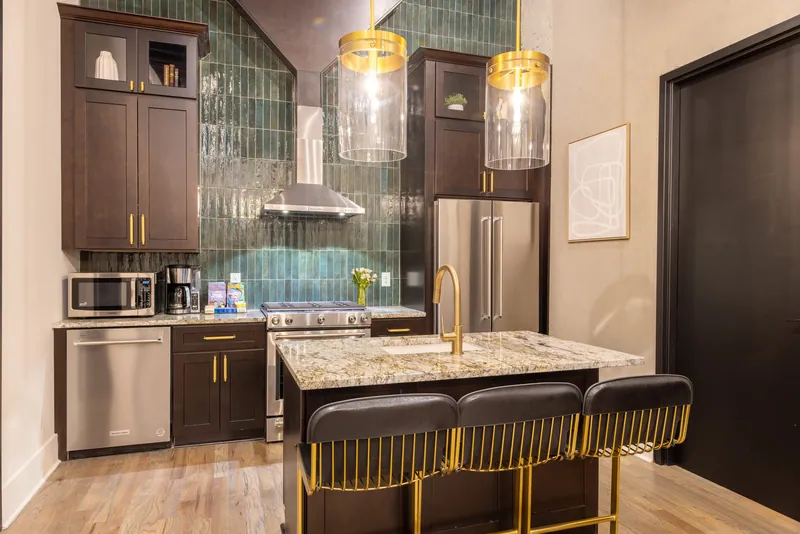
A standard that lives only in one cleaner's head fails the first time that person is sick or the calendar stacks two checkouts on the same morning. Write it down per unit, because a loft with a galley kitchen and a townhome with a laundry room do not share a checklist. Keep it to what can be seen and checked: surfaces, floors, glass, appliances inside and out, linens, consumables, trash and the safety items in the next sections.
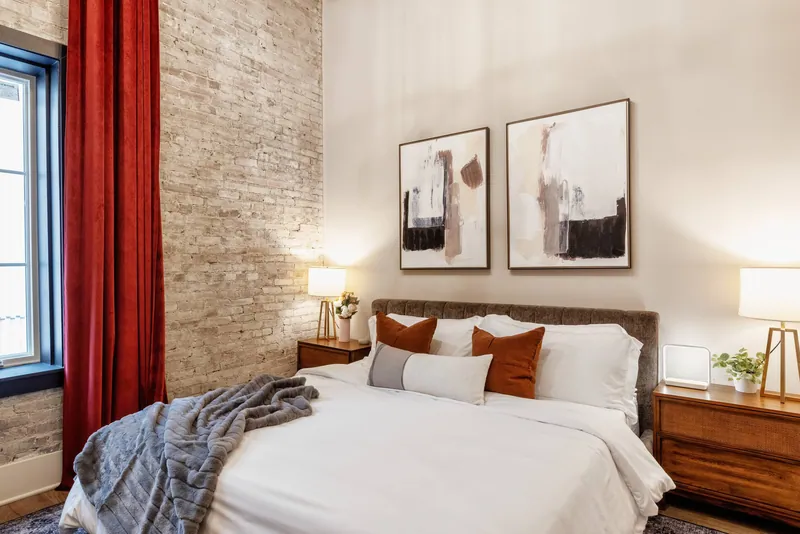
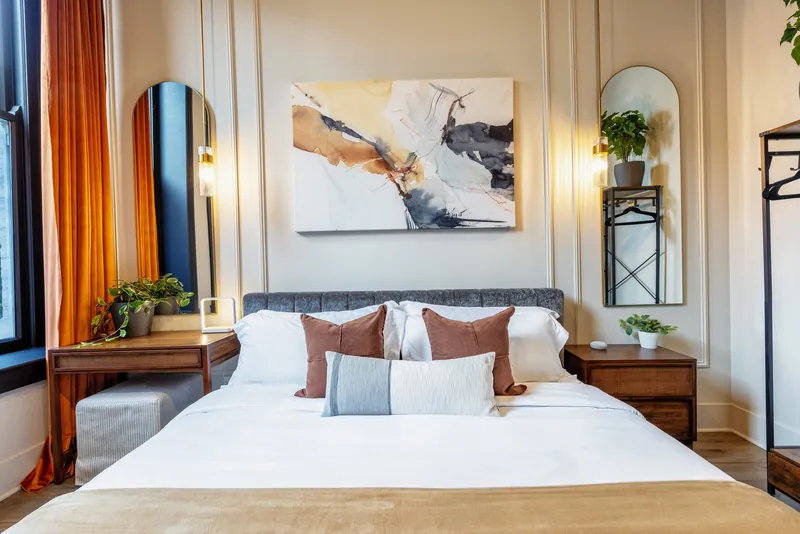
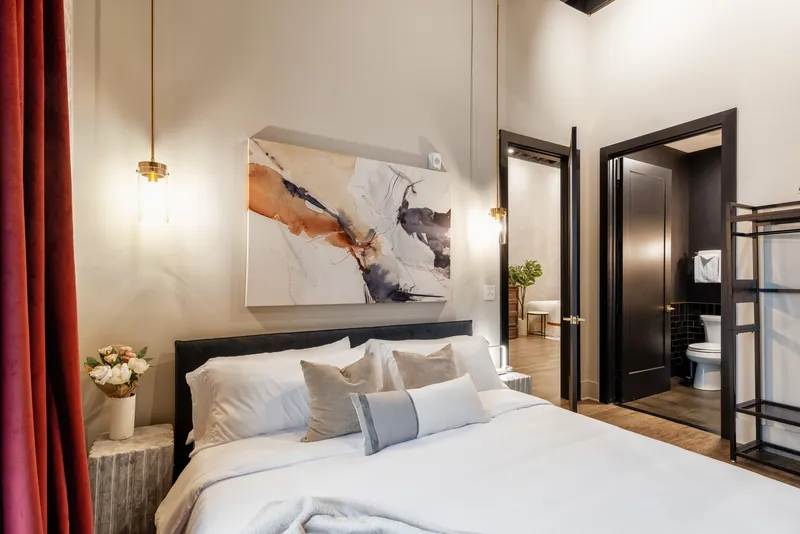
Pair the list with a reference photo set taken when the unit is in its best condition: each bed as it should be made, towels as staged, the kitchen counters, the bathroom vanity and the living room from the door. The crew finishes by taking the same shots. The photos settle questions about what was in place at check-in and give the owner a record without a visit.
- Kitchen: inside the refrigerator, microwave, oven and dishwasher, sink and drain, coffee maker emptied and rinsed, dishes put away clean
- Bathrooms: toilet including the base and hinges, shower glass and grout, drains cleared of hair, mirror, vanity, floor behind the door
- Bedrooms: linens changed on every bed that was used or unmade, mattress protector checked, under the bed, nightstand drawers
- Living areas: cushions lifted, remotes wiped, floors vacuumed edge to edge, windowsills and baseboards on a set rotation
- Exit check: thermostat set, windows locked, lights off, door code reset if your lock allows it, photo set uploaded
Linens, towels and laundry
Airbnb's Essentials checkbox promises guests a basic kit: toilet paper, hand and body soap, sheets on each bed they will sleep in, and one towel plus one pillow per person. Hosts who tick the Essentials box without supplying those items risk penalties up to removal of the listing, and Airbnb asks for larger quantities for bigger groups and longer stays. Size the linen stock to the unit's full occupancy, not to the average party.
For washing, the CDC's home guidance is to use the warmest water setting appropriate for the fabric and to dry items completely. Damp linens folded into a closet will smell by the next check-in. Owners who send laundry out should know the vendor's turnaround time, because a one-day delay with no spare set on site turns into a late check-in.
Bed bug checks at every turnover
Bed bugs arrive in luggage, and a rental with a new party every few nights has more chances to receive them than a home. The EPA lists the signs to look for: rusty or reddish stains on sheets or mattresses, dark spots that look like marker bleeding into fabric, eggs, and the pale yellow skins young bugs shed. The places to look are the piping, seams and tags of the mattress and box spring, cracks in the bed frame and headboard, and, in heavier cases, couch seams, curtain folds and drawer joints.
The EPA recommends encasing mattresses and box springs with a cover tested for bed bugs and leaving it on for a year, because the cover makes it harder for bugs to reach a sleeping guest. If a crew finds signs, it stops, photographs them and leaves the bedding in place. The EPA advises against throwing infested items out in a hurry, because that can spread bugs to other homes, and suggests an experienced pest management company that uses integrated pest management. Block the unit's calendar until the treatment is finished.
Safety checks that ride along with cleaning
A turnover is the one time every few days that someone walks the whole unit, so it is the cheapest moment for safety checks. Airbnb says that where smoke and carbon monoxide alarms are listed they must be working and tested regularly. The U.S. Fire Administration, an arm of FEMA, says to press the test button on each alarm once a month and to swap out any alarm a decade old. Put the test date on the checklist so it is not left to memory.
Metro also wants the local contact person's name and number displayed where guests will see it, and guests sometimes move or remove that sign, so the crew looks for it on every visit. The Tennessee State Fire Marshal's Office winter tips of December 2024 say to keep anything that can burn at least three feet from a space heater and to turn portable heaters off when leaving a room or going to bed. If a unit has a portable heater, the crew checks where guests left it.
Trash and recycling in Nashville
Metro's curbside service covers single-family homes in the Urban Services District, which includes duplexes, triplexes and quadplexes. Trash is picked up weekly and recycling every other week. Crews collect only what fits in the cart, so overflow bags left beside it stay behind. Bag the trash, leave recyclables loose, and set the cart out early on pickup morning. Bigger apartment buildings, and anything out in the General Services District, need a private hauler, though a multifamily owner inside the Urban Services District may request a Metro dumpster.
A unit that turns over every few days can fill a single cart well before the next pickup. Metro charges $65 for an added trash cart and nothing for an added recycling cart, often the cheaper fix for a busy unit. Holiday weeks shift collection: for 2026, Thursday routes in Thanksgiving week move to Monday, November 30, and Friday routes in Christmas week move to Monday, December 28. Build those dates into the turnover calendar.
Damage the crew finds
An Airbnb host has two weeks from the departing guest's checkout to open a request in the Resolution Center, backed by pictures and a quote or receipt for the repair or extra cleaning. If the guest ignores it for a day, refuses or pays only part, the host can ask Airbnb support to review it. Airbnb's damage program will pay for special cleaning after stains, smoke or a pet accident a guest caused. It will not pay for ordinary aging of furniture or for the everyday reset of washing sheets, doing dishes and hauling bags out.
Vrbo gives hosts the same 14 days after checkout to inspect and file a claim, whether the listing asks for a card on file, a refundable damage deposit or the guest's Property Damage Protection. The deadline is why the crew's photo set matters: damage noticed on day 15 is usually the owner's cost.
Cleaning fees and the price guests see
On Airbnb, a charge every guest must pay belongs either in a fee field or inside the nightly rate, and it may not be collected separately off the platform. Airbnb's tax page for Tennessee adds that the state's 7% sales tax is figured on the stay price with the cleaning charge included. When guests book on the owner's own website, the federal fee rule the FTC began enforcing in May 2025 counts a required cleaning charge inside the total, and that total has to be the most prominent price on the page.
Price the fee from the written standard. Time the full checklist on a normal turnover, add laundry and supplies, and set the fee to cover that. A fee set low to win searches gets made up by rushing the clean, and the cleanliness rating shows it.
Turnovers in a multi-unit building
When several units in one building rent to weekend groups, their departures tend to land on the same mornings. The decisions there are staffing and storage. A crew that cleans four units in one morning needs linens for four units on site, a place to stage dirty laundry out of guest view, and a building-level supply closet so no unit runs short of soap or paper on a busy day. Stagger checkout and check-in times by unit only if the listings say so before booking.
Shared spaces add a task. Guests share the stairs and corridors, and a building of three or more homes also has to pass a Fire Marshal inspection before its unit permits issue. Keep corridors clear of carts and laundry bags between turnovers.
What the owner decides
Most of the cleaning work can be delegated. A few decisions stay with the owner, and each one is easier to make once, in writing.
- The written standard and photo set for each unit, and who signs off on each turnover
- In-house crew, contract cleaner or a manager's team, and the backup when the first choice is unavailable
- Linen sets per bed, where spares are stored and who launders them
- When disinfection is added and which EPA-registered product is used
- The cleaning fee, reviewed against timed turnovers at least once a year
- How damage is photographed and who files the claim inside the 14 days
Questions
Can I charge a guest who leaves dishes in the sink?
Not on Airbnb. Its rules bar hosts from charging guests fees for skipping cleaning or checkout tasks, though a host can reflect cleanliness in the review. Damage or a mess that needs more than standard cleaning, such as stains or smoke odor, can go through a damage request within 14 days of checkout.
Do I need to disinfect every unit after every stay?
The CDC says disinfecting a home is likely not needed unless someone there is sick or has a weakened immune system. Clean thoroughly every time, and disinfect high-touch surfaces with an EPA-registered product when a guest reports illness or leaves signs of it.
What should a cleaner do if they find signs of bed bugs?
Stop, photograph the signs, leave the bedding where it is and call the owner or manager. The EPA advises against rushing items to the trash, which can spread bugs, and recommends an experienced pest professional. Block the calendar until treatment is complete.
Does Metro collect garbage at a rental building like mine?
Inside the Urban Services District, Metro's carts serve houses and small buildings of up to four homes. Larger multifamily buildings and properties outside that district contract with a private hauler, and Metro offers dumpster service to Urban Services District complexes on request.
Does the cleaning fee count toward the price I advertise on my own site?
Yes. Under the FTC fee rule, a cleaning fee every guest must pay is part of the total price, which has to be shown more prominently than other pricing. Government taxes can be shown separately as long as they are disclosed before payment.
Sources
- Airbnb Help Center, Ground rules for home hosts (article 2895), opened Nov. 12, 2026
- Airbnb Help Center, Ground rules for home guests (article 2894), opened Nov. 12, 2026
- Airbnb Help Center, Star ratings and review categories (article 1257), opened Nov. 12, 2026
- Airbnb Help Center, Providing essential amenities (article 2343), opened Nov. 12, 2026
- Airbnb Help Center, Safety disclosures (article 2904), opened Nov. 12, 2026
- Airbnb, AirCover for Hosts and Host damage protection, opened Nov. 12, 2026
- Airbnb Help Center, Pricing and payment transparency (article 2799), opened Nov. 12, 2026
- Airbnb Help Center, Occupancy tax collection and remittance in Tennessee (article 2330), opened Nov. 12, 2026
- Vrbo Help, How do damage deposits work, opened Nov. 12, 2026
- CDC, When and How to Clean and Disinfect Your Home, opened Nov. 12, 2026
- U.S. EPA, How to Find Bed Bugs, opened Nov. 12, 2026
- U.S. EPA, Top Ten Tips to Prevent or Control Bed Bugs, opened Nov. 12, 2026
- U.S. Fire Administration (FEMA), Smoke Alarms, opened Nov. 12, 2026
- Tennessee State Fire Marshal's Office, Winter Fire Safety Tips, Dec. 18, 2024 (Wayback copy Jan. 20, 2026)
- Metro Codes, Short Term Rental Property Operation Rules and Requirements (Wayback copy Feb. 12, 2026)
- Metro Codes, Not-Owner Occupied Permit Application Checklist (Wayback copy Nov. 5, 2026)
- Nashville Department of Waste Services, Curbside Trash and Recycling Services (updated Oct. 19, 2026; Wayback copy Oct. 23, 2026)
- FTC, Rule on Unfair or Deceptive Fees, Frequently Asked Questions, opened Nov. 12, 2026
Checked November 12, 2026.
To keep this page, print it or choose Save as PDF in your browser's print window. The printout keeps the sources and the date.
More owner guides
All 41Emergency Planning for Nashville Short-Term Rentals
A short-term rental guest arrives without knowing the building, the county or how local warnings work.
Furnishing a Short-Term Rental Durably
A rental's furniture is used by a new group of strangers every few nights, and every piece shows up in the photos guests book from.
Getting a Property Ready for Its First Guest
The first guest should be the last step of a sequence, not the start of one.