

Handling Guest Complaints
Guest complaints in a Nashville rental tend to fall into a few groups, such as access, cleanliness, something broken and noise, and many of them can be fixed while the guest is still there. How fast you answer, and what you do in the first hour, decides whether the complaint ends in a thank-you, a refund that Airbnb takes out of your payout, or a low review. This guide covers the rules that set the clock, what the platforms count as a real problem, and how to run complaints across several units.
- Metro contact rule
- Responsible party within 25 miles, answering 24 hours a day during every stay
- Airbnb reply time near check-in
- Within 1 hour for messages received in local daytime hours
- Airbnb reply time during other stays
- Within 12 hours in local daytime hours
- Guest's window to report a Reservation Issue
- 72 hours from discovering it
- Airbnb host cancellation fee
- 10%, 25% or 50% of the reservation amount, minimum $50
- Checked against Airbnb's help center and Metro sources
- November 12, 2026
On this page
- Who picks up the phone
- Airbnb's response clock
- What Airbnb treats as a Reservation Issue
- What a refund costs the owner
- Triage in the first hour
- Write it down while it happens
- Downtown noise and construction
- Storms and power outages
- Offering a refund or a credit yourself
- When the guest is the problem
- Running complaints across several units
- Questions
- Sources
Who picks up the phone
Metro Nashville makes this part of the permit. Every permitted unit names a local responsible party based within 25 miles, and that person's name and number go on a wall inside the unit. Metro's operation rules say the line must be answered around the clock for the full length of each rental, so that someone can deal with problems in the unit. A voicemail that is checked the next morning does not meet that rule.
Where one owner runs several units, put in writing who carries the phone each night, who backs them up, and who can authorize a locksmith, a plumber or a hotel room without waiting for the owner. Post one number in every unit, and once a month call it yourself late at night to see what a guest would hear.
Airbnb's response clock
Airbnb's written expectations for hosts put numbers on how quickly to reply. When check-in is more than five days out, a host should answer within three days. Close to check-in, or when an issue is time-sensitive, Airbnb expects an answer within one hour to messages that arrive in local daytime hours. Other messages during a stay, or within five days of arrival, should get an answer within 12 hours.
Those are minimums. A guest standing at a door that will not open needs an answer in minutes. Set notifications so that messages from guests who are checking in today, or who are in the unit now, reach the person on call as a phone alert, not only as an email.
What Airbnb treats as a Reservation Issue
Airbnb's refund and rebooking rules for homes, in force since February 6, 2025, recognize four kinds of problems. The host cancels before check-in. The guest cannot get in. The unit is unfit to live in on arrival, for instance dirty or carrying a hazard to health or safety. Or the place is materially different from the listing.
The last group is where many complaints land. Airbnb's examples include the wrong type of space, the wrong count of bedrooms, bathrooms or kitchens, the wrong location, a host, another person or a pet on site that the listing did not disclose, and a feature the listing promised that is absent or broken, for instance the pool, hot tub, a major appliance, heat or cooling.
The guest must raise it with the host or with Airbnb within 72 hours of finding it, though Airbnb may take a late report when the guest can show an earlier one was not possible. Problems the guest, their companions or their pets caused are excluded.
What a refund costs the owner
If Airbnb decides a Reservation Issue disrupted the stay, it can refund the guest in full or in part, help them rebook, or pay toward a new place. The outcome depends on how serious the problem was, how much of the stay it affected, whether the guest left, and the evidence. The host then receives no payout, or a payout cut by the refunded amount. This policy overrides the listing's cancellation policy.
Two details help the owner. Airbnb generally checks the guest's concern with the host, and a host can dispute a claimed issue by contacting Airbnb. And if the host has already given the guest a refund or other relief, Airbnb may reduce what it pays. A fast, fair fix on your side often keeps the matter between you and the guest.
Triage in the first hour
Sort every complaint by what it threatens, and work the list in this order.
- Safety. Gas smell, smoke, carbon monoxide alarm, a fall, a person who should not be there. Tell the guest to call 911 first, then go or send someone.
- Access. A failed keypad, a wrong code, a building door that will not release. Have a second way in that does not depend on the first, such as a lockbox key or a person within a short drive.
- Habitability. No heat in January, no air conditioning in July, no water, a toilet that will not flush, a unit that was not cleaned. Send a cleaner or a trade the same day and tell the guest the arrival time.
- Listed features. A broken dishwasher, dead Wi-Fi, a television that will not stream. Fix or replace, and offer something fair for the time it was out.
- Comfort. Pillows, a noisy street, a thermostat the guest cannot read. Answer with facts and a small practical help.
Write it down while it happens
Keep the whole exchange in the platform's message thread. Ask the guest for a photo or short video of the problem, take your own after the fix, and keep the invoice from the plumber or locksmith. Airbnb asks for photos, videos or the host's confirmation of conditions when it weighs a refund request, and the same record protects you if the guest later says nothing was done.
Log each complaint by unit, date, category and fix time in one sheet. Metro already makes permit holders retain a register of guests for six months or more. A complaint log kept beside it shows the patterns, such as one unit, one appliance or one weekend that keeps coming up.
Downtown noise and construction
Noise is the complaint owners can predict best in Nashville. Metro's noise chapter treats the downtown DTC district differently from the rest of the county. Inside it, a bar that is open may run indoor speakers so long as a meter at street level, fifty feet out from the building wall, reads no more than 85 decibels, and no speaker within ten feet of an open door or window may point toward it. Beyond DTC and its bordering CF parcels, a speaker loud enough to be clearly heard from the edge of the closest lived-in property breaks the law. A unit near Broadway or Printers Alley will hear music late on weekends, and much of it is within those limits.
Construction is the other one. Metro's construction chapter bans outdoor building work between seven at night and seven the next morning for most of the year, and in the three summer months the quiet window shrinks to eight at night through six in the morning. In Gulch North, Gulch South and Hope Gardens, that shorter summer window applies all year. Most other downtown subdistricts, for example SoBro, Core and Rutledge Hill, have no hours limit on such work. Airbnb's host ground rules say the listing should disclose surroundings that affect the expected noise level. Say it plainly in the listing and in the pre-arrival message, and put earplugs and a white-noise machine in the bedrooms.
Storms and power outages
Weather can turn into a building-wide complaint. During the late January 2026 ice storm, FOX 17 reported more than 230,000 Nashville Electric Service customers without power on the Sunday night after it hit, and more than 99,000 still out at 9 p.m. on January 28. A unit without heat is not habitable, whatever caused it.
Airbnb's Major Disruptive Events Policy can cover a large-scale utility outage, meaning a long loss of heat, water or electricity across most homes in an area, but only where and when Airbnb activates it. Under it, guests can cancel for a refund or credit and hosts can cancel without fees, though the host gets no payout for canceled dates. Outside an activation, a host who cancels is charged by Airbnb, at 10% of the booking value when check-in is more than 30 days away, 25% inside 30 days and 50% inside 48 hours, never less than $50, unless Airbnb accepts a documented valid reason. Keep a plan for portable heat, a generator for essentials if the building allows it, and a list of nearby hotels.
Offering a refund or a credit yourself
When the fault is yours, a fair partial refund offered before the guest asks can settle the matter, and Airbnb may cut its own refund to account for relief you already gave. Pay it through Airbnb. Airbnb's payment rules require money for current, future and repeat bookings to stay on the platform, and its help center sends refunds and payment requests between host and guest through the Resolution Center.
Size it to the impact: a night's rate for a night without heat, a smaller amount for a missing amenity. Say what happened, what you fixed and what you are refunding, in two or three sentences. Do not offer money in exchange for a review or ask the guest to change one. Airbnb's Reviews Policy bars both.
When the guest is the problem
Complaints also run the other way. Airbnb's ground rules for guests cover cleanliness, trash, damage, the approved number of guests, smoking of tobacco, cannabis or e-cigarettes, pets, noise and quiet hours, check-in and checkout times, and commercial filming. Hosts may not charge a fee because a guest skipped checkout chores, though they can mention cleanliness in a review.
Airbnb asks hosts to contact the guest first, document the problem with message threads or written neighbor complaints, then contact Airbnb or ask for damage payment through the Resolution Center, and finally leave an honest review. First or minor problems usually lead to education or a warning for the guest. Repeated or serious ones can get the guest suspended or taken off Airbnb. Metro's operating rules put guest behavior on the permit holder, so a guest who ignores a noise warning becomes a Codes matter for you too.
Running complaints across several units
In a building, one complaint can be about another unit. Metro allows only one party per unit under one contract, so groups split across units book separately and each has its own house rules. Put the building rules, quiet hours and trash location in every unit and every listing, and make sure they match.
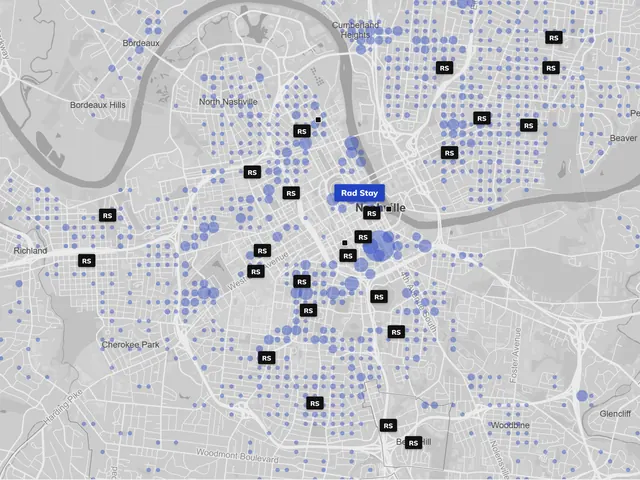
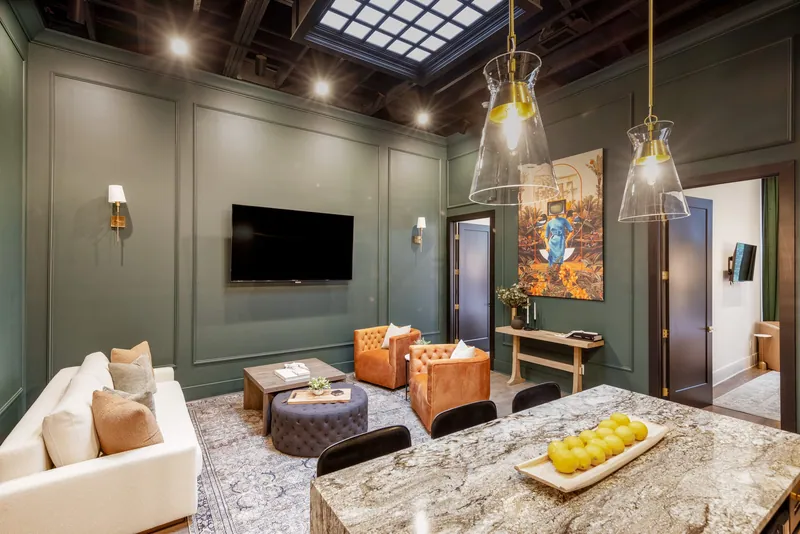
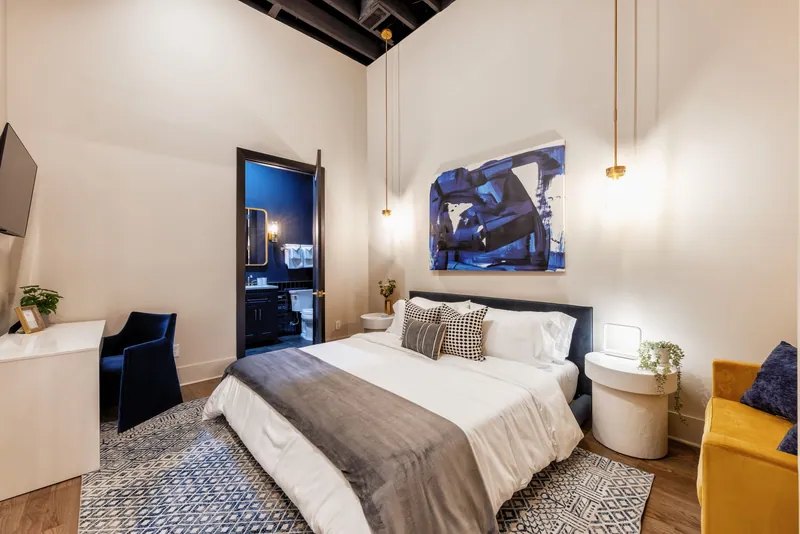
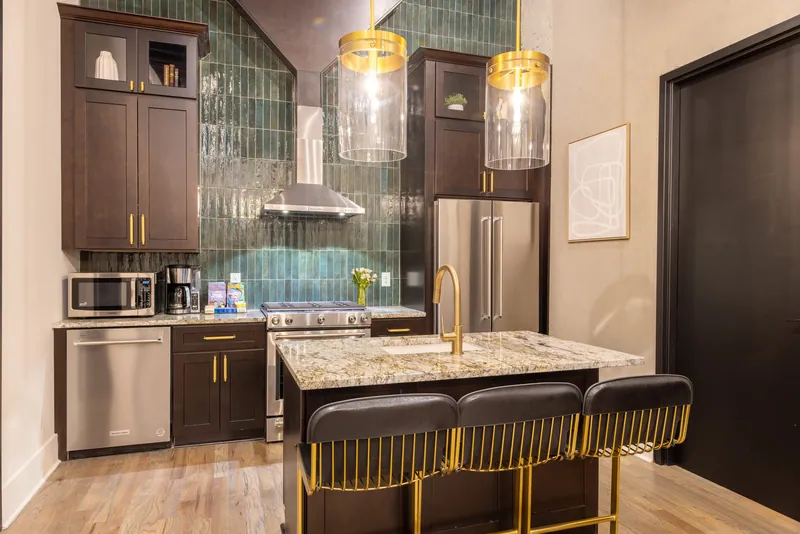
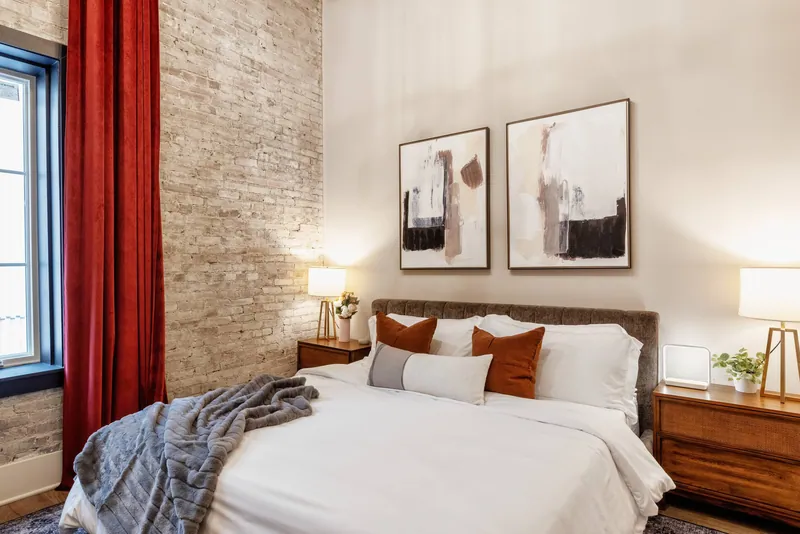
Review the complaint log once a month. If one unit gets most of the noise complaints, look at what sits above, below and beside it. If one appliance shows up three times, replace it instead of repairing it again. Rad Stay's four lofts at Union Street Lofts each carry a separate Metro permit, so every unit gets its own posted contact sheet and copy of the house rules, even where one person is on call for a whole building.
Questions
How fast do I have to answer a guest on Airbnb?
Airbnb expects an answer within one hour to messages received in local daytime hours when check-in is close or the issue is time-sensitive, and within 12 hours for other messages during the stay. Separately, Metro expects its named local contact to take calls day and night for as long as a rental lasts.
Can a guest get a refund for a broken air conditioner?
It can qualify. Airbnb lists heating or air conditioning that is advertised and does not work as an example of a Reservation Issue. If Airbnb refunds the guest, your payout is reduced by that amount.
Is a guest refunded because of bar noise downtown?
Noise from the surroundings is not on Airbnb's list of Reservation Issues, but a listing that hid it can draw an accuracy complaint and a low review. Disclose street and music noise in the listing, as Airbnb's host ground rules ask.
Should I refund the guest myself or let Airbnb decide?
If the problem was yours, a fair partial refund through Airbnb's Resolution Center is often the better route. Airbnb may reduce its own refund when the host has already given relief.
What if a storm knocks out power to the whole area?
If Airbnb activates its Major Disruptive Events Policy for the area and dates, guests can cancel for a refund and hosts can cancel without fees, with no payout for canceled nights. Outside an activation, normal cancellation rules apply.
Sources
- Metro Codes, Short Term Rental Property Operation Rules and Requirements (Wayback copy, Feb. 12, 2026)
- Metro Code chapter 6.28, short term rental property (Municode, current through June 23, 2026)
- Metro Code Title 9, Noise and Amplified Sound, chapters 9.20 and 9.30 (Municode print, Supp. 47, Sept. 19, 2024)
- Airbnb Help Center, Ground rules for home hosts (article 2895), opened Nov. 12, 2026
- Airbnb Help Center, Rebooking and Refund Policy for homes (article 2868), opened Nov. 12, 2026
- Airbnb Help Center, Major Disruptive Events Policy (article 1320), opened Nov. 12, 2026
- Airbnb Help Center, Host cancellation policy (article 990), opened Nov. 12, 2026
- Airbnb Help Center, Pricing and payment transparency (article 2799), opened Nov. 12, 2026
- Airbnb Help Center, When to use the Resolution Center (article 767), opened Nov. 12, 2026
- Metro Council BL2023-2106, amplified noise and enforcement (Legistar, passed Aug. 15, 2023)
- Airbnb Help Center, Ground rules for guests (article 2894), opened Nov. 12, 2026
- Airbnb Help Center, Reviews Policy (article 2673), opened Nov. 12, 2026
- FOX 17, Nashville power outages days after ice storm (Jan. 28, 2026)
Checked November 12, 2026.
To keep this page, print it or choose Save as PDF in your browser's print window. The printout keeps the sources and the date.
More owner guides
All 41Hosting Bachelorette Groups Responsibly
Bachelorette groups and other celebration trips book Nashville rentals, and many of them are good guests.
Insurance Claims After Guest Damage
When a guest breaks something, money can come from three places: the guest, the booking platform's program, and the owner's own insurance.
Keeping Neighbors on Your Side
Neighbors decide more about a Nashville rental's future than most owners expect.