








Nashville Short-Term Rental Permits by Type
Metro grants each short-term rental permit in one of two forms, and its register shows the two forms acting like separate markets. In our download dated November 3, 2026, a total of 6,996 permits carried ISSUED status, with investors' not-owner-occupied permits outnumbering owner-occupied ones 4,999 to 1,997. Below, each type is counted from that file: how many survive, where they cluster, who holds them, and what that means for a building already owned or still being shopped.
- Issued permits, Nov. 3, 2026
- 6,996
- Not owner-occupied
- 4,999 (71.5%)
- Owner-occupied
- 1,997 (28.5%)
- Not-owner-occupied permits on parcels holding 4 or more
- 1,525 (30.5%)
- Not-owner-occupied holders with a Tennessee mailing address
- 59.6%
- Expiring Nov. 3 to Dec. 31, 2026
- 622 not owner-occupied, 175 owner-occupied
- Source
- Metro Nashville open data, pulled Nov. 3, 2026
On this page
- The two permit types in Metro's rules
- Where each type can be issued
- Issued permits by type on November 3, 2026
- How long each type survives
- Why owner-occupied permits drop out faster
- First issues by type since 2015
- Single homes and whole buildings
- Who holds each type
- Council districts by type
- Renewal dates ahead
- What the type means when you buy
- Limits of the permit file
- Questions
- Sources
The two permit types in Metro's rules
Chapter 6.28 of Metro's code knows two permits. The owner-occupied kind attaches to a home its owner lives in, or to a second unit on that lot. The other kind, which Metro calls not owner-occupied and this page calls the investor permit, covers everything else. Each permit is good for a single dwelling of four sleeping rooms or fewer, booked by one party, so an eight-unit building files eight times.
Metro Codes' permit-types page, updated March 13, 2026, reserves the owner-occupied kind for natural persons who live on site. Companies, trusts and partnerships are shut out, and four residence documents have to match the recorded deed. The investor permit has no residency test, so an LLC or a trust may hold it. It has a location test.
Where each type can be issued
Investor permits are newly issued only in a fixed list of zones. That list covers the four mixed-use families and their -A twins, the OG, OR and ORI office zones, five commercial codes from CN through CF, every downtown code district except DTC East, and the three shopping-center codes. Closed to them: AR2A, R, RS, RM, and since December 12, 2025, the new RN and RL zones.
The owner-occupied kind can go almost anywhere homes are allowed, short of the NS zones built to exclude rentals. RN and RL accept it only on the single-family building type, newer ADUs may not carry it, and single-family or two-family zones get one per lot.
Inside a Specific Plan or PUD, whatever that plan says governs, and Metro Codes points those questions to Planning.
Issued permits by type on November 3, 2026
Each permit number counts once here. Of the file's 17,634 rows, 31 duplicate an earlier number, leaving 17,603 records, 6,996 of them ISSUED on the pull date. The rows below the first two trace every record ever granted an issue date to where it stands today.
| Measure | Not owner-occupied | Owner-occupied | Both types |
|---|---|---|---|
| ISSUED on Nov. 3, 2026 | 4,999 | 1,997 | 6,996 |
| Share of ISSUED | 71.5% | 28.5% | 100% |
| Ever granted an issue date | 10,421 | 5,654 | 16,075 |
| Of those, ISSUED now | 48.0% | 35.3% | 43.5% |
| Of those, EXPIRED | 37.0% | 51.0% | 41.9% |
| Of those, CANCELLED | 14.7% | 10.3% | 13.2% |
| Of those, REVOKED | 0.2% | 2.6% | 1.0% |
How long each type survives
Permits last 365 days and renew yearly, while the register holds on to the original issue date. Grouping by that first year shows how many from each cohort still read ISSUED on November 3, 2026.
- Permits first issued in 2018 or 2019: 37.6% of the investor type are still active, against 23.0% of owner-occupied ones.
- Permits first issued in 2022 or 2023: the gap is 66.9% to 49.4%.
- 2024 is the one year in which owner-occupied permits kept the higher share, 65.6% to 61.8%. The file gives no reason.
| First issued | Not owner-occupied, first issued | Not owner-occupied, ISSUED now | Owner-occupied, first issued | Owner-occupied, ISSUED now |
|---|---|---|---|---|
| 2015 to 2017 | 2,584 | 456 (17.6%) | 1,551 | 277 (17.9%) |
| 2018 to 2019 | 2,404 | 904 (37.6%) | 1,768 | 406 (23.0%) |
| 2020 to 2021 | 1,637 | 923 (56.4%) | 606 | 266 (43.9%) |
| 2022 to 2023 | 2,145 | 1,435 (66.9%) | 1,011 | 499 (49.4%) |
| 2024 | 768 | 475 (61.8%) | 360 | 236 (65.6%) |
| 2025 | 528 | 454 (86.0%) | 225 | 182 (80.9%) |
| 2026, to Oct. 31 | 355 | 352 (99.2%) | 133 | 131 (98.5%) |
Why owner-occupied permits drop out faster
Nothing in the register explains an ending, so read the gap against the rules. The owner-occupied kind survives only while one named person keeps living at the property, and a sale voids either kind. Revocation also lands mostly here, on 146 of 164 REVOKED records. Metro's code allows revocation after a third violation, gives 15 days' notice in writing, lets the holder appeal to a board set up for these permits, and then keeps the property out of the program for a year.
First issues by type since 2015
Counting the year each permit first issued, the investor type has been the larger share every year since the register began on April 1, 2015.
- The share ran from a low of 55.7% in 2018 to a high of 75.9% in 2021.
- In 2025 and 2026 it sat between 70% and 73%, even with the residential zones closed to new investor permits.
- The file has no zoning column, so it cannot show which districts the new ones went to. By ZIP code, the most new investor permits since January 1, 2025 went to 37203, with 199, and 37207, with 177.
| First issued in | Investor permits | Owner-occupied permits | Investor share |
|---|---|---|---|
| 2015, from April 1 | 800 | 373 | 68.2% |
| 2016 | 794 | 494 | 61.6% |
| 2017 | 990 | 684 | 59.1% |
| 2018 | 1,214 | 966 | 55.7% |
| 2019 | 1,190 | 802 | 59.7% |
| 2020 | 636 | 288 | 68.8% |
| 2021 | 1,001 | 318 | 75.9% |
| 2022 | 1,546 | 559 | 73.4% |
| 2023 | 599 | 452 | 57.0% |
| 2024 | 768 | 360 | 68.1% |
| 2025 | 528 | 225 | 70.1% |
| 2026, to Oct. 31 | 355 | 133 | 72.7% |
Single homes and whole buildings
All 1,997 owner-occupied permits sit one to a parcel, which fits a primary-residence permit and the one-per-lot rule. Investor permits stack. The 4,999 not-owner-occupied permits sit on 3,470 parcels; 3,342 are the only issued permit on their parcel, and the other 1,657 share a parcel with at least one more.
- Seventy-one parcels hold four or more, with 1,525 permits between them, or 30.5% of the type. The largest single parcel holds 328.
- A parcel is a tax lot. Metro can record a condominium building as one parcel or as one per unit, so read the bands as a rough guide to building size, not a count of buildings.
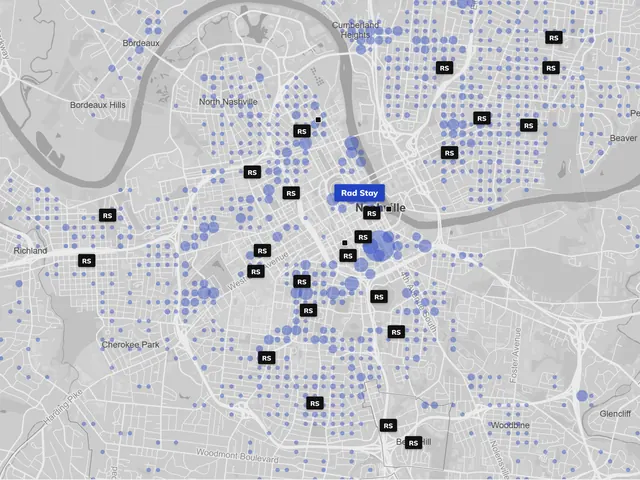
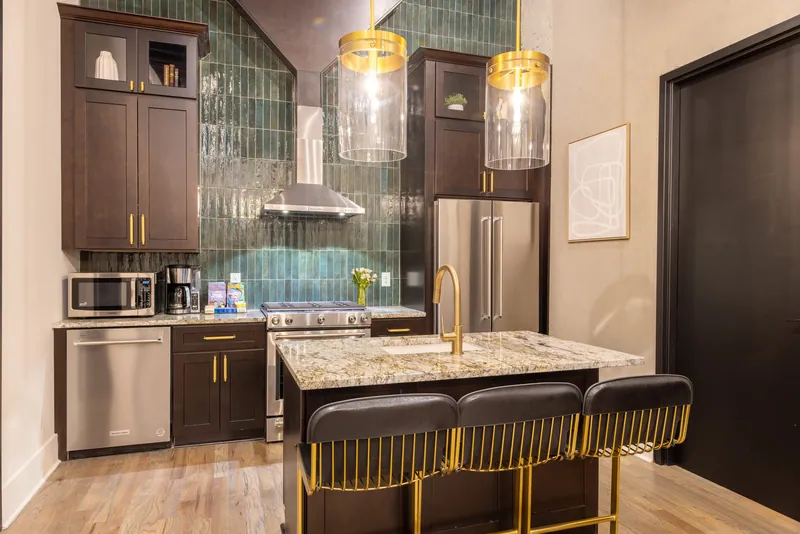
- Union Street Lofts, managed by Rad Stay, is the pattern in miniature. Four lofts share one building, each holds its own investor permit, and all four permits date to April 2023.
| Issued not-owner-occupied permits on one parcel | Parcels | Permits on them |
|---|---|---|
| 1 | 3,342 | 3,342 |
| 2 to 3 | 57 | 132 |
| 4 to 9 | 37 | 211 |
| 10 to 49 | 30 | 585 |
| 50 or more | 4 | 729 |
Who holds each type
The register gives a permit owner's name and mailing state. We counted names only by pattern and published no name. Of the 4,999 issued investor permits, 3,694, or 73.9%, carry an owner name with a company or trust marker such as LLC, Inc., Corp., LP or Trust. On the owner-occupied side the count is 21 of 1,997, about 1%, as you would expect when only individuals qualify; a text match can misread how a deed styles a name, so treat that small figure loosely.
Mailing addresses split the same way. Among issued permits with an owner state on file, 99.3% of owner-occupied holders use a Tennessee address, against 59.6% of investor holders. About four in ten investor permits are held from another state. Because Metro wants a named responsible party who stays within 25 miles and takes calls day or night, an owner in another state lines up that person before applying.
Council districts by type
The two types sit in different parts of the county. Using the Council district Metro's file records for each permit, District 19 holds 1,788 issued not-owner-occupied permits, 35.8% of the type. Districts 17, 21, 5 and 2 follow with 773, 647, 530 and 385, so five districts hold 82.5%. Seven of the 35 districts have no issued investor permit: 4, 12, 23, 28, 31, 32 and 33.
Owner-occupied permits spread wider, with at least one in every district. District 6 leads with 290, then District 5 with 271, District 17 with 189, District 7 with 141, District 21 with 113 and District 15 with 112.
Renewal dates ahead
Metro sends reminder emails twice, at 60 and at 45 days out. From the pull date through December 31, 2026, 622 investor permits and 175 owner-occupied permits reach their expiration dates. From January through March 2027 the counts are 1,218 and 507. A short grace window after expiry exists only at Metro's discretion and only without documented complaints, so file early instead of counting on it.
What the type means when you buy
No permit passes with a sale. The code forbids transfer or assignment, the buyer applies fresh under whatever rules stand that day, and Metro's operation page treats moving title between an individual and an LLC or a trust, in either direction, as a sale too. So ask whether you could win a new permit of the type your plan needs, not whether the seller has one.
Check in this order. Zoning first: if the parcel is R, RS, RM, AR2A, RN or RL and you won't live there, value it with no short-term income. Distance next: even in a listed district, a new investor permit is refused if your parcel line comes within 100 feet of the parcel of a house of worship, a park, a school, a licensed day care, or the playground of either of the last two. The way around it is a waiver resolution, heard in public, that at least 21 Council members support.
Paperwork third: the applicant certifies that the rental is allowed by every condo, HOA and lease document, and those can be tighter than Metro's code. Safety last: a Fire Marshal visit comes once a lot holds three-plus homes, while a house or duplex needs a signed report from a licensed professional (architect, engineer or home inspector) in Tennessee, and Metro Codes should confirm each step before the permit enters your price.
Limits of the permit file
Without a zoning field, the register can't say whether a parcel qualifies for a new permit. It records permits, not bookings, so it says nothing about occupancy or income. Status can trail real events by a few days. Three subtype codes sit behind the two types: one for owner-occupied permits and two for the investor kind, which cover 333 and 4,666 issued permits. The census study on this site explains where the second investor code came from.
Questions
What share of Nashville's permits belong to investors?
71.5%. Of 6,996 ISSUED permits on November 3, 2026, 4,999 were the not-owner-occupied kind and 1,997 owner-occupied, by our count of Metro's open data.
Can my LLC get an owner-occupied permit?
No. That kind goes only to individuals living at the property as their main home. An LLC may hold the investor kind where the parcel's zone permits it.
Which permit type lasts longer?
In Metro's file, the not-owner-occupied type. Of those first issued in 2022 or 2023, 66.9% still read ISSUED on November 3, 2026, against 49.4% of owner-occupied permits from the same years.
Does a building need one permit or one per unit?
One per unit. A permit covers one dwelling with no fifth sleeping room, and Metro's code puts no percentage ceiling on permitted units within a single building.
What does a permit cost?
Metro's FAQ, as archived in February 2026, lists $313, and paying by card adds 2.3%. Ask Metro Codes for the fee in force on the day you file.
Sources
- Metro Nashville Residential Short Term Rental Permits (open data, Codes Administration), status ISSUED and full history, pulled November 3, 2026
- Metro Nashville open data item page, Residential Short Term Rental Permits
- Metro Code Chapter 6.28, Municode (version current through June 23, 2026)
- Metro Code 17.08.030 district land use table, Municode
- Metro Code Chapter 17.38, RN and RL districts, Municode
- Metro Codes, short-term rental permit types (archived copy, October 22, 2026; page last updated March 13, 2026)
- Metro Codes, operation requirements (archived copy, February 12, 2026)
- Metro Codes, renew a short-term rental permit (archived copy, October 12, 2026)
- Metro Codes, apply for a short-term rental permit (archived copy, August 22, 2026)
- Metro Codes, not owner-occupied checklist (archived copy, February 16, 2026)
- Metro Codes, short-term rental FAQ (archived copy, February 11, 2026)
- Metro Council Legistar, BL2025-1005
Checked November 12, 2026.
To keep this page, print it or choose Save as PDF in your browser's print window. The printout keeps the sources and the date.
More market data
All 15Nashville Short-Term Rental Permits by ZIP Code
On November 3, 2026, Metro's permit register carried 6,996 permits marked ISSUED, spread over 31 ZIP codes but packed into a handful.
Tourism Growth in Nashville Since 2010
Between 2010 and 2025, Nashville's airport traffic more than doubled, leisure and hospitality jobs in the metro area grew 71%, and visitors to Davidson County spent $11.6 billion, the most on record.
Nashville Universities and Their Visitors
Vanderbilt, Belmont and Lipscomb together reported about 27,600 students in their newest fall counts, and most of their families live outside Tennessee.